sam: local inference is a terrible allocation of scarce resources
“a lot of people want local inference, and somehow they assume that the problem is solved now because we have open-source models, we're going to be able to run them on our computers, and so we're not going to need all the stuff in the data centre
but from a global allocation perspective, actually it's quite terrible to have everybody, like, have a bunch of the world's limited supply of DRAM sitting in their own computer and being used five percent of the time
you want maximum utilisation in the cloud if you're trying to deal with this very supply-constrained environment
somehow many people's intuition is the opposite of that”
The:
- net tax-take dip (via lock-in effects); and
- productivity hit (via higher cost of capital)
aren't bugs Treasury overlooked, they're the price the government has decided to pay.
The higher purpose is "equalising" the taxation of labour income and asset income.
Jim Chalmers uses the phrase "better aligning" to mean "equalising".
Revealed preference: Values > Economics.
I put this exact Q to someone with decades of experience in+around AusGov.
The reply: "Collateral damage".
Which I took to mean something along the lines of
"Undesirable side effects are inevitable."
@TheKouk When the CGT component is so very small vs the property component (0.5 of 3.6B) and the risks so high that there will be a net tax-take reduction and broad productivity decline, how is this justifiable?
Unpleasant thought: perhaps the thinking behind these changes to the tax system aligns with Australia's present national mood.
In which aspiration means: "nudge singles and occupy the crease. DO NOT go for fours, let alone sixes."
Same profit, different tax - the CGT's dogs breakfast.
My article in the @australian's Inquirer today quotes Chief Economist of the NSW Parliamentary Budget Office, @DerekFranc90653
It's hard to get your head around just how bad this is, because it is so counter-intuitive.
The lock-in effect
It may be that the most economically consequential outcome of the proposed tax rises will not be:
- discouraging founders; or
- founder flight
but something called "the lock-in effect".
The literature on it is consistent across almost 50 years of study.
The basic idea is that raising taxes at exit makes owners less likely to sell.
From there, it's straightforward to predict:
- reduced transaction volumes
- reduced liquidity; and
- a whole set of inefficiencies re: owners that should have sold years ago but were averse to losing half.
Having the highest CGT rate in the world will no doubt put Australia in a position to contribute to the literature on the topic 😊
@buirachel@shandsaker@andrewbirt@SmallTimeVC@LaunchVic One thing not measured by the Startup Genome Report is serendipity.
Brownian motion of people and ideas and...hey presto, a company!
I doubt that the longest lockdown in the world will prove friendly to serendipity. Quite the reverse.
Tetlock’s study into forecasting accuracy found that the most important skill was a willingness to update ones beliefs when new information arrived
In Think Again
@petecameron steps down as chair of @StartupVic leaving every aspect of the org >2x better than he found it: management, finances, board. Thanks Pete.
Congrats to incoming co-chairs @RachelYang_ and @morganranieri!
Congrats to @petecameron for his tenure as chair of @StartupVic . Passing the baton after doing more than almost anyone to make the organization relevant, viable and impactful. Victoria thanks you. 👏
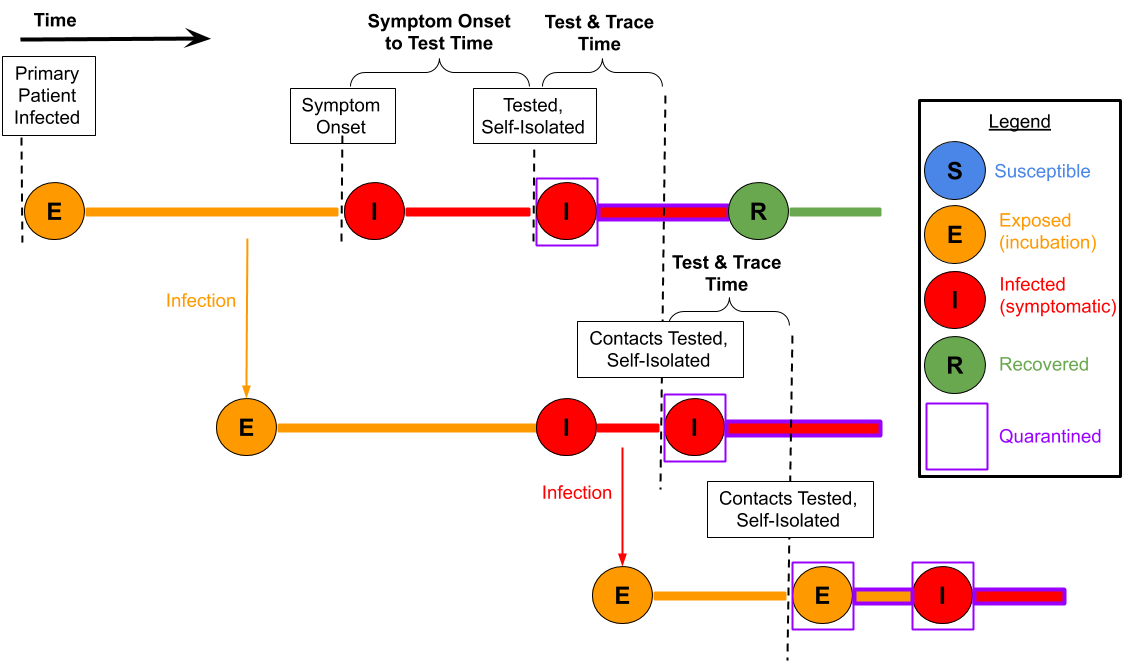
What determines the success of #COVID19#TestAndTrace?
Our SEIR on a graph says:
(i) Symptom Onset to Test Time (& to self-isolation)
(ii) Share of Contacts Traced
Less important:
(iii) Test & Trace Time: test turnaround & contact tracing time.
https://t.co/LoiC5hFPxe
1/
Hypothesis: One limit on the switch to a remote world is that the only safe way for a group to talk is in person. Better communication tools and more bandwidth can't fix this.