Decision models don’t generate text. They just pick the right outcomwe from a fixed list, with a probability.
For a trade: buy, sell, or hold.
It returns the probabilities and stops.
The interesting part is how you improve them without another GPU run.
Take two fine-tunes from the same base model, average the weights (a “soup”), and the merged model often beats both originals.
$SN127
SN127 taking over the decision model category.
A small model with a fine-tuned LoRA adapter will beat a frontier LLM on speed, cost, and reliability every time for bounded tasks.
Especially when sorting, tagging, routing, or scoring a massive index.
Zils cracked the JevBench top 10 🎉
Our z3-mini soup preview took the #10 spot. It’s a 4B model made by averaging the weights of three open decision models.
There should be a subnet for super tiny compute - not GPU focused.
Agents need tiny sandboxes 2GB RAM / 10GB disk, with a boot time of 5 seconds, even old hardware works here.
VM + routed inference which $TAO solves well for already = AgentBot
For the microVM - The issue will be uptime, how to containerise the data image fast enough so that if a miner did stop it could recover.
Control plane would manage that and encrypted up to Hippius. TEED would be needed for a trustless environment too.
X402 payments to allow the agents to manage themselves, and could be a good use case for the new Gamma token when it arrives in Bittensor. X402 with Gamma.
Taken a look - kind of.
They have solved for a VM up to 23hours.
What they then need to do is create the agent control plane which saves the VM image to a Hippius type location, then can be rebooted on another VM for another 23 hours in a few seconds.
All of the current offering is geared mostly at training runs.
There should be a subnet for super tiny compute - not GPU focused.
Agents need tiny sandboxes 2GB RAM / 10GB disk, with a boot time of 5 seconds, even old hardware works here.
VM + routed inference which $TAO solves well for already = AgentBot
For the microVM - The issue will be uptime, how to containerise the data image fast enough so that if a miner did stop it could recover.
Control plane would manage that and encrypted up to Hippius. TEED would be needed for a trustless environment too.
X402 payments to allow the agents to manage themselves, and could be a good use case for the new Gamma token when it arrives in Bittensor. X402 with Gamma.
needs to be no more complicated and TAO confused than this - https://t.co/S1shDqNyqE
underlying compute a subnet, normal product with x402 USDC for agents at most.
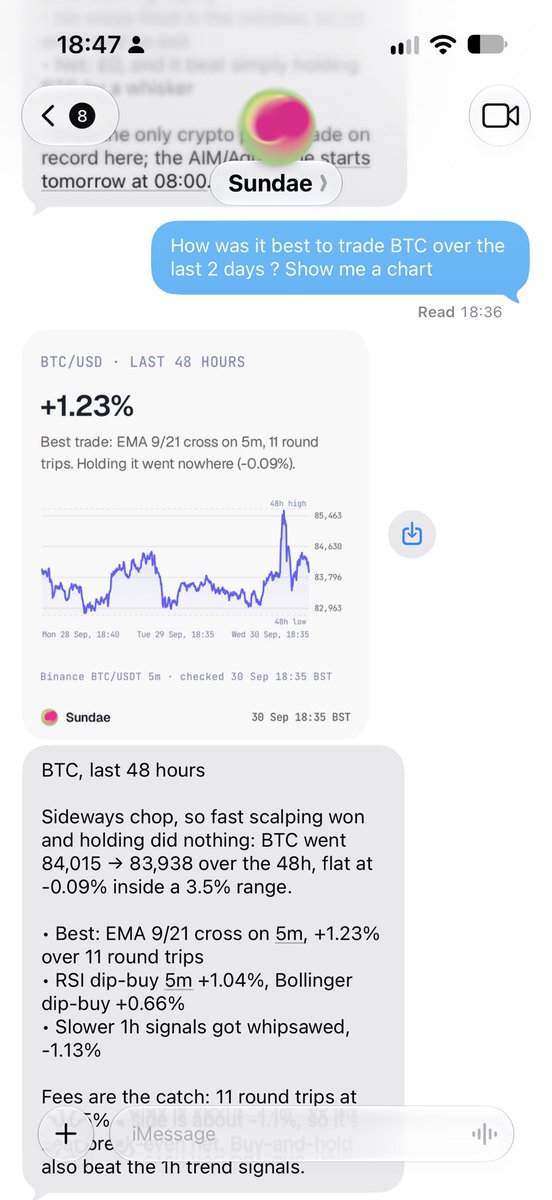
Unpopular opinion in testing JEV or Laya (Opensource JEV) performance was no better than a coin toss for any trading decisions.
Save yourself the time.
• 19,549 one-minute calls were right 46.6% of the time. Always betting "up" was right 46.7%.
• Net after fees: −12.8 bps a trade.
• On 7 days of news it had never seen, it went long 99.6% of the time, so it just copied the market.
Findings -
Speed doesn't beat analysis.
Where it's actually useful: sorting and routing text, not calling trades.
Test it against a simple rule before trusting it. As a safety check on commands, a basic pattern rule beat it 58% to 31%.
Its confidence scores didn't separate right answers from wrong. Measure that before acting on them.
Bittensor has great builders but needs more. The wall: ~500 bittensor:native ($150k) to register a subnet, and even more to run. This is a wall to innovation.
Proposal: a Bittensor venture fund, funded from subnet emissions.
a % of a subnets emissions routes into a pooled foundation fund (optional by owners). Distributed as grants to founders building on Bittensor. Grants can never be sold - only consumed for subnet services, or used to register a new subnet (burnt dTAO and TAO removed from pool).
Think AWS Activate, not YC cash. Infrastructure credits, locked to ecosystem utility by construction.
The grant ladder:
Start: consume alpha as infra to build your product on existing subnets
Prove it: keep building, keep burning registration costs for miners and validators
Graduate: burn pooled TAO to register your own subnet, or deploy it into an existing subnet's pool to take an alpha position
Founders move from tenant to owner without ever touching liquid TAO. The 500 TAO setup wall becomes a milestone, not a barrier.
Why this works where other grant programs fail: no sell pressure. Grantees can't dump. Every grant either creates value, burns supply, or locks into subnet liquidity.
Why the network opts in:
More builders = more demand for subnet services
Registration paths are pure burns — supply tightens
Pool paths lock TAO into ecosystem liquidity
Founders become long-term aligned operators, not mercenaries
Emissions already exist — this redirects a slice toward creation
Closed loop. Network emits → foundation grants → founder builds → founder consumes, burns, or locks into pools → supply tightens or liquidity deepens. Everyone aligned.
Most of what an AI/agent business needs is already on Bittensor. We don't need to redistribute TAO subnets through perfect democracy and control. We need firm visionary founders and supportive capital. Role of investor is invest. Role of founder is create value and return it.
TAO doesn't grow by splitting itself more fairly. It grows by making more of itself worth holding.
@AlgodTrading The pre dTao advantage needs to be corrected. For the current subnets in the top to move down - it’s effectively TAO failing. Which should not be the case.
Each subnet should trade on its own merit. This will also strengthen $TAO.
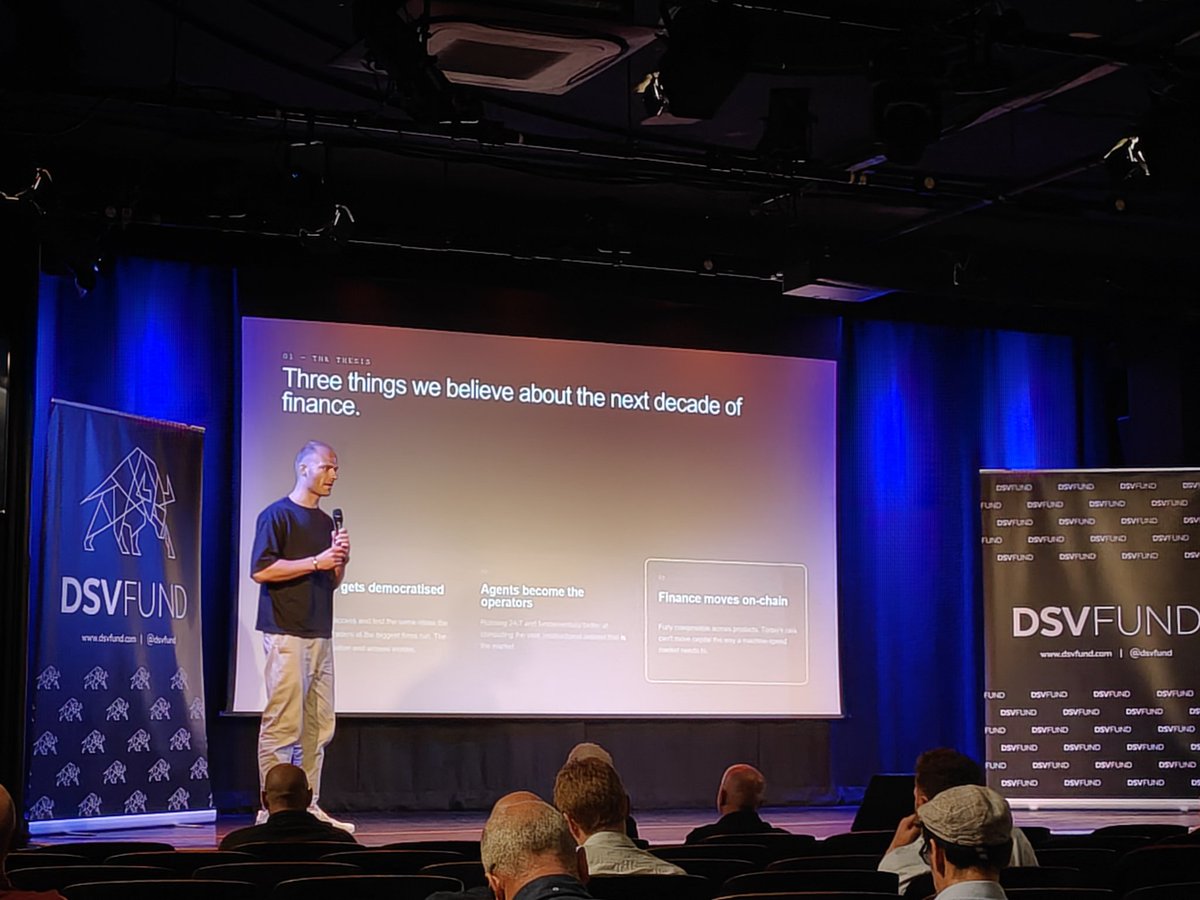
AI agents will rewrite financial markets.
1. Democratisation
Everyone gets a personal analyst. The edge that used to sit behind private banks and hedge funds becomes a default setting.
2. Always on
Agents trade 24/7. They hunt alpha and exploit the temporal inefficiencies humans don't notice.
3. On-chain by default
Agents move at machine speed. Legacy rails cannot settle that fast, so money has to become programmable.