Thrilled to announce that we just presented „MAGNet: Motif-Agnostic Generation of Molecules from Scaffolds“ at #ICLR2025 🧲
@j_m_sommer@Pseudomanifold@fabian_theis@guennemann
For those who couldn’t make it to our spotlight: https://t.co/lZjDLFCYcW
Finding good resources on efficient AI is harder than it should be. We're fixing that! 🚀 Check out our new https://t.co/mpwE01YXPX repo —a curated hub of the best tools, papers, and techniques to make AI faster, smaller, and cheaper.
Congrats to my amazing PhD students: We have 9 papers accepted at #ICLR2025. Reliability, AI4Science, graphs, LLMs, and more (https://t.co/O3f86agVaN).
And if you follow the recent discussions about AI efficiency, you might like our blog and webinars (https://t.co/MsohgAJRUZ).
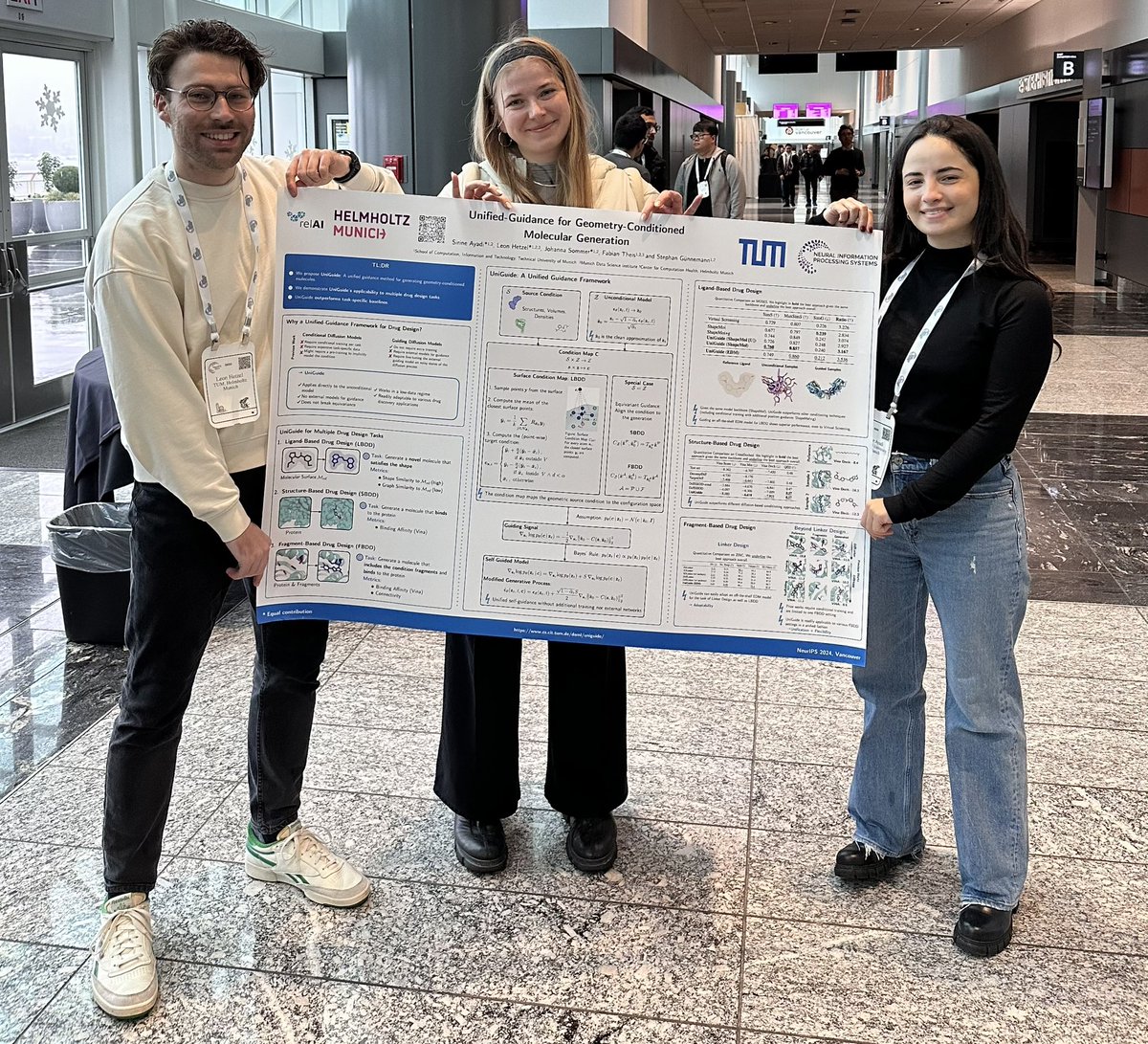
It’s rainy in Vancouver, poster hall is closed but we are ready 🙌
👉 Come and talk to us and learn about UniGuide at Poster#2600 (East)
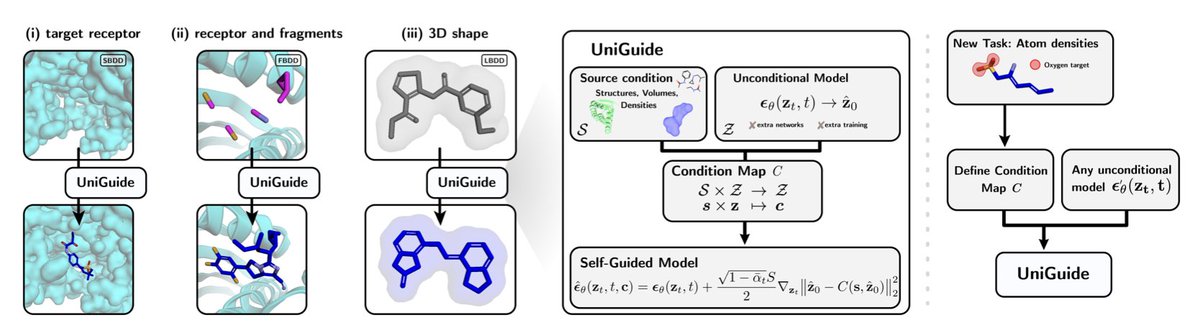
UniGuide is a new framework for molecular diffusion models that enables flexible geometric conditioning across tasks—no retraining required
This week, we will present our recent #NeurIPS2024 paper.
📎 Paper: https://t.co/92UJBKn4WZ
📆 Make sure to visit our poster #2600 on Fri, 13 December at 11 am!
Joint work with my amazing mentors @leon_het@j_m_sommer@fabian_theis@guennemann
Unified Guidance for Geometry-Conditioned Molecular Generation
• UniGuide introduces a unified framework for geometry-conditioned molecular generation using diffusion models. It provides a flexible method for controlled molecular design, eliminating the need for additional training or specialized networks.
• Key innovation: UniGuide employs “condition maps” to translate geometric constraints into actionable guidance, enabling applications in structure-based, fragment-based, and ligand-based drug design with a single model.
• Unlike traditional conditional models, UniGuide excels in handling diverse geometric constraints like surfaces, densities, and volumes. This versatility allows it to generalize across a range of tasks without the limitations of task-specific models.
• Performance benchmarks show UniGuide’s superior or comparable results to specialized approaches in drug discovery tasks, demonstrating its adaptability and efficiency.
• Applications include ligand-based drug design (LBDD) for generating novel molecules that match predefined shapes, structure-based drug design (SBDD) for ligand-pocket interactions, and fragment-based drug design (FBDD) for linking and growing molecular fragments.
• UniGuide’s method decouples training from conditioning, making it robust in data-scarce scenarios. It demonstrates state-of-the-art performance across ligand similarity, binding affinity, and drug-likeness metrics.
@guennemann@fabian_theis@j_m_sommer@leon_het@sirine_ayadi1
📜Paper: https://t.co/XSPi4vPvjF
#MolecularDesign #DrugDiscovery #GeometryConditioning #AIinBiology #GenerativeModels
11 exciting news: Our group has 10 papers at #NeurIPS2024 (incl. 1 oral + 2 spotlights) 📃🎓. And as of October 1st, I am on entrepreneurial leave 🚀. Re papers: Congrats to all co-authors. Amazing work! https://t.co/poxiW14P1I Re startup: We are hiring! https://t.co/7iKVJhifSy
Three papers @NeurIPSConf 2024 🎉
An efficient adv. training algorithm for LLMs
https://t.co/TSCTNNremX
Unlearned LLMs are not safe against adv. attacks
https://t.co/dN1jeXKgR5
Scaling robustness of Lipschitz-1 networks
https://t.co/4XH6lVTDD6
Happy to chat in Vancouver!
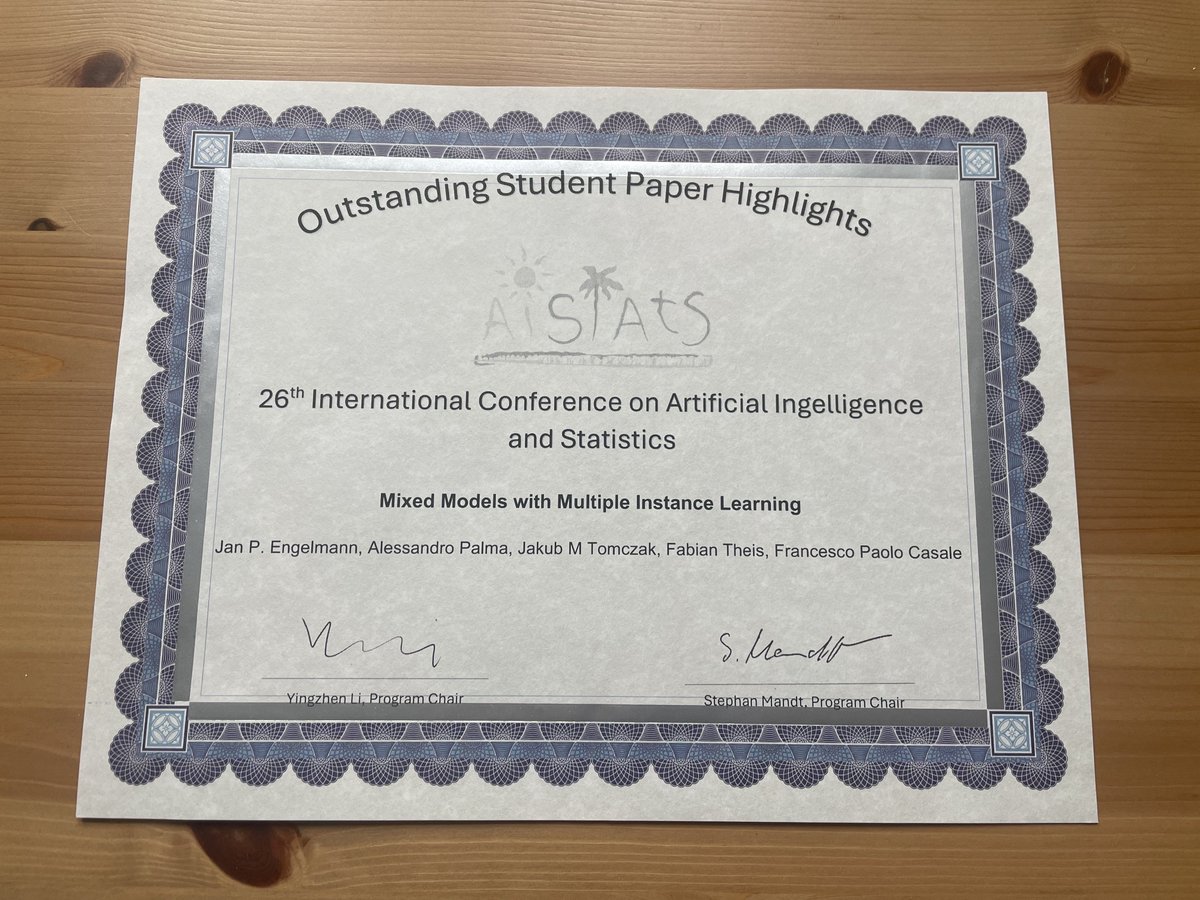
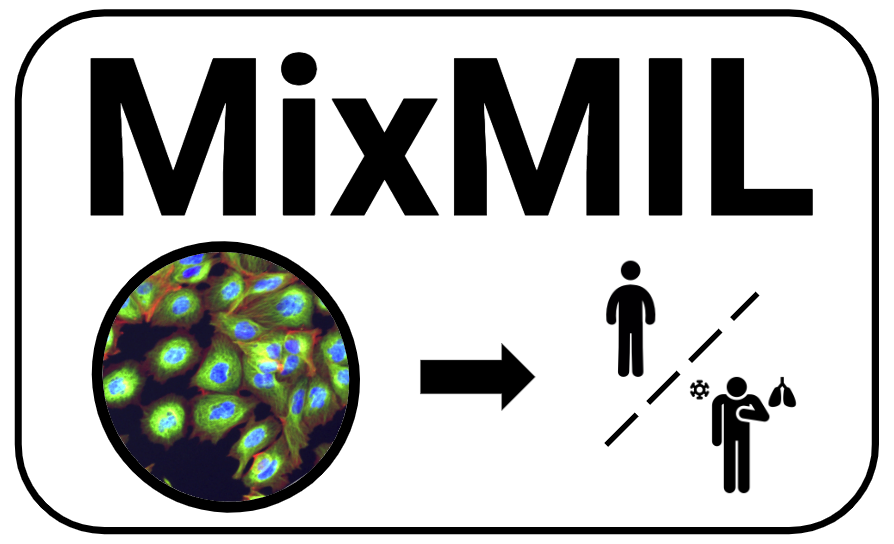
Mixed Models with Multiple Instance Learning (MixMIL) received an Oral & Outstanding Student Paper award at @aistats_conf last week! 🏆
MixMIL enables accurate & interpretable patient label prediction from single-cell data by adding attention to GLMMs.#singlecell#MachineLearning
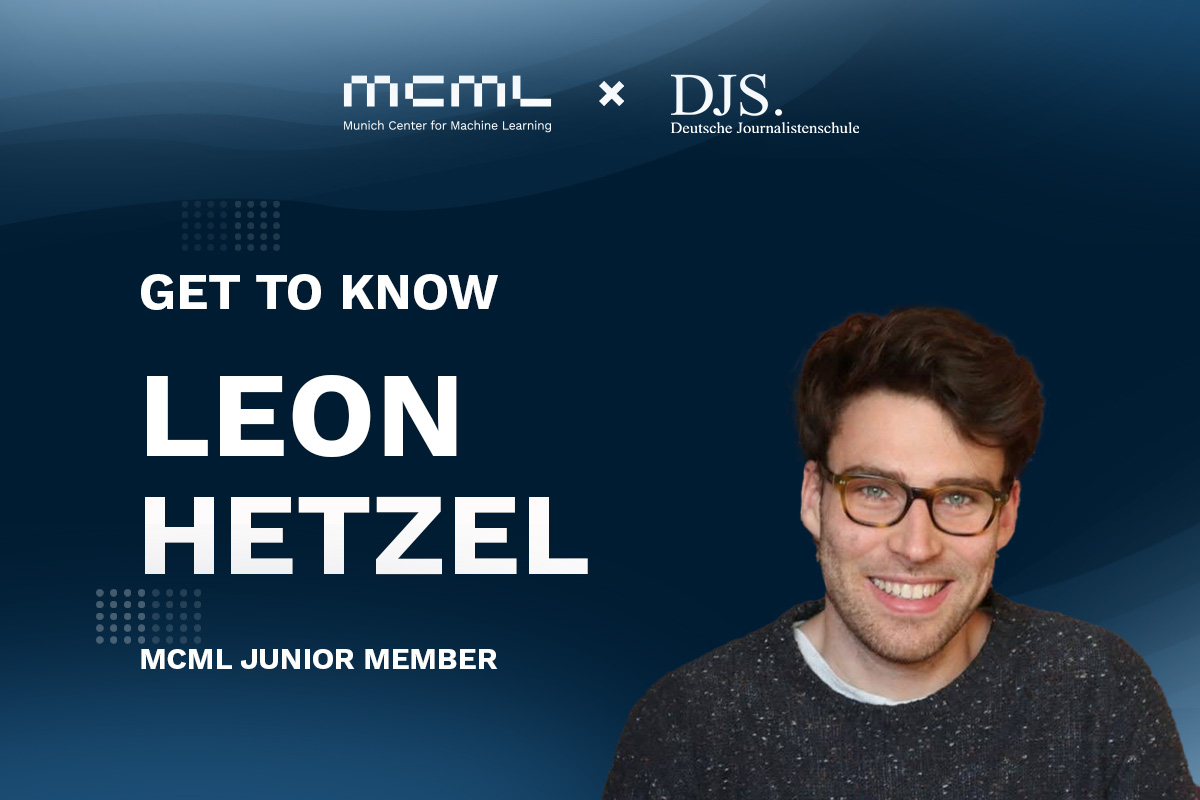
Get to know #mcml junior member @leon_het 💡
He developed an algorithm called chemCPA designed to make drug discovery more effective. Read more (in German): https://t.co/cpW09cwTRo
This article was written by @leonie__fischer from @DJSde!
Thrilled to present our paper "(Provable) Adversarial Robustness for Group Equivariant Tasks" at #NeurIPS2023!
Joint work with great collaborators @YanScholten @guennemann!
Paper: https://t.co/XXXdUmvlvn
Poster #800 Thursday 11 am - 13 pm #NeurIPS
Is binarization of scATAC-seq data really necessary? The conclusion from our analysis is that a quantitative treatment is in fact beneficial. Now out in Nature Methods! @gagneurlab@fabian_theis https://t.co/UdFyU8fpYz
Many additions since the preprint 👇(1/n)
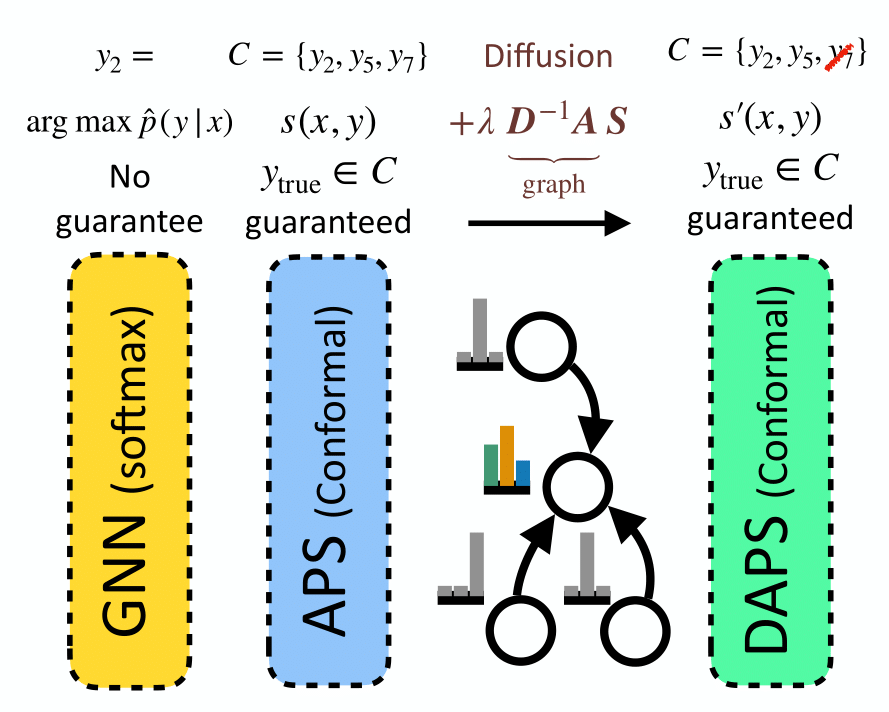
Do you care about uncertainty quantification? Do you like guarantees? Check out our #ICML2023 paper where we bring conformal prediction to Graph Neural Networks.
tldr: Instead of a single label return a *set* that is guaranteed to contain the true label. Set size = uncertainty.
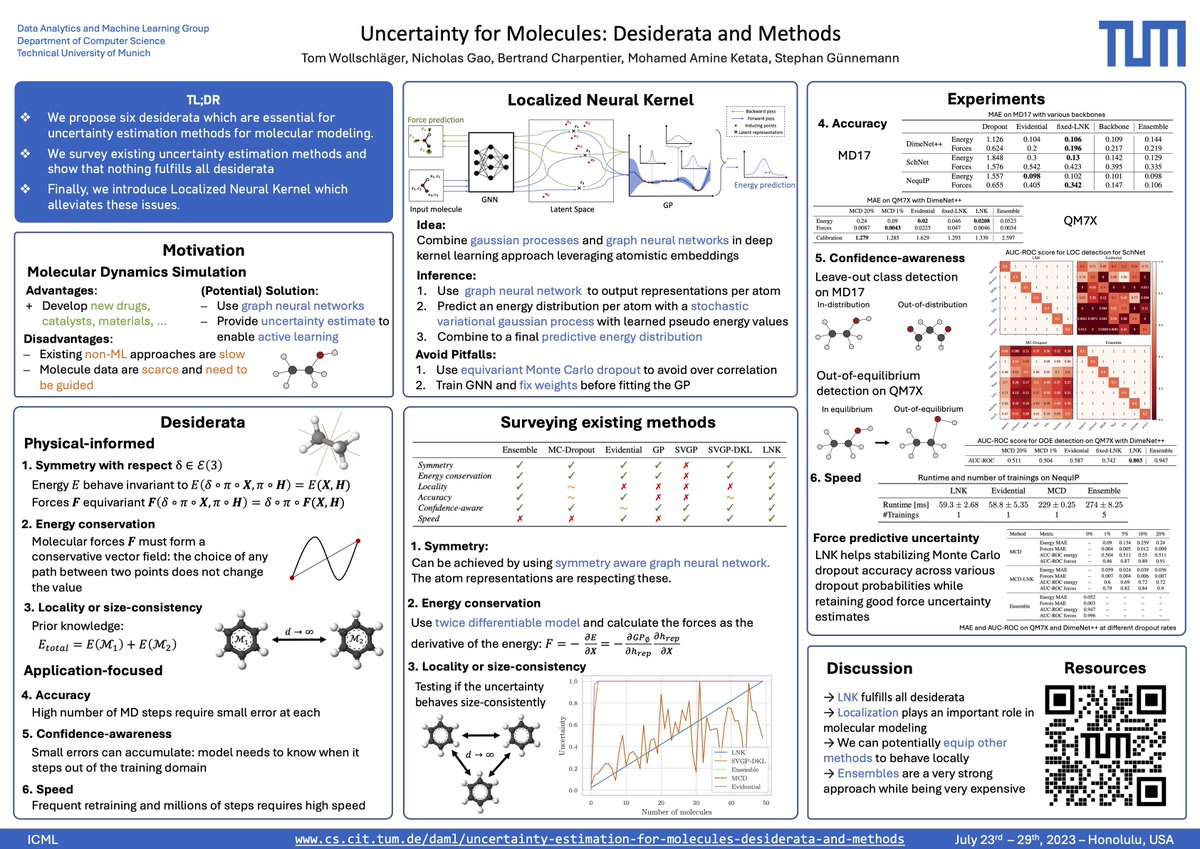
If you are interested in ML potentials and/or uncertainty estimation come and visit our presentation of "Uncertainty Estimation for Molecules: Desiderata and Methods" this week at #ICML! Tue, 11am, #415
Joint work with @n_gao96@Bertrand_Charp@amine_ketata@guennemann
1/2
1/9 CPAis finally published. It can predict single-cell responses to combinatorial perturbation (drugs, CRISPR). This is a joint collab between @meta and @fabian_theis@HelmholtzMunich. Read the thread to understand the LEGO analogy! https://t.co/Ia87dfgdBF
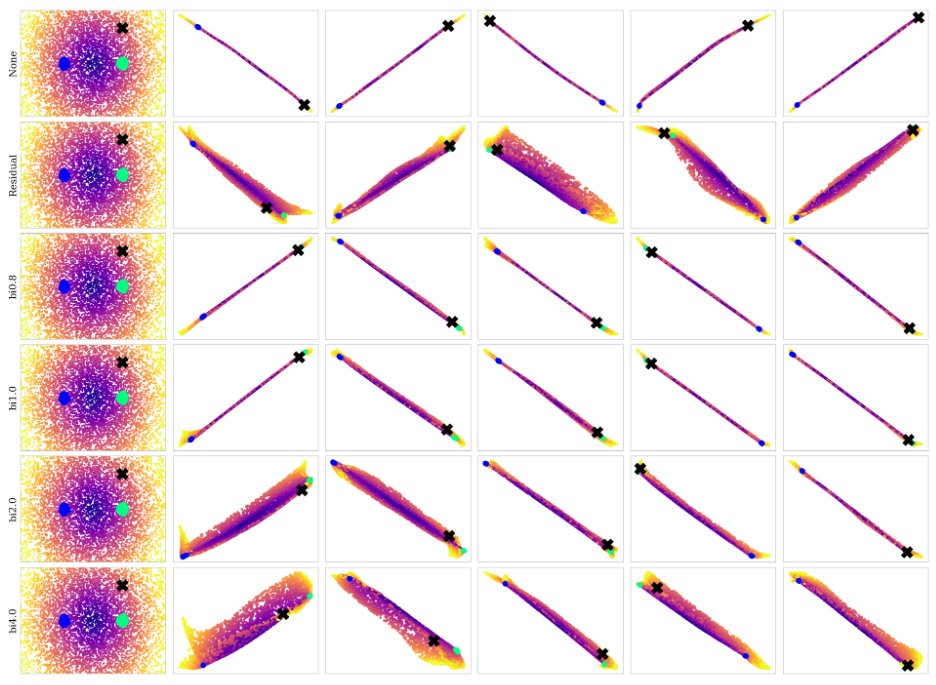
Happy to announce our new paper on Deterministic Uncertainty Methods @TMLunLimited#ICLR2023 !
We dissect how the design of training schemes, architecture, and prior can significantly impact feature collapse and uncertainty performance!
w/ C. Zhang and @guennemann
📺New video: Curvature for Graph Learning📺
Presenting, among other things, current work with (i) @JoshSouthern13, @jeremy_wayland, @mmbronstein and (ii) @CorinnaCoupette and Sebastian Dalleiger.
Very excited about this research direction!
https://t.co/pZd9SbP6nA