I have no words to describe how special is to be part of the #SCIONY community 🥰 thanks @rockedu_ for the opportunity to collaborate with you 🤓 Leonora Olivos Cisneros - RockEDU https://t.co/swMoRRiFEy
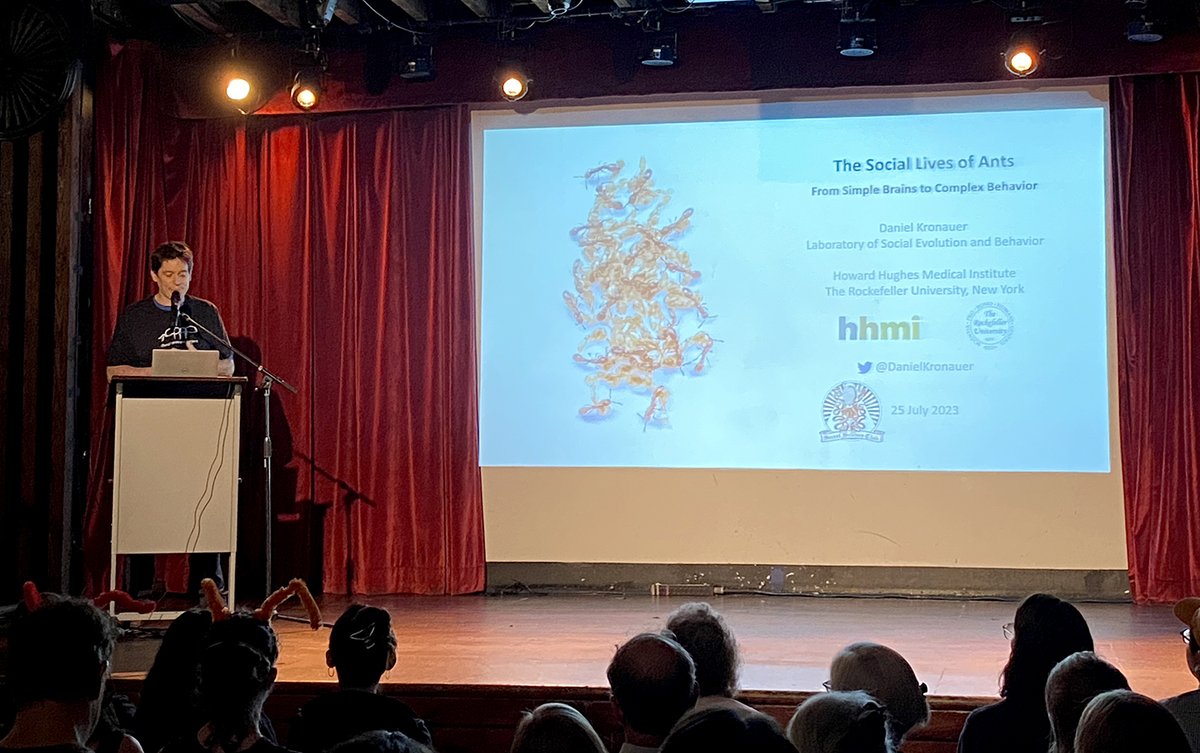
This week @DanielKronauer brought the ants to the people @BellHouseNY through the fantastic @SecretSciClub series. The audience asked a ton of smart questions, and the entire lab turned out in custom tees to represent their Clonal Raider Ant Project!
Muy agradecida por la amena charla con @Geraldinecastf y la oportunidad de compartir con @wiredenespanol un poco de lo que hacemos para tratar de entender la conducta de las hormigas 🐜
En @wiredenespanol estamos de mantel largo porque @leonoraoc nos contó a detalle cómo usan ingeniería genética para estudiar neurobiología en hormigas🐜
@Geraldinecastf talked to @leonoraoc about our recent paper on transgenic ants and how they sense alarm pheromones, and then wrote about it for Wired. It’s a great read / es una lectura fantástica:
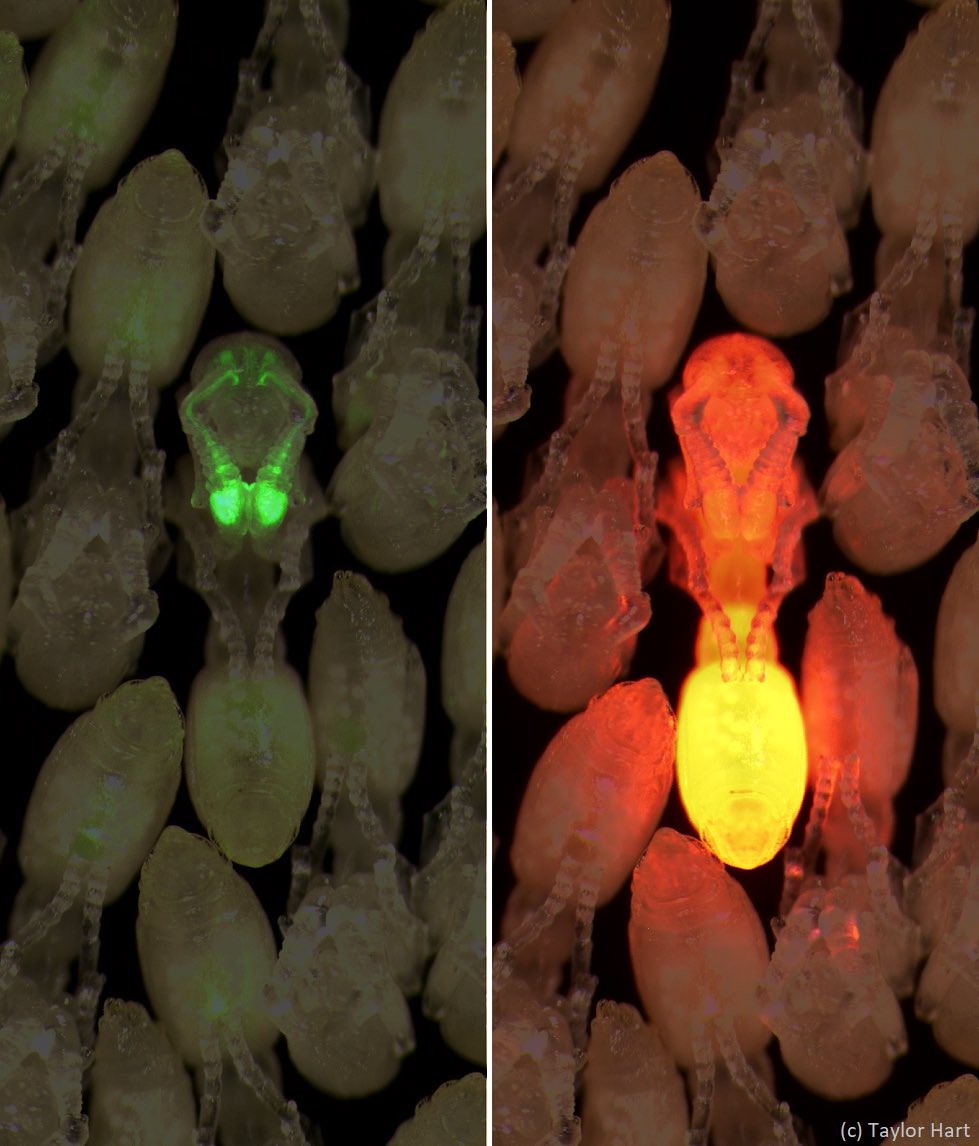
Researchers in @danielkronauer's lab have created the world’s first transgenic ants, whose olfactory sensory neurons flash neon green in the presence of odors. Using this new experimental system, they've shed light on how colonies respond to danger signals.https://t.co/meuW9G5jPG
We have so much to learn about the social brain, the future of ant research is bright ✨🐜✨
Such a privilege to be part of this amazing team @RockefellerUniv@DanielKronauer
Our first neurogenetic study of ants survived peer review and just appeared OA in its final form @CellCellPress@CellPressNews: https://t.co/RJj0eas8a1. @teraxurato & team @RockefellerUniv created the first transgenic ants and identified a sensory hub for alarm behavior. 1/8
Work by twitterless MD/PhD student Iryna Ivasyk, in collaboration with @Schmitz_Lab: clonal raider ants develop normally despite greatly reduced DNA methylation, but they don’t lay eggs without a functional DNMT1 enzyme.
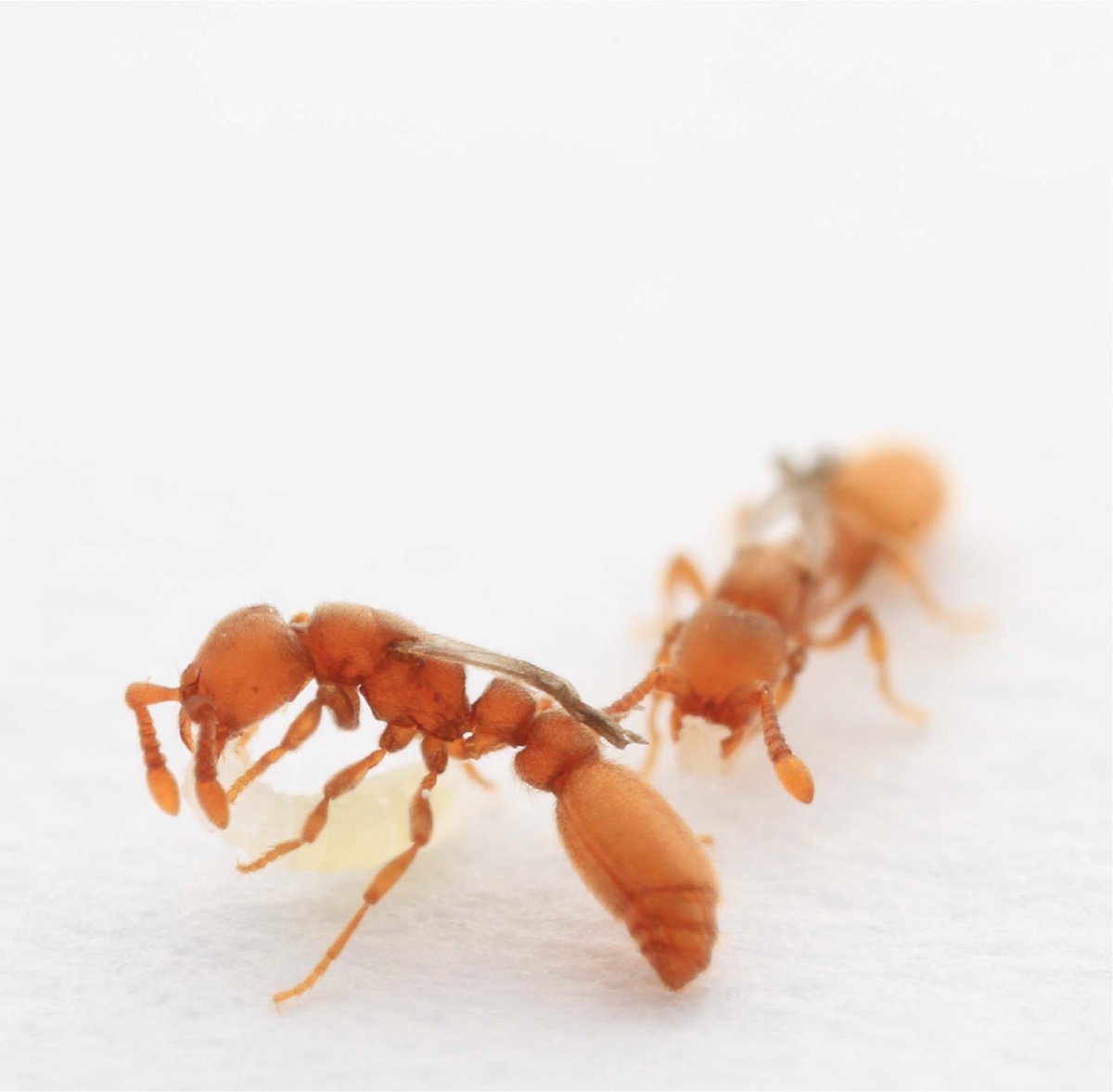
Hey friends, today our 7-year queen-like mutant project is out in Current Biology. These mutant raider ants show the core traits of parasitic ant species, but arose in a laboratory stock just a handful of generations before we discovered them -- probably due to a mutant supergene
First transgenic ants are teaching us so much about the neural basis of social olfaction 🐜 I’m really grateful to be part of this amazing team 🐜 #science#antScienceRocks@RockefellerUniv
Out on bioRxiv today: the first transgenic ants (in Christmas colors) provide some really cool insights into how the complex ant olfactory system works, and how general odorants and pheromones are represented in the ant brain. An absolute tour de force led by @teraxurato: