Our study of developing human striatum and inhibitory neurons using 3D-genome conformation+DNA methylome+spatial RNA is online @CellCellPress along with a series of incredible studies of the basal ganglia by @NIH BICAN groups
https://t.co/sifkGNn091
Unlocking the full potential of spatial omics in plants: practical challenges, solutions, and a path forward (Min-Yao Jhu , Max Minne , Ziliang Luo , Hannah Dörpholz , et al) https://t.co/5wY1bS8BWz @ASPB#PlantSci
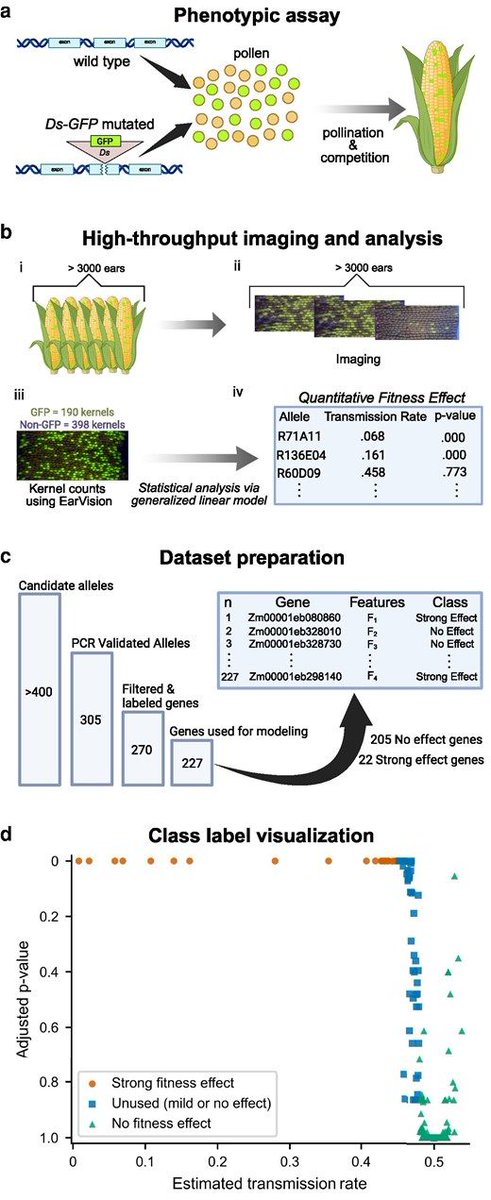
Successful predictive modeling of pollen fitness phenotypes is enabled by measures of expression specificity (Sebastian A F Mueller , Zuzana Vejlupkova , Molly Megraw , John E Fowler) https://t.co/xOlZpRkxDX @ASPB#PlantSci
The Peanut Innovation Lab at UGA is hiring a Project Administrator, Project Manager, Impact Specialist and Business Operations Professional. All four positions are in Athens and open until filled. Please share with anyone who might be interested.
https://t.co/keB9PWRXKb
Happy to share our latest publication! Huge thanks to Dr. Layla Schuster, for her outstanding work!
Explainable AI identifies recombination and chromatin environment as key predictors of subgenome evolution in maize and Brassica | Science Advances https://t.co/ezKFvTNBFA
Happy to announce that registration for our workshop “Transcriptional Reprogramming in Plants 🌱” is now open!!!
Featured invited speakers meet with ample talk slots for participants — for information visit: https://t.co/QRr3oMXSPQ
#PlantScience#Workshop#cutandrun#Arabidopsis
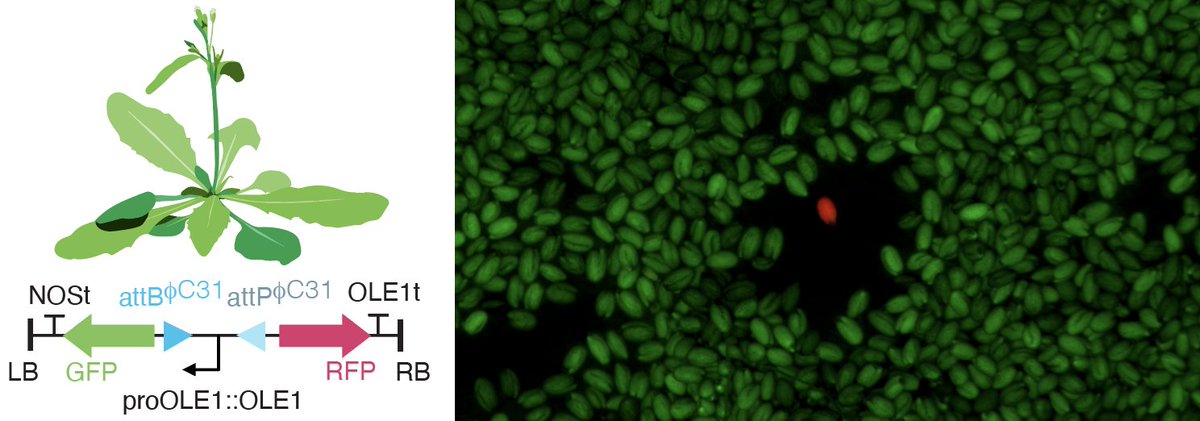
What drives T-DNA integration? We couldn’t get a convincing answer with existing tools, so we built one!
Our new preprint introduces a synthetic biology approach to tracking T-DNA delivery and integration in plants 🌱 https://t.co/0yO1CWt9rn
Excited to post my lab's latest pre-print, led by the phenomenal Anna Dmitrieva!
Anna asked the question - what happens to epigenetic inheritance when you lose (almost) all DNA demethylation activity?
https://t.co/hFSizYNiRM
Our latest, sent on behalf of the outstanding but X-less Aidan Keith: OPTIMuS PRIME-Del uses paired prime editing to program targeted deletions at candidate enhancers, while concurrently replacing them w/ a molecular tag to verify & quantify deletions 1/7
https://t.co/iq41mejHGG
Seed number per pod is a difficult trait to move in soybean. Stacey and colleagues found a mutant that takes four-seeded pods from about 3% to nearly 30%, and CRISPR knockouts of GmNAT1 and GmULT genes raise four-seeded pods without hurting seed weight or pod number. Cool work! https://t.co/KAckCuscgy
What distinguishes successful from failed reprogramming to iPSC? In this new preprint, part of our @IGVFConsortium efforts, we used single cell methylation, Hi-C, RNA and ATAC, and spatial RNA to answer this question https://t.co/dKtCnB91sl
In our new study led by @molivarina we found an unanticipated layer of cell identity in the plant root. A subset of cells in every cell type shares a common environment-responsive state, and their frequency shifts with conditions such as water availability https://t.co/yX6yi5OCZi
In our new Current Opinion paper, we pull together a few strands of research on the scenarios in which epigenetic fidelity is compromised in plants & what this might mean for gene editing and crop improvement
https://t.co/JZrekcE5u3
For busy people, it's a short read and at the very least can point you towards some papers that are influencing our thinking. For anyone interested or frustrated by tissue culture, transformation or somaclonal variation - it's worth reading!
Very excited to be part of the 2026 #PackardFellows from the Packard Foundation!
https://t.co/LqgZhTsry7
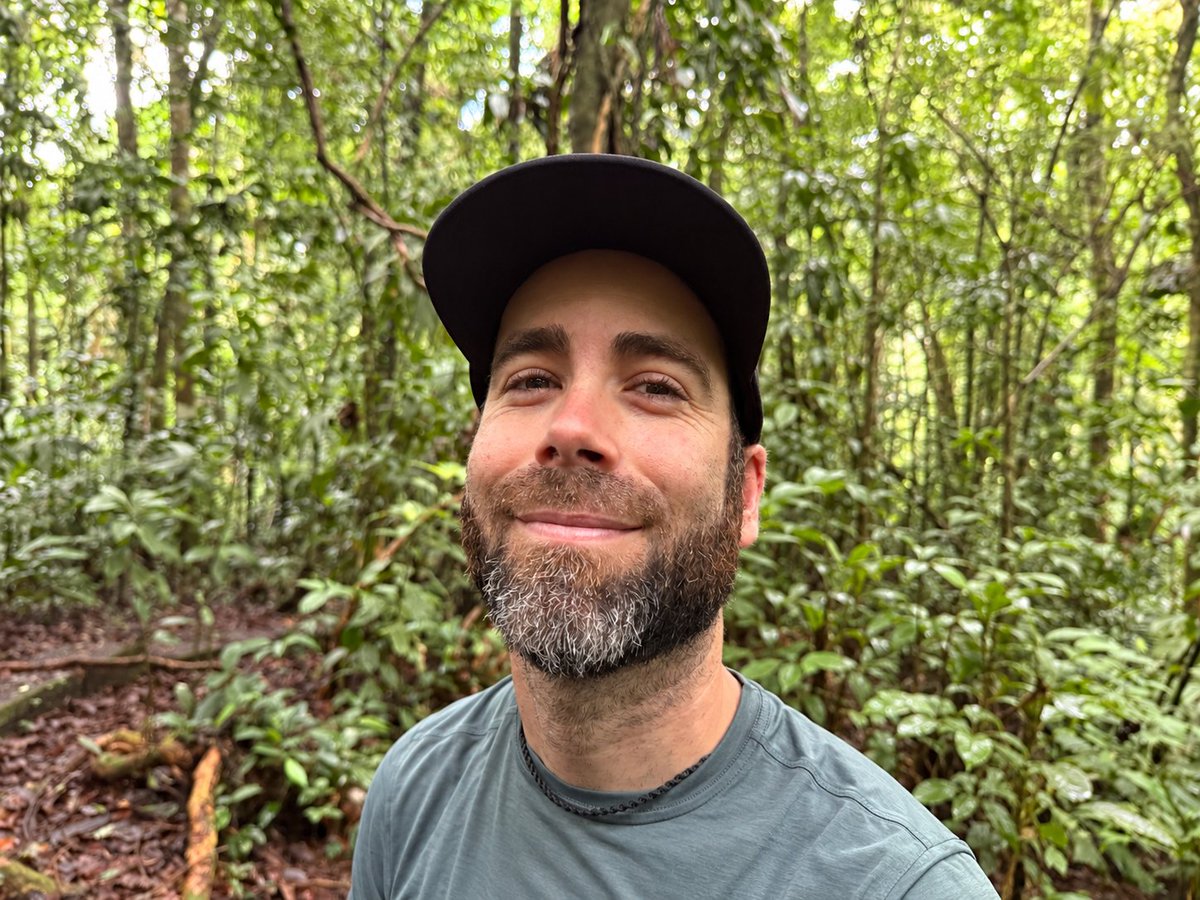
This will enable us to pursue bold studies of rapid evolution in plants, from the Arabidopsis plant to neotropical rainforests!
Press @UCBerkeley
https://t.co/5Gvql5LmlT
Agentic models can act, observe consequences, and decide what to do next.
This is great for coding, but if you want them to do science, lab experiments take forever.
To fix this, we made a lab-in-the-loop with zero latency!
1/10