Since Bridge joined @stripe last year, company has gone all in on stablecoins. From products to infra, they are adopting and integrating.
We extended Stripe's Global Payments and Treasury Network (GPTN) to support stablecoins without building a parallel system.
Learn how below!
Big launch today: Aethir now offers Managed Kubernetes as a Service. 🚀
- GPU-accelerated K8s clusters.
- Bare-metal performance.
- Self-service API.
- Zero egress fees.
Built for enterprise AI teams that want to ship models, not manage infrastructure. 💻
Bridge CEO @zcabrams on how stablecoins will lower traditional card fees:
"There will be the emergence of infrastructure that provides fraud and chargeback prevention and so on, but gets rid of all the bank fees because you no longer need a bank–you have a wallet."
"You'll have a payment method that has all the benefits of a card, but is one-fifth to one-tenth the cost and enables instant settlement."
In conversation with @rhackett@a16zcrypto
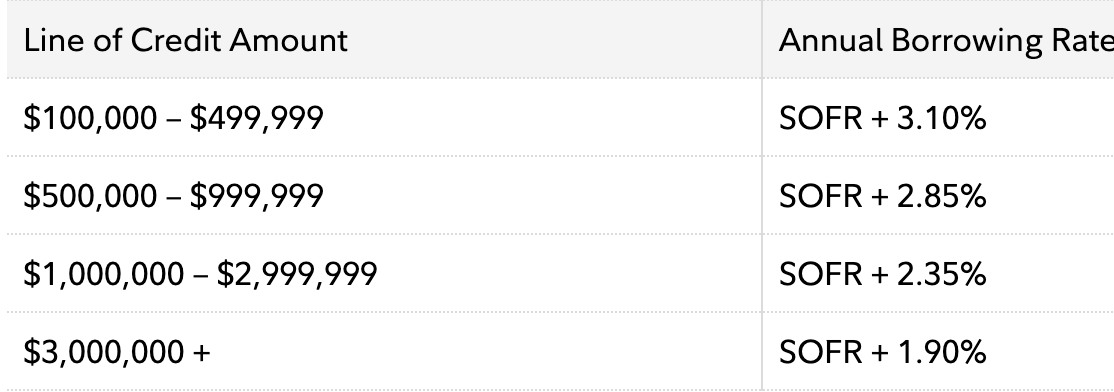
in world where every asset is tokenized, borrowing costs are going to come down dramatically
lets say someone has $1m in a SP500 index fund and $1m in ETH. they want to borrow $100k collateralized by their assets.
most would assume it'd be cheaper to borrow against the former
borrowing against ETH is 1/3 the cost (2.25% vs ~7%). The savings is driven by tokenization + smart contracts
one card. global coverage.
@chippercashapp is building for africa. @SlingMoney for the US and latam. @airtminc, latam and asia.
millions of consumers and business now have access to better financial infrastructure.
learn more below
We just saw the lowest reading on the Bitcoin Fear and Greed Index in history.
Lower than FTX and COVID.
But the true believers are getting excited because their favorite asset is now on sale.
Stripe isn’t just incorporating stablecoins into its product, but embedding it throughout the company as a core tool for operational efficiency. This week the Stripe Treasury team started using stablecoins to rebalance its own internal treasury between the US and Mexico, similar to how many of our other customers, such as SpaceX and DFelix, use Bridge today.
“Why did it take two hours, shouldn’t it be instant?”
A stablecoin sandwich includes two legs, USD->stablecoin and stablecoin->MXN. Unfortunately, we are still dependent on the US payments system (in this case wires) to mint stablecoins, which can take anywhere from 10-120 minutes to leave Bridge’s bank and land at the issuers. Once on-chain, sending wallet to wallet, trading into MXN, and sending via SPEI take minutes.
A small step for stablecoins, but a giant leap for further adoption. In time we’ll be able to get this down to minutes end-to-end, but it’s already a 10x improvement over multi-day settlement.
stripe moved $14M to Mexico using @Stablecoin
traditional rails: T+2 days
bridge: <2 hours
corporate treasury is one of the largest unlocks for stables—we're finally upgrading global treasury flows from dial-up to fiber
One of my favorite lessons I’ve learnt from working with smart people:
Action produces information. If you’re unsure of what to do, just do anything, even if it’s the wrong thing. This will give you information about what you should actually be doing.
Sounds simple on the surface - the hard part is making it part of your every day working process.
we're partnering with Sui to launch a native stablecoin for the Sui ecosystem. USDsui will be built on the @stablecoin Open Issuance Platform.
Every ecosystem should control their money, which primarily means 2 things:
(1) Own the economics. Use stablecoin revenue to incentivize behaviors, lower costs and fund future investments, and
(2) Control the roadmap. With your own stablecoin, you control smart contract functionality ensuring this asset works uniquely well within your ecosystem.
Excited to see Sui taking full advantage of what stables enable - and to partner with them to maximize value for their community.
What people don't see is that this is bullish @AerodromeFi and bearish @Uniswap...
People are predicting Aero's announcement on Wednesday is expanding across the EVM & if that's true, Uniswap got rattled and tried to rain on Aerodrome's day with this news (oops)
The reason why Aero is kicking Uniswap's ass on Base (~2:1 volume dominance) is because LPs only care about return per dollar of liquidity contributed. Aero is winning on that.
If Uniswap is turning on the fee switch, that means LPs will make even less or fees to trade on Uniswap will be jacked up higher
Rock and a hard place
Good post on evolving stablecoin market structure. I would extend it further: yes, I think that stablecoin issuers are going to have to share yield with others, but this is just one instance. Everyone is going to have to share yield. Today, the average interest on US savings deposits is 0.40% (FDIC data), and $4T of US bank deposits earn 0% interest.* Things aren't better in the EU: 0.25% average interest on non-corporate deposits; corporate deposits just 0.51%.** In my view, this is going to change: depositors are going to (and should!) earn something closer to a market return on their capital.
(Some lobbies are currently pushing, post-GENIUS, to further restrict any kinds of rewards associated with stablecoin deposits. The business imperative here is clear -- cheap deposits are great -- but being so consumer hostile feels to me like a losing position.)
* See FRED's memorably-titled QBPBSTLKDPDOFFDPNIDP time series.
** MIR.M.U2.B.L21.A.R.A.2250.EUR.N and MIR.M.U2.B.L21.A.R.A.2240.EUR.N from the ECB.
Patrick (and by extension, @nic_carter) are correct. Stablecoin issuers will end up paying out all of their yield, one way or another. This will put a lot of pressure on banks that don't. They'll have to pay up.
The fact that banks don't pay competitive interest on deposits was never a pre-ordained optimal design for the economy. It was more of an accident of history, fueled by the lack of better technology and regulatory moats. Today, it's more of a policy decision.
The banking lobby argues this impedes credit creation, but banks are not non-profits. They make money from not paying more on deposits. So bank profits will have to go down.
The world doesn't yet recognize how economically impactful such a change will be. In its most recent earnings, JPM forecast $95 billion in net-interest margin income for the next 12 months. That's more than half of its 2024 revenues.
BoAs NIM is in the $60 billion range, Citi somewhat lower. Not all of it will disappear due to stablecoins, but most might, eventually.
Put together, I'd estimate a quarter trillion dollars that may someday not go to bank shareholders. The world is not ready for the economic impact of this - we are talking some of our largest and most profitable corporations.
More importantly, the quarter trillion that doesn't go to banks will go to corporations and individuals, the depositors. Imagine the economic impact of this - a massive stimulus if there ever was one.
But of course stablecoins aren't just desirable because they'll pay yield, they also offer instant settlement. The eventual disappearance of delayed settlement is another way stables will deprive banks and other payment providers--including Stripe--of income and give it back to customers.
For example, the US Government pays around $1.5 trilloin in social security benefits annually. Most of it goes out via ACH (T+2 business days), some of it via even slower methods like prepaid debit cards and checks.
That's $1.5 trillion dollars, the yield on which does not go to the US government or retirees, for several days a year. We are talking billions in profit for the banking system and card issuers.
Same goes for the even larger amount paid by all corporations in payroll, the lost float on your rent payment, wires that take 3 days to settle, etc etc.
The current architecture of banking and payments is predicated on someone else getting the yield on your money for some period of time, and charging you transaction fees on top of it for the privilege of not getting yield. Many FinTechs offer faster settlement, but for an additional fee.
The payments industry, which includes banks, has over $3 trillion in annual revenues. Thanks to stablecoins, but really public permissionless blockchains, some substantial percentage of that will someday stop going to the payments industry and instead go back to payers and payees.
One of the largest sources of economic rent, eliminated.
The world is not ready for this. But it will be glorious.
Today’s @phantom release is a monumental moment. It is the first integration that showcases the full power of what developers can build on top of a combined @stripe and @Stablecoin.
In one API, you get
- Stripe Link user onboarding and profiles
- Card on-ramps and risk analysis
- Virtual accounts for direct deposit
- Custom stablecoin issuance
- Cross border FX
- Consumer card issuance
Phantom is no longer just a wallet, but a digital stablecoin account seamlessly interact with the global financial system.
Launching Open Issuance
Stablecoins have arrived. Two years ago, we still faced a degree of skepticism over if and how financial services would adopt stablecoins, but today we’re seeing neobanks, remittance companies, creator platforms, marketplaces, treasury teams, and more all use stablecoins to grow their businesses.
That being said, it’s abundantly clear that while stablecoins are on their way to becoming core global infrastructure, there are some meaningful gaps to fill.
Currently businesses build with one of two major stablecoins, USDC or USDT. Circle and Tether have pioneered this space, and they’ve been (rightfully) rewarded for doing so. But an off-the-shelf solution will only take you so far. It’s like choosing a car for a big race—you’d want to assemble it carefully, selecting the right parts and customizing the design, rather than picking a factory sedan.
For instance, if you’re using an off-the-shelf stablecoin to build a neobank -
- You can’t fully access the rewards to build the best possible savings account,
- Your reserve mix cannot be customized to support increased liquidity or higher earnings, and
- You’d have to pay a 10bps redemption fee to withdraw your own money!
The status quo just isn’t good enough. If we want to maximize the impact stablecoins can have globally, we need to allow businesses to select the right parts and customize the design.
That’s why we built Open Issuance, a new platform that enables any business to create a stablecoin. With Open Issuance, you can:
- Customize the smart contracts to ensure this stablecoin meets your unique needs
- Issue on any desired blockchain(s)
- Adjust reserves composition and management strategy
- Fully participate in the reserve economics
- Control mint and burn fees (so you never pay to withdraw your own funds)
- And so much more
But what about liquidity? For a stablecoin to work, you need to make it easy to access, use and move. Through Bridge’s APIs and our new permissionless interoperability network, you can instantly convert between any two dollar formats, including all existing stablecoins (USDC, USDT, etc.), supported fiat currencies, and Open Issuance assets. Seamlessly convert your stablecoin into USDT and then into Mexican Pesos; convert Euros into USDC and then into your stablecoin; and so on.
And unlike building a car, this customization comes at little-to-no additional cost. You get better economics, day 1 liquidity, and interoperability with just a few lines of code.
We’re excited to unlock a whole new set of capabilities that builders around the world can use to create improved money experiences. We’re launching today with partners including Native Markets (USDH), Phantom (CASH), Metamask (mUSD), and Dakota (DKUSD). Each is using Open Issuance to build world-class stablecoin products.
The stablecoin market is early – come build with us and help shape the future. Get in touch at bridge[.]xyz