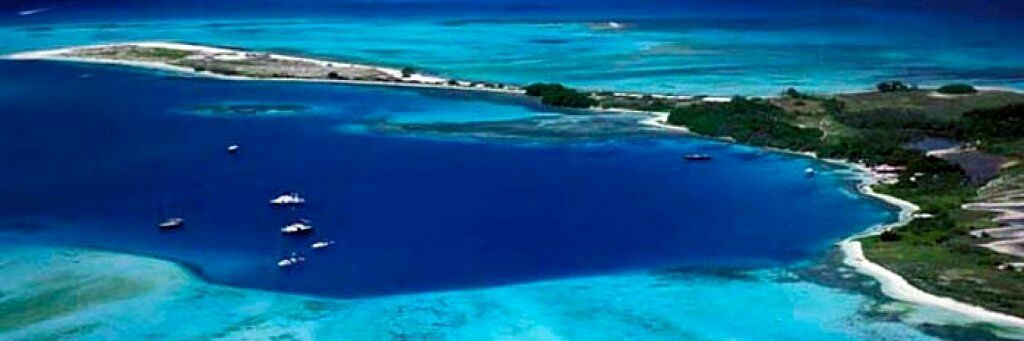
El 3 de sep. de 1976 la tragedia de Las Azores apagó sus voces, pero jamás su legado. A 50 años, el Orfeón Universitario de la UCV renació de las cenizas y hoy sigue cantando por ellos.
Su voz se sigue oyendo en esta Universidad 💙🖤
Con todo lo que hemos vivido aquí, no había visto esta noticia: ¿saben quién es el nuevo vocalista líder de la banda Chicago? ¡El cantante venezolano Rudy Cárdenas, nacido en el estado Táchira!
https://t.co/QekqKHp8p5
¡Qué viva el Táchira
y qué viva Rudy Cárdenas! 🙌🏻🇻🇪
Meanwhile, in Bangkok, Thailand’s prime minister sang “Let It Be” and “Blowin’ in the Wind” as Singapore’s prime minister played guitar.
#Thailand#Singapore
Marina cerca de Les Saintes-Maries-de-la-Mer es un deslumbrante óleo sobre lienzo realizado por Vincent van Gogh en junio de 1888.
Medida en 50.5 x 64.3 centímetros, la obra reside en el Museo Van Gogh de Ámsterdam.
Centrarse en un detalle de este lienzo permite apreciar de cerca una de las revoluciones técnicas y emocionales más puras del Postimpresionismo.
Al observar de cerca la superficie del oleaje, se puede apreciar el uso de la técnica del empaste (impasto), donde Van Gogh aplicó la pintura directamente sobre la tela con una espátula además de pinceles audaces.
En una famosa carta enviada a su hermano Theo, Vincent describió que el mar Mediterráneo tenía "un color como el de la caballa, es decir, cambiante; no siempre se sabe si es verde o púrpura, o azul...".
Para capturar este efecto lumínico, el detalle del agua muestra cómo intercaló líneas puras de azul ultramar y blanco con vibrantes trazos de verde y amarillo.
Otro detalle célebre se encuentra en la esquina inferior izquierda. Su firma en rojo brillante ("Vincent") no fue colocada al azar, sino dispuesta deliberadamente sobre los tonos verdes del agua para crear una vibración óptica a través del contraste de colores complementarios.
Marco de la imagen generado con apoyo de Grok
More mileage can help marathon performance, but how much is too much? One runner tested the limits while chasing a new PR.
Read about his experience, and what you can learn from it: https://t.co/9zrzT4KKOO
La historia no ocurrió por capítulos. Todo esto estaba ocurriendo al mismo tiempo.
Este gráfico intenta comprimir unos 5,000 años de historia en una sola imagen. Es inevitablemente incompleto y simplifica muchísimo, pero tiene una virtud extraordinaria: nos obliga a abandonar la forma lineal en que normalmente aprendemos historia.
Ejemplos fascinantes:
Cleopatra vivió más cerca de nuestro tiempo que de la construcción de la Gran Pirámide de Guiza.
Existe evidencia de enseñanza en Oxford desde 1096, siglos antes del apogeo mexica.
Mientras en Europa surgían y desaparecían reinos e imperios, simultáneamente ocurrían procesos completamente distintos en China, India, Persia, el mundo islámico y América.
Esa es quizá la mejor manera de leer este gráfico, no como un mapa exacto de la historia universal, sino como un mapa de la simultaneidad de la historia.
Y una advertencia importante: África y buena parte de América están claramente subrepresentadas.
Aun así, vale la pena ampliarlo y perderse un rato en él. 🌎
Tenemos que conocer los detalles del acuerdo petrolero anunciado ayer para poder evaluarlo con propiedad. Pero el monto de impuestos por recabar anunciados por el gobierno interino es insolitamente bajo.
US$209 mil millones por 65 mil millones de barriles, representa $3,2 dólares por barril. Y si ese monto es en términos nominales, traído a valor presente es una cantidad irrisoria. La falta de transparencia con que se está manejando la política petrolera es muy alarmante...
When you throw a ball at a wall, you can be sure it will bounce back at you.
You would be extremely surprised if the ball suddenly appeared on the other side of the wall. In quantum mechanics this type of phenomenon is called tunnelling and is exactly the type of phenomenon that has given it a reputation for being bizarre and unintuitive.
The 2025 Nobel Prize laureates in physics John Clarke, Michel H. Devoret and John M. Martinis, used a series of experiments to demonstrate that the bizarre properties of the quantum world can be made concrete in a system big enough to be held in the hand. Their superconducting electrical system could tunnel from one state to another, as if it were passing straight through a wall. They also showed that the system absorbed and emitted energy in doses of specific sizes, just as predicted by quantum mechanics.
In a few weeks we will be announcing this year's Nobel Prize in Physics - stay tuned.
How could two people who had just met on stage, with only a few hurried minutes of rehearsal, sing as if they had shared the same heartbreak for years?
In June 1986, at the Prince’s Trust Rock Gala, Paul Young had already sung “Every Time You Go Away” once that night. The song was his biggest hit, a smooth, aching ballad that had topped charts the year before. Then George Michael appeared. He had not been fully expected. The two men had only a few hurried minutes to run through the lyrics backstage. What followed should have felt awkward. Instead it became one of those rare live moments that still feels alive decades later.
Watching the clip now, what strikes you first is how little either of them seems to be performing for the cameras. Young sings with the steady warmth that made the original recording so persuasive. Michael enters with a different kind of intensity—slightly more urgent, more exposed. They do not blend into one smooth sound. They take turns, listen, push each other a little higher on the chorus, then pull back. There is no visible competition, only a quiet agreement to stay inside the song together.
The circumstances make it more interesting. Michael had scheduling conflicts that evening. He arrived late and chose this particular track because it was the one he already knew. Young, who had just finished performing it, simply stepped back onstage and began again. Behind them sat an absurdly stacked band—Elton John on piano, Eric Clapton and Mark Knopfler on guitars, Phil Collins on drums—yet the focus never drifts from the two voices at the front. The stars in the background only underline how little the moment needed decoration.
What gives the performance its lasting charge is the absence of polish. Most high-profile duets are rehearsed until the edges disappear. This one still has edges. You can hear the slight uncertainty of an unrehearsed entrance, the way one voice adjusts to the other in real time, the shared decision to treat the song as something fragile rather than a showcase. “Every time you go away / You take a piece of me with you” lands differently when sung by two men who had no time to protect their images. The lyric stops sounding like a radio-friendly heartbreak and starts sounding like a simple admission.
There is something quietly generous about the exchange. Young could have guarded the song as his own. Michael could have used the stage to remind everyone of his own rising stardom. Neither does. They make space. In an industry that often rewards self-display, the restraint feels almost radical. The result is not a perfect performance. It is a human one.
That is probably why the clip continues to circulate. It captures a night when two skilled singers decided, on very short notice, to trust each other with a song about loss. They did not turn it into a spectacle. They simply sang it, and in doing so left behind something more durable than most carefully planned collaborations. Sometimes the most memorable moments are the ones that almost did not happen.
¡Llegó el día! Mejor dicho, la noche 🌓 Hoy, a partir de las 10:30 p. m., será visible en Venezuela un eclipse lunar parcial. A diferencia del solar, este lo puedes ver a simple vista (sin usar filtros). El próximo eclipse lunar visible en 🇻🇪 ocurrirá el 20 de febrero de 2027.
John Lennon pauses for a low-angle portrait along the Manhattan waterfront, October 1974. Photographed by Bob Gruen during the Walls and Bridges era, this session captured John wandering the New York rail yards and piers in his classic flat cap and coat.
What is your favorite song from John Lennon's 1974 Walls and Bridges album: #9 Dream, Whatever Gets You Thru the Night, What You Got, or Scared? 👇️
Dolly Parton's 9 to 5 was performed outside Buckingham Palace on Wednesday as the Royal Family paid tribute to the singer.
Read about the country music legend's life: https://t.co/ecQKppc2vs
El Busto de Maria Duglioli Barberini, esculpido entre 1626 y 1627 por el maestro del barroco italiano Giuliano Finelli, es considerado una de las mayores proezas técnicas en la historia de la escultura en mármol.
La obra, que actualmente se exhibe y resguarda en el Museo del Louvre en París, destaca internacionalmente por un nivel de detalle tan extremo que desafía la naturaleza rígida de la piedra.
La retratada es Maria Duglioli Barberini, sobrina del influyente Papa Urbano VIII. La joven noble falleció prematuramente en 1621, a los 22 años, debido a complicaciones durante el parto.
Cinco años después de su muerte, la poderosa familia Barberini encargó este retrato póstumo. Originalmente el proyecto estuvo bajo la dirección de Gian Lorenzo Bernini, pero la ejecución física recayó por completo en su brillante discípulo y asistente, Giuliano Finelli.
Lo que hace célebre a este busto no es solo el realismo del rostro o el cabello rizado, sino la increíble textura textil lograda con cincel y trépano manual:
El amplio cuello plisado (gorguera) está tallado con una finura milimétrica. El mármol fue perforado tantas veces de manera precisa que la piedra imita la ligereza, la porosidad y la transparencia del encaje real, pareciendo flotar en el aire.
Finelli esculpió minuciosamente los hilos individuales que sostienen las cuentas del collar de perlas de Maria, así como los pequeños botones y brocados de su vestido.
Esta obra marcó un punto de inflexión en la historia del arte barroco. Finelli esperaba obtener un reconocimiento público masivo por el virtuosismo de esta pieza; sin embargo, Bernini se llevó la mayor parte del crédito formal ante el Papa.
Decepcionado por la falta de autoría y la sombra de su mentor, Finelli decidió abandonar el taller de Bernini poco después para consolidar su propia carrera independiente en Roma y Nápoles.