Presented at #CCR26:
Among adults with septic shock, the use of restricted fluids and early vasopressors did not result in more days alive and out of the hospital through day 90 than the use of liberal fluids and later vasopressors. Full ARISE FLUIDS trial results: https://t.co/GsimTBtR7c
@CritCareReviews
Presented at #CCR26:
Among critically ill adults with acute respiratory failure, neither carbocisteine nor hypertonic saline reduced the duration of mechanical ventilation, and each strategy was associated with harm. Full phase 3 MARCH trial results: https://t.co/xpljVtcg8x
@CritCareReviews
⚡ Can you score perfectly? Take the 2-Minute EP Challenge and test your approach to real-world EP workflow, anticoagulation, ablation, and vascular closure decisions. 🩺
Take the quiz:
https://t.co/l2HrbkkMfY
Intriguing results from Mayo Clinic's first-in-human study on a catheter-free, proton-based cardiac radioablation (CRA) therapy show a 79% reduction in VT episodes.
For VT patients who have exhausted conventional options, this could represent a way forward https://t.co/CdutmzXx5H
This live case demonstrates best practices in conduction system pacing (CSP), led by Amr Abdin.
Using Boston Scientific stylet-driven leads, the procedure focuses on precise septal orientation and signal mapping. The RAO and LAO fluoroscopic views, along with the TAVI valve as an anatomical landmark, guide positioning to ensure optimal lead placement around two centimetres below the valve.
The workflow highlights careful rotation and the use of the locking helix tool, balancing efficiency with accurate electrical capture while avoiding unnecessary use of contrast or His mapping.
#EPeeps #CSP #Electrophysiology #Cardiology
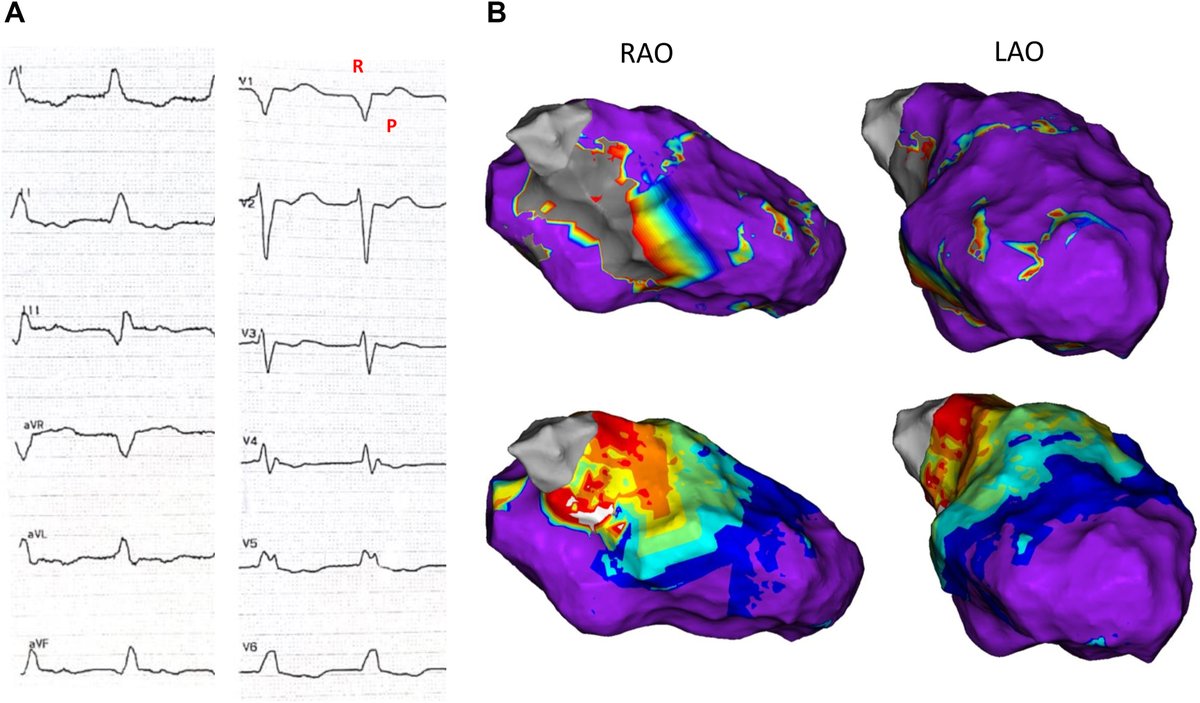
Durable PVI and posterior wall isolation confirmed, yet AF recurs. Dr Ben D'Souza shows how dispersion mapping identifies residual substrate and guides a targeted anterior mitral line.
#AFablation#Electrophysiology#SubstrateMapping
📌Transseptal puncture in cardiovascular interventions: a clinical consensus statement of the European Heart Rhythm Association, the Heart Failure Association, the European Association of Percutaneous Cardiovascular Interventions, the European Association of Cardiovascular Imaging of the ESC, and the Association for European Paediatric and Congenital Cardiology
👉https://t.co/oMsxxW7hOg
@EuropaceEiC@GiulioConteMD@Dominik_Linz@FraSantoroMD@AndyZhangMD@marcovitoloMD@DavideMei93 #Europace #arrhyhtmias
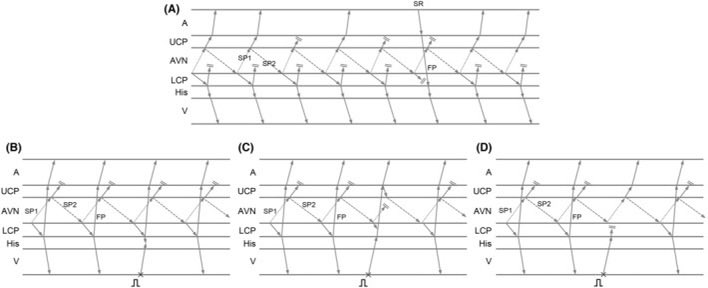
🟡 complete AV block in AF 🟡
🧵 a case report of a patient with an older MI and permanent AF + RBBB 🧵
AF with ventricular response from 53 bpm to 84 BPM as seen in the rhythm strip.
No complete AV block in AF here.
🏃♂️⚡ Can exercise stress testing (EST) improve the diagnosis and risk stratification of #BrugadaSyndrome?
A fascinating new state-of-the-art review highlights that exercise testing is much more than a tool for assessing exercise capacity. In Brugada syndrome, the *recovery phase* may be the key moment to uncover concealed disease and identify patients at higher arrhythmic risk.
🔍 Key takeaways:
✅ Type 1 Brugada ECG pattern is rarely unmasked during peak exercise (~1%) but becomes evident in up to 25% of patients during early recovery.
✅ The transition from sympathetic activation to parasympathetic rebound appears to play a crucial role in ECG changes and arrhythmogenesis.
✅ Premature ventricular contractions (PVCs) occurring during early recovery may represent an important marker of future ventricular fibrillation risk.
✅ Exercise-induced malignant arrhythmias are rare, suggesting that EST is generally safe when performed with appropriate monitoring.
✅ Careful ECG monitoring during the first minutes of recovery may provide valuable diagnostic and prognostic information.
💡 The review supports the concept that both *peak exercise* and *early recovery* offer complementary insights into the electrophysiological substrate of Brugada syndrome and may help refine individualized risk assessment.
An important reminder that sometimes the most informative part of a stress test is not the exercise itself—but what happens immediately afterwards.
#BrugadaSyndrome #Electrophysiology #Cardiology #InheritedCardiacConditions #SuddenCardiacDeath #Arrhythmias #SportsCardiology #ExerciseTesting #ECG #RiskStratification #PrecisionMedicine #JACCAsia
Managing Type 2 Diabetes in CKM Syndrome Stages 2–3 (without CVD)? The 2026 AHA/ACC algorithm breaks it down
Personalized, risk-stratified T2D care is the standard in CKM.
The AHA/ACC/ADA/ASN have developed the first-ever guideline aimed at preventing & managing #CKM syndrome, an interconnected set of health conditions that significantly 📈 the risk of multiorgan complications & negative CV outcomes https://t.co/kmUw3woToN #JACC#ClinicalGuidelines