Paraphrasing Marc Rowan:
In equity, concentration can be justified by unlimited upside.
In credit, your upside is limited to interest and principal. You are not paid to be concentrated.
If someone asks you to accept concentration in credit, they need to offer two things:
- More compensation
- More safety
More compensation alone is not enough. Credit losses can be too large to offset with additional income
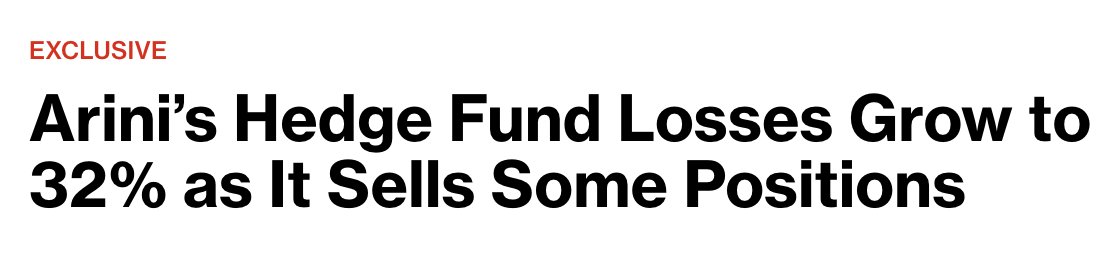
How does a credit fund lose 32% in 10 months?
From Arini’s own letter (per Bloomberg):
- Most of its exposure is CCC
- Its top 5 positions are ~2/3rds of NAV
- It used leverage
“Our conviction remains firm.”
When you own a great business, quit dancing in and out of the stock every time the wind blows. “Taking gains” and “trading around a position” sound sophisticated, but ask yourself what you’re actually doing, exchanging ownership in a business you understand for a prediction about its next price movement. Being right about the business doesn’t automatically make you good at predicting the stock.
The expensive part is that selling creates a second decision. Now you must decide when to return, often while hoping the business you admired becomes cheap enough to justify buying it back. A stock can fall after you sell and still never reach your reentry price, leaving you correct about a decline and absent from years of compounding.
Meanwhile, the business keeps working. Customers spend, earnings grow, and management reinvests in opportunities that may produce profits for another decade. Those returns accrue to whoever owns the shares, regardless of how clever the previous owner’s exit looked.
Patience still requires scrutiny. You must keep asking whether the competitive advantage is intact, whether management is allocating capital wisely, and whether the valuation offers a reasonable return. But when those answers remain favorable, learn to sit on your ass and give the business time.
The discipline is continuing to evaluate the business without feeling compelled to trade its stock. You can spend enormous energy trying to improve your entry and exit prices while forfeiting the far larger opportunity between them. Investing is simple, but leaving a good decision alone can be extraordinarily difficult. 🌹
@anchovycapital it’s a very small market then - that’s why American firms leave/cut exposure. Good luck trying to make alpha with >$1B in equity in Euro HY/distressed
@MrtnzAlvrz IRR vs CAGR. El calendario de capital calls no es alpha. Al dueño del capital le importa la rentabilidad sobre su compromiso (es una deuda en su balance): múltiplo, riesgo y tiempo
Old bank traders did the homework and took risk. Many now trade on vibes. Don't buy their stories at face value. Do your own work and build conviction: lower risk, higher returns
Fully consistent with my experience, and aligned with that of top investors.
Concentration is not a risk to be avoided, it is how alpha is captured, especially with GPs that have a record of generating it
Best Ideas
https://t.co/dCy1TGDMqz
We find that the stocks in which active mutual fund or hedge fund managers display the most conviction towards ex-ante, their “Best ideas,” outperform the market, as well as the other stocks in those managers’ portfolios, by approximately 2.8 to 4.5 percent per year, depending on the benchmark employed. The vast majority of the other stocks managers hold do not exhibit significant outperformance. Thus, the organization of the money management industry appears to make it optimal for managers to introduce stocks into their portfolio that are not outperformers. We argue that investors would benefit if managers held more concentrated portfolios.
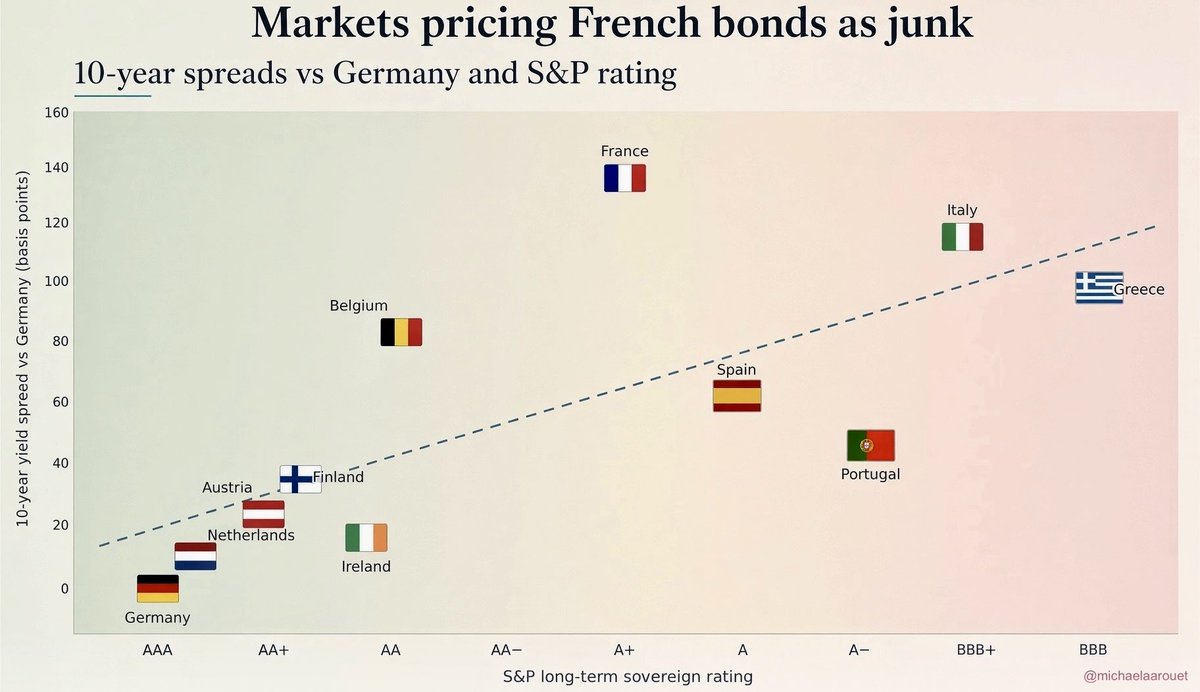
Most people don’t yet grasp what is happening in France. Markets are pricing French sovereign debt as junk, rating agencies will eventually have to follow. This will have two major impacts:
1. Most French banks are already rated at or just below the sovereign, so a move toward junk would likely drag domestically focused lenders with it. Credit to households and firms would slow sharply, hurting the economy and widening the fiscal deficit even further, a vicious cycle.
2. For the ECB, the constraint is legal as well as financial. A fall below investment grade would force sales by ratings-bound investors while making any backstop harder to justify under current rules.
The next euro crisis will begin in France. The first, which began in Greece, will feel like a walk in the park compared with what comes next.