No science today. Two years ago, my great aunt Geula, 81, was murdered in her home. Her grandson Idan was shot dead on the bloody streets of Kibbutz Be’eri. His brother Sahar was kidnapped to Gaza, where he was murdered. Today, I mourn.
#October7th
https://t.co/R5fZI5fVBi
Science of the day: tracking animal movement isn't trivial. I recently switched from @DeepLabCut to an 8-camera setup by @optitrack - and I'm impressed by its precision.
Side science: 2 LEDs on the mouse head also do the job https://t.co/qZ5q7qrlQA
#Neuroscience#Motion
Science of the day: to find the synaptic gain between two neurons, I use a method developed by @LidorSpivak (https://t.co/oD6UV0Kaig) to de-convolve the auto-correlation from the cross-correlation.
Side science: what is your go to method?
#Neuroscience#Connectivity
@OdedRechavi Not preprints, but I'm trying to upload somewhat scientific stuff on a day to day basis. Otherwise, I agree with you, my feed is mostly politics and not enough science.
https://t.co/7532FOaTG4
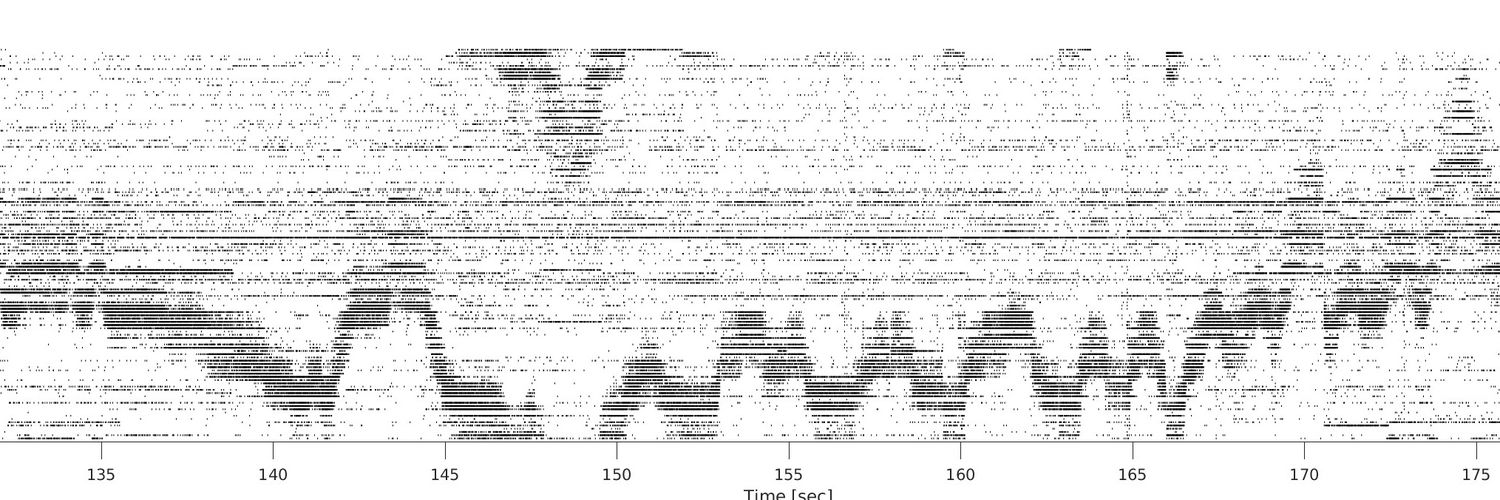
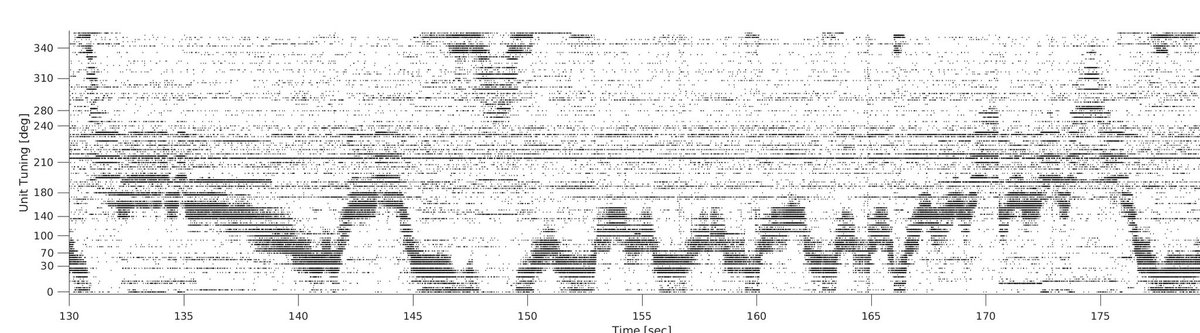
Science of the day: Head direction neurons usually need a decoder to reveal heading. With these raster plots, the heading is clear from the neurons' spiking activity.
Side science: although compared to an internal compass, the HD system isn’t tied to magnetic north
#Neuroscience
Science of the day: The three essential components for groundbreaking neuroscience: inspiration, perspective, and a well-stocked bottom shelf.
Side science: The optimal book-to-whisky ratio is still under review.
#Neuroscience#Macallan#hawking
Science of the day: some spikes are just more positive than others, at least waveform-wise.
Side science: interested in these positive units (Punits)? Look up this work https://t.co/poPIIEd9rH by @shirlysomeck#Neuroscience#punits#PositiveVibesOnly
Science of the day: Head direction neurons usually need a decoder to reveal heading. With these raster plots, the heading is clear from the neurons' spiking activity.
Side science: although compared to an internal compass, the HD system isn’t tied to magnetic north
#Neuroscience
Science of the day: the activity of thalamic neuronal population during slow wave sleep. Here, dozens of neurons synchronize their firing activity in a Delta rhythm
Side science: Shana Tova to you all! I hope this year will be a year of science and peace
#Neuroscience#ShanaTova
Science of the day: the distance between shanks of this silicone probe, used for electrophysiological recordings from the brain, is 0.125 mm. For scale, a hair at the bottom of the image
Side science: my go to probe is the @DiagBiochips 8 shanks, 128 channels.
#Neuroscience
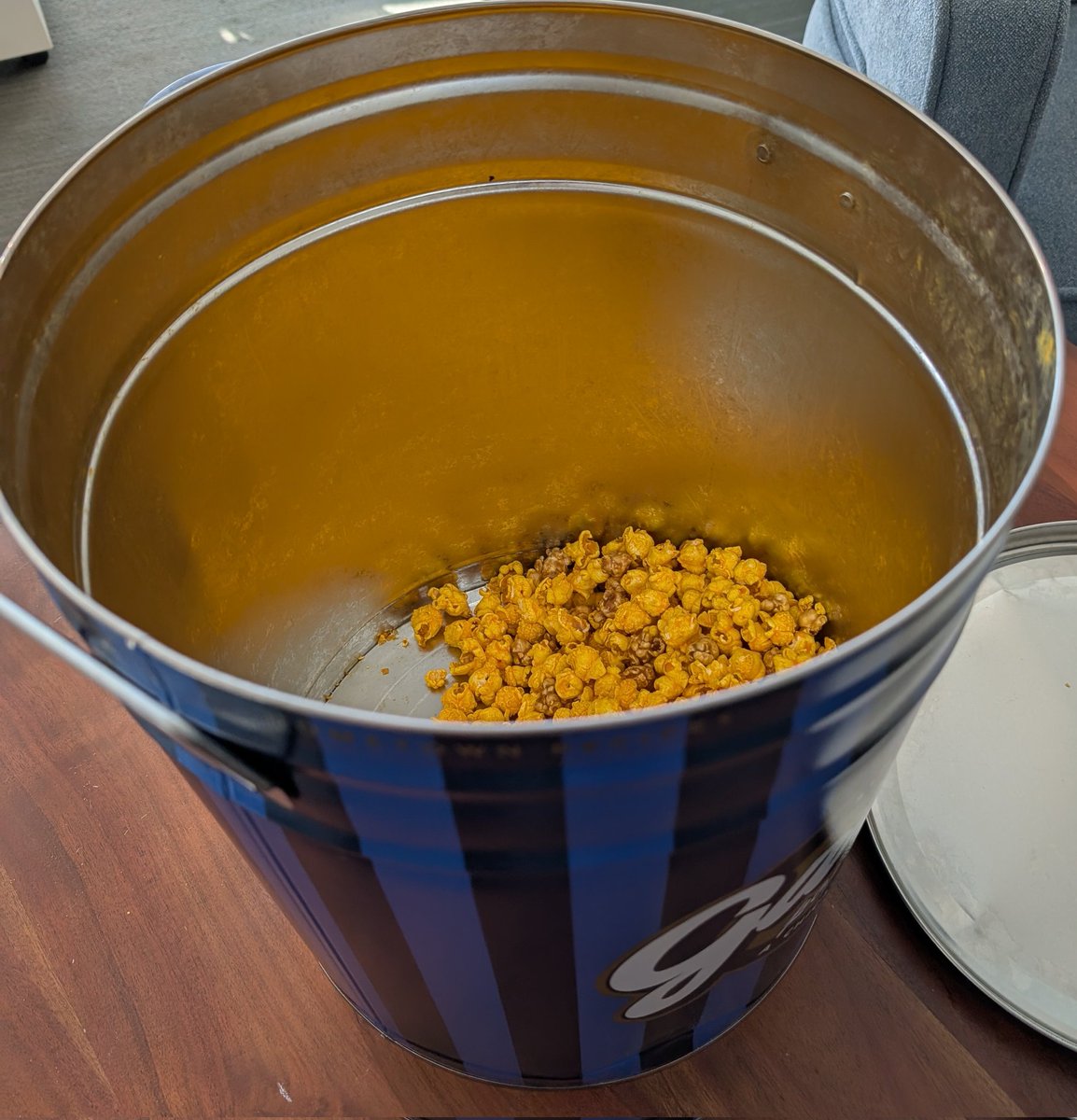
Science of the day: 10 neuroscientists require 3 weeks to finish a bucket full of caramel and cheddar popcorn (thanks @HHMINEWS)
Side science: the lab is divided between those who prefer the caramel ones and those who know nothing
#Neuroscience#popcorn
Science of the day: the 4 ingredients of an in house optogenetic device: LED, fiber, 61 and 68 optical adhesives.
Side science: although I was taught this technique by Eran Stark (@lab_stark), I consider @shirlysomeck as the uncontested master builder
#Neuroscience#optogenetics
I'm very excited to be selected as a 2025 Jane Coffin Childs Fellow. Grateful to join this amazing group of scientists.
🔗 https://t.co/XGfi5cJ0Bt
https://t.co/V1NbCEoDAg
I have childhood memories, being a guest of Geula in the kibbutz. I look at the pictures of Idan and Sahar and remember when they were just toddlers.
May their memory be a blessing
https://t.co/R5fZI5fVBi
3/3
I usually avoid, writing about non-science related issues. But well... A year ago I found myself sitting in front of the news, a feeling of complete shock running through my body. This #October7 I'm at #SfN24, supposed to be interested in science and networking
1/3
But I can only think about the dead. My great aunt, Geula, 81, murdered in her house by axe wielding terrorists. Her grandson, Idan, was shot dead not far, on the bloody streets of kibbutz Be'eri. His brother, Sahar, was kidnapped to Gaza where he was tortured and executed.
2/3
Humans excel at #learning and adapting to new circumstances, but what about mice?
In our new @PNASNexus paper, we found that every mouse learned a new visual rule in a single session. So: what are the behavioral mechanisms that allow for fast learning?
https://t.co/I4VQUhhSkV