Humans excel at #learning and adapting to new circumstances, but what about mice?
In our new @PNASNexus paper, we found that every mouse learned a new visual rule in a single session. So: what are the behavioral mechanisms that allow for fast learning?
https://t.co/I4VQUhhSkV
@NetaTropp עשיתי את זה בעבר, הכנסתי את ההרצאות כשכר מרצים וביצעתי תיאום מס בין המעסיק העיקרי לבין החברה דרכה העברתי הרצאות. אם רוב ההרצאות הן דרך אותה חברה זה סבבה.
@ArbleMatan בתור מי שהתחילה פוסט בספטמבר, אני מאוד מזדהה עם הקושי.
אני יכולה לומר שכמו שציפיתי, ההתחלה הייתה קשה, אבל אחרי חודשיים-שלושה אני שמחה מהחיים שלי פה. אם תרצה לקשקש- אני זמינה בפרטי.
#Hippocampal#theta phase #precession plays a role in spatial coding and neural sequences. Ever wondered how it is generated?
New in @sciencemagazine: we show that local circuits can generate precession and propose a potential mechanism: https://t.co/GiYkDJy52v. #ScienceResearch
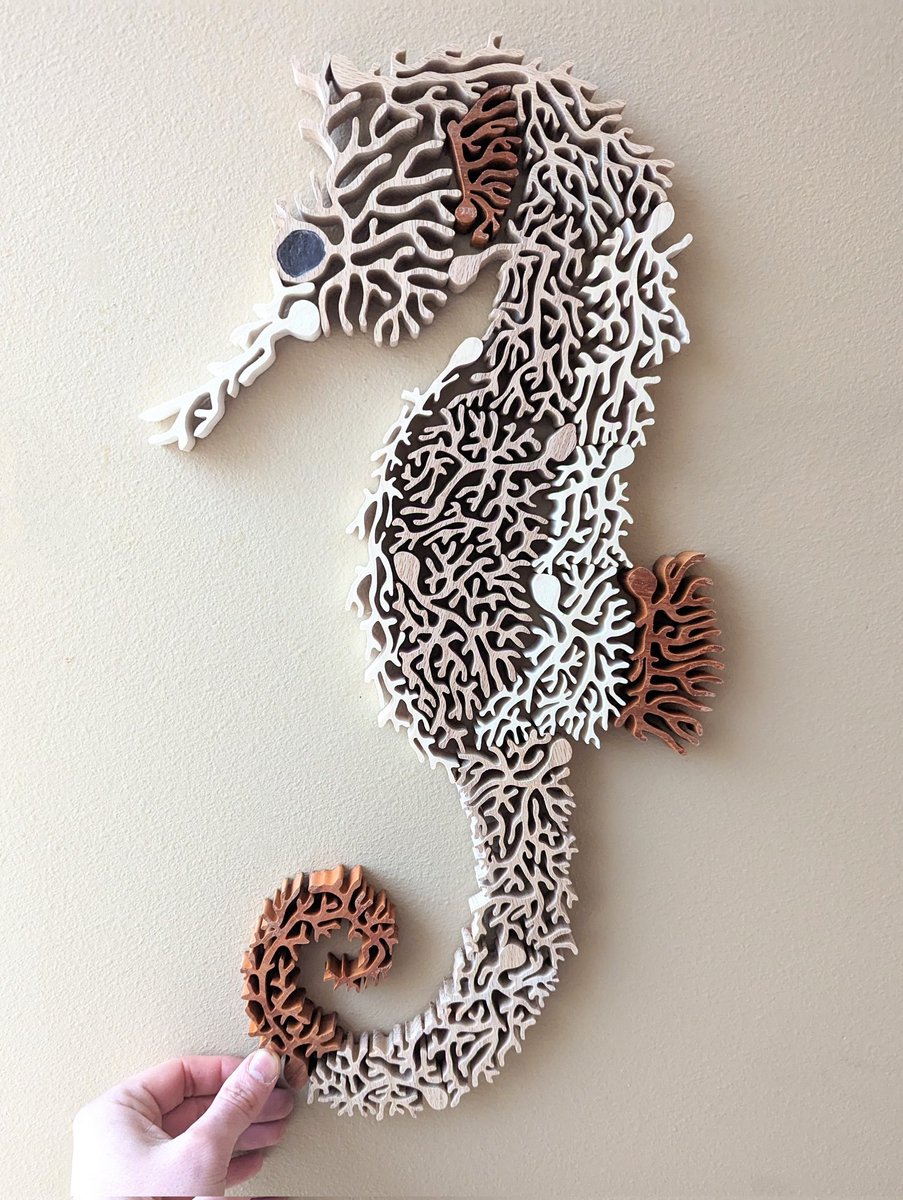
I finally made this piece, "hippocampe neuronal" (neuronal seahorse). 16 #neurons cut out of Padauk, oak, poplar and maple wood. #sciart#neuroX#biology
What activates secondary thalamus? We recorded in POm and LP/pulvinar in trained mice. Come see pulvinar respond better to touch than vision, and POm respond better to vision than touch. (No, I didn't accidentally mislabel those.) #SfN23 poster Z28 on Tuesday morning. #SfN2023
Get ready to learn a new word: #Punit!
Our new paper on @CommsBio explores densely-interconnected neuronal networks in freely-moving mice, in search of the origin of non-negative extracellular waveforms: positive and biphasic spikes.
1/8
https://t.co/uGLsL1ZvT8
When recording extracellular ephs, it's almost inevitable to stumble upon positive spikes. @shirlysomeck made a tremendous effort to make sense of positive spikes, quantify them, and theorize regarding their biophysical origin. I am proud to be a co-author of this work! 🧠
@lab_stark, @shirlysomeck analyse extracellular waveforms from freely moving mice which offers widespread implications for how to interpret and understand neural signals captured with extracellular probes. https://t.co/GZDGPKLyOr