💬 Editor's Note by Dost Öngür, MD, PhD: In a RCT, semaglutide reduced hemoglobin A1c and body weight and improved physical quality of life in patients with #schizophrenia, #prediabetes, and #obesity, without negative effects on mental health status.
https://t.co/J2xmDSBujn
Hace poco salió una revisión de Alzheimer en The Lancet (2026). Aquí van las notas (muy) sintetizadas:
🟡60% de los casos de demencia
🟡 Si <65 años: pensar en monogénica dominante (por mutación en APP, PSEN1, PSEN2) (1%)
🟡 Late-onset Alzheimer, es 80% de los casos, por APOE epsilon4; aunque hay 100 loci, el estilo de vida saludable sí reduce el riesgo
🟡80% de los casos son con amnesia hipocampal (olvidas rápido, no aprendes); 20% son en la corteza, disfunción visuoespacial, síndrome de Gerstmann, agnosia visual, dificultad para encontrar una palabra (afasia primaria progresiva lopogénica), cambios en comportamiento, estereotipia, crisis, mioclonía
🟡No poder recordar palabras con pistas, es sugestivo de inicio de Alzheimer (si la pista ayuda a recuperar, sugiere fronto-subcortical, vascular o depresión)
🟡No poder funcionar fuera de casa define la demencia como “moderada”; ser dependiente lo cataloga como grave
🟡Patogenia: agregados de beta-amiloide que forman placas y acumulación de tau fosforilada
🟡Es frecuente que coexista con angiopatía amiloide (80%, leve), enfermedad argirofílica (otra tauopatía) o astrogliopatía de la edad, microinfartos - demencia vascular
🟡Aunque la genética importa mucho, 45% del riesgo es modificable con: educación, buena audición, salud cardiovascular, peso, ejercicio
🟡La RM es importante para los diferenciales, clásicamente en Alzheimer hay atrofia en el lóbulo temporal medial - pero no es suficiente
🟡El PET con 18-FDG es más sensible; y aun mejor PET con beta-amiloide (Aβ PET - bueno para descartar, puedes usar escala de Centiloid) o Tau-PET. Otros biomarcadores para PET en investigación: Synaptic Vesicle Glucoprotein (SVA2), Translocator protein 18 kda (TSPO), MAO-B PET
🟡Biomarcadores en LCR: radio beta-amiloide 42/ beta-amiloide 40, tau total, tau-fosforilada 181 alto. Otros: cadena ligera de neurofilamento (NfL), proteínas sinápticas (beta-sinucleina, GAP-43, NPTX2, SNAP-25, SV2A, sTREM2, YKL-40, GFAP
🟡Biomarcadores sanguíneos p-tau181, p-tau217, p-tau231, GFAP, NfL, Beta-sinucleina
🟡Para el diagnóstico una sociedad dice que debes tener datos clínicos y otra no (como diabetes, no requiere síntomas solo HbA1c - un debate interesante)
🟡Mejorar la salud cardiovascular y ejercicio es parte del tratamiento
🟡 Tratamiento: inhibidores de acetilcolina y memantina, y sintomáticos
🟡Modificadores: Lecanemab y Donanemab están aprobados. En prueba: Trontinemab
🟡Otras en estudio: esitmulación gamma, estimulación magnética transcraneal, estimulación profunda cererbral, agonistas muscarínicos parciales, agonistas de receptor de cannabinoies, inhibidores de la MAO-B, litio.
El tema es gigante y muy interesante. Está completo con mucho más en Accio - incluye algoritmo de los nuevos criterios diagnósticos (https://t.co/FQyQuLPcWG).
Individualized, connectivity-based targeting of accelerated transcranial magnetic stimulation produced significantly greater antidepressant effects than scalp-based targeting in adults with treatment-resistant #Depression.
https://t.co/mHdQIS4NVG
Xin et al. found that tau PET is as effective as amyloid PET for diagnosing Alzheimer’s disease. It also provides valuable information for identifying non-AD tauopathies and refining diagnoses, thereby increasing diagnostic confidence. https://t.co/nxq8thk9fs
Dear fellows: We published this systematic review to figure out the Neuropsychiatric Phenotyope of Klüver-Bucy syndrome.
🧵🧠💭
This condition involves a deep transformation of behavior, characterized by hypersexuality, hyperorality, hyperphagia, visual agnosia, (1/5)
We all thought this study would fail, for different reasons.
Joe Taylor (1st author) thought it'd be a takedown of fMRI-guided TMS.
@foxmdphd and I (co-senior authors) thought the effect would be too small to detect in just 40 patients.
We were wrong.
https://t.co/MlFghE9hBX
🚨@SaraStampacchiaet al. investigated minor hallucinations in patients with Parkinson’s Disease using a connectome-based brain fingerprinting approach and examined their association with cognitive decline. @BernasconiFosco,@OlafBlankeLab,@Neuro_X_EPFL
https://t.co/GrLGY4wqVZ
💬 Editorial: Connectivity-based targeting for transcranial magnetic stimulation demonstrated greater antidepressant effects and precision than scalp-based approaches in adults with treatment-resistant #Depression. https://t.co/U0tyKb6lO3
This narrative review suggests mental disorders are statistical clusters of biopsychosocial properties, not sharply defined categories, mirroring concepts in species classification and supporting dimensional #MentalHealth frameworks. https://t.co/SfES3sUTlh
🧠 New paper in @NatMentHealth !
In Parkinson's Disease, we show that patients at risk of cognitive decline have a distinct brain fingerprint, and that patient-specific networks associate with clinical outcomes and neurochemical substrate.
Paper 👇
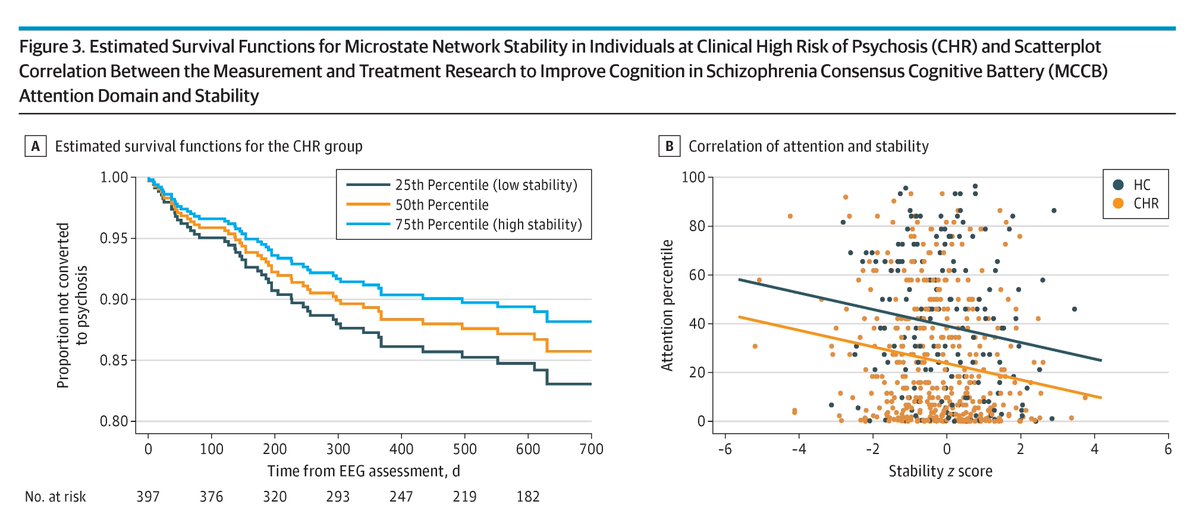
In individuals at clinical high risk for #psychosis, reduced temporal stability of EEG microstates was associated with earlier conversion and increased positive symptom severity. https://t.co/zFnnkHeCQT
💬 Editorial: Reduced temporal stability of #EEG microstates shows promise as a scalable biomarker for predicting clinical outcomes in individuals at high risk for psychosis.
https://t.co/aicAIEKYJs
I have a lot to say about POSSIBLE psychosomatic symptoms but here is the most important thing:
Individual clinicians MUST take the patient and the symptoms seriously. BOTH must FEEL and explore the possibility that the symptoms aren’t or aren’t entirely psychosomatic AND the 1/
Video Atlas of the Detailed Neurologic Examination by Dr. Martin Samuels
A classic neurologic examination series that was included as part of Harrison’s. Highly recommended for anyone learning or refining their neurological exam
https://t.co/2SukhwUvIB
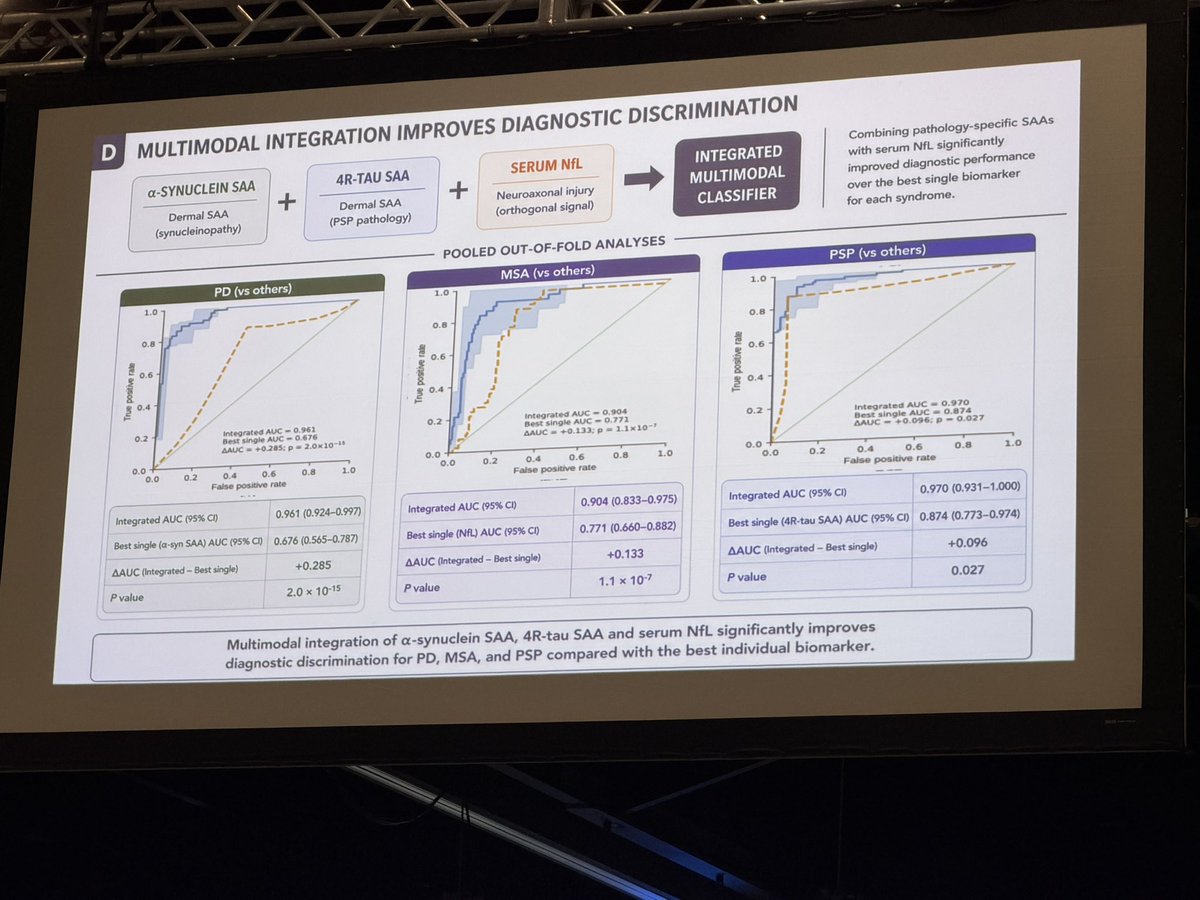
Big challenge in Parkinson’s is that synuclein seeding assays can be positive across many diseases. Nice plenary this morning showing how this group uses synuclein seeding + 4 R TAU + NFL to sort this out using a multi-modal biomarkers approach. This is one such approach used at the University of Toronto and presented today at the World Parkinson Congress.
Pragmatic. Full of information. Cutting edge. Cool figs!
Honored to lead The Lancet review on Encephalitis. With amazing Sophie B, Ava E, Kiran T & @DeannaSaylor1
We hope you enjoy reading it:
https://t.co/0baEHVhjeH
@mayoneurores@mayocliniclabs@MayoClinic@NDCNOxford
CTE cannot be diagnosed during life. Our work published today in @NatureMedicine demonstrates that most individuals meeting proposed clinical criteria do not have evidence of #CTE neuropathology at autopsy (1/5)
https://t.co/5euKrqf8vq
@PennNSG@PennMedCSO@WillStewNeuro