"Countries are split over whether to move to permanent summer or permanent winter" Surely it will have to be a unanimous decision, I wonder who will make it
Michael Portillo shows off his Kpop dance skills in his latest show, Great Korean Railway Journeys.
The look on the dance teachers face as he acts impressed 😂
#KPOP
Kevin Hines went to the Golden Gate Bridge in 2000 intending to end his life. He's one of 39 people in history to survive that jump. Of the 19 other survivors who've come forward publicly, every single one reported the same thing: the millisecond their hands left the rail, they wanted to live. He calls it instant regret.
Years before that pattern showed up in survivor interviews, a Berkeley researcher named Richard Seiden was already finding something similar in the data. He tracked down 515 people who had been physically stopped from jumping off the same bridge between 1937 and 1971. The assumption at the time was that they'd just find another way. They didn't. By the time Seiden's 1978 follow-up was published, 94% were either still alive or had died of natural causes. Only 6% later died by suicide.
A 2009 study at Innsbruck Medical University in Austria went one step further. Researchers asked 82 patients who had just attempted suicide how long it had been between the first thought and the act. Almost half (47.6%) said 10 minutes or less. A separate CDC analysis of 153 almost-fatal attempts put it at 5 minutes for nearly a quarter.
That window is the entire crisis. Whatever feels permanent and obvious in those minutes usually looks completely different an hour later.
The recovery data points the same direction. Richard Tedeschi and Lawrence Calhoun, two psychologists at UNC Charlotte, invented the field of post-traumatic growth research in the 1990s. Their core finding: about 9 out of 10 trauma survivors report at least one major positive change after coming through the worst of it. Even people who almost died. A 20-year German trauma center follow-up of 337 patients who had survived life-threatening injuries found 96.5% reported improvements in some part of their life. About a third said they appreciated being alive more, and had stronger relationships, than before the thing that almost killed them.
The thing that pulls people out is the boring part. A 2014 review of 26 clinical trials covering 1,524 patients found that something called behavioral activation, a fancy name for "do small things even when you don't want to", beat both control conditions and antidepressants in head-to-head tests. The kinds of things that move the needle: a short walk, one real meal, replying to a message you've been avoiding, showing up to one thing you said yes to. The doing comes first, and the wanting to do follows.
The brain doing the math tonight is not the brain you'll have in six months. Stretch the window between the thought and the action. That window is the whole game.
If you're in crisis right now: US/Canada 988, UK 116 123, or visit https://t.co/GFvPdUpLxc for the global directory.
In double-blind placebo-controlled trials, 'gluten-sensitive' people who *think* they're going to eat gluten have reactions.
But if they don't expect gluten, there's no reaction.
Expectancy has a bigger effect than actually eating gluten!
Every cup of coffee you’ve ever drunk worked because gravity pulled the liquid down and tipped it toward your mouth when you tilted the mug. Take gravity away, and the coffee floats in a ball. Won’t go near your lips.
For decades, astronauts drank everything from sealed plastic bags through a straw. Coffee, water, juice. Like a grown-up juice box. NASA astronaut Don Pettit, a chemical engineer with a PhD from the University of Arizona, got tired of it. So during a two-week shuttle mission to the International Space Station in November 2008, he grabbed some leftover plastic film and heat-resistant tape floating around the cabin and built himself a cup. 250 miles above Earth. On his own time. He called it “just goofing around.”
The shape is everything. It looks like a squished teardrop with a narrow groove running from the bottom to the rim along one wall. That groove does what gravity normally does. It uses something called capillary flow, which is the same force that makes a paper towel soak up a spill. Liquids naturally creep through tight spaces on their own, no gravity needed. When Pettit tilts the cup toward his face, the coffee crawls up that groove and reaches his lips, pulled along by the way liquid molecules cling to surfaces and to each other.
That cup earned the first patent ever granted for something invented entirely in space. Mark Weislogel, a researcher at Portland State University in Oregon, later took Pettit’s taped-together prototype and 3D-printed a proper version from food-safe plastic. NASA tested it in flight. A porcelain version ended up on the station permanently, and you can buy one online for under $100 from a company called Spaceware.
Rocket fuel tanks deal with the exact same problem, which is what makes this cup more than a novelty. In zero gravity, fuel drifts randomly inside the tank instead of pooling at the bottom where the engine can reach it. If the engine sucks in gas bubbles instead of liquid fuel, it shuts down. So engineers build tiny grooves inside fuel tanks, called capillary vanes, that use the same physics as Pettit’s coffee cup to pull fuel toward the outlet. Every spacecraft ever flown has carried extra fuel because these groove systems still can’t squeeze out every last drop.
Italy took the coffee obsession further. In 2015, the Italian Space Agency teamed up with coffee company Lavazza to send a 44-pound espresso machine to the station, called ISSpresso. Astronaut Samantha Cristoforetti brewed the first real espresso in orbit on May 3rd that year. Before that, the only coffee in space was freeze-dried powder mixed with lukewarm water.
Pettit landed back on Earth in April 2025 on his 70th birthday, after spending a total of 590 days off the planet across four missions (about a year and eight months in orbit). He is NASA’s oldest active astronaut. The cup he taped together on a slow afternoon in 2008 is now informing how engineers move liquids through the spacecraft headed for Mars.
I remember about two years ago when the ‘glasses’ of my childhood perception of my dad fell off and I saw, for perhaps the very first time in my life, a man and not just ‘my father.’ The realization that his had had grown grey, and that he had added a bit of pudge. The realization that I still imagined him in my head as the figure I saw of him when I was 7 years old and we were camping together. It’s all so strange.
All men are ultimately born in the shadow of their father. All men see him place before them a set of expectations and then they spurn, or accept, those. All men find that eventually the day comes when they must stand alone.
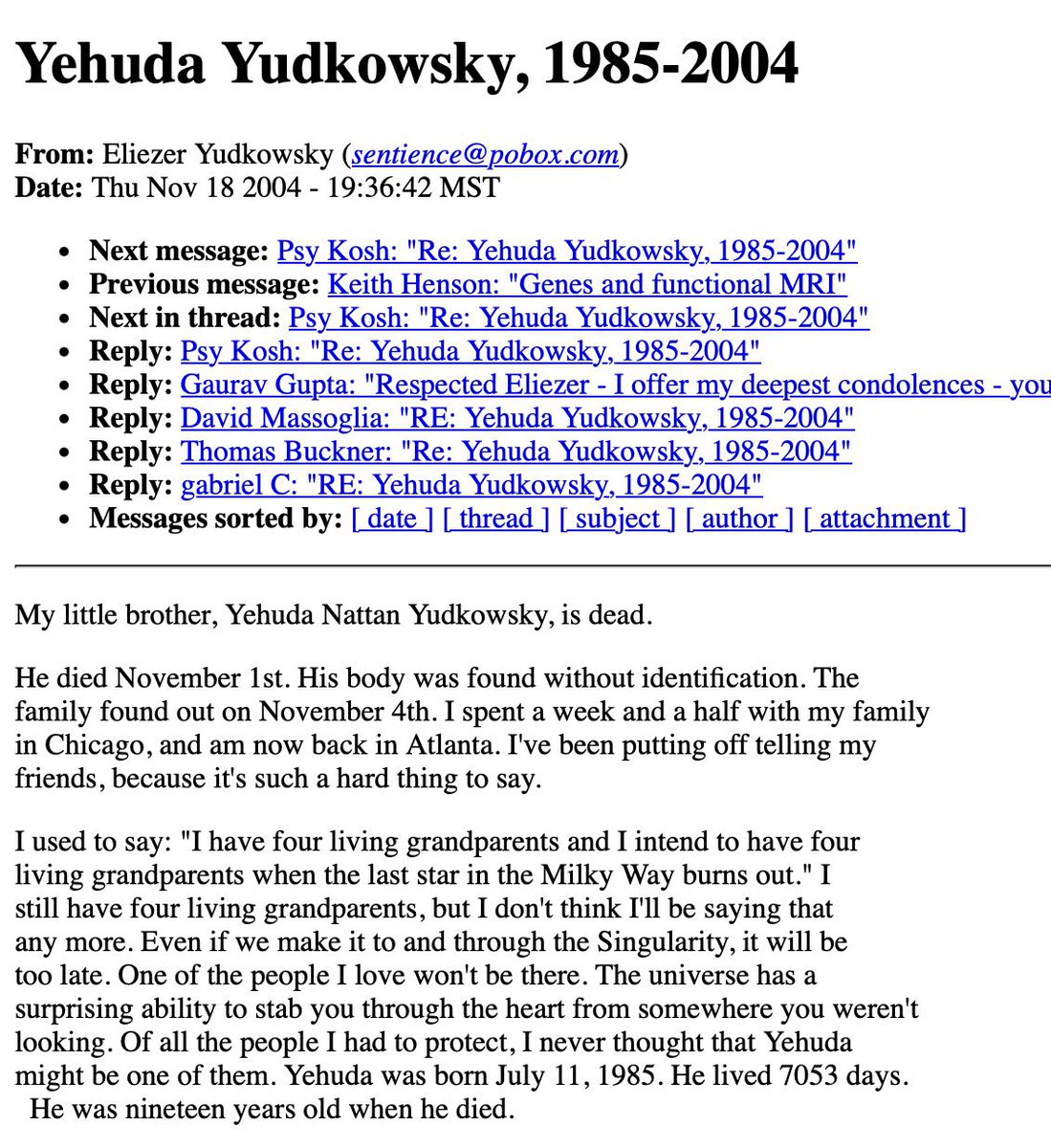
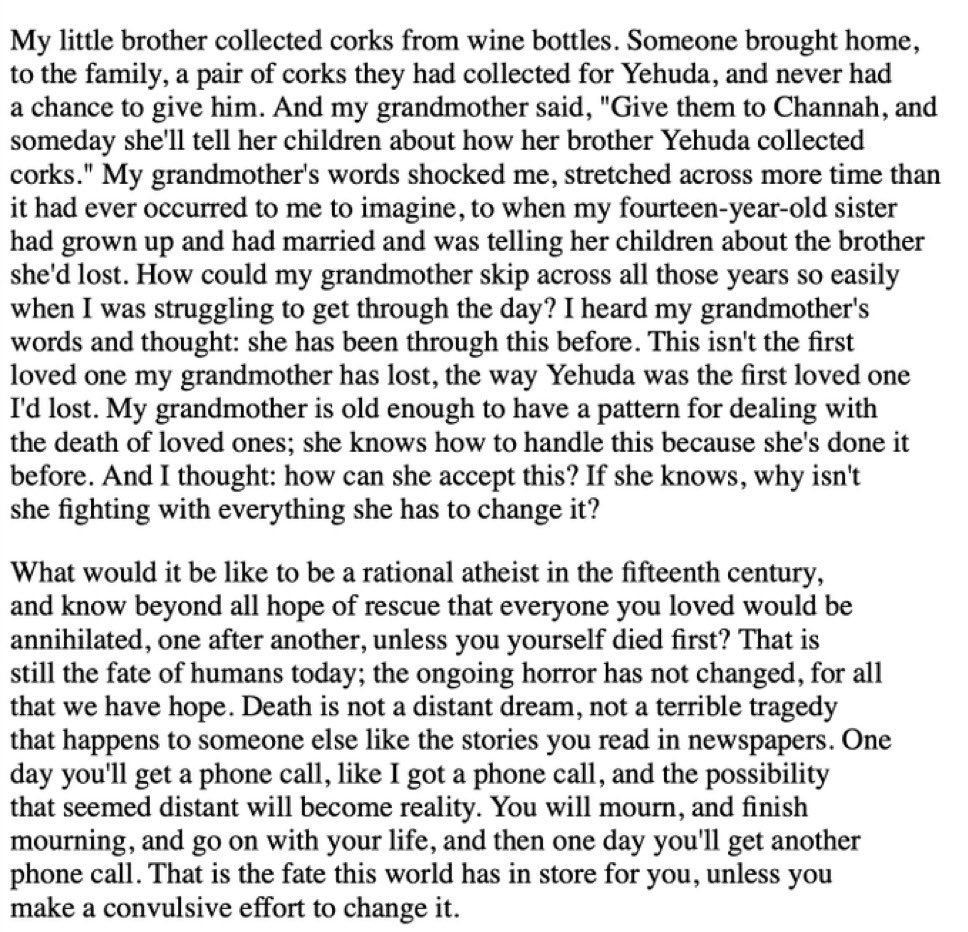
A tragic gap. I remember this Eliezer Yudkowsky piece teortaxes posted a while back and what he said above it about his own father. “I hoped, so much, so long, to prove him wrong.”
That aspect is probably not that unrealistic, unfortunately.
Across the OECD, on average, just 55% of 15-to-16-year-olds got this question right, and no country saw 80% get it.
Most people globally *do* struggle even reading simple tables. What else?
Thread.🧵
@reddit_lies One of the most annoying ways people seek attention and validation is by expecting (or even demanding) people ask them directly about themselves.
It’s not an interview, and you’re an adult. Make normal conversation and work in the information you want to share.
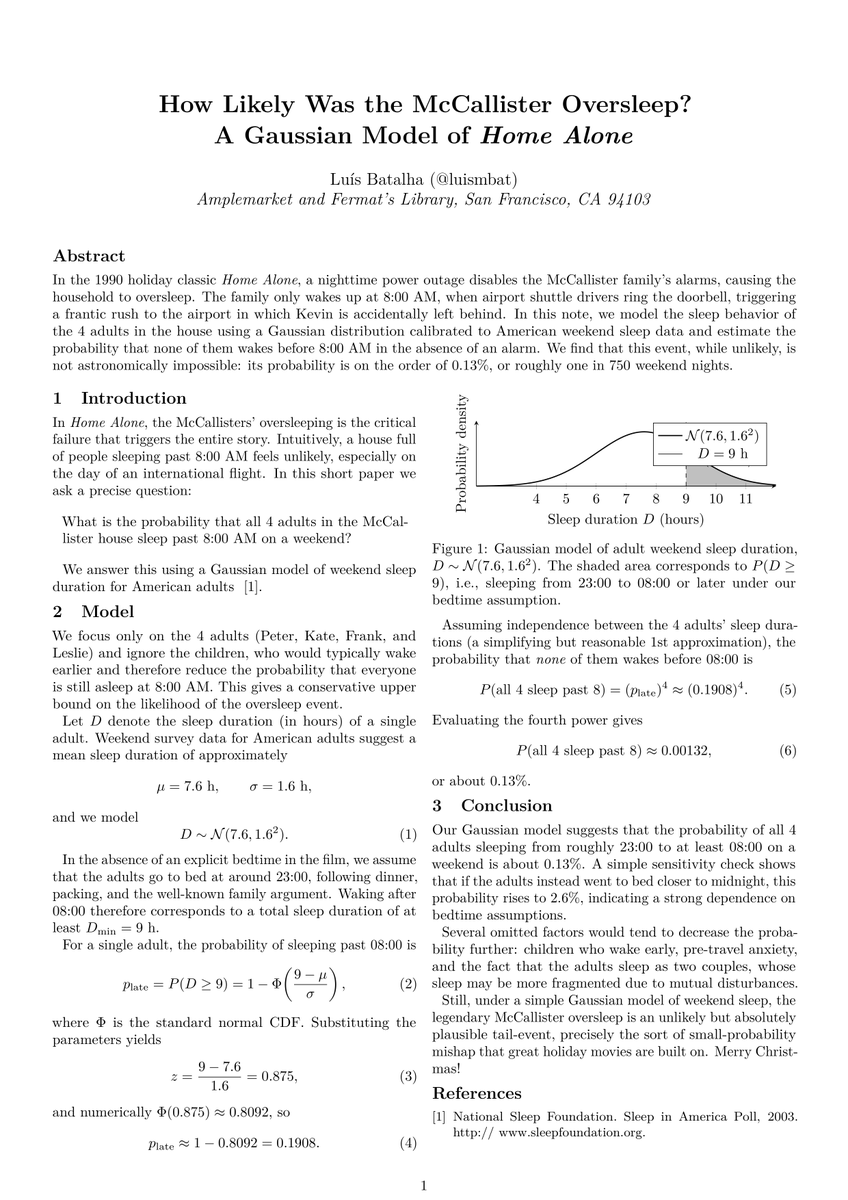
After rewatching Home Alone, I couldn’t stop wondering:
how plausible is the oversleep that leaves Kevin behind?
So I wrote a tiny paper and ran the numbers.
Merry Christmas! 🎄
Last April, five girls—all in 7th and 8th grade—publicly forfeited their chance to compete in shot put against B.P.J., as a silent protest for fairness in girls’ sports.
The school board initially punished these girls by disqualifying them from future competitions. 7/
In January, 50 yr old Nicholas Cepeda, a professor at @YorkUniversity, competed in a swim meet in Canada.
His competitors were 13 year old girls.
Cepeda, a fully intact adult male who now calls himself “Melody Wiseheart,” both showered and changed in the girls’ locker room, with the full support of @SwimmingCanada and @SwimOntario, the only organizations for competitive swimming in Canada and Ontario.
Both of these organizations were aware that this locker room would be used by girls as young as 8. The fact that the girls were - to quote one swimmer - “terrified,” and that parents were angry and distressed, meant less than nothing to both organizations. Parents have even reportedly banned from accompanying their daughters into the changing room at later meets. Cepeda has not.
Once again, groups meant to look after the best interests of female athletes have thrown every single one of them under the bus in order to cater to a man. @SwimmingCanada and @SwimOntario have also thrown out the safeguarding they owe to the minor children whom they pledged to provide with a safe and fair environment in which to compete.
Since this incident made the news in January, neither organization has moved to protect the children in their care. Mr. Cepeda still changes and competes with underage girls, and has even been given a police escort to at least one competition. The media, after a flurry of initial interest, has allowed the story - and the pressure on these organizations to do their damn jobs and protect these children - to disappear.
It’s been almost a year, and these little girls are still being forced to strip, shower, and swim with a 50 year old man. His “gender identity” has been given priority over both their safety and their mental wellbeing.
As a survivor of child sexual abuse, and someone who has worked with other survivors, I am certain that those girls are afraid and uncomfortable, even if the professor does nothing but change and shower in front of them. Our sexual taboos and mores exist for a reason, and we know perfectly well how psychologically damaging it can be to expose young girls to naked adult men.
Women and girls should matter. Opportunities for women and girls should matter. Young girls should not be forced to change and compete with boys their own age, let alone a fully intact adult male in his 50s. “Melody Wiseheart” is a fraud and a pervert, and he has taken advantage of this trans insanity to gain access to naked little girls — with the full support and approval of both the organizations running these competitions, and the Canadian government itself.
https://t.co/yCXGHLrd1k
@VirginExp pretty useless having online contact only as noone has replied to my messages in over 48 hours! Surely there must be some customer support or do you only offer automated chat bot?