My entire Caltech thesis in physics was about studying phonons, and this is genuinely sad. Is this the bar for "novel discoveries and breakthroughs" now?
In superconducting theory, they prove some known conjectured bound on the critical temperature really is a bound.
1. This was proved twice in the last few months
2. No one uses this to discover materials... The constant in the bound was numerically calculated by physics Gods, Allen and Dynes, in their 1975 paper Transition temperature of strong-coupled superconductors reanalyzed.
This bound is only approached when the coupling, lambda, between electrons and phonons approaches infinity. In practice materials soften so much that they aren't even stable above around lambda = 4...
Any PhD would've told them that this asymptotic bound is rarely used in practice and a better problem would've been approximating some valid pairs of coupling and phonon frequency values before instability. Then you could better filter your candidate superconductors from simulation for testing in the lab.
There's a reason why no one rushed to prove the former problem for 50 years...
You work your ass off solving really hard problems day after day for decades, and this is what you get: anyone could have done it.
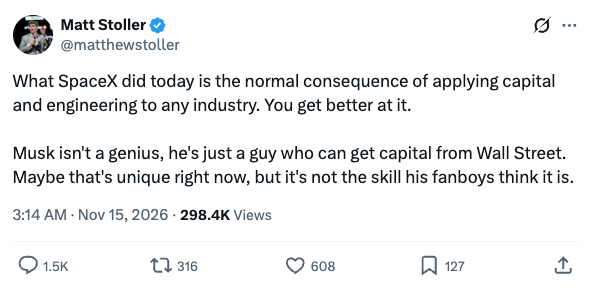
As an investor, I can tell you the limiting factor isn't investment. It's founder ability.
I think it’s time to revisit the accredited investor laws in the US.
Companies are staying private longer, where only accredited investors (aka rich people!) can invest. Retail investors can only come in after IPO, when much of the upside has already been captured.
These rules were created with the best of intentions, to protect regular people from scams - a noble idea. Unfortunately, in practice they've often made it illegal to get richer, unless you're already rich. A regressive tax!
We have to judge policies based on their outcomes, not on their intentions.
These are two possible routes I see:
1) Replace the rule with something merit-based, like a financial literacy test. Pass it and you're accredited. Having a qualification based on competency rather than your bank balance or income seems far more fair.
2) Remove the rule entirely. Let consenting adults assess their own risk. Disclosure requirements stay and fraud enforcement stays to punish bad actors.
تو مؤسسه ما حدود ۱۵۰ دانشجوی دکترا هست که بهصورت دورهای باید کارشون و پیشرفت پژوهشیشون رو ارائه بدن. جدیداً میرم تو جلسات ارائهشون میشینم و سه سؤال پایه میپرسم: دقیقاً داری چی رو مطالعه میکنی و مسئله علمی اصلیت چیه (WHAT)؟ چرا این مسئله مهمه، چه شکافی در دانش موجود هست و اصلاً چرا باید این پژوهش انجام بشه (WHY)؟ و چطور میخوای به این سؤال پاسخ بدی، چرا این روش رو انتخاب کردی و چطور میتونی از انتخابت دفاع کنی (HOW)؟ به نظرم تو عصر هوش مصنوعی، بیش از هر زمان دیگهای باید مراقب باشیم که نسل آینده پژوهشگران، توانایی مستقلِ فهم مسئله، صورتبندی سؤال، استدلال درباره چرایی و دفاع از انتخابهای علمی خودشون رو از دست ندن. هوش مصنوعی میتونه در پیدا کردن پاسخها کمک کنه، اما نباید عاملیت فکری و توان فهم و تبیین چرایی رو از پژوهشگر بگیره. البته تا جایی که خود پارادایم پژوهش علمی تغییر نکرده باشه! الان منفور شدم! 🙄 ولی باعث شده قبل ارائه کمی هم در مورد reasoning بخونن!!!
@sopharicks Wouldn't a galaxy scale intelligence once have been at a human scale intelligence level meaning they could've still come up with the eqn due to constraints they faced at the time (like us now) before eventually outgrowing said constraints.
Seriously underrated...
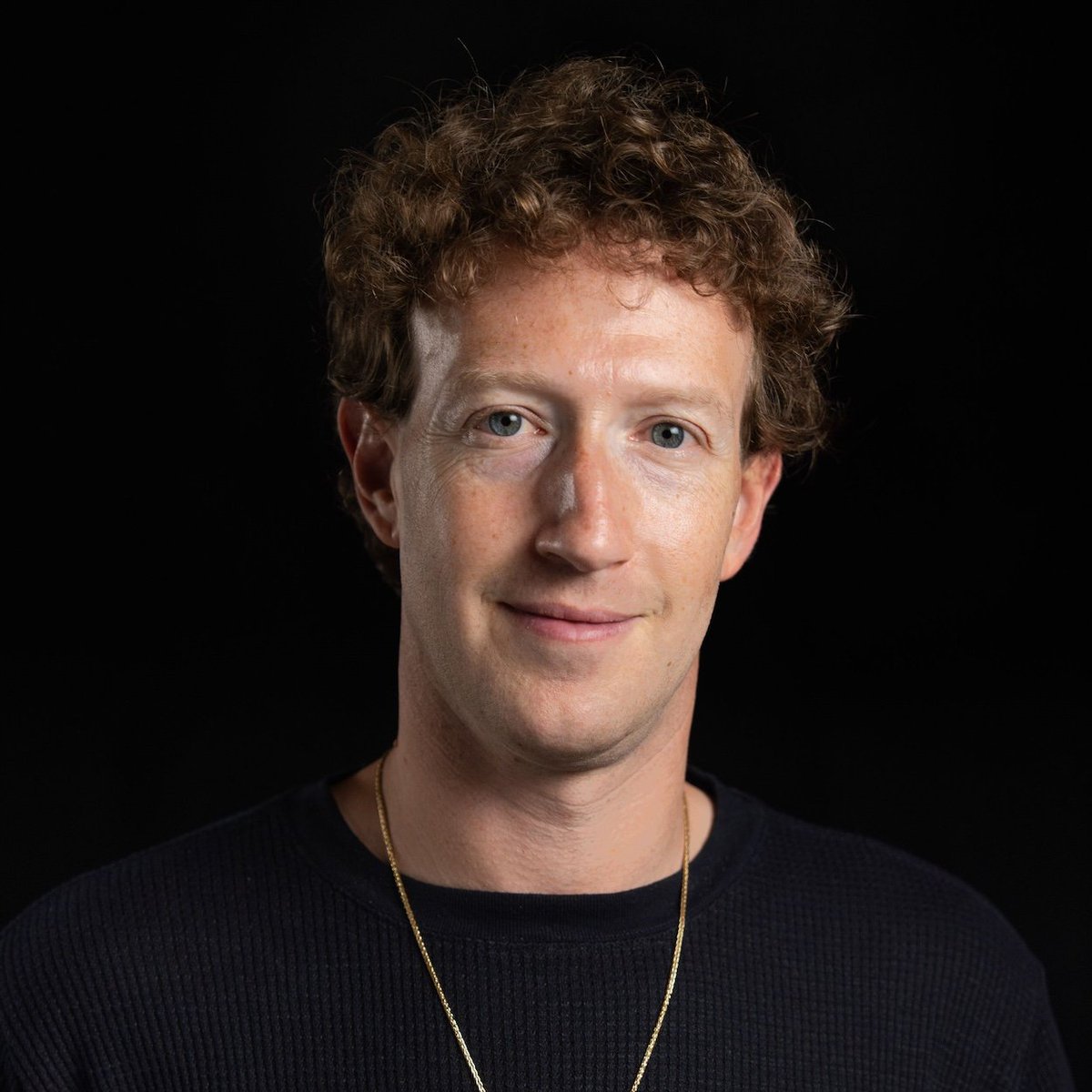
There is no Meta without him really.....And quite amazing for someone who started so early to still be on top of the game 20 years later