I did a PhD in the biology of p53 so, given this week's news, I can't resist sharing some facts about it
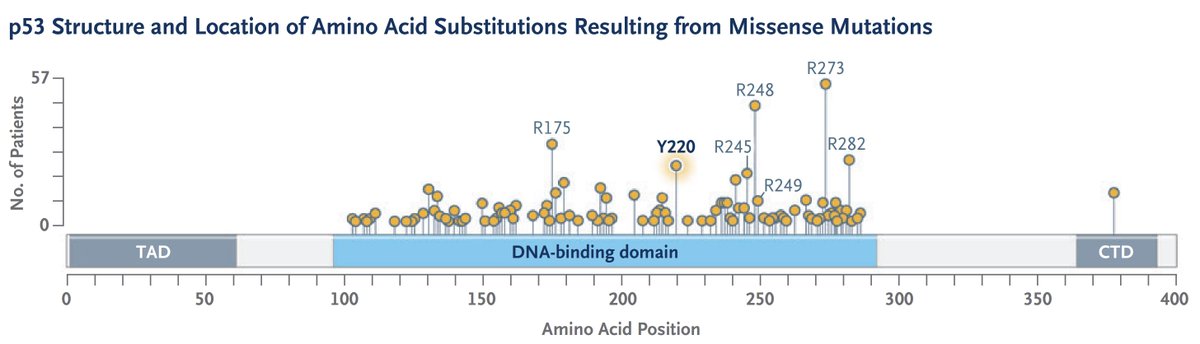
1. Cancers are under intense selective pressure to inactivate p53, and there are >1,000 ways to do it
2. Even one molecule of mutant p53 within the functional tetramer can poison the whole complex — many of the mutations are dominant-negative
3. Some p53 mutations not only disrupt its anti-tumor function, but add new pro-tumor functions (these are the 'gain-of-function' mutations)
We've known all of this for a long time, and it's amazing to see p53-reactivating therapies finally (slowly) having some success in the clinic
देश की बेटियां स्वस्थ और समृद्ध हों, इसके लिए हम कोई कोर-कसर नहीं छोड़ रहे हैं। इसी दिशा में आज सुबह करीब 11:30 बजे राजस्थान के अजमेर में एचपीवी टीकाकरण के देशव्यापी अभियान का शुभारंभ करूंगा। इस पहल का उद्देश्य सर्वाइ���ल कैंसर की रोकथाम है। इस दौरान कई परियोजनाओं के शिलान्यास और उद्घाटन के साथ ही अपने युवा साथियों को नियुक्ति पत्र देने का भी सुअवसर मिलेगा।
https://t.co/LHT7SdJrGc
📢📢Big day for HIF-2α inhibition — the Belzutifan era is expanding in RCC✅
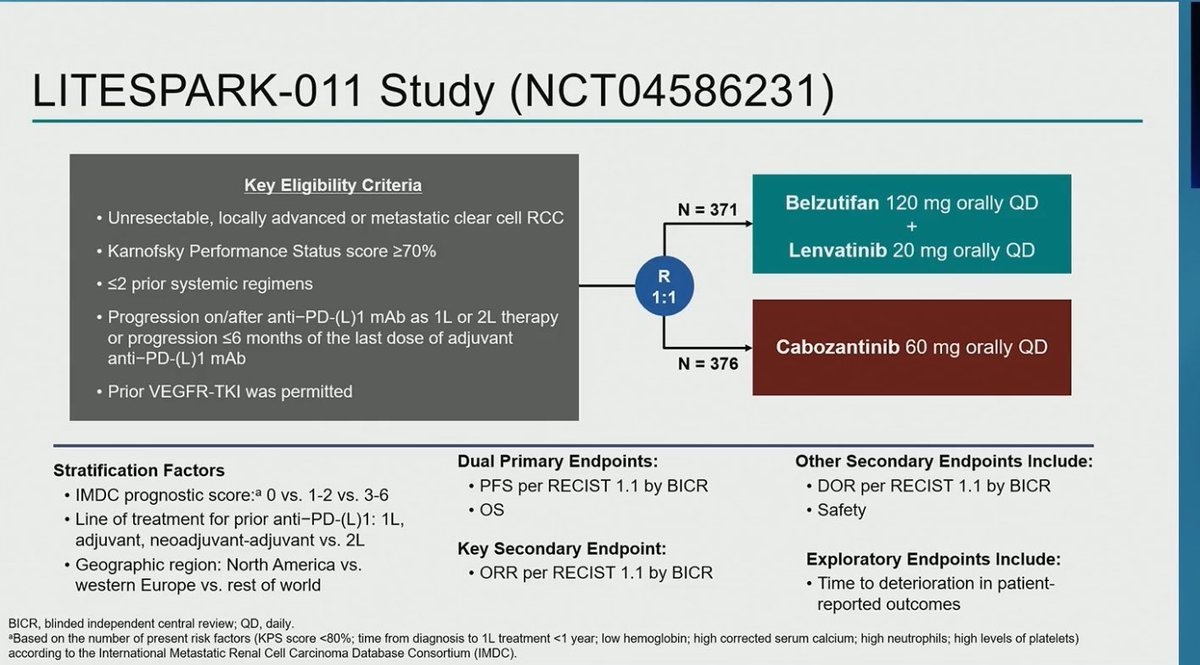
🧬LITESPARK-011 (2L mRCC)
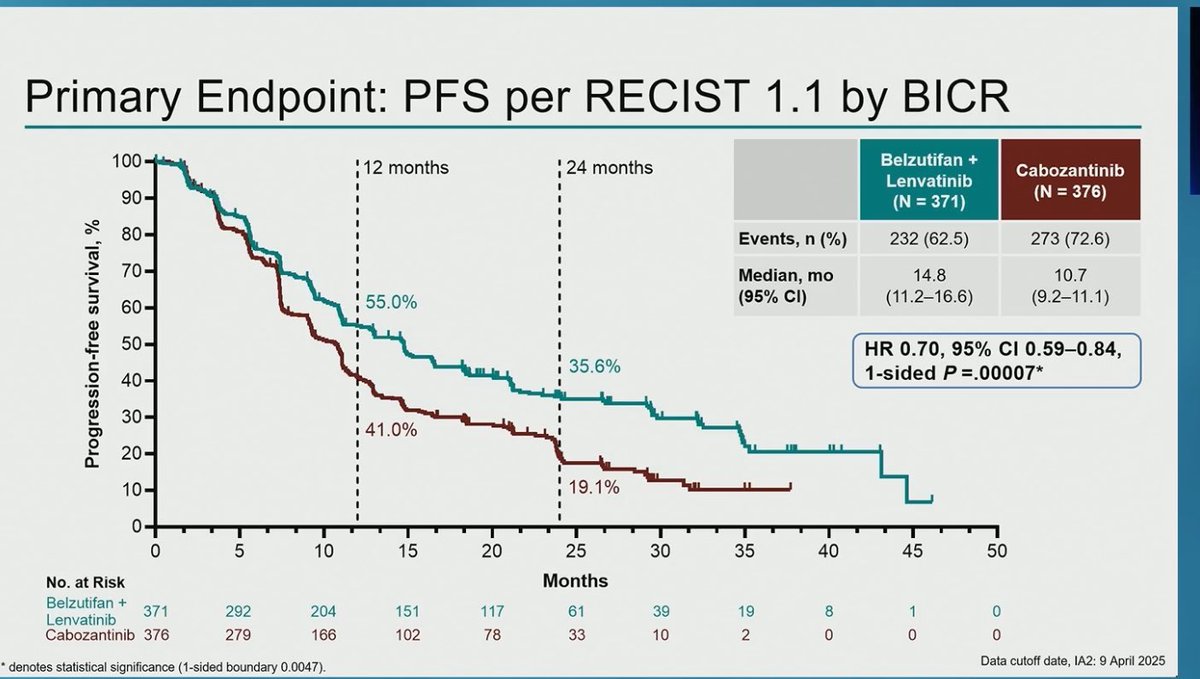
Belzutifan + lenvatinib vs cabozantinib
PFS HR 0.70
24-mo PFS: 35.6% vs 19.1%
Strong and clinically meaningful signal.
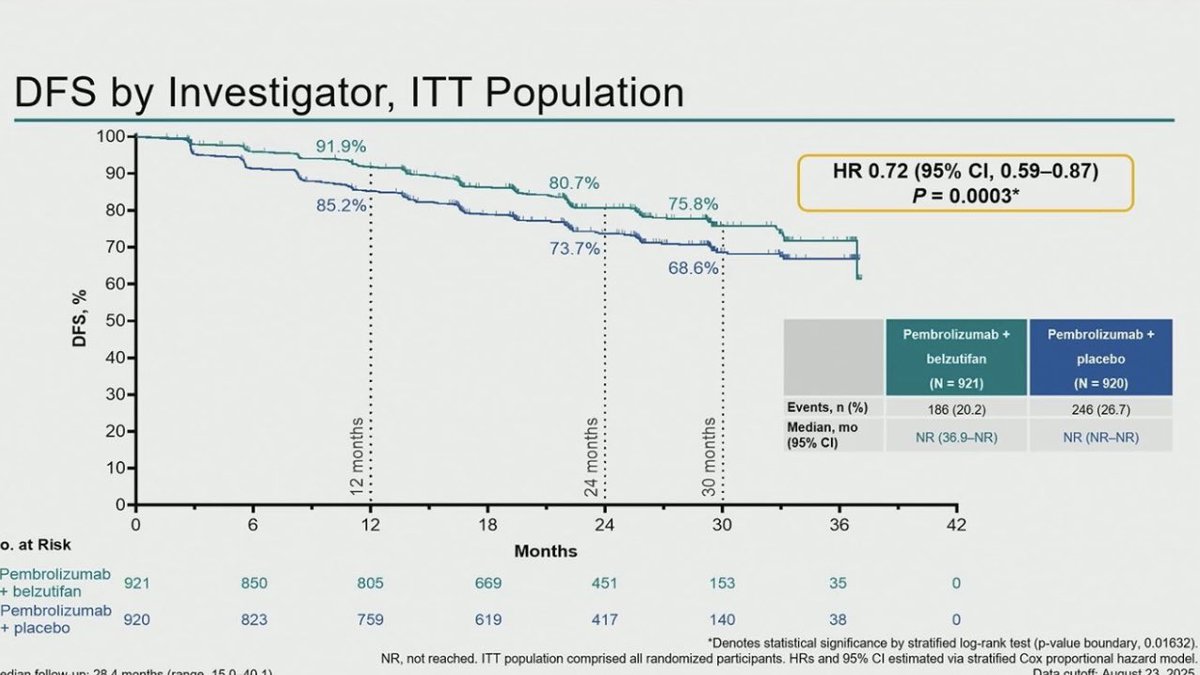
🧬LITESPARK-022 (adjuvant)
Belzutifan + pembrolizumab vs pembro
DFS HR 0.72
~7% absolute gain at 2 yrs
OS immature.
From metastatic to adjuvant —
HIF-2α inhibition is clearly entering prime time. @OncoAlert@OncoReporte@MedwatchKate @MedicalwatchHQ @weoncologists@Uromigos
A brief history of p53-targeting cancer therapies
2003 — Gendicine, a p53 gene therapy, approved in China (but not elsewhere)
2012 — The first small molecule MDM2 inhibitor (RG7112, which works by preventing degradation of p53) enters trials, but did not progress to approval
2013 — Second-generation MDM2 inhibitor (Idasanutlin) reached phase 3, but failed and was dropped
2017 — A dual MDM2/MDMX inhibitor, ALRN-6924, enters trials; it has not since been approved
2020–2021 — A mutant p53 reactivator, Eprenetapopt, fails in phase 3
2023 — An MDM2 inhibitor, Milademetan, fails in phase 3
2024 — Promising phase 1 data for an MDM2 degrader
2026 — Rezatapopt phase 1 data: very promising early data, specific for the p53 Y220C mutation (present in 1% of all solid tumours)
Our work is now published in @Nature.
We introduce the Mouse Cancer Cell Line Atlas (MCCA) and reveal deterministic, tissue-specific rules of KRAS-driven cancer evolution.
Huge thanks to the entire team & collaborators.
https://t.co/vjiwCcHnQl
Real world intracranial efficacy of trastuzumab deruxtecan (T-DXd, HER2 ADC) in HER2 mutant NSCLC @JTOonline. Systemic RR 54.8%, PFS 7.2m, OS 18.3m across lines. As 1L, RR 72.2%, OS 22.1m. Intracranial RR 74.1% in 27 pts. ILD seen in 14% (4 fatal).
https://t.co/QMJ38D4Qf2
@PTarantinoMD@chadinabhan The field’s mistaken belief that higher payload potency would translate to better clinical efficiency delayed progress by at least a decade
When a phase 1 trial is published in @NEJM, you can bet it will be impactful. Here, the p53 reactivator rezatapopt showed an ORR 20% among 77 pts with TP53 mutant (Y220C) advanced tumors. Are we getting closer to drug the most undruggable of all mutations? https://t.co/lpkvWiNNmu