This @NASAHubble image shows an active spiral galaxy on a journey lasting hundreds of millions of years. The galaxy Messier 88 (M88) is located about 63 million light-years away in the constellation Coma Berenices.
Learn more about M88 >> https://t.co/j65CDQ7N19
😃💙“A breathtaking view of Mount Fuji from space”🤎
Soaring above the clouds,Mount Fuji looks almost unreal from this awe-inspiring perspective.
Japan’s most iconic volcano rises majestically beneath the curvature of the Earth,surrounded by the twinkling lights of the city .
Since arriving at its destination five years ago, our Perseverance Mars rover has collected data that hints at a history of past life on the Red Planet.
Catch up on Percy’s biggest discoveries in this week’s episode of our Curious Universe podcast: https://t.co/J5dh8FhHjw
Join us today for a live event where we'll share our @NASAMoonBase plans! At 2pm ET (1800 UTC), we'll update you on our progress toward a long-term presence on the Moon. Watch right here on X.
It’s #SunDay! Here’s your space weather report for the week of May 15 - 21:
• 4 M-class flares
• 3 C-class flares
• 35 coronal mass ejections
• 1 geomagnetic storm
This video from NASA’s Solar Dynamics Observatory (SDO) shows the week’s activity.
It was a fairly calm week on the Sun. A coronal mass ejection last week reached Earth on May 15, triggering a minor geomagnetic storm and leading to aurora sightings across the northern U.S.
On May 20, SDO's Helioseismic and Magnetic Imager (HMI) paused normal science operations for a series of routine calibration maneuvers — measurements that keep the instrument's magnetic field and Doppler velocity data scientifically accurate. You can see these maneuvers starting at about 2:29 in the video.
Learn more about space weather: https://t.co/GRxOaTcMdD
Raising the bar.
NGC 4394 is a barred spiral galaxy, captured here by Hubble.
Bright spiral arms emerge from a central bar of stars. These arms sparkle with young blue stars, dark lanes of dust, and hazy regions of new star formation: https://t.co/2BOQMTKhEE
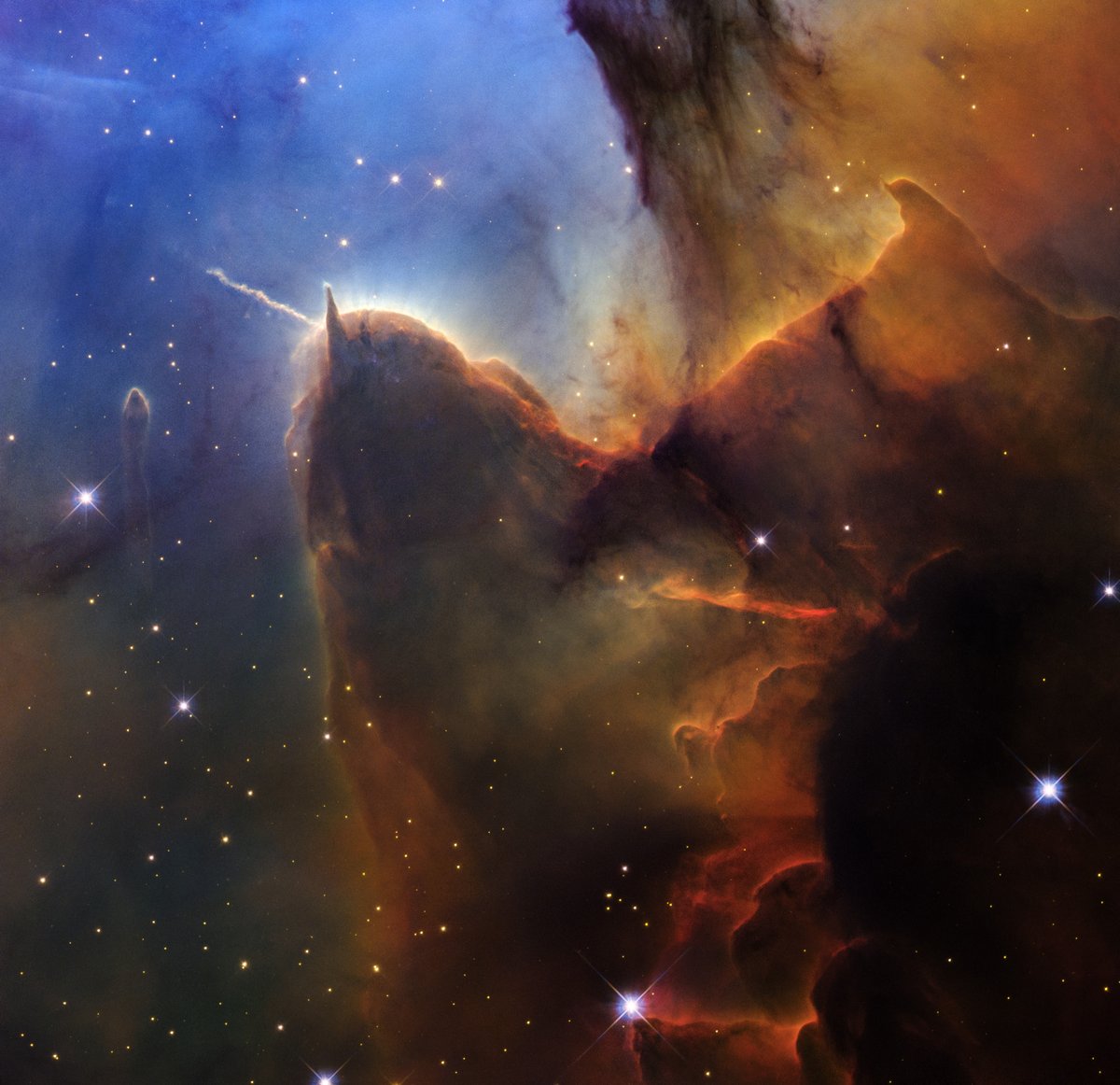
5,000 light-years from Earth, stars are forming in the Trifid Nebula. Our orbiting @NASAHubble telescope is taking a close look: https://t.co/gkoaV8e64M