The War in Gaza Harms Israeli–Moroccan Normalization
INSS researcher Dr. @link_morr writes:
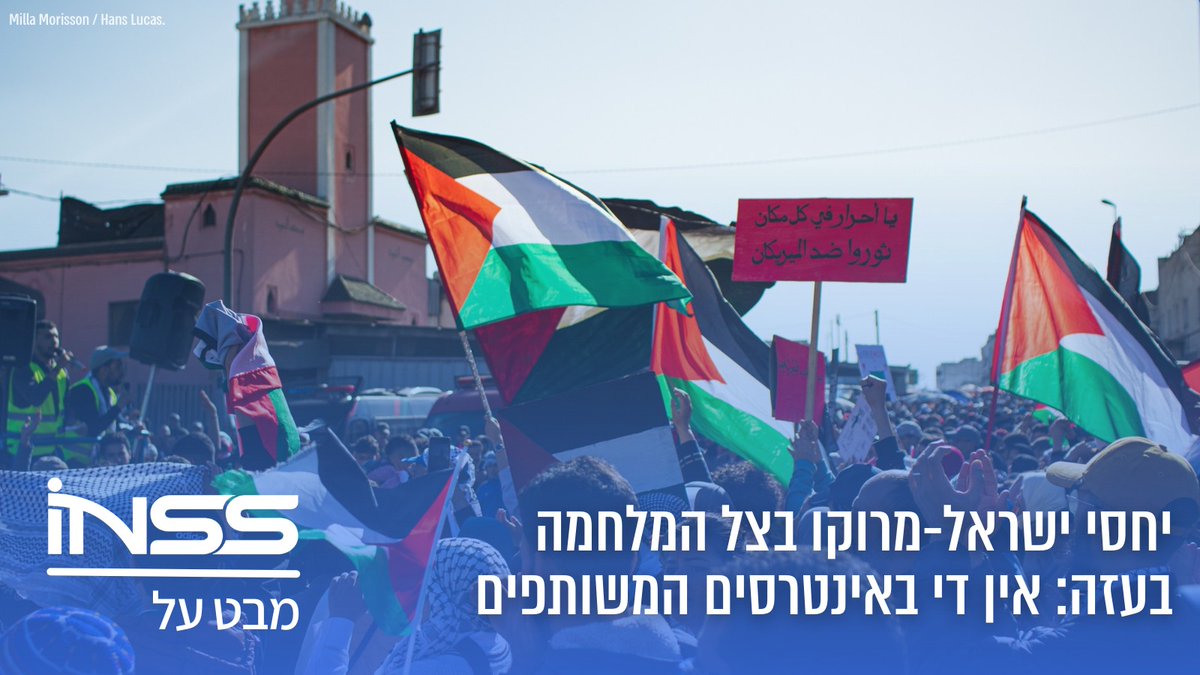
A recent @ArabBarometer report, published last month, reveals troubling findings from an Israeli perspective. The latest opinion poll indicates a sharp decline in popular support for normalization between Israel and Arab states, including Morocco, dropping from 31% in 2022 to only 13%. This marks a significant shift in Morocco, which previously had high levels of support for normalization compared to other Arab countries like Egypt and Jordan.
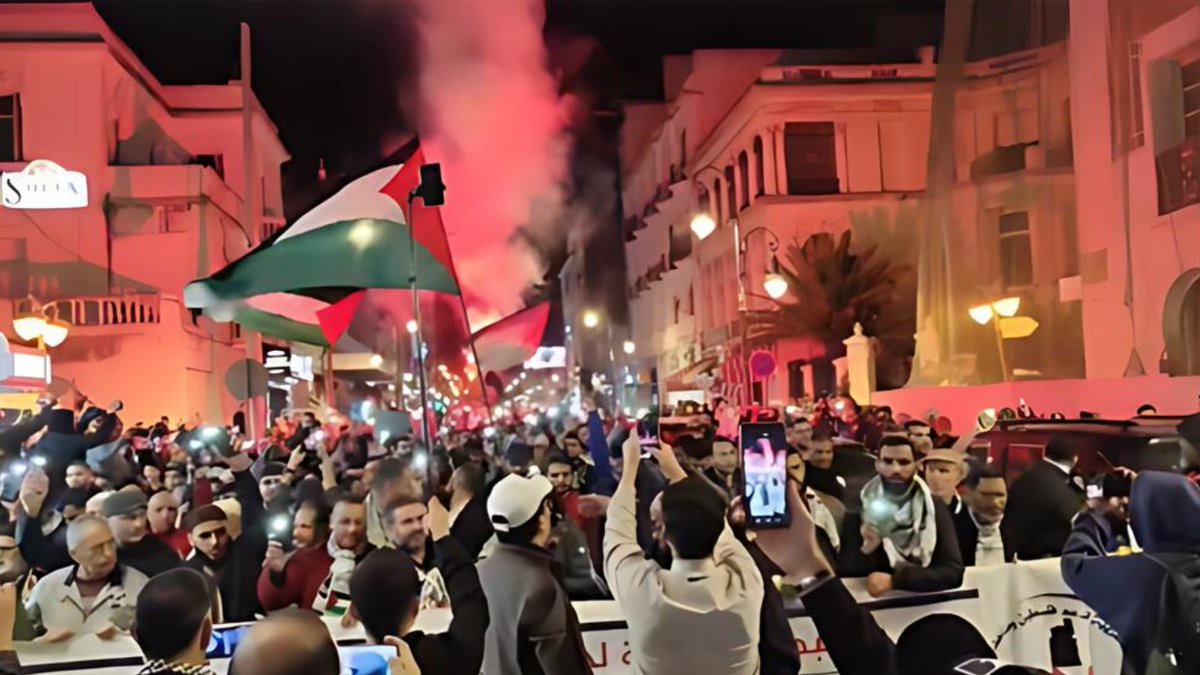
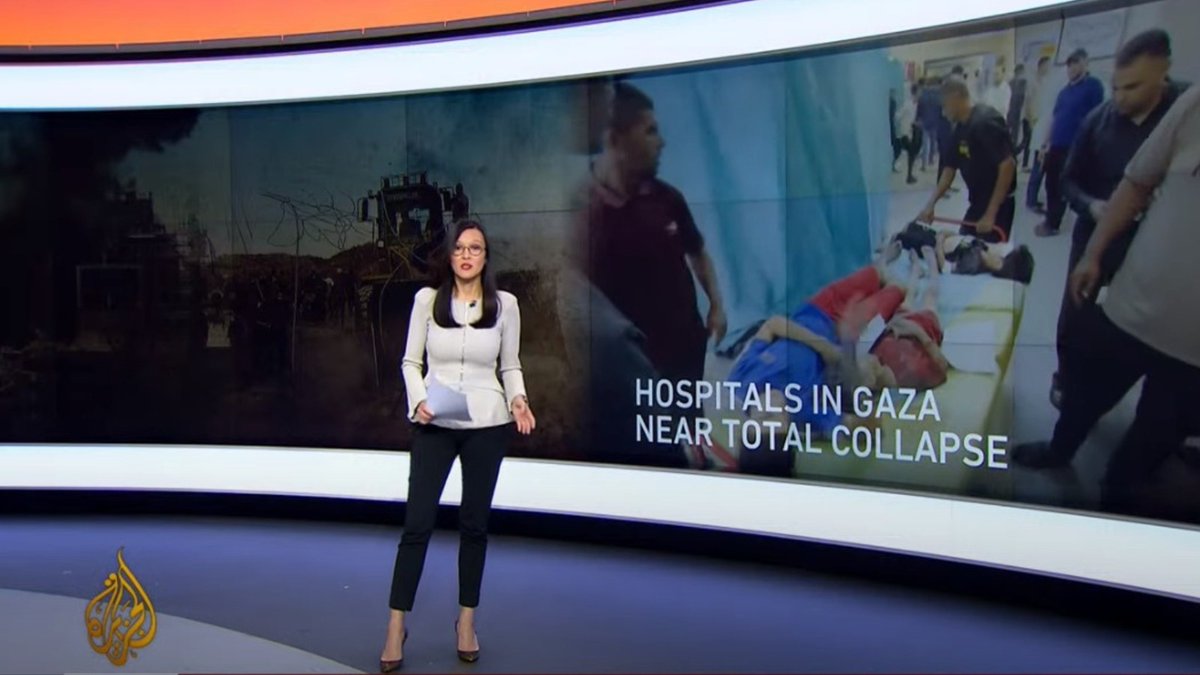
This decline is attributed to how the Arab world, including Morocco, views the ongoing war in Gaza. According to the poll’s findings, Moroccans commonly describe the events in Gaza as a massacre (26%), a war (24%), a genocide (14%), or a mass killing (14%). Since October, almost weekly protests have been held in Morocco in support of the Palestinians, commonly calling for severing of ties between Israel and Morocco.
This trend exacerbates the tension between Morocco’s official policy of maintaining ties with Israel, albeit at a low profile, and the increasing public and political opposition. On the one hand, the Kingdom has allowed public demonstrations in support of the Palestinians, an issue that has gained significant support in Morocco and in the Arab world in general. Over the years, the Royal Palace has consistently reiterated its support for the Palestinians to establish a state within the 1967 borders, alongside Israel. These demonstrations also help deflect attention from pressing domestic issues such as the cost of living. On the other hand, the Kingdom has shown little tolerance for open criticism of its official policies of continuing its ties with Israel, and at least two people have been arrested in recent months for criticizing its policies.
While key aspects of Israeli–Moroccan relations remain unaffected by the war in Gaza—bilateral trade continues, and security ties remain intact—other important aspects have been significantly harmed, most notably overt diplomatic ties, official visits, and tourism. This pattern of fluctuating relations during periods of escalation in the Israeli–Palestinian conflict is not new. Israel would do well to remember that Morocco’s support for the Palestinians may extend beyond lip service. During the Second Intifada, Morocco went as far as severing relations with Israel due to the conflict’s escalation, and it took nearly twenty years to renew them.
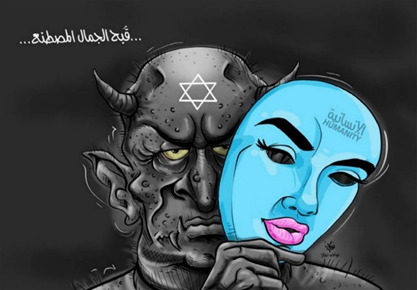
Antisemitic expressions in Arab discourse post-October 7 go beyond Hamas and Islamist groups. Understanding and addressing this hatred is crucial for lasting peace in the Middle East.
Joint article with @link_morr in @TelAvivUni antisemitism annual Report.
https://t.co/h1J77lGgKB
מהסכמי קמפ-דיוויד ועד הסכמי אברהם, משטרים ערביים שפנו לשלום עם ישראל ניצבו בפני אתגר קשה: מתן לגיטימיות למדיניות מהפכנית השנויה במחלוקת ציבורית עמוקה. כיצד ניגשו למשימה? התשובה בספרי החדש "בשם אללה: הפולמוס האסלאמי סביב השלום עם ישראל". זמין לקריאה בלחיצה.
https://t.co/3je7ahivBB
Exploring the Future of Israel-Egypt Relations through Education 📚 How does Egypt's curriculum shape the prospects for peace and normalization with its Israeli neighbor?
A joint article with Dr. Eldad Pardo.
@IMPACT_SE@INSSIsrael
https://t.co/yj5HiFg4c9
@kisralkaid@malcacohen1@rafa_refaella@kaisos1987 Some reports were indeed refuted (including the baby-in-oven story). You will not see me defending false reports. But I provided you with evidence regarding sexual violence against Israeli women, documented by a credible source. Do you have enough integrity to respond?
@VakninYaron2@bernstein_ariel אופס יצא לך מיזוגני :) איזה כיף זה אנשים בטוויטר שלא מסוגלים לנהל דיון ענייני.
לעצם העניין - טענת שאחמד טיבי לא יכול לשבת בכנסת כי קרובי המשפחה שלו בעזה מהווים ניגוד אינטרסים. זה אותו טיעון שמופנה נגד יהודים לאורך ההיסטוריה - שהם נאמנים לעצמם, לישראל, ולא למדינות בהן הם חיים.
@kisralkaid@malcacohen1@rafa_refaella@kaisos1987 Have you bothered to read the NYT article I literally just posted? It is the result of an investigation carried out by NYT reporters Jeffrey Gettleman, Anat Schwartz and Adam Sella, who interviewed more than 150 people.
@kisralkaid@malcacohen1@rafa_refaella@kaisos1987 تفضل ابو القسام الكذاب:
https://t.co/24uuRmL9VA
A Times investigation uncovered new details showing a pattern of rape, mutilation and extreme brutality against women in the attacks on Israel
What is Egypt's perspective on post-war Gaza, and does it align with or differ from Israel's?
Joint piece with @link_morr and Adam Sharon.
@INSSIsrael#HamasMassacre#Egypt
https://t.co/8FeqXsk5B0
תגובותיהן של מדינות ערב בשבועות האחרונים מאתגרות את האמונה שלפיה ישראל יכולה לקדם את יחסיה עמן במנותק מהסכסוך הישראלי-פלסטיני - ומרוקו אינה יוצאת דופן, למרות האינטרסים המשותפים לה ולישראל.
@two__evils Great job! Next up, every non-indigenous American at the protest returns to their ancestral homelands, right? Looking forward to seeing this unfold.
Let the world know what happened to women in Israel during Oct.7th.
It’s been 37 days and the rumours turned to unbearable truth that MUST be revealed.
Here's the recording from the event @Harvard: https://t.co/p8zWgDUCf0
Here’s the recording of the press conference held tonight by @JPressClub and @MediaCentral, with @CochavElkayam, prof. Yifat Bitton & Sheri -giving a horrifying testimony of the unit dealing with identification and burial of female soldiers
_⚠️Warning: Graphic descriptions of attacks presented.⚠️__
Watch the full briefing here:https://t.co/DtXmGB3sOr
#UnconditionalHumanity
#BringThemBackHomeNow
@BonotAlt@UN_Women
@ofirwinter מסביר מדוע הרעיון ההזוי של טרנספר תושבי עזה לסיני לא ריאלי - ואף גורם נזק אסטרטגי לישראל: ״ המסר שיוצא בימים האחרונים מקהיר לירושלים הוא ברור: זה משחק באש שעלול לפגוע ביחסי השלום".
https://t.co/sAL5UbVnet
The “Gaza Holocaust”: The Outrageous Framing of the War by the Arab Media
INSS researcher Mor Link writes:
Since the terror attack by Hamas, numerous media outlets across the Arab world, including from Egypt, Jordan, Morocco, and Bahrain, have compared the Israeli airstrikes on Gaza to the Holocaust, sparking a renewed focus on the nature of Holocaust narratives in Arab discourse. One prominent example: on October 19, the Egyptian daily newspaper al-Youm a-Sabi – a publication affiliated with the regime – described the war in Gaza as “the Gaza Holocaust,” encapsulating a comparison pervasive in media circles.
While not new, this trend underscores the inherent contradictions within Holocaust narratives prevalent in Arab and Muslim countries. Academic research has shown that Arab discourse on Holocaust denial began as early as 1945, escalating in the subsequent decades of Israeli-Arab conflict. This discourse is fraught with dissonances, simultaneously denying, justifying, and employing the Holocaust to depict Israeli actions against Palestinians.
These narratives are reflected in contemporary attitudes toward the Holocaust in the MENA region. Data from the Anti-Defamation League (ADL) for 2014-2015 paint a grim picture of Holocaust perceptions in the MENA region: 59% of respondents reported being unaware of the Holocaust; 52% believed that the atrocities and the death toll of Jews cited have been greatly exaggerated;11% regarded the Holocaust as a myth; and only 22% felt the historical accounts are accurate. Significantly, these perceptions are not limited to the MENA region, but are also prevalent in Arab and Muslim diasporas in the West.
An op-ed in Akhbar al-Khaleej, a Bahraini newspaper known for maintaining a relatively independent stance from the regime, exemplifies these discrepancies, stating: “What the Palestinian people have endured for the past 75 years is a Holocaust of their own…surpassing the Zionist narratives and legends about the Jewish Holocaust. The Zionist entity has perpetrated severe crimes beyond anything seen worldwide, which makes the Palestinian Holocaust an atrocity a thousand times greater.”
This emphasizes the urgency of confronting antisemitism and Holocaust denial within Arab and Muslim communities, both in the MENA region and in diasporas in the West. To be sure, certain shifts in these attitudes are already underway, particularly in the Abraham Accords states. Countries like Morocco and the UAE, which champion religious tolerance and the fight against extremism, have taken substantial measures to grapple with antisemitism. This includes the integration of Holocaust education into school curricula, demonstrating a commitment to counter historical distortions.
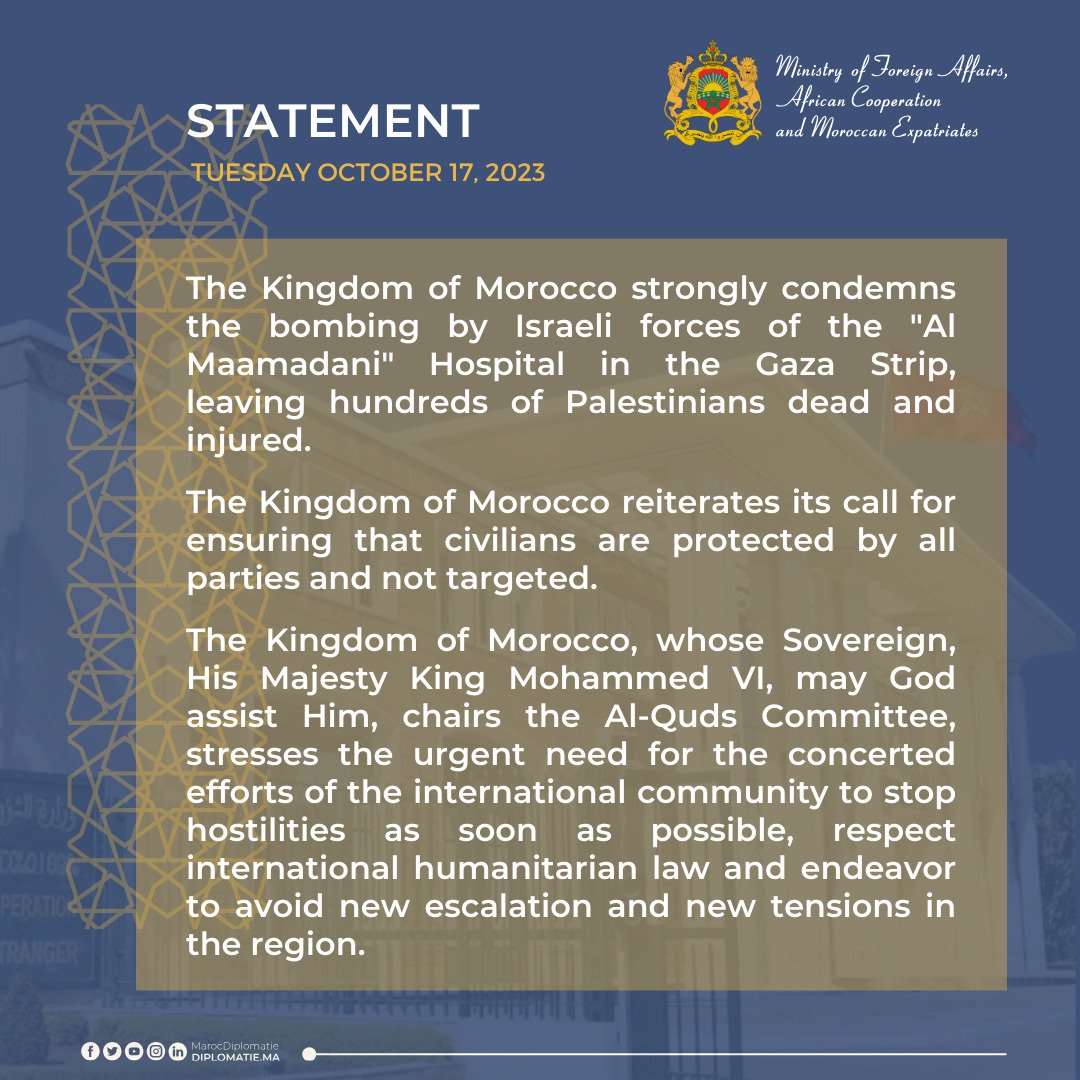
🔴Statement: The Kingdom of Morocco strongly condemns the bombing by Israeli forces of the "Al Maamadani" Hospital in the Gaza Strip, leaving hundreds of Palestinians dead and injured.
1/While states use 'Model BITs,' variations arise when accommodating partners’ experiences with investor disputes. We introduce new measures to understand these changes, revealing: the more a partner has faced investment claims, the more the agreements deviate to suit their needs