@0xpiyushvm@Replit@GoogleAds Owner approval on the final amount is a good boundary. I'd also scope that approval to one purchase: amount, merchant, and an expiry, so a retry can't silently reuse it for something else.
@dasmersingh@ChatGPT Not handing the model raw card details is a good baseline. The next question I'd ask: if the agent's payment request times out, how does it find out whether the charge actually went through before trying again?
@0xALTF4 Agreed. The part I'd separate: a limit the model is told about vs. a limit the wallet actually enforces. Amount, recipient, and expiry checked outside the model, so a persuasive prompt can't talk its way past them.
@shubhkumar01 A part that often gets skipped: what happens when the same key comes back with a different request body? Stripe's API v1 compares parameters and errors on a mismatch. Deciding that behavior up front matters as much as storing the key.
@CNRTechBeast One thing I'd add for the payment step: 'failed' and 'timed out' need different compensations. If payment timed out, releasing inventory right away can be wrong, because the charge may still succeed. Check the payment status before compensating.
@Josephyala The outbox closes the 'saved but never published' gap. Consumers still need to handle the same event twice, though: the relay can crash after publishing but before marking the row as sent. Outbox on the producer side, dedupe on the consumer side.
@RoundtableSpace Per-request payments make retries a real design question. If the search call times out after the payment went through, does the agent pay again, or look up the original payment? That matters more when agents make thousands of small calls.
@Julioxiong_ Biometric approval is a strong record of what the user intended. I'd also record what actually settled: approved vs. executed amount, and what happens if the request times out after approval. Pix or QR rails make that part even more interesting.
@rishikkumar84ya The retention point is underrated. If a retry can arrive after the key expires, you need a status lookup or reconciliation path, not just the key. An unknown outcome needs somewhere to resolve to.
@keanumonterde Same key, same action is the right start. I'd also reject a reused key with different params (like a different amount), and save the key together with the result atomically. Otherwise a crash between charge and save brings the doubt back.
@SwapnilNakate9 Agree the backend owns it. One edge I'd add: the second request can arrive while the first is still in flight. So the key store needs an 'in progress' state, not just 'done', or both requests can still reach the processor.
@domainlancer Same split I'd apply to payments: the agent can prepare an invoice payment, but whether it can execute should be decided by a policy the model can't rewrite: amount, recipient, expiry. Authentication tells you who's asking, not what they may do.
@javierbits Putting the check outside the agent is the right instinct. An injected agent can ask for anything; what matters is what the firewall lets through. If a payment succeeds but the agent never sees the response, do you retry or look up the original?
@eventtoactionk The fix has its own edge: write state first, and a crash before the 200 means the provider retries an event you already handled. That's fine if the handler dedupes on the event ID in the same transaction as the state change. Ack order and dedupe go together.
@williamm168@EvanWeb3 The part I'd want enforced outside the model: amount cap, merchant, and expiry, checked by the payment side. A prompt saying 'only $20' asks the agent to behave. A scoped permission limits what can actually happen.
@lotharthesavior Anything that crosses a boundary I don't control, like a payout to an external account. If the response is lost, I'd want a status lookup by a stable operation ID before any second attempt, not just a retry.
@dash12_dev A valid signature proves origin, not mapping. I'd attach our own reference (order or customer ID) to the payment when it's created and resolve from that, never from email. Do you also store the event ID to skip redeliveries?
This is not enough to prevent duplicate work:
if (!processed) {
doWork();
markProcessed();
}
Two workers can both pass the check.
The interesting part isn't the if statement. It's the atomic boundary around claiming the work.
Backend engineering question: if an AI agent retries a payment, how do we make sure “try again” doesn’t become “pay again”? 😅
Idempotency isn’t the flashiest topic, but it gets pretty interesting when software starts acting on our behalf.
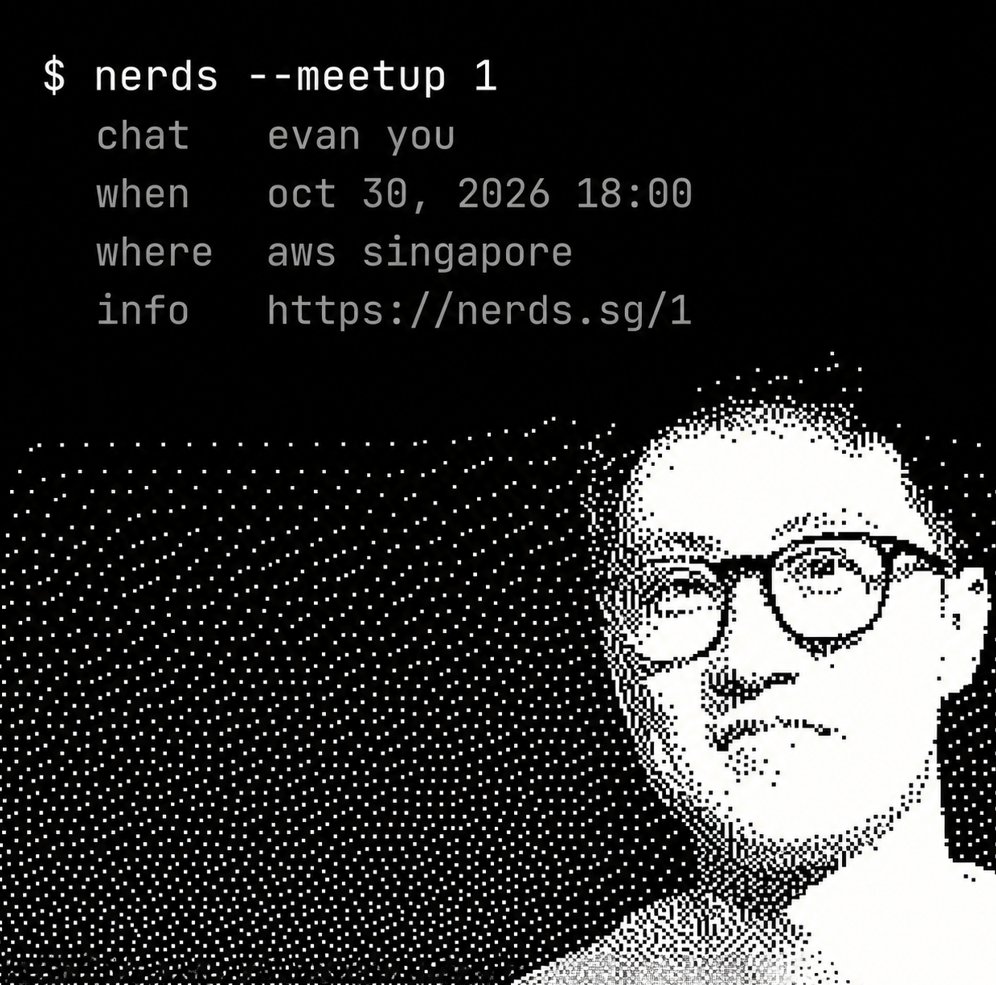
Got to meet Evan You, the creator of Vue which is the FIRST frontend framework I used at my first dev job!!
A bit of a fangirl moment 🥹
Also, he's only eight years older than me…