The @TrustLayerIO team has been an amazing group from the start, and I am so proud of how far we’ve come. Our Series A is only the beginning -- we’re ready for the next phase of insurance innovation!
https://t.co/iwzQ0kf74W
The "expel grifters" part is challenging. @dax is right when he says they poison the well (crypto bros now all-in on AI as an example). Love the excitement, but technical depth is what keeps the right people interested and motivated long term.
Designers are amongst the most impactful professionals in society. Empathy. Ability to capture the essence of a task while balancing aesthetic and function. Relentless pursuit of simplicity and intuitiveness. Skills that cannot be easily thaugth. Arguably instincts.
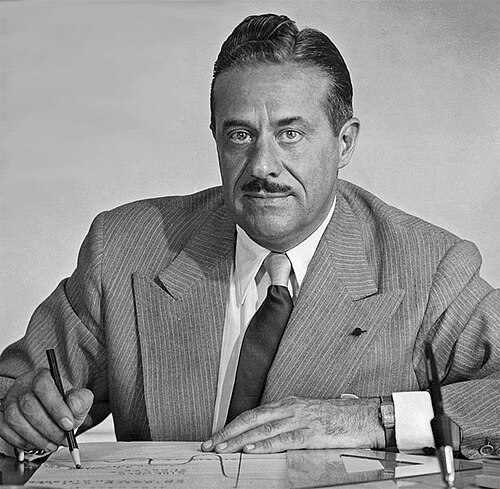
Do designers like Raymond Lowey or Henry Dreyfus exist anymore? Designers who can design anything?
These guys designed locomotives, thermostats, telephones, buildings, ocean liners, company logos, typewriters, vacuum cleaners, floor polishers, product packaging, cars, bottles, aircraft interiors, livery, stamps, radios, tractors, even space station interiors!
The depth, breadth, quality, and taste of their work is astonishing. Where are these people today? Who are these people today? Who's working across so many different industries, mediums, product types, and categories at such a high level?
https://t.co/Fn7LjgZ9Yy
https://t.co/Qf9nJqFeWh
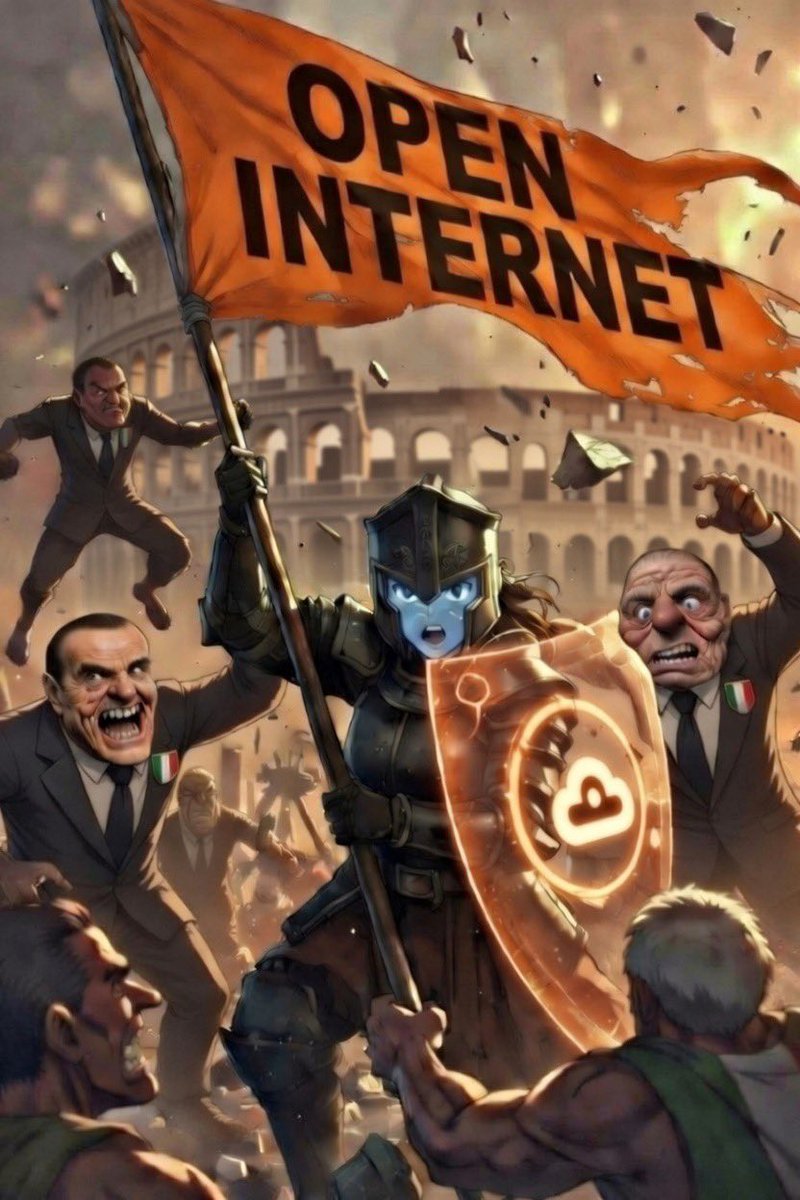
Yesterday a quasi-judicial body in Italy fined @Cloudflare $17 million for failing to go along with their scheme to censor the Internet. The scheme, which even the EU has called concerning, required us within a mere 30 minutes of notification to fully censor from the Internet any sites a shadowy cabal of European media elites deemed against their interests. No judicial oversight. No due process. No appeal. No transparency. It required us to not just remove customers, but also censor our 1.1.1.1 DNS resolver meaning it risked blacking out any site on the Internet. And it required us not just to censor the content in Italy but globally. In other words, Italy insists a shadowy, European media cabal should be able to dictate what is and is not allowed online.
That, of course, is DISGUSTING and even before yesterday’s fine we had multiple legal challenges pending against the underlying scheme. We, of course, will now fight the unjust fine. Not just because it’s wrong for us but because it is wrong for democratic values.
In addition, we are considering the following actions: 1) discontinuing the millions of dollars in pro bono cyber security services we are providing the upcoming Milano-Cortina Olympics; 2) discontinuing Cloudflare’s Free cyber security services for any Italy-based users; 3) removing all servers from Italian cities; and 4) terminating all plans to build an Italian Cloudflare office or make any investments in the country.
Play stupid games, win stupid prizes. While there are things I would handle differently than the current U.S. administration, I appreciate @JDVance taking a leadership role in recognizing this type of regulation is a fundamental unfair trade issue that also threatens democratic values. And in this case @ElonMusk is right: #FreeSpeech is critical and under attack from an out-of-touch cabal of very disturbed European policy makers.
I will be in DC first thing next week to discuss this with U.S. administration officials and I’ll be meeting with the IOC in Lausanne shortly after to outline the risk to the Olympic Games if @Cloudflare withdraws our cyber security protection.
In the meantime, we remain happy to discuss this with Italian government officials who, so far, have been unwilling to engage beyond issuing fines. We believe Italy, like all countries, has a right to regulate the content on networks inside its borders. But they must do so following the Rule of Law and principles of Due Process. And Italy certainly has no right to regulate what is and is not allowed on the Internet in the United States, the United Kingdom, Canada, China, Brazil, India or anywhere outside its borders.
THIS IS AN IMPORTANT FIGHT AND WE WILL WIN!!!
Favorite excerpt from Brent Beshore's annual letter:
What CEOs Are and Aren’t
Most people think of a CEO as the person at the top. That’s true in the same way it’s true that the windshield is “at the front” of the car. Technically correct.
Also, misses the point. The windshield isn’t the engine. It isn’t the wheels. It doesn’t move anything. But it does determine what the driver can see, what they ignore, and what they slam into at 70 miles an hour.
When done well, the CEO job is an arbiter of truth. The CEO stands at the border between the outside world and the inside world, between company mythology and competitive reality. That sounds obvious, but it’s not.
I’d argue the norm is delusion, where organizations create realities disconnected from truth, complete with alternate headlines, villains, and heroes, all proclaimed with a shocking level of certainty.
So the CEO’s job starts with a basic question: What’s true?
Not what’s comforting. Not what’s politically convenient. Not what our dashboards can measure. What’s true?
And what should we do about it?
But deciding what to do and then doing it, requires a blend of rare attributes.
The CEO must be confident enough to pick a direction and humble enough to change it.
Optimistic enough to inspire and paranoid enough to prepare.
Warm enough to build trust and hard enough to make calls that disappoint people they like and care about.
We need to strip away the mystique.
In practice, the CEO allocates three things:
Attention: If you want to understand a CEO, ignore their strategy deck and read their calendar. Where attention goes, energy flows. Where energy flows, money follows. And where money follows, the organization slowly becomes something different, usually without anyone noticing until it’s obvious. This is why the CEO’s attention is so expensive. It’s why it’s so easy to waste. There are a thousand “important” meetings that are actually just elaborate ways to avoid the one meeting that matters. There are a thousand “urgent” problems that are actually just the company asking the CEO to temporarily soothe anxiety. A CEO’s attention is the company’s flashlight. Point it at the right things and companies transform. Point it at the wrong thing long enough and the wrong thing becomes the thing.
People: The CEO builds the team that builds the team. I’ve learned that a healthy company isn’t built by a heroic CEO. It’s built by a great team operating with clarity, trust, speed, and accountability. The CEO’s role is to create that environment, protect it, and, when necessary, make the painful personnel decisions that preserve it. This sounds straightforward until you live it. Then you realize you’re not moving boxes on an org chart. You’re messing with people’s dignity, livelihoods, and families. You’re also messing with the morale of everyone who stays. Every hire is a bet. Every promotion is a signal. Every tolerated behavior becomes a de facto policy. The CEO becomes, whether they like it or not, the embodiment of culture. It’s not what they say they value, but what they practically reward, punish, ignore, and allow.
Money: This is the CEO’s most difficult job because it’s often the one they’re least trained for, that seems the most glamorous, and is extremely impactful over time. Most CEOs come up through some form of excellence in sales, operations, engineering, or product. Then one day they wake up and realize the biggest decisions they make are capital allocation decisions: reinvest or distribute, grow or consolidate, buy or build, add headcount or automate, bet on the future or play it conservative. Capital allocation is where strategy stops being a noun and becomes a verb. It is where vision gets an audit. And it’s also where a CEO can quietly ruin a business while looking busy.
It’s remarkably easy to confuse action with progress, and reinvestment with wisdom.
Oftentimes the best capital allocation decision is painfully boring: Do fewer things, do them better, and keep your powder dry. But, that’s not what gets applause.
In our world, with long-term owners, permanent capital, and no forced exit timetable, this is where the CEO job gets simpler. We don’t need theater. We don’t need growth for growth’s sake. We don’t need to hit a narrative for the next fundraising cycle or quarterly call. We can play offense when the opportunity is real and defense when it isn’t. We can say “not now” without pretending it’s “never.”
This brings me to what might be the most misunderstood part of the CEO role: The CEO is the Chief “No” Officer. Every yes is a no to something else. Every strategy is a pile of exclusions. Every commitment is a tradeoff.
The organization will always ask for more: more initiatives, more products, more meetings, more hires, more exceptions, more complexity.
Increasing complexity is the default setting of life, and companies are not exempt from natural order. A CEO has to become comfortable being the person who disappoints people in the short term so the company doesn’t disappoint everyone in the long term.
This is where I’ve personally struggled, both as a leader and as an owner. I want to be helpful, agreeable, and liked. I can easily slip into short-term people pleasing at the expense of leading well. Sometimes I’ve confused my progress anxiety for insight. I’ve wandered into decisions too early because “someone should do something.”
I’ve also learned slowly and painfully that a CEO can add enormous value simply by refusing to add noise. Clarity is kindness, but often feels like inaction to busy people. A lot of CEO work is invisible. It’s pressure management. It’s absorbing emotion without spreading it. It’s knowing what you think and how to say it with grace. It’s carrying the weight of uncertain outcomes while still asking the team to move forward decisively.
This is why, in our portfolio, we care less about a CEO’s charisma and more about their character and judgment. We’ve found that the best CEOs have a rare combination of humility and intensity. They don’t need to be the smartest person in the room, but they do need to be the clearest. They don’t need to have all the answers, but they do need to be willing to make the hard call.
Amusing how everyone (who is not a dev) who assumed *writing code* is the hard part about sw development cannot comprehend:
That now that LLMs can write code 100x faster (and 100x more) than human devs - creating the software they want is STILL hard!
Seemingly incomprehensible
@theo Closest console-like experience for AAA PC gaming: a powerful mini-pc (they are almost silent) with an Oculink port that lets you connect a full desktop GPU via dock. My setup: Minisforum AI X1 Pro + 5070 Ti on Minisforum eGPU Dock.
* https://t.co/2WqZ2ZjuBf
Irrational fear of rebasing has put the whole industry back for at least 10 years.
I blame GitHub and the fact that no one at GitHub understood how rebasing works and it somehow became the most popular code platform
@Harada_TEKKEN this is a love letter to the community. Thanks for doing this. I strongly encourage everyone to pledge their support and demonstrate their love for the Tekken project. More than willing to pay for this content. I’d pay for the opportunity to make my vote count.
These days, it takes an enormous amount of time and money to create a battle stage. So if there are any stages from past Tekken series to be remake, we would like to listen to everyone's requests and carefully select them.
Which of these stages would you guys like to see remake?
Se la spesa per il superbonus avesse davvero raggiunto la cifra di 180 miliardi di euro, sarebbero 4 miliardi in più del costo di tutto il programma nucleare francese (57 reattori operativi) dal 1973 ad oggi.
Solo che noi li abbiamo spesi in 4 anni per rifare le facciate.
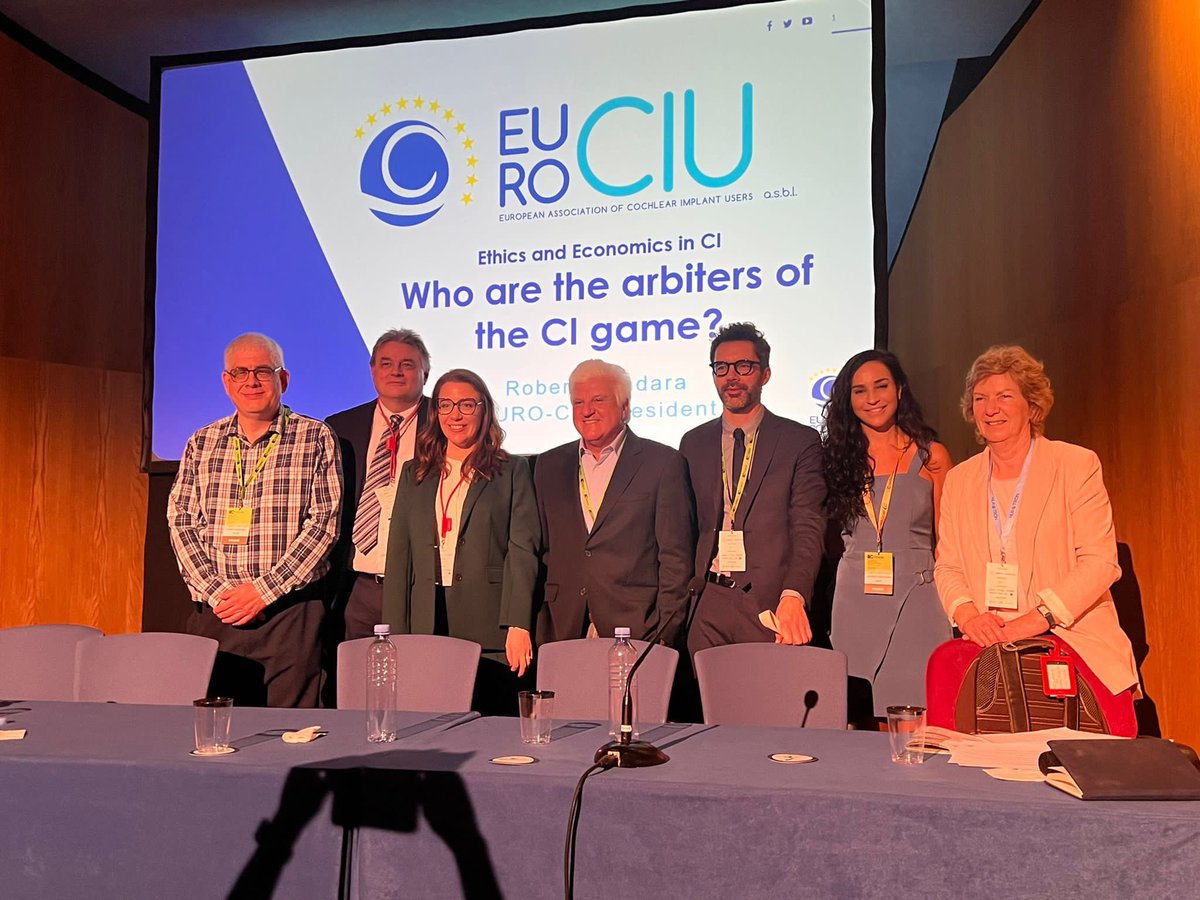
What a conference! Proud to speak about a current study with @medel and to serve on 3 conference panels and the scientific advisory committee at #CI2024spain. Sharing the stage with global leaders in CI is such an honor!! @UMiamiHealth@UMiamiAudiology
Rails 8 targets PWAs, Rails X should target WASM! Check out this thread—we're much closer than you might think,
P.S. Just imagine having a Rails app running completely in your browser (backed by in-browser SQLite, of course). What will you build?
There were no server actions when we created Remix. So we created route actions. Now React has server actions.
There was no way to fetch data in components on the server before Remix, so we created route loaders. Now React can fetch data in components for SSR with RSC.
React had no way to know the pending status of an action, so we added useNavigation and useFetcher hooks in Remix. Now React has useFormStatus.
React has no way to know the result of an action, we added useActionData and useFetcher. Now React has useFormState.
React had no way to know the state of a transition, so we added useTransition. Now react has useTransition (and we changed to useNavigation)
React had no way to add optimistic UI to a pending action so we added it to useNavigation and useFetcher. Now react has useOptimistic.
People who criticize Remix for not doing it “the React way” must not be paying attention to the timeline. React merged Remix into main.
It’ll take us a bit to adjust to the subtle differences of our already existing features. Would ofc be easier if we didn’t have these features in the first place, but we do!
Seeing some qs on what Gemini *is* (beyond the zodiac :). Best way to understand Gemini’s underlying amazing capabilities is to see them in action, take a look ⬇️
This is what’s so odd about the tech discourse. You can literally be doing things at great scale (Shopify/Rails), and people will claim it doesn’t scale. Or be using a given method for years (HEY/no build JS), and they will claim “doesn’t work”.