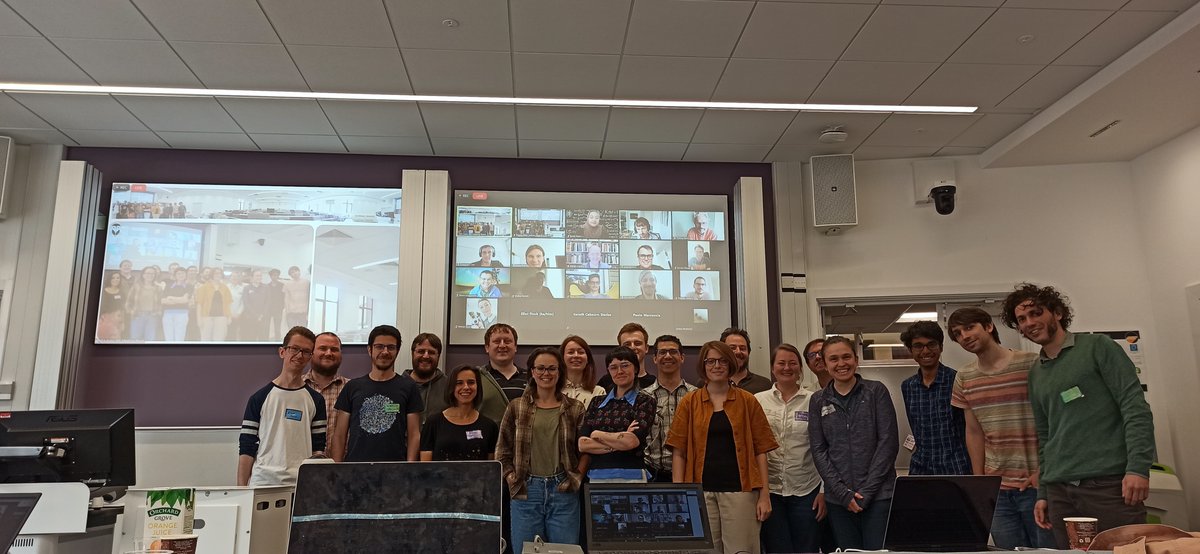
The LISA Astrophysics Working Group held his 2022 hybrid meeting last week, hosted by @UoBIGWaves (UK).
The meeting schedule and talk recordings are available on the meeting website https://t.co/Wwn3Mvmiu2 - check it out!
#LISAMission#LISAAstroWG
WOOT! After two years of work, and tremendous effort from my colleagues in the Astrophysics Working Group of the @LISACommunity the whitepaper is done! A summation of decades of discovery, & our aspirations for science when LISA flies. Well done, all! https://t.co/mUgmoXoFrt
The Legacy of the First Workshop on Gravitational Wave Astrophysics for Early Career Scientists is on #arXiv today! We hope it planted the seeds of an interdisciplinary, well-connected and all-inclusive community of ECSs working on GWs https://t.co/JUbP7Xb8ak
Interested in gravitational-wave data analysis or modelling? We are considering post-doctoral positions at the Albert Einstein Institute in Hannover! Please consider applying. We'd be happy to answer any questions.
https://t.co/GnglIANk6G
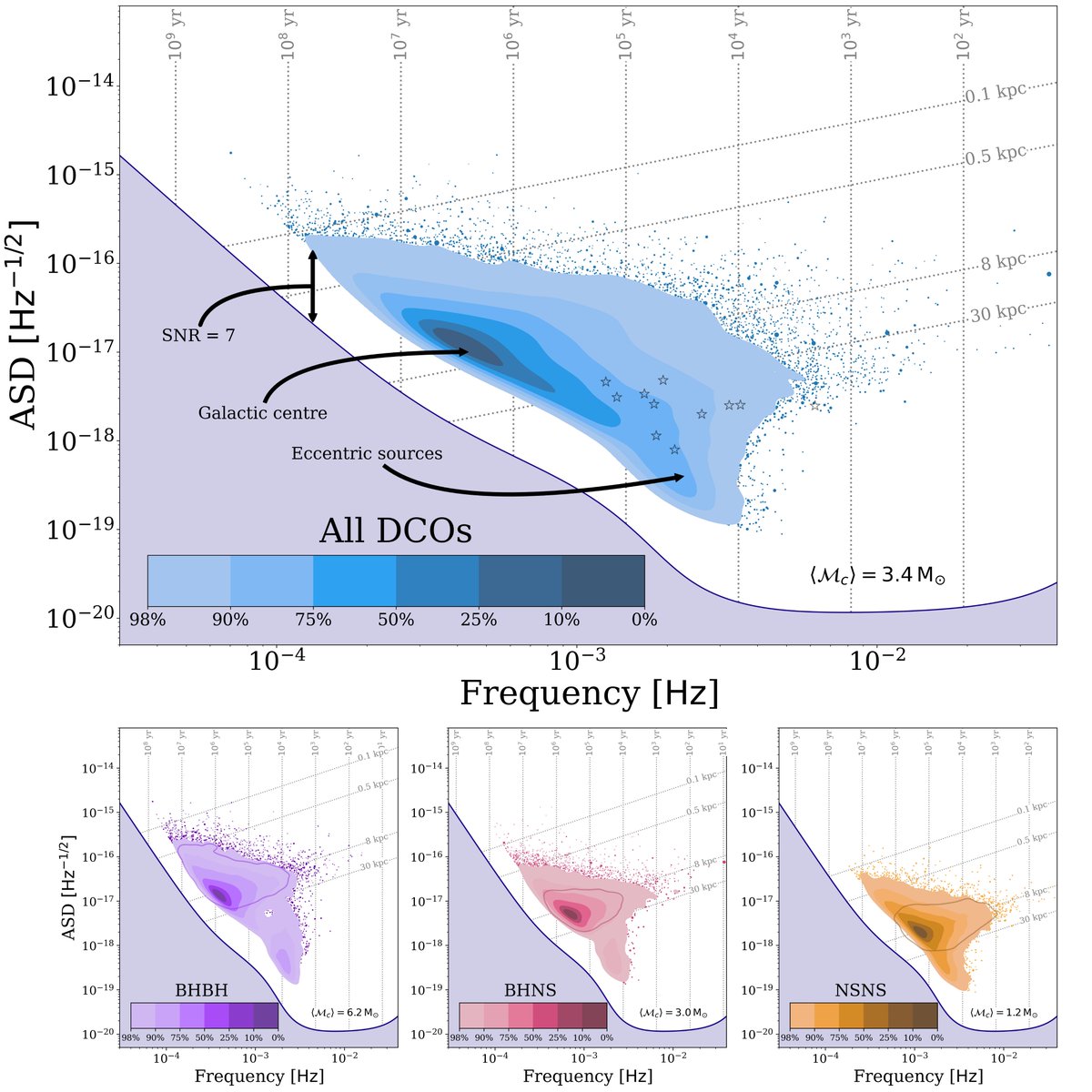
If you’ve been wondering just what the @LISACommunity detectable population of binary black holes, black hole neutron stars and binary neutron stars look like, well today’s your lucky day! Check out LECS @tomjwagg’s latest paper https://t.co/RQZvEujfIu
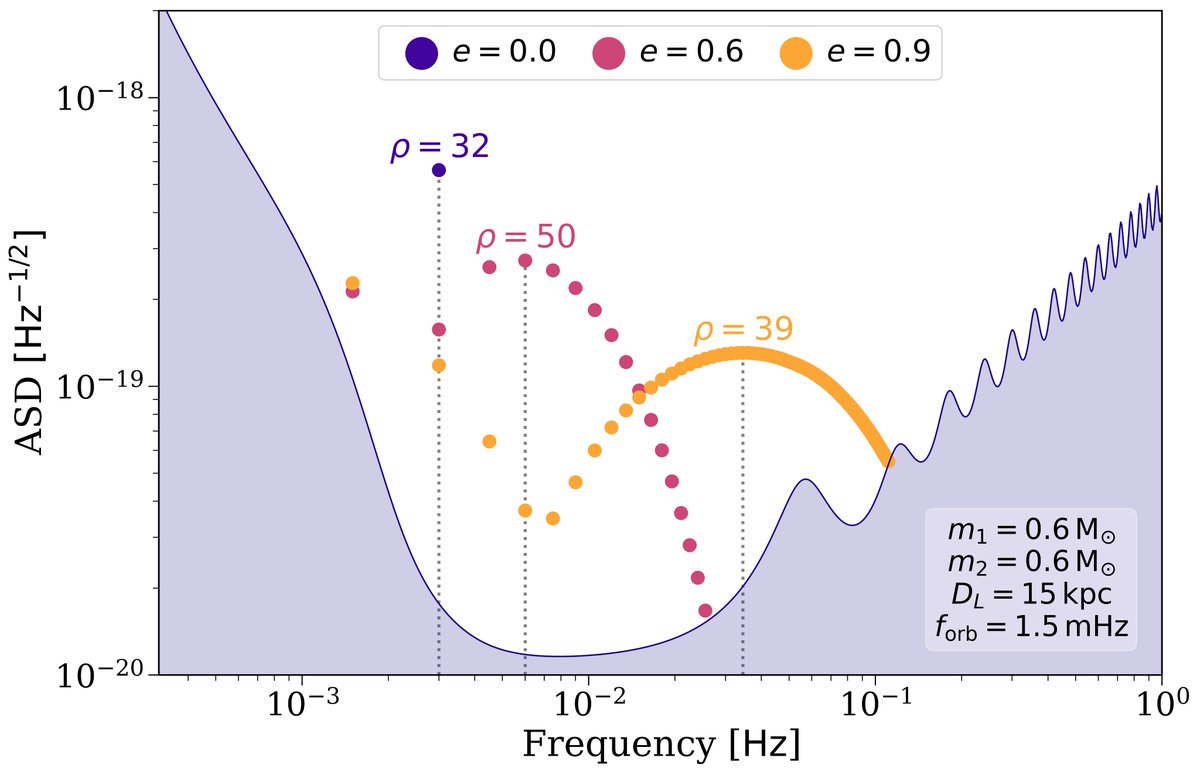
Trying to make predictions for stellar-origin binaries in LISA? Check out the new LEGWORK python package by LECSs @tomjwagg and @spacetimekatie! LEGWORK evolves orbits, computes GW strains, calculates SNRs, helps visualising your results and more! https://t.co/OZlfce9rbV
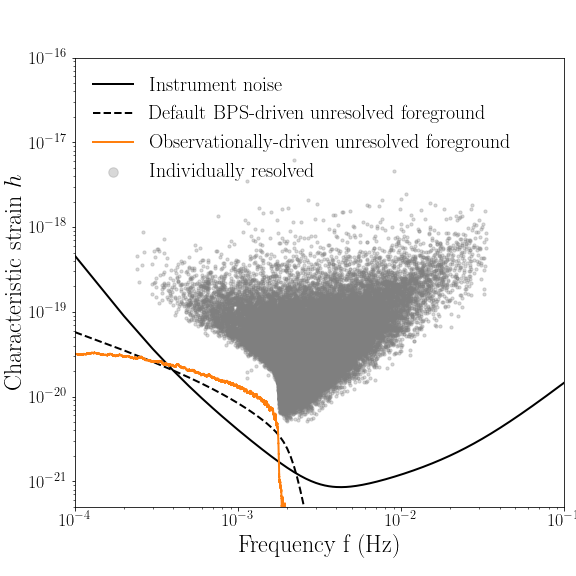
WARNING for @LISACommunity: there might be 2-5x more detectable galactic binaries in the LISA data than previously expected! Furthermore, there might be less foreground at 2-3 mHz. Check this paper by LECS @korol_valeria👉 https://t.co/7r8zBLnXh5
A new paper from LECS Mekhi Dhesi and others, on a new method to model gravitational wave emission from black-hole binaries with intermediate mass ratios. #LISA 🌌
https://t.co/sc8hnZt2kH
Hey LECSs, from September the group will run a mentorship program that aims to support your personal and career growth within the LISA Consortium and beyond. Check you emails for details on how to sign up. ‼️Hurry up as we can accommodate only a limited number of participants‼️
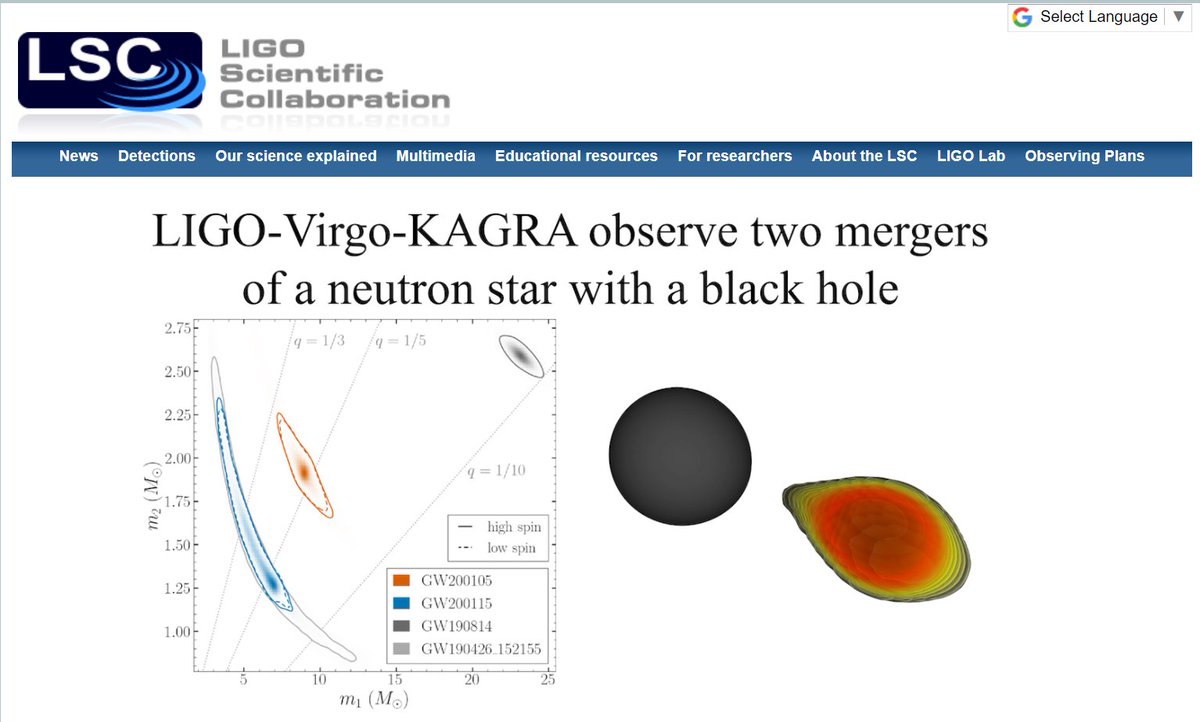
Today @LIGO@ego_virgo & @KAGRA_PR have exciting news: the first ever confirmed detections of a #NeutronStar#BlackHole binary merger. Find out more at https://t.co/RKdgwo92IK and read our discovery paper, published today in ApJ letters https://t.co/GlcmP5syJ4
Hear the universe roar - a laser interferometer on the moon (LION) would allow us to partially bridge the gap between the high frequency regime of ground based detectors and the low frequency regime observed by LISA. See the new paper by multiple LECS: https://t.co/51yTQ8hMyZ
A new paper by LECS @chionatan, presenting a Bayesian parameter estimation of stellar-mass black-hole binaries with LISA! 🌟https://t.co/ZwcANWJok7 #LISA
What should a group of #BlackHoles be called? We asked for suggestions & you delivered! The entries have been narrowed down to 10 candidates, we need your help to pick a winner. Vote for your favourite https://t.co/JE0eQh2WfY. Backstory: https://t.co/pFrgCpCNEy #LISA#ESA#NASA
Please consider donating to get this book by @Quaternionbooks (including LECS @korol_valeria) published! It is dedicated to Katherine Johnson, a brilliant mathematician who worked as a "human computer" for the #NASA's space program and made space science possible #WomenInSTEM
NEW PROJECT: a book dedicated to Katherine Johnson, who worked on all major milestones of NASA's space program. Help us to achieve our goal:
https://t.co/Hv5X2MppWf
@NASAhistory@NASA#astronomyday#WomensHistoryMonth#NASA
@NASA_Langley @korol_valeria @ele_omnia