Why are spelling lists still an effective instructional tool, even in the digital age? How should spelling lists look? And how often should students receive them? Read our past blog post to get the answers to these questions and more: https://t.co/CbbBC7EgIn
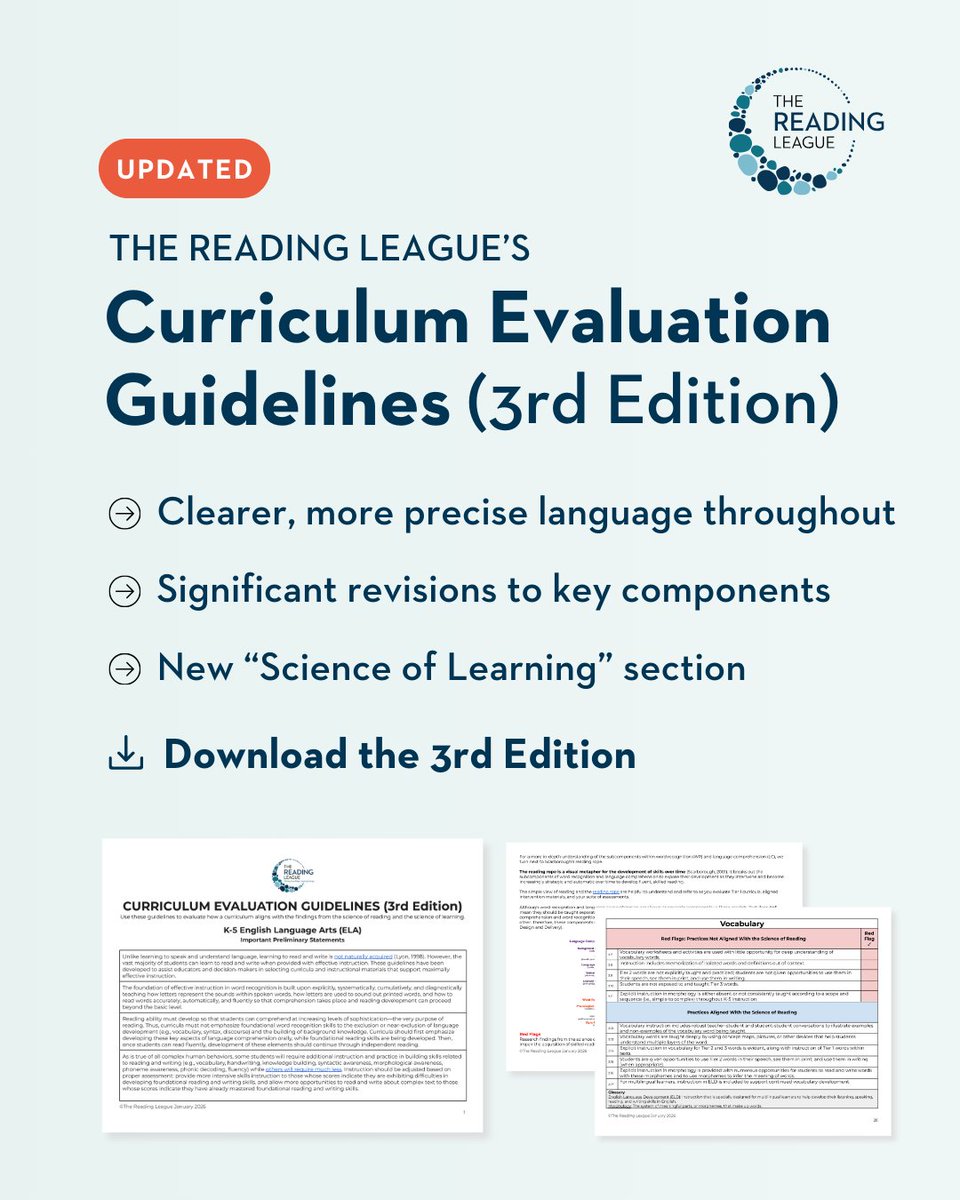
TRL is excited to share the Curriculum Evaluation Guidelines (3rd Edition) & Workbook—updated to reflect new research & the evolving curriculum landscape.
Find improved clarity, revisions to key components & a “Science of Learning” section.
🔗: https://t.co/HdAGmJj4fP
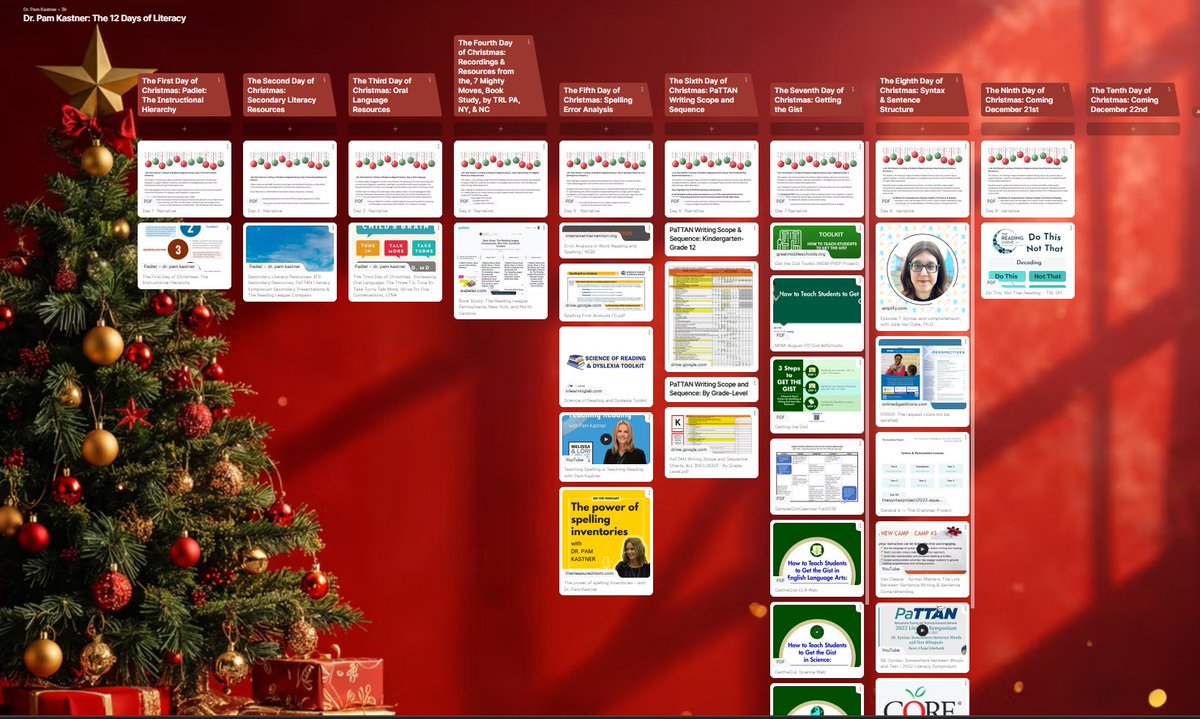
🎄 Dr. Pam Kastner’s 12 Days of Evidence-Aligned Literacy: Day 9: Do This, Not That! 🎄
Day 9 highlights a powerful “Do This, Not That” resource from The Reading League Ohio that reminds us of an often-overlooked truth in literacy improvement: what we stop doing matters just as much as what we start doing.
These practitioner-friendly tools clearly contrast evidence-aligned practices with long-standing but unsupported instructional practices and routines across decoding, vocabulary, comprehension, fluency, and assessment. Rather than adding “one more strategy,” it helps educators de-implement ineffective practices—such as three-cueing, leveled text dependency, rote memorization, and round-robin reading—and replace them with instruction grounded in how students actually learn to read.
The result is clarity, coherence, and instructional focus—supporting accuracy, automaticity, and access to meaning.
📌 Explore Day 9 resources and every day after, here: https://t.co/pXD63OBHKF
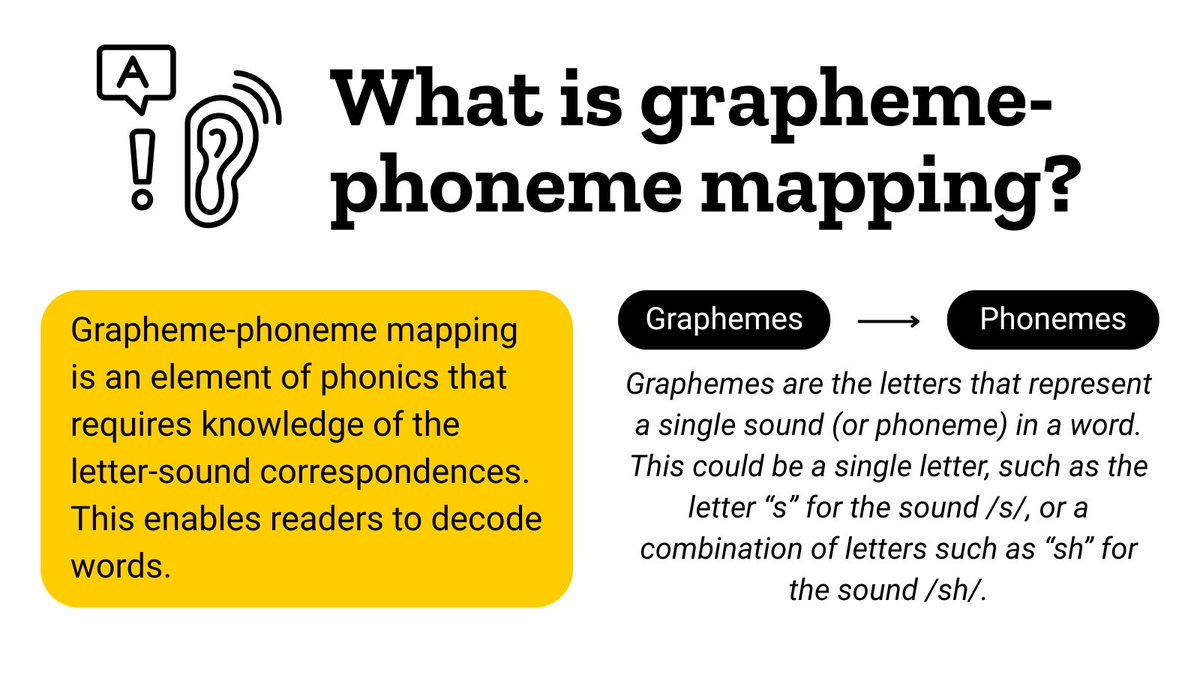
Grapheme-phoneme mapping is an element of phonics that requires knowledge of the letter-sound correspondences. This enables readers to decode words. Learn how to teach students to map phonemes to graphemes with our eLearning module: https://t.co/t8eKfRzDA6
📣 Save the date! The IU13 Community Yard Sale is Sept 20, 7 AM–1 PM (Rain date: Sept 27).
Want to be a vendor? Proceeds support local students via the IU13 Social Work Fund.
Register by Sept 5: https://t.co/R2wQJc34fR
Providing students with opportunities to respond (OTR) during a lesson has been shown to positively impact academic engagement. Teachers can make OTR more effective through a cycle of planning, measuring, and coaching. Visit our website to access MOTR-Cycle, our free OTR measurement tool: https://t.co/sQcPOrf6uA
Remake Learning Days is just around the corner. Don’t miss our Region 9 Mega Event “Farm City Days” at the Farm Show on May 7-8! More info: https://t.co/A6kIzWa7Uw #CareerReadyPA@caiu15@LincolnIU12@IU13@RemakeDays
Common Core ignored evidence-based research when it excluded cursive writing instruction, thereby, increasing academic struggles among K-12 students and illiteracy rates among adults in America.
“Research shows that printing letters and writing in cursive activate different parts of the brain. Learning cursive is good for children’s fine motor skills, and writing in longhand generally helps students retain more information and generate more ideas. Studies have also shown that kids who learn cursive rather than simply manuscript writing score better on reading and spelling tests, perhaps because the linked-up cursive forces writers to think of words as wholes instead of parts.”*
Congress needs to revise; Common Core standards, the federal Elementary and Secondary Education Act (ESEA), and Every Student Succeeds Act (ESSA) to require explicit direct cursive writing instruction, STAT.
Effective success criteria clearly describe what learners will say, do, or how they'll act when they've met the learning goal. 💡 Here are five ways to share #successcriteria with your students.
#TeacherClarity#VisibleLearning
IU13 schools get 12% off Eduplanet21’s Curriculum Planner! 🌟
✅ Embedded storyboards
♿ WCAG-aligned features
📖 Share, plan, and align curriculum with ease
Use "IU13" to claim!
Visit: https://t.co/QgWX6r9AgQ
The solution to math anxiety isn’t just improving math skills. Research says it’s crucial to address the psychological origins directly. For example...
💬 Be encouraging and avoid language that makes math feel inaccessible.
⏳ Offer low-stakes or untimed tests to reduce stress.
🌏 Embed math in real-world problems and projects to keep students engaged.
Students who lack foundational word recognition skills can struggle to comprehend what they read. Vocabulary must be taught explicitly, in a way that engages all of the parts of the brain associated with word recognition. One way to do this is through the POSSUM approach. Learn more about this approach in our past blog post: https://t.co/MLYDcBn9xl
What's worse for learning?
Being absent from school?
OR
Being bored at school?
Both have an effect size of -0.46 or a over a year's worth of lost learning potential
This means we need to place as much urgency on getting learners engaged as we do getting them to school
Students should know what successful learning looks like. Success criteria are designed to signal to learners about the destination and provide a map for how they will get there.
#CorwinTalks#VisibleLearning
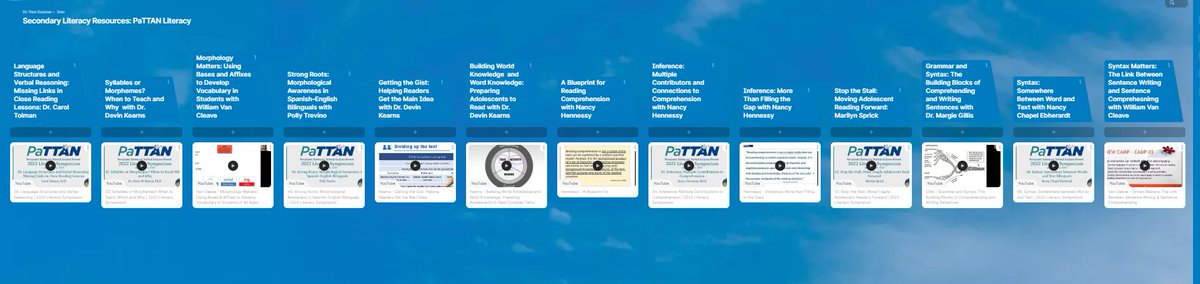
Looking for Secondary Literacy Resources? :) Look no further than PaTTAN Literacy!
On this padlet you will find 27 Secondary Literacy Presentations from the PaTTAN Literacy Symposium's from the world's BEST! It's a do-not-miss resource and all curated right here! https://t.co/LfGXvOMC2j
@focusonliteracy you have me in 😭 tears! Your work in adolescent literacy is phenomenal! I really appreciate that you have shared your class with #PATTANLIT2024