Thought I would mark today down for posterity. Today was the first day we owned a robot. It’s just a Eufy C10 Vacuum, but I’m going to bed and it’s still cleaning my kitchen floor. That counts as a real robot. In a not too distant future robots will be everywhere. It begins…
How is @OpenAI’s ChatGPT voice not a “home hub” product yet?
Every time I use @Google Home Hub, all I can think about is how much it sucks vs chatGPT.
Google you better get to market with @GeminiApp deployed in your home products, or you’re going to lose your spot in my home.
Registration for #Splash 2024 is now open!
Join us in the desert oasis of Las Vegas for a week filled with #learning, connection, and inspiration.
Don't wait, save the date! https://t.co/O99wG2F2Dd
@hylandwx @hylandwx This is awesome! Seems to be to only data online about the debris field! Can’t believe you don’t have more likes/views. Can you validate, timing & trajectory match?
@NycPlover @hylandwx Stainless steel in the deep ocean, with methane/oxygen fuel that evaporative is hardly an environmental disaster. Probably a net positive as a artificial reef. NASA, ESA, And Roscosmos, have been doing this for decades, but their fuel is toxic, RP-1, and degrading carbon fibre.
In 2009, Stanford business professor Tina Seelig split her class into groups and issued a challenge:
Each group had $5 and 2 hours to make the highest return on the initial money.
At the end, they'd give a short presentation on their strategy.
The results were fascinating...
Most of the groups followed a basic approach:
• Use the $5 to buy a few items.
• Barter or resell those items.
• Repeat
• Sell final items for (hopefully) more than $5.
These groups made a modest return on their initial $5.
A few groups ignored the $5.
They thought up ways to make the most money in the 2 hours of allotted time:
• Made and sold reservations at hot restaurants.
• Refilled bike tires on campus for $1 each.
These groups made a better return on their initial $5.
The winning group took an entirely different approach.
They had three core realizations:
1. The $5 was nothing more than a distraction.
2. The 2 hours of time was not enough to make an attractive, outsized return with a mini-business (like selling restaurant reservations or filling bike tires).
3. The most valuable "asset" was actually the presentation time in front of a class of Stanford students.
Realizing the value of this hidden asset, they offered the presentation time to companies looking to recruit Stanford students.
They struck a deal to sell the time slot for $650, netting a monstrous return on the $5 of initial capital.
The losing groups thought in linear, logical terms and achieved a linear, logical outcome.
The winning group thought differently.
So, what can we learn from this story?
There are two types of problems:
1. Low-Stakes: Lower potential, linear rewards. Decisions are easily reversible.
2. High-Stakes: Higher potential, asymmetric rewards. Decisions are not easily reversible.
With low-stakes problems, given the reward potential is low and the decisions are easily reversible, we can use shortcuts and heuristics to choose our path. We can take a logical, linear approach.
With high-stakes problems, the high, asymmetric reward potential means we need to think differently. We want to take a creative, non-linear approach.
Three steps to start thinking differently:
Step 1: Avoid the Distraction
There will always be an "obvious" solution that is simple, clear, and entirely wrong.
In the challenge, the $5 was nothing more than a distraction. It was a trap.
To find the best path, you have to avoid the distraction.
Step 2: Ask Foundational Questions
Ask and answer questions that expose and vet underlying assumptions and logic.
• What's the real problem you are trying to solve?
• What's your hypothesis? Why?
• What are your core assumptions? Why?
• What evidence do you have?
• What are your core options?
• What alternatives exist?
This takes time, but it's an essential exercise when facing a problem with the potential for non-linear rewards.
Step 3: Select the High Leverage Approach
Slow down and evaluate the options on the table.
Select the path most likely to generate the asymmetric, attractive risk-adjusted returns.
If the story teaches us one thing, it's this:
Creative, non-linear, asymmetric thinking generates creative, non-linear, asymmetric outcomes.
If you enjoyed this or learned something, follow me @SahilBloom for more in future.
Learn about #Dashboards and Reports in the all-new book: Advanced #Reporting and Dashboards. Brought to you by Roy Googin, Jessica Toner and Andrea Tout, this new title will release just in time for summer reading if you pre-order. https://t.co/p06IOuEQv6
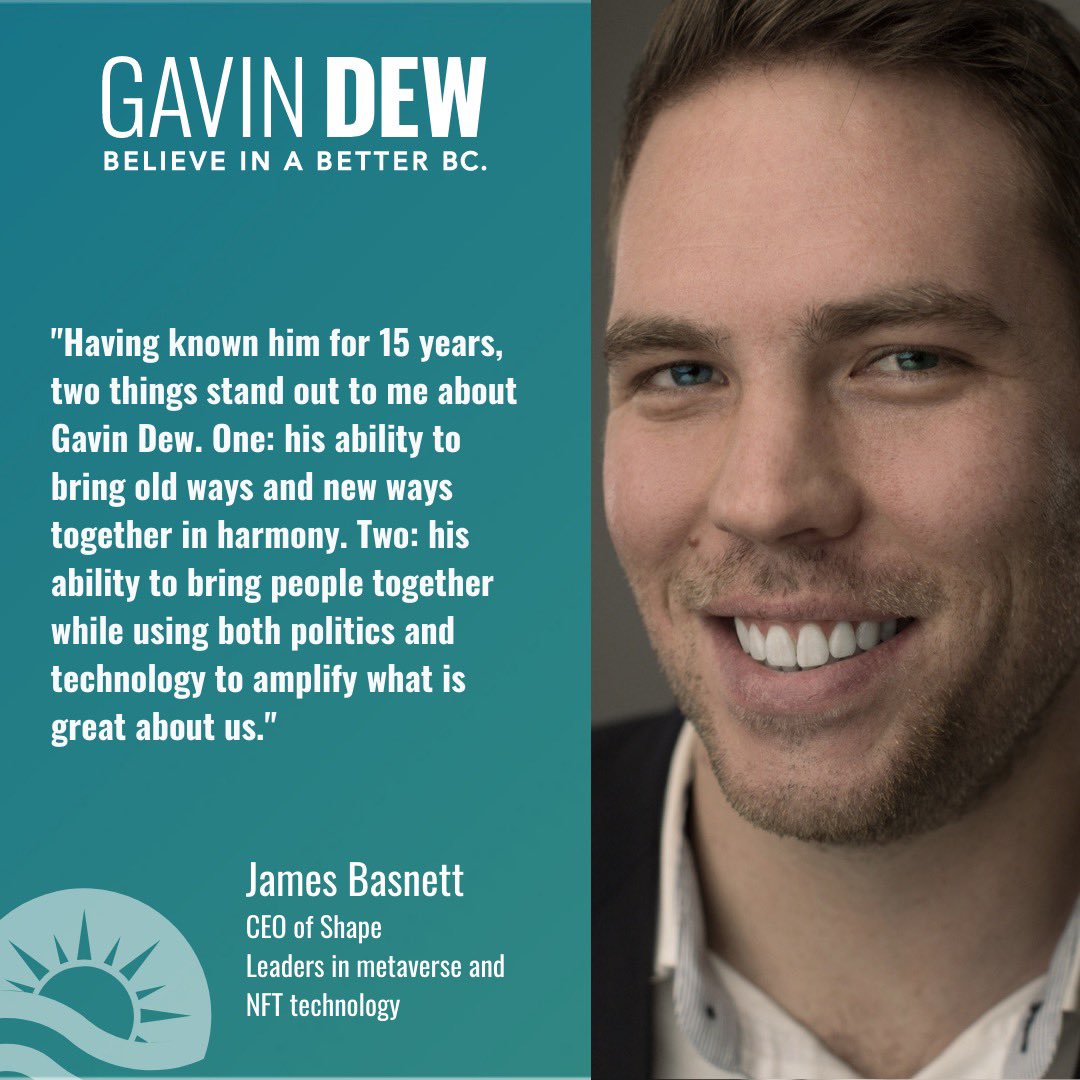
.@jamesbasnett of @ShapeImmersive is at the cutting edge of innovation in #bctech.
At Shape, they're making the Metaverse and architecting virtual worlds through NFTs, 3D, AR & VR.
To lead BC, the @bcliberals must be able to navigate both traditional sectors and new ones.
Congratulations to OneStream brand ambassador, @b_dechambeau and Team USA on a well-earned victory and great demonstration of sportsmanship at the @RyderCupUSA! https://t.co/ww9dcNntOb
#LeadAtSpeed#TeamOneStream
It happened. Today our #MarsHelicopter proved that powered, controlled flight from the surface of another planet is possible. It takes a little ingenuity, perseverance, and spirit to make that opportunity a reality: https://t.co/oT3rrBm6wj
@SamHarrisOrg@wakingup@SamHarrisOrg this was a masterpiece which should be studied alongside the great thinkers of all time! You have subjugated my freedom to believe anything else on the subject.