https://t.co/d3hyjJmD9V CRY to MAMA for missing $BOINK drop 💩💎 Come play @BoinkersIO telegram game and farm a shit TON of points towards the upcoming $BOINK drop on TON💩💎Get starter bonus here: https://t.co/v9hkqo81Qd
#TrumpGPT $TGPT is now LIVE! Ready to trade on #PancakeSwap!
Explor into the future of AI-powered insights with a token that's built for our community!
#Trade $TGPT now here: https://t.co/AcyQ6d35l1
This is a great idea, btw — preparing for the upcoming update in advance. You'll be fully armed and ready by the time our devs roll out that feature
We never doubted you. Smart move, guys, very smart 🤔
Welcome, Hubble’s first new #StarrySights image!
This glittering gathering of stars is Pismis 26, a globular cluster located 23,000 light-years away. Many thousands of stars gleam within this cluster, which scientists estimate to be 12 billion years old: https://t.co/mQBMiLeH2e
Our universe is speckled with stars, with billions just in our galaxy. Some stars live alone or in twos or threes, but others are bound together by gravity into much larger communities. In honor of @NASAHubble’s exploration of #StarrySights, let’s talk about star clusters! 🧵 1/6
What’s more beautiful than a star? A whole cluster of them!
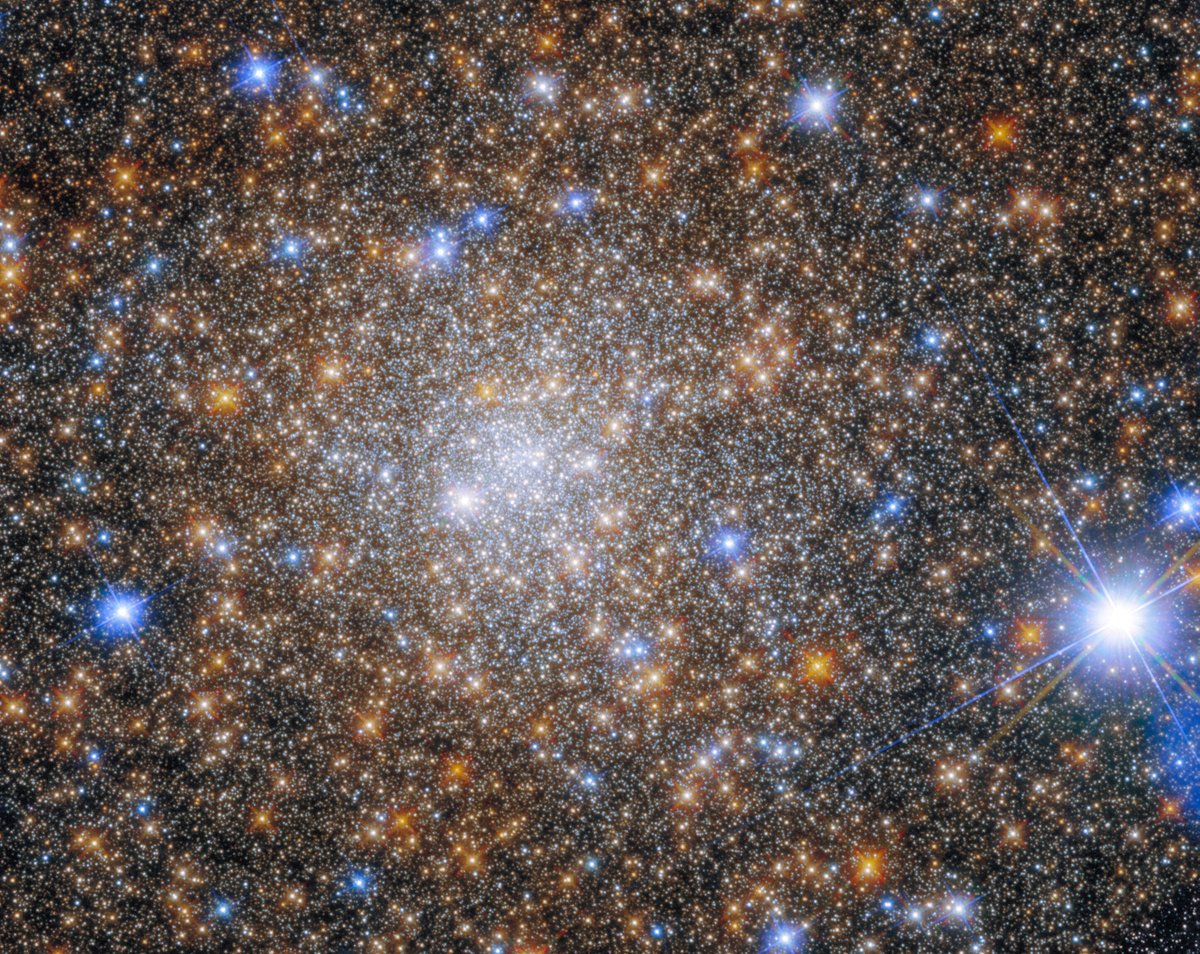
This #HubbleFriday image shows Terzan 1, a globular cluster about 22,000 light-years away.
Globular clusters are roughly spherical groups of stars bound together by gravity: https://t.co/C1WmRoF1TD
Chandra & Webb, together at last! Webb's infrared abilities combined with Chandra's X-ray vision underscore how the power of any of NASA's telescopes is only enhanced when joined with other instruments, both in space and on the ground. More: https://t.co/IzKkaTncSX
You say it's your birthday? It's our birthday, too, yeah!
NASA was founded Oct. 1, 1958. On Oct. 1, 2001, @NASAHubble took this picture of a galaxy 50 million light-years away.
Check out what the space telescope saw on YOUR birthday: https://t.co/oHvXXpIzjg
Webb is on a roll! 🤸
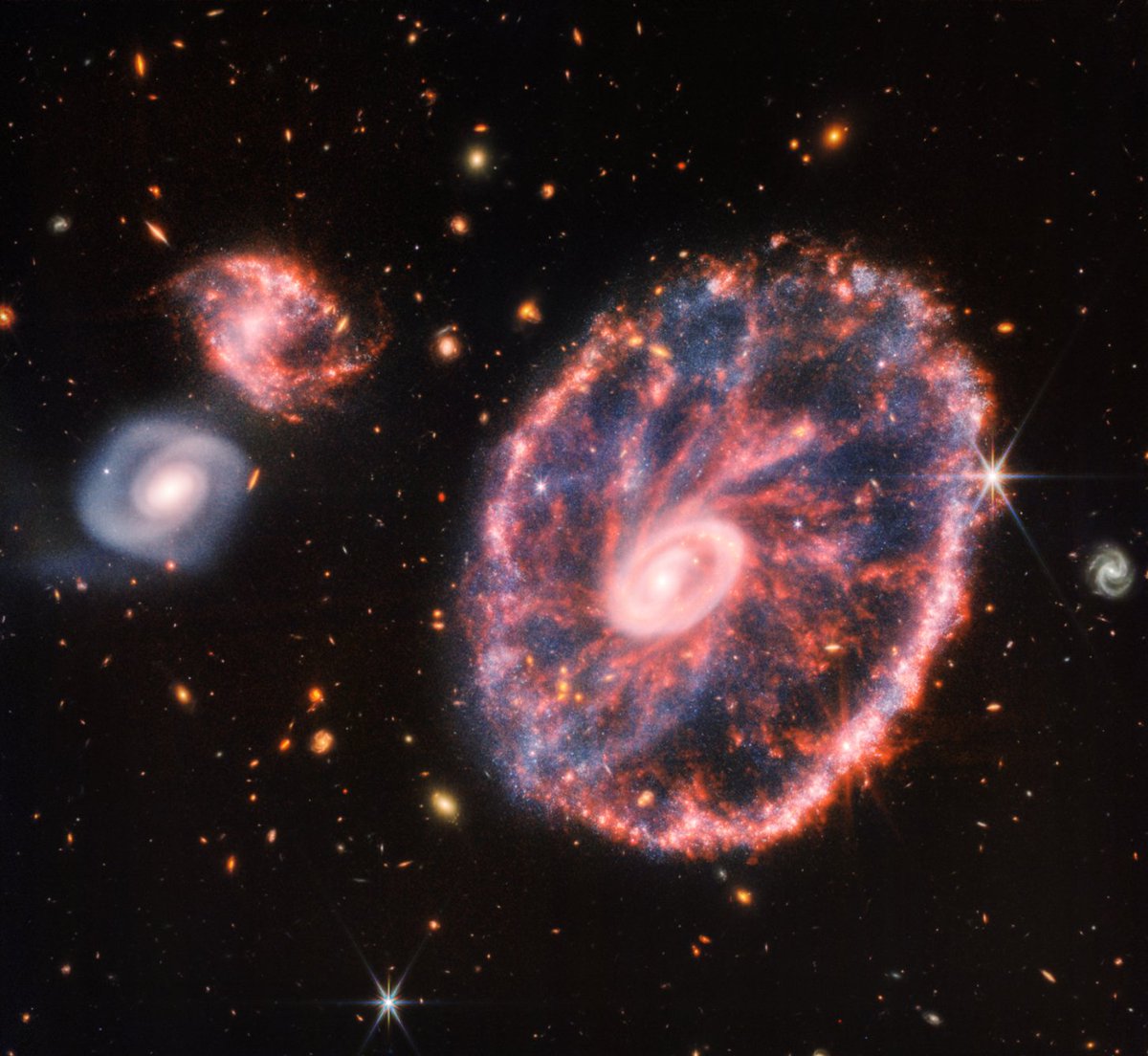
This new @NASAWebb near and mid-infrared composite image highlights the Cartwheel Galaxy, the result of a high-speed collision that occurred about 440 million years ago, along with two neighboring galaxies. Get the details: https://t.co/c8lEVBBlub