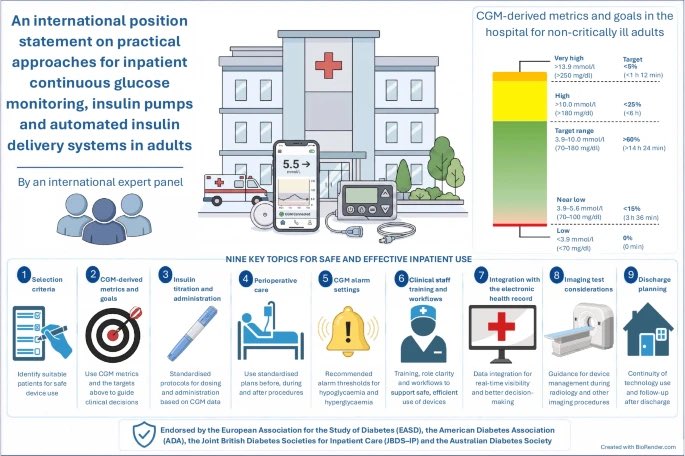
📢 Primer posicionamiento internacional ADA/EASD sobre MCG, bombas y sistemas AID en adultos hospitalizados no críticos.
🎯 TIR >60% TBR 0% tiempo 70-100 mg/dl <15%
📟 Alarmas: 80 y 250 mg/dl
✅ Si el paciente puede manejar su dispositivo, se mantiene
@AmDiabetesAssn@EASDnews
🔗 https://t.co/fJnIAj1oXT
The updated 2026 ADA/EASD Consensus report on the management of type 1 diabetes in adults. Developed by an international panel of experts, the report summarises the latest evidence to inform clinical practice worldwide. #Type1Diabetes#T1D https://t.co/dXrwVImBtq 🔓️
Single-cell profiling of pancreatic islets maps subtype-associated molecular alterations in type 2 diabetes, highlighting distinct endocrine stress and metabolic signatures across these clinical subgroups. #Diabetes#Subtype#scRNAseq https://t.co/REQMJu0inC 🔒
Insight from the first RCT of a GLP1 in Type 1 Diabetes:
Insulin doses drop within 4 weeks in those starting semaglutide. The bulk of that insulin reduction is in bolus insulin.
#ENDO2026 presentation by Dr. Jerry Greenfield
Changes in body composition, muscle function, and muscle insulin sensitivity induced by obesity and bariatric surgery: Implications for sarcopenic obesity
https://t.co/10Viw7wXTf
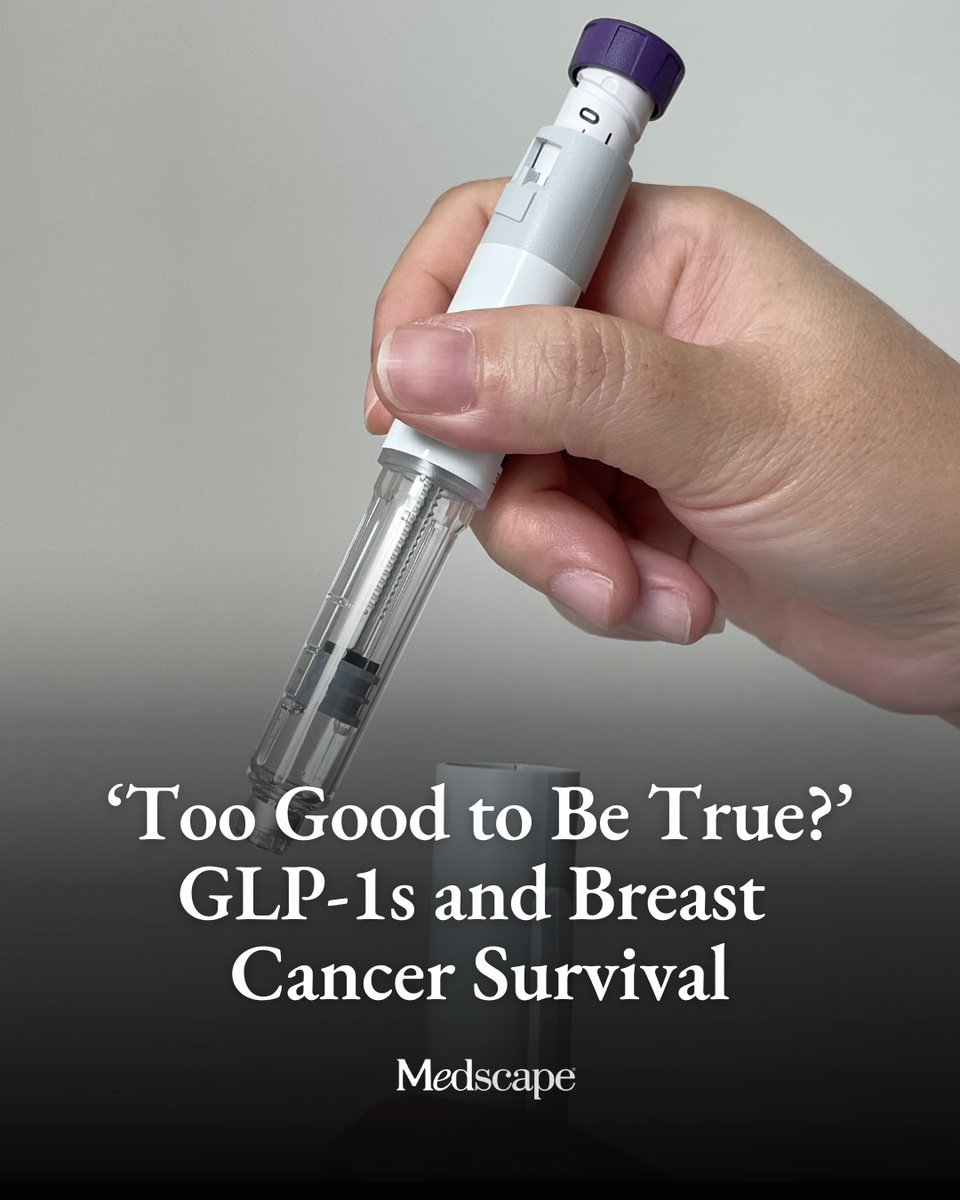
Dr F. Perry Wilson breaks down study findings suggesting a link between GLP-1 drugs and improved outcomes among patients with breast cancer and obesity on the latest episode of Impact Factor. Tap the link to view the video: https://t.co/adHKrVkomr
How much of the blood pressure-lowering effects of GLP1s are due to weight loss?
About 70% (according to this paper)
The remaining 30% probably comes from a mixture of things:
- Relaxation of vessels
- Renal effects (volume off-loading, natriuresis, reduced renin–angiotensin activation)
- Less inflammation, less insulin resistance (= better vascular function)
¿Cuándo elegir semaglutida y cuándo tirzepatida?
La EASO acaba de actualizar su algoritmo con evidencia hasta noviembre 2025 📊 @EASOobesity
Spoiler: depende del objetivo clínico. No es solo pérdida de peso.
🔗 @NatureMedicine
https://t.co/RKkccNGYTq
#ECO2026
What if hunger is not simply about self-control, but about biology?
Sadaf Farooqi receives the 2026 EASO–Novo Nordisk Foundation Obesity Prize for Excellence for pioneering research that transformed how scientists understand obesity and appetite regulation. Her work has shown that body weight is regulated by biological systems in the brain shaped by hormones, genes and signals from fat tissue, the gut and the pancreas.
By identifying genetic causes of severe obesity – including leptin deficiency – her research demonstrated that, for some people, constant hunger is driven by biology rather than lack of willpower. This work has helped reduce stigma, guide targeted treatment and pave the way for more precise and compassionate approaches to obesity care.
#PRESS Our new data presented at the European Congress on Obesity highlights the powerful, consistent weight loss that our obesity injection delivers for women across all menopause stages.
The data reveals that it also lowers risk of migraine, depression and cardiovascular disease, highlighting the broad support our medicine provides for women living with obesity.
Learn more in the press release here: https://t.co/mLXs6NCGYq
How do GLP-1 meds improve liver health through #weightloss independent mechanisms? Here @ChusaGzlzRellan & colleagues identify Liver Sinusoidal Endothelial Cells as direct targets of semaglutide, linking LSECs to reduction of #inflammation#Fibrosis#MASH https://t.co/c5FXIs2hTO
New phase 3 trial – baxdrostat, a selective aldosterone synthase inhibitor, significantly reduced 24 h ambulatory systolic blood pressure vs placebo in patients with resistant hypertension, study suggests.
Read more: https://t.co/f61jWKDg2m
Application of continuous glucose monitoring and automated insulin delivery technologies for #pregnant#women with type 1, type 2, or gestational #diabetes: an international consensus statement https://t.co/Kz9UaKijcy
#T1D#T2D#GDM#CGM#AID#FREE to read w/reg (also FREE)
Finerenone improves kidney and cardiovascular outcomes in patients with chronic kidney disease and type 2 diabetes, but its efficacy in type 1 diabetes is unknown. The phase 3 FINE-ONE trial involving patients with CKD and type 1 diabetes is summarized in a new Quick Take video. https://t.co/3Hv0T43giw
🫀🧠 HFpEF: why old models failed—and why a new one may finally work
In this provocative Circulation (2026) “On My Mind” article, Milton Packer dissects decades of failed conceptual models for heart failure with preserved ejection fraction (HFpEF) and argues that the field may finally be approaching a coherent explanation .
🔁 A history of frustration
For years, HFpEF was framed as a problem of hypertension, concentric hypertrophy, and diastolic dysfunction. But this model collapses under scrutiny: HFpEF ventricles are often not small or underfilled, diuretics help rather than harm, and common echo markers like E/e’ are unreliable. Hypertension, once considered causal, shows only a weak genetic and clinical link.
🧪 The microvascular inflammation detour
The later coronary microvascular inflammation–NO–cGMP hypothesis shifted attention to systemic inflammation driven by comorbidities. Elegant—but therapeutically disappointing. Multiple trials targeting NO or cGMP signaling failed to improve symptoms or outcomes. A model that cannot predict treatment success is, at best, incomplete.
🧩 Why phenomapping didn’t save us
Clustering and phenomapping embraced heterogeneity but offered description without explanation. Mathematical groupings proved unstable, non-reproducible, and biologically unconvincing.
🔥 Enter the adipokine hypothesis
Packer proposes a unifying upstream mechanism: proinflammatory adipokine imbalance, often driven by visceral adiposity (but not limited to obesity). Dysregulated adipose tissue secretes mediators that directly cause:
Cardiac hypertrophy & fibrosis
Sodium retention & plasma volume expansion
Endothelial dysfunction & atrial fibrillation
Crucially, effective HFpEF therapies improve adipokine balance, lending clinical support to the model.
🔮 Bottom line
HFpEF may not be a mysterious collection of comorbidities after all—but a disease rooted in adipose tissue biology and systemic inflammation. If correct, this framework finally aligns mechanisms, phenotypes, and therapeutic success—turning decades of futility into potential fruition 🚀
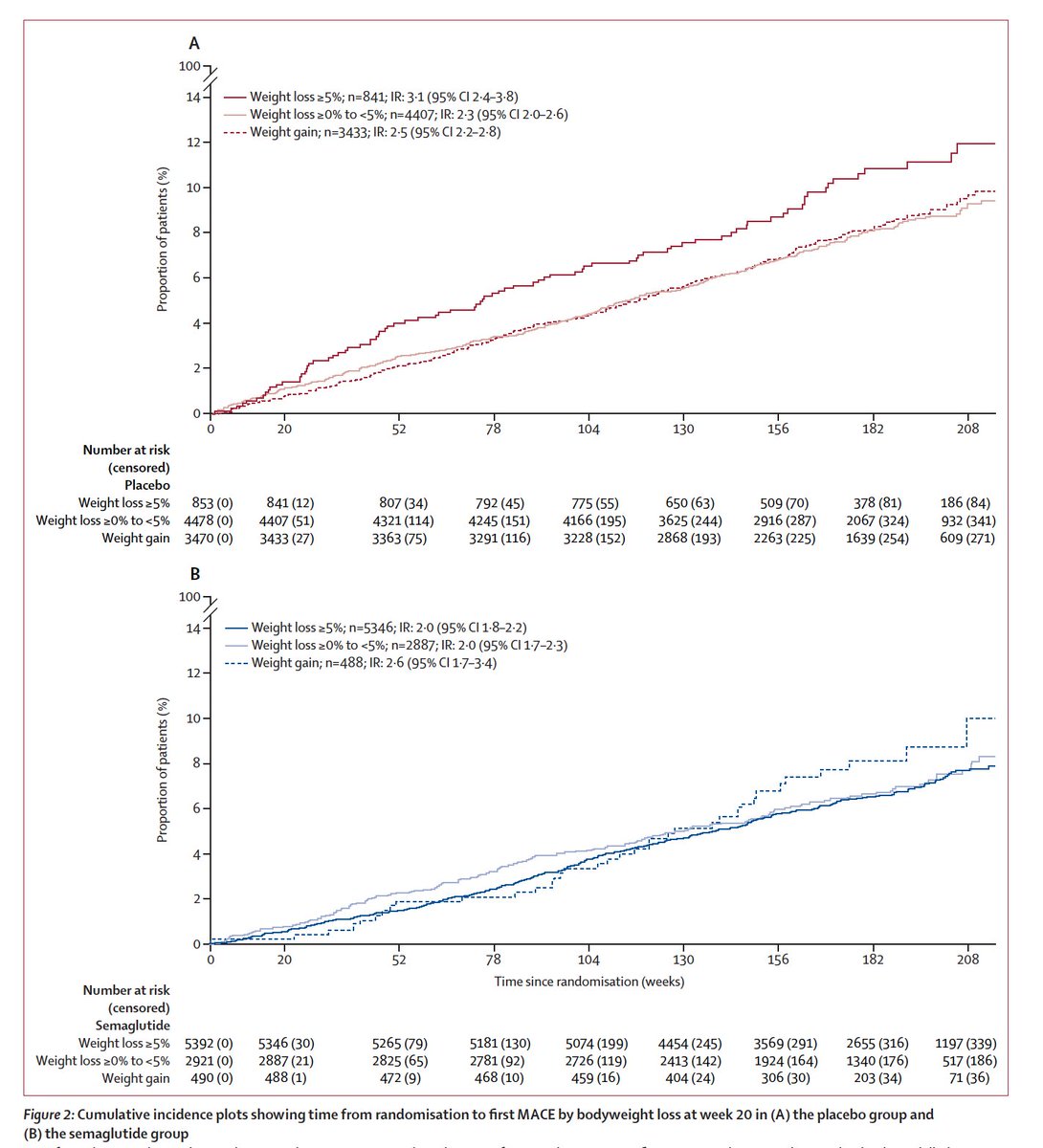
The benefit of Ozempic (semaglutide) for protection from major adverse cardiovascular events (MACE) is independent of weight loss magnitude and baseline adiposity, likely related to the GLP-1 anti-inflammatory effect
https://t.co/y44fRowTGi
⭐️Best of #DiabetesADA2024⭐️ | #02 ALTMETRIC
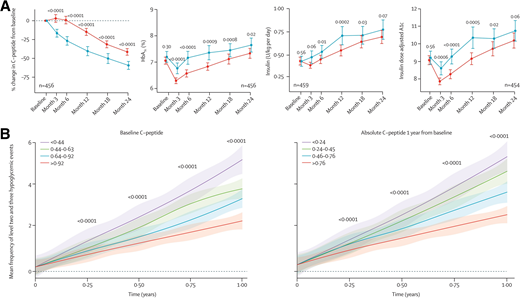
Evidence for C-Peptide as a Validated Surrogate to Predict Clinical Benefits in Trials of Disease-Modifying Therapies for Type 1 Diabetes
-Esther Latres et al.
https://t.co/us9lSK8YGA
@ADA_Pubs