Informal poll: How does your cytogenetics lab report unbalanced MYC FISH rearrangement (R) patterns?
Our latest paper in Blood, led by PhD student Brett Collinge, shows why these should be interpreted as rearrangement-positive: 🧵
https://t.co/32QbWDm0A9
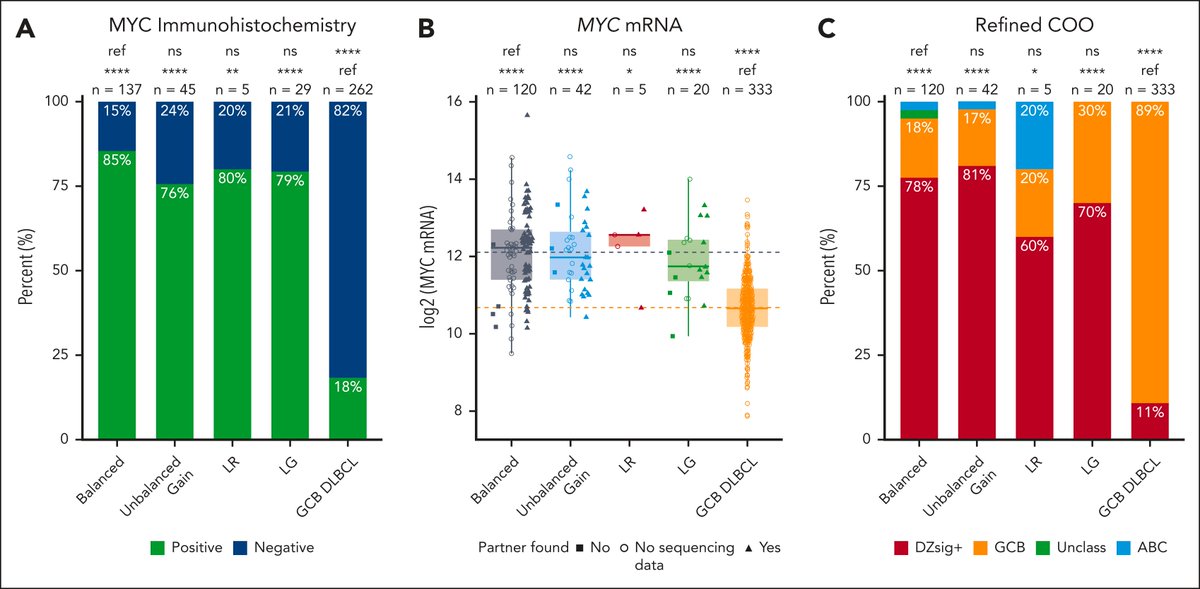
Furthermore, these HGBCL-DH-BCL2 tumors with unbalanced MYC-R are MYC-IHC positive, have high MYC mRNA levels, and are frequently positive for the dark zone signature. These data show similar biological consequences of unbalanced MYC-R as balanced ones in HGBCL-DH-BCL2.
Every time there’s a Marburg or Ebola virus outbreak, my feed instantly fills with filovirus fear porn.
It’s airborne! Deadliest virus ever! OMG IT’S IN EUROPE! Pandemic imminent!
These takes are at best wrong & at worst anti-scientific and racist.
Here are some facts.
Congrats to Dr Ryan Morin, co-recipient of the @cancersociety Bernard and Francine Dorval Prize.
This award is given to investigators whose contributions to basic biomedical research have the potential to lead or have led to improved understanding of cancer treatments and cures.
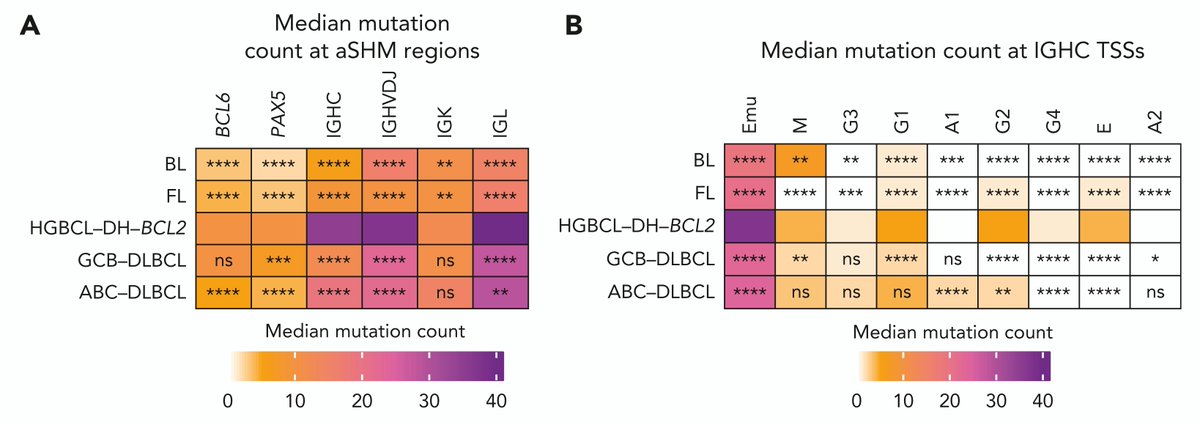
We hypothesized that more widespread SHM in DH-BCL2 could create more opportunities for MYC-R. Consistent with this, we found elevated SHM at IG and non-IG loci, as well as at Eµ and class switch acceptor regions, in DH-BCL2 compared to BL, FL, and DLBCL.
Thus, the architecture of MYC-R in DH-BCL2 is explained by motive (preserving BCR and BCL2-IGH expression) and opportunity (more SHM across MYC partner loci). This work was brought to you by the incredible LLMPP team and @NIH@cancersociety@tfri_research@CIHR_IRSC
When MYC-R do involve IGH, it’s usually Eµ or the variable region in BL and DLBCL, but almost always involves the constant gene region of IGH in DH-BCL2, most often IGHE. What drives these differences?
In contrast, MYC-R are very different in DH-BCL2. MYC-R in BL and single-hit DLBCL involve IGH in 70-80% of cases, while >50% of MYC-R involve non-IG loci (including BCL6, PAX5, RFTN1, etc.) in DH-BCL2.
Out today in @bloodjournal: Our study on the architecture of MYC, BCL2, and BCL6 rearrangements (R) across >800 mature B-cell lymphomas! Key question: are MYC-R different in HGBCL-DH-BCL2 vs. single-hit lymphomas, and if yes, why?
https://t.co/L8T2IJFOTi
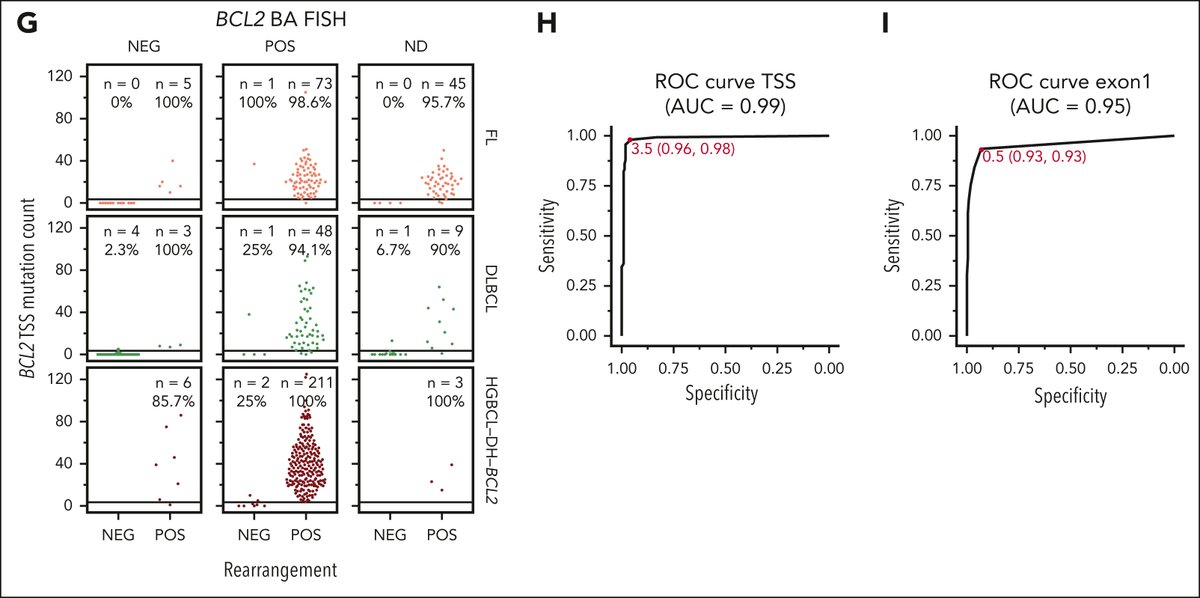
But first, we looked at BCL2-R across FL, DLBCL, and HGBCL-DH-BCL2. BCL2-R are remarkably consistent. We show that somatic hypermutation (SHM) of BCL2 only occurs in BCL2-R and is a very accurate proxy for the presence of a BCL2-R.