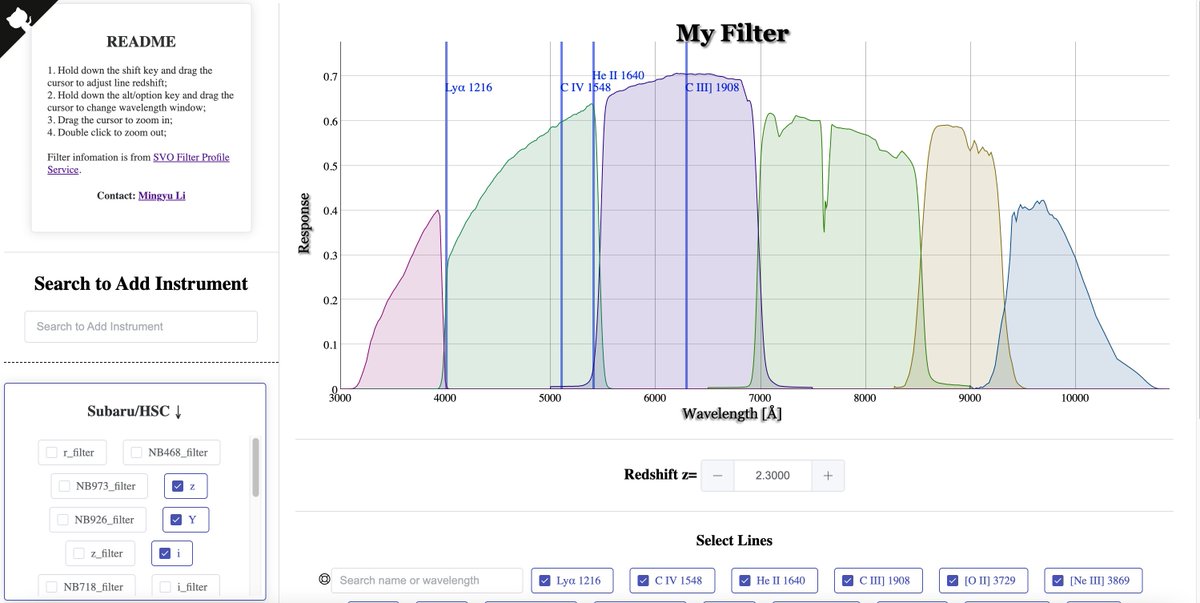
I develop a web app providing interactive visualization of the transmission curve of astronomical filters.
You can check the location of spectral lines at different redshifts, and can also check which filters can touch that lines.
App link: https://t.co/HRnSzlRt0Y
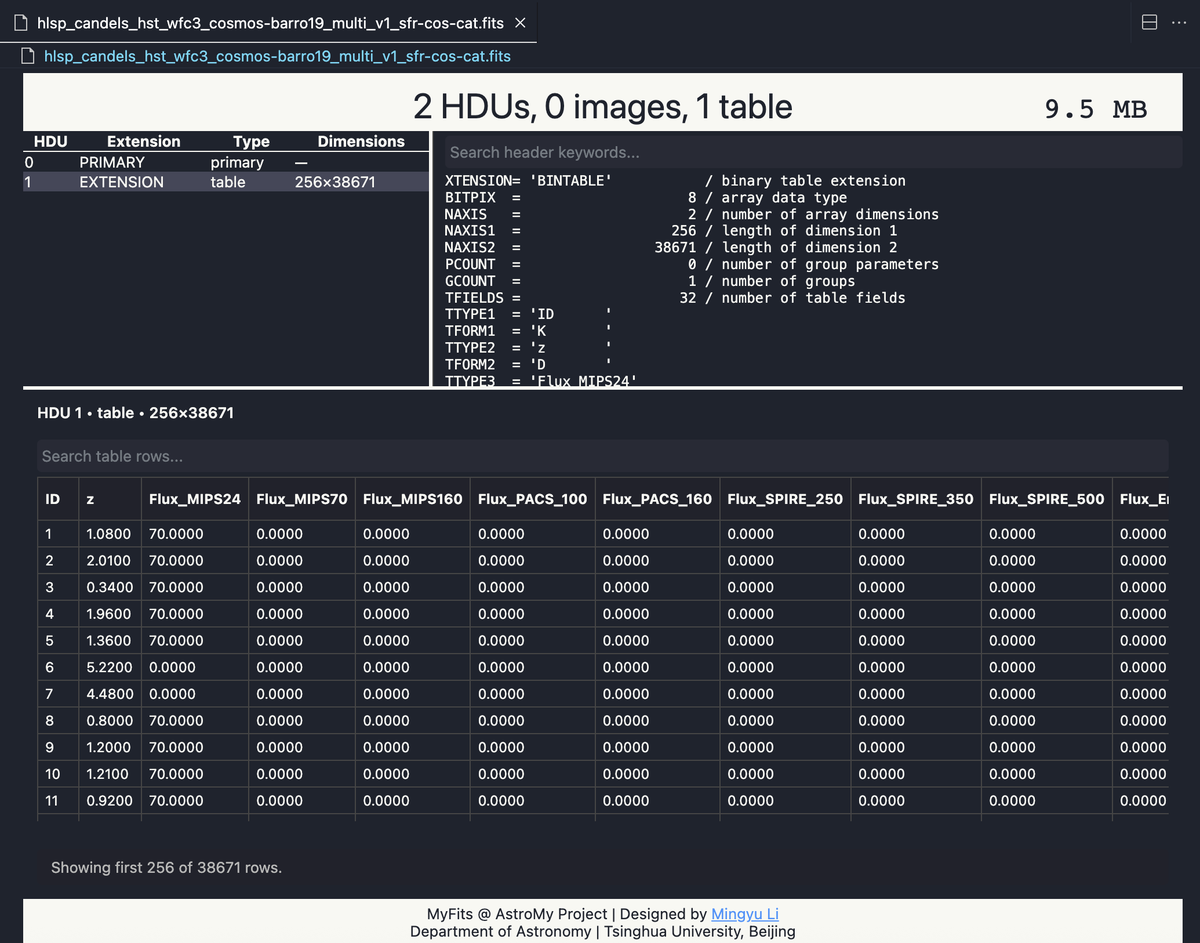
Do you want to click and open a FITS file in #VSCode? Please search "MyFits" in the VSCode extension market.
It can preview image and table data now!
https://t.co/b7pyJc6DGA
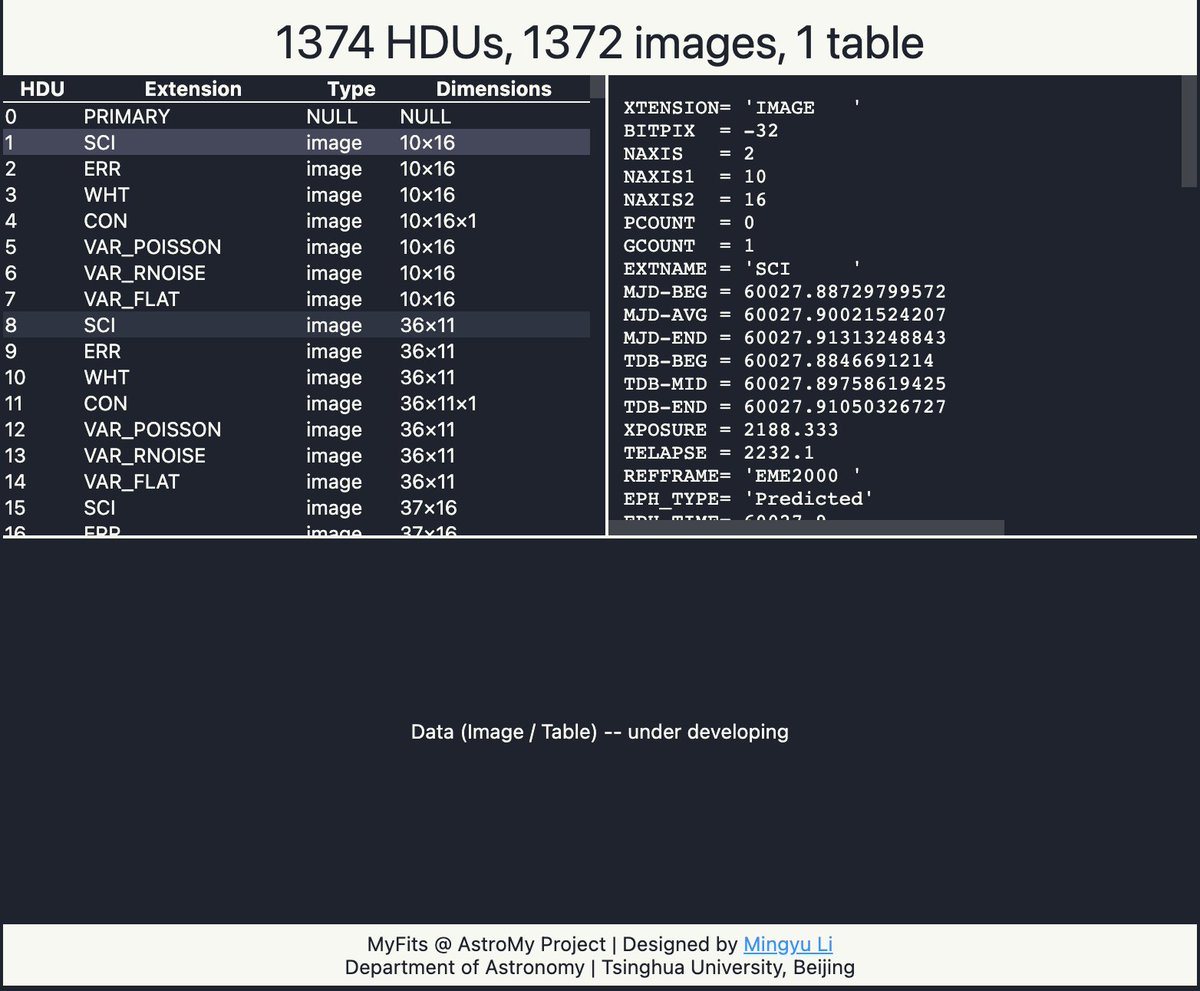
Do you want to click and open FITS file in VSCode?
Please search "MyFits" in the VSCode extension market! Now it can only show headers but it helps a lot.
I develop this by myself and I am coding on more features (showing table/image). I am always here to hear your feedback!
Solo la zona común
James #Webb Space Telescope #JWST
Resolving the Dynamic ISM with IR Echoes around Cas A
TARG: #ECHOW1-NIRCAM
2024-08-19 2024-09-16 2024-09-30 2024-10-16
PI: Jencson, Jacob
NIRCAM 4x f444 f360 f335 f300
https://t.co/uoCk9XuOYQ
NASA/ESA/CSA/STScI/j. Roger
**New paper available!**
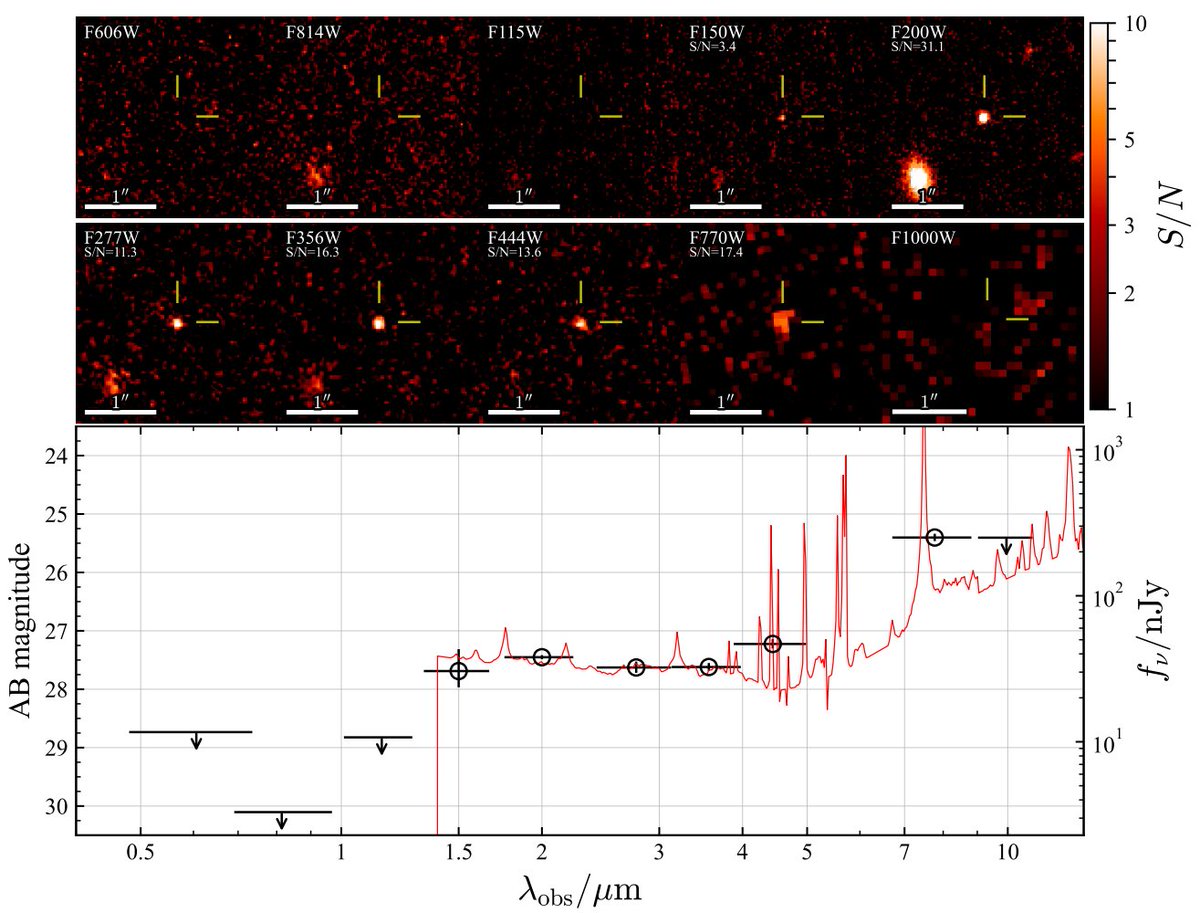
First robust z>10 LRD candidate discovered!
We selected it with a novel MIRI+NIRCam selection method and, for the first time, constrained the LRD's number density at z~10!
https://t.co/hALs9ZasCO
@kirxkirx Yeah, adstex is a good code👍🏻. Here minibib is designed for a simpler and more common case. It gets input of a tex file and a [LARGE] bib file, which may include >thousands of items. And minibib can output a clean .bib file, which includes only those tex file actually cite.
Writing a paper in #LaTeX? I created a Python script, "minibib," that automatically extracts a clean .bib file with only the references you actually cite. It intelligently ignores commented-out citations, making final submissions a breeze.
Check it out on GitHub!
https://t.co/xjGSWY9mVL
#BibTeX #PhDLife #OpenSource
An international team has discovered a tightly packed cluster of supermassive black holes, dating back 10.8 billion years, using the #SubaruTelescope combined with JWST. This is the most extreme concentration of such objects ever found in the Universe.
https://t.co/J4whH9hDhb
Science: Cosmic Himalayas Quasar Cluster Defies Explanation
A newly discovered cluster of eleven quasars has shattered the previous record of five. These sit on the boundary between two groups of galaxies. This cannot be explained by conventional theories.
https://t.co/E8f00fkhur
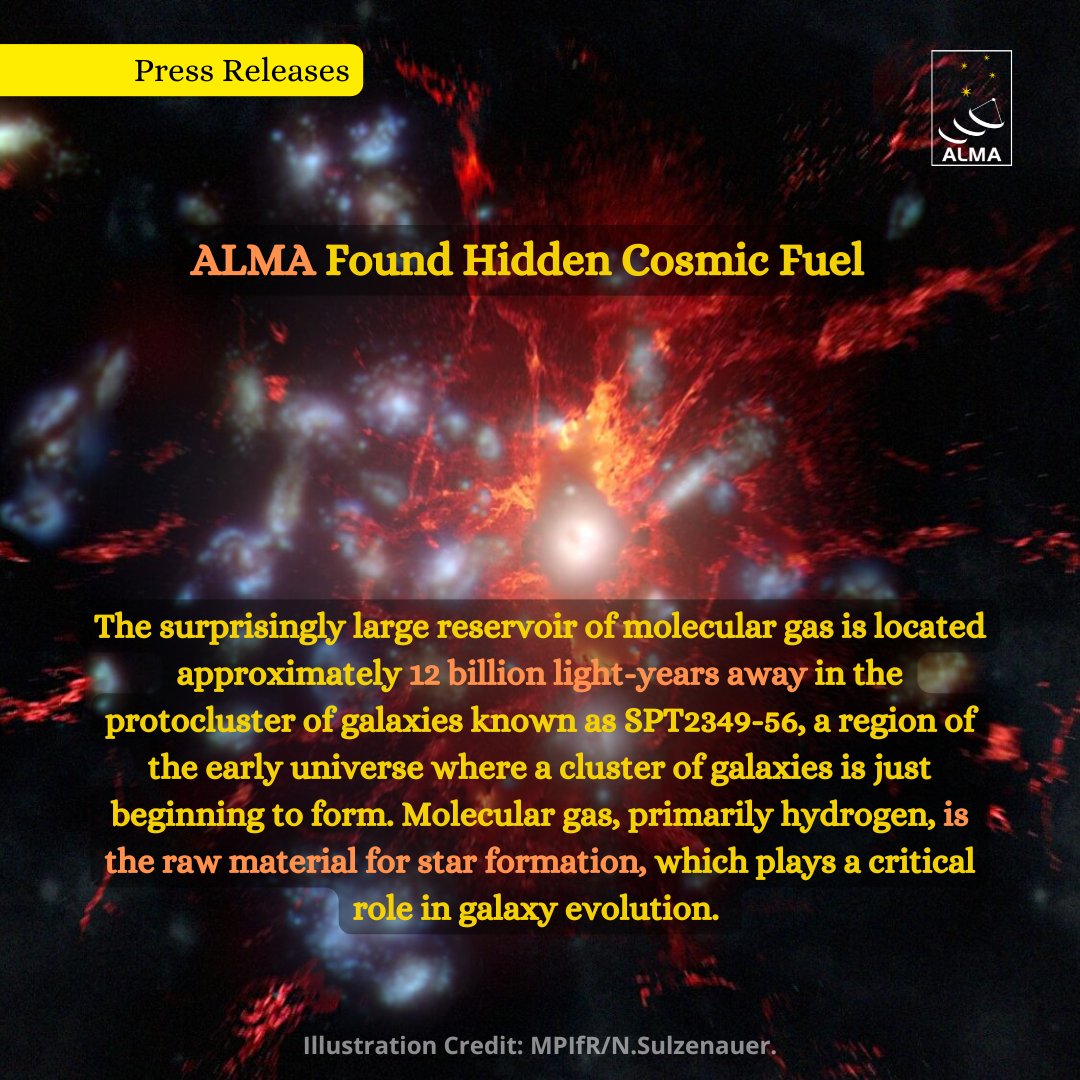
📡✨ An unexpected discovery made by a scientific team using data ALMA and APEX reveals diffuse molecular gas in distant galaxy protocluster, extending star formation timeline to 400 million years.
🔗https://t.co/DUy2W7hwzC
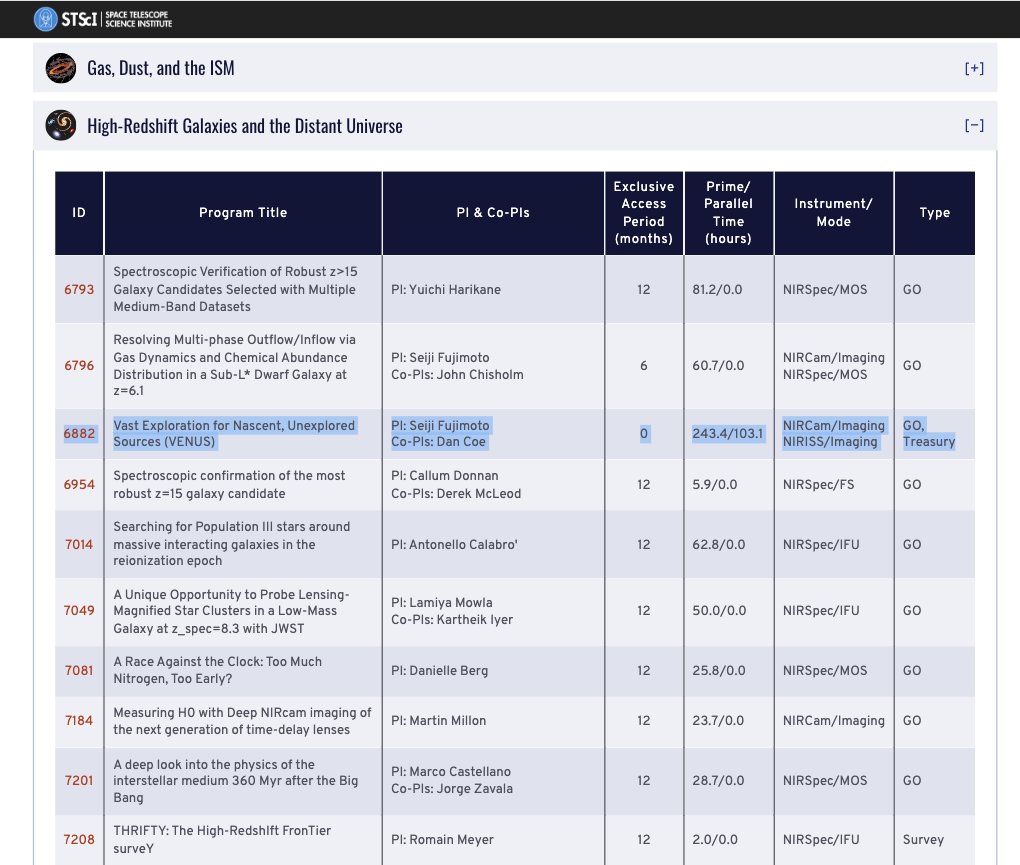
Our years of effort have finally paid off!!🥹 We’re embarking on JWST’s first wide-field lensing cluster program, unlocking 60 precious lensing cluster survey fields for the community — Vast Exploration for Nascent, Unexplored Sources (VENUS)! @NASAWebb
https://t.co/K1OvlEHr7R
Using JWST, Fudamoto et al. have identified more than forty individual stars in a distant galaxy, dating back to when the Universe was only half of its current age. https://t.co/0KiNJBCyQ4
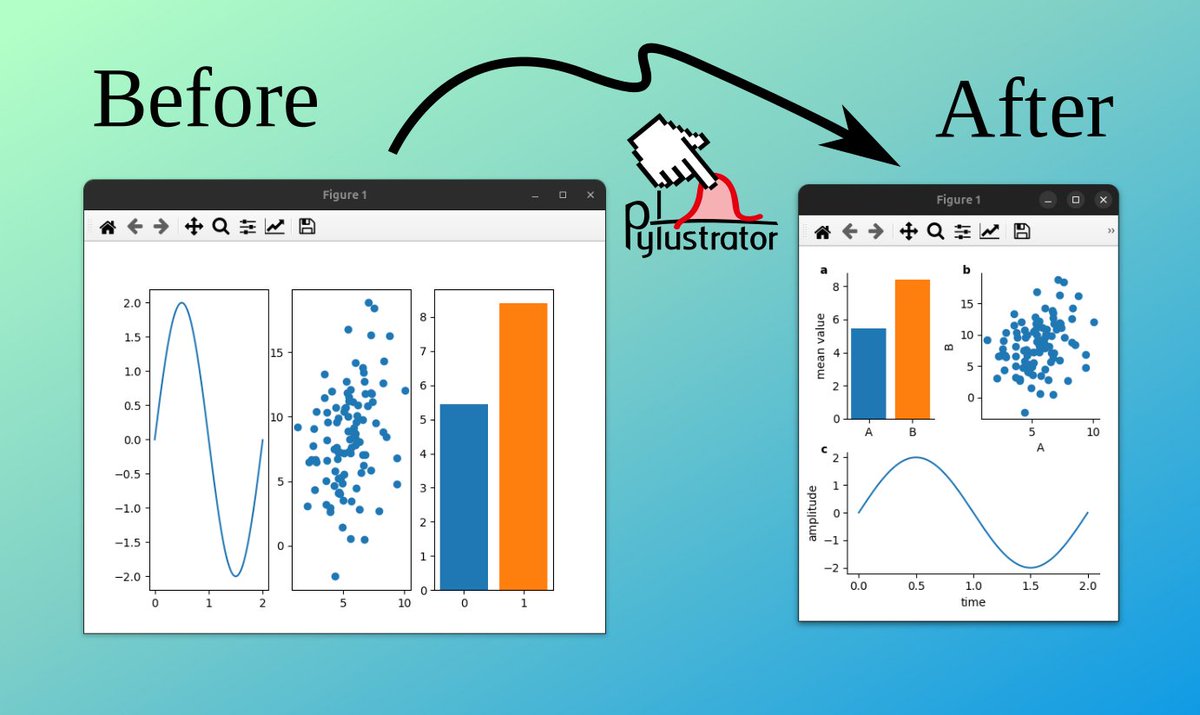
🎉 Great news! Pylustrator, my open-source tool for creating publication-ready @matplotlib plots, works seamlessly with the latest Matplotlib version! 🖌️✨ Curious how it can transform your figures and save your changes as reproducible Python code? Let me show you! 🧵👇
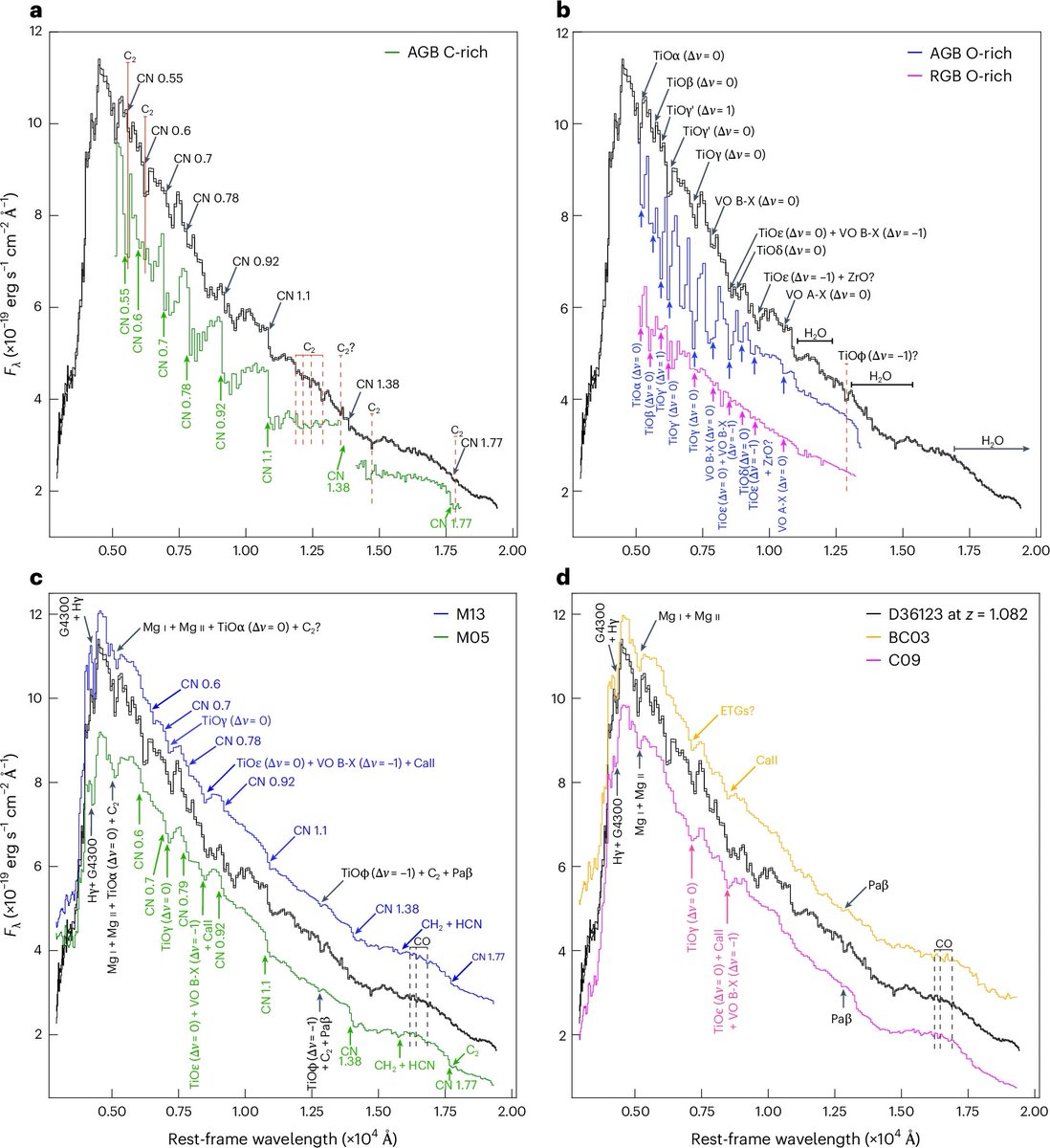
Strong near-IR spectral features from asymptotic giant branch stars are detected by JWST in the integrated light from distant quiescent galaxies, clarifying their contribution to galaxy spectra and population synthesis models. Lu, Daddi, Maraston et al.: https://t.co/n9E4E5SHUp