O engenheiro que criou o Claude Code acaba de lançar um vídeo de 28 minutos onde te ensina a escrever prompts que realmente funcionam.
Já vi cursos de 300 dólares que não chegam nem à metade do que ele explica nos primeiros 10 minutos.
Arquivos CLAUDE.md, atalhos de memória, sessões paralelas e padrões de prompting que mudam o jogo.
Tudo em um único vídeo e completamente grátis.
Não importa se você é desenvolvedor, iniciante ou já usa o Claude há meses. Isso vai explodir sua cabeça.
Nobel Prize winner and Google DeepMind CEO Demis Hassabis just revealed the real AI skill gap:
“The next generation will do things that used to take teams of 10, 20, 30, 50 people”
Most people heard that and thought:
“Cool, AI makes me faster”
Wrong.
AI does not just make people faster.
It changes what one person can become.
A startup used to need:
> researcher
> designer
> developer
> marketer
> analyst
> support team
> ops manager
Now one AI-native person can wire all of that into workflows.
> Agents that research.
> Tools that write.
> Workflows that test.
> Automations that publish.
> Memory that compounds.
This is not prompt engineering.
This is leverage.
The next 5 years will not belong to people who write better prompts.
They will belong to people who build better workflows.
Watch the full interview.
Bookmark this. It is one of the most important ideas of the decade.
Speaking from the heart often works surprisingly well in a public setting. It can be scary to be so vulnerable, but even if you end up getting emotional, as I did in this speech from 2012, your audience will sympathize and appreciate the honesty. https://t.co/IBGsxX4Q8G
Two math olympiad champions wrote a training manual in 1993 on two old Macintosh computers, and every American kid who has won a major math competition in the last decade learned to think from it.
Their names are Sandor Lehoczky and Richard Rusczyk. The book is called The Art of Problem Solving. Most people in math know it as AoPS.
Since 2015, every single member of the US International Math Olympiad team has been an AoPS student. Not most of them. Every one.
That statistic sounds impossible until you understand what the book actually does.
Lehoczky and Rusczyk were not professors. They were competitors. Lehoczky earned the sole perfect AIME score in 1990 and led the national first place team. Rusczyk was a USA Mathematical Olympiad winner and a perfect AIME scorer in 1989. They had both survived the same brutal selection process the book was designed to train students for.
And the first thing they decided was that almost every existing math textbook was teaching the wrong thing.
School math gives you formulas. You memorize them. You apply them. You pass the test. Then you sit down in front of a real competition problem and the formula does not apply, and you have nothing underneath it.
That is the gap. The gap is not knowledge. It is thinking.
The entire premise of AoPS is that problem-solving is a transferable skill, not a bag of memorized tricks. A student who genuinely understands why a technique works can adapt it, combine it with something else, and deploy it in a context they have never seen before. A student who only memorized the technique freezes the moment the problem looks different.
The book teaches the difference between a formula and a method.
A formula tells you what to compute. A method tells you how to see. The students who win olympiads are not the ones who know more formulas. They are the ones who have trained themselves to look at an unfamiliar problem and recognize its structure. To see that this problem is secretly asking the same question as a problem they solved three weeks ago, just dressed differently.
Rusczyk calls this "learning to read the problem." Not reading the words. Reading what the problem is actually asking underneath the words.
The second thing they built into the book is tolerance for being stuck.
Most students treat confusion as a signal to stop. The book treats confusion as the starting point. Every chapter pushes students past the point where the obvious approach runs out. That moment of running out is not failure. That is where the actual thinking begins.
Lehoczky once described it this way. If you can solve a problem quickly, you are not learning. You are performing. Learning only happens when you are past the edge of what you already know.
The book was written on old Macintosh computers in 1993. Rusczyk launched the AoPS website in 2003. Today the community has over one million users. Thousands of students enroll in AoPS online courses every year. Most winners of every major American math competition are AoPS alumni.
A platform built by two kids who were good at math competitions has become the infrastructure that produces the next generation of mathematicians, engineers, and scientists who are good at thinking.
The formulas you memorized in school will eventually be obsolete.
The thinking you trained will not.
What is one problem in your life right now that you have been avoiding because you do not yet know the right formula to solve it?
A few matrices, a strange-looking equation, and a prediction that rewrote physics.
The Dirac equation remains one of the most beautiful examples of mathematics uncovering reality.
A mathematician who shared an office with Claude Shannon spent 30 years watching which scientists became legendary and which ones disappeared.
In 1986 Richard Hamming told researchers exactly what he found.
Here are the 10 habits that separated Nobel winners from everyone else:
"I think that there is only one way to science—or to philosophy, for that matter: to meet a problem, to see its beauty and fall in love with it; to get married to it and to live with it happily, till death do ye part—unless you should meet another and even more fascinating problem or unless, indeed, you should obtain a solution.
But even if you do obtain a solution, you may then discover, to your delight, the existence of a whole family of enchanting, though perhaps difficult, problem children, for whose welfare you may work, with a purpose, to the end of your days."
—Karl Popper, Realism and the Aim of Science.
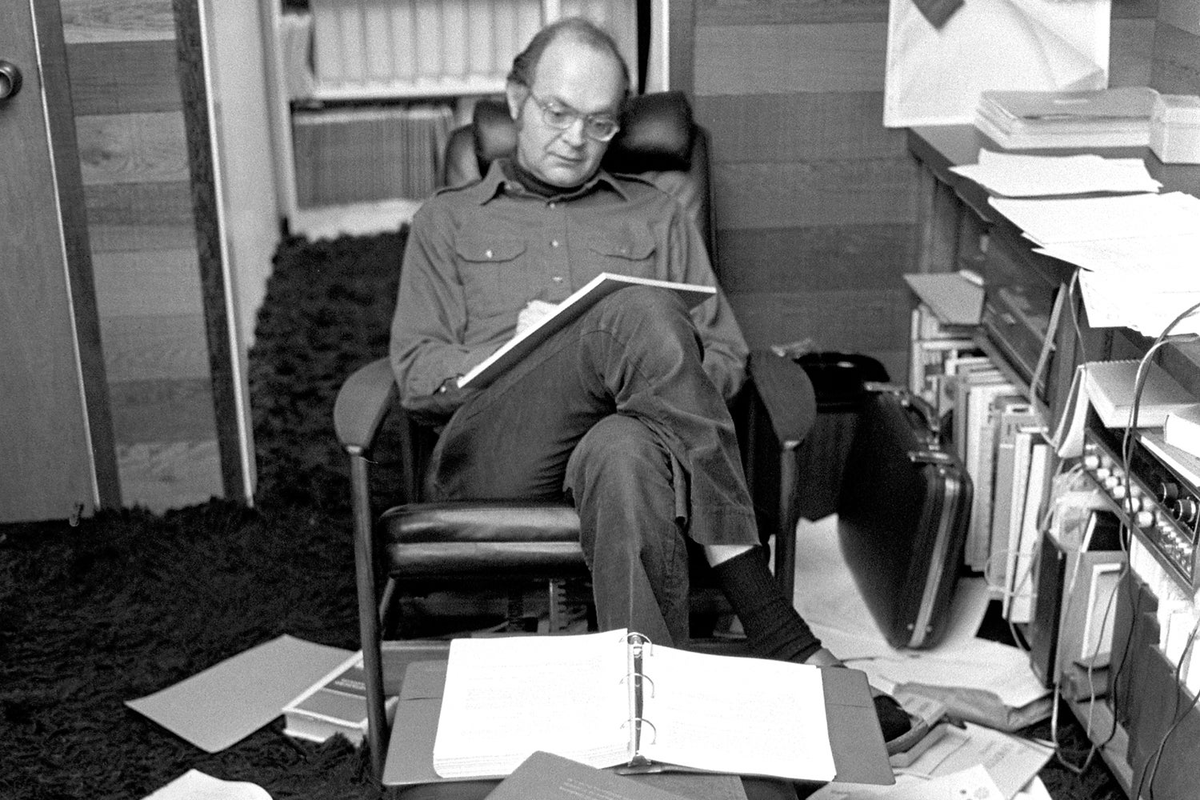
A computer scientist won the Turing Award at 36 and then walked away from almost every other project for the next 50 years to write one book that he has still not finished at age 88, and it may be the most important book in his field.
His name is Donald Knuth. He won the Turing Award in 1974, which is the closest thing computer science has to a Nobel Prize.
He was 36 years old. He had already written volumes one, two, and three of a book series called The Art of Computer Programming. He was the youngest person ever to receive the award at that point in its history.
Almost anyone else would have ridden that moment for the rest of their career. Founded a company. Sat on boards. Gone on speaking tours. Knuth did the opposite. He went back to his desk and kept writing.
He started the book in 1962. He was 24 years old. His publisher had asked him to write a short paperback on compilers. He sat down to outline it and discovered that to explain compilers properly he would have to explain the deeper algorithms underneath them first.
The short paperback became a draft outline of 12 chapters. The 12 chapters became a planned 7-volume series. The 7-volume series became the project he is still working on 63 years later.
Volume 1 came out in 1968. Volume 2 in 1969. Volume 3 in 1973. He was producing books faster than most academics produce papers. Then everything stopped.
In 1977 he received the printed proofs of the second edition of Volume 2. He looked at the pages and was so disgusted by how the publisher had typeset his mathematical notation that he could not bring himself to release the book.
The equations looked ugly. The fonts looked wrong. The spacing was off. He decided he could not in good conscience publish another volume of TAOCP until the typesetting problem was solved.
So he paused the book.
He stopped writing TAOCP and spent the next 8 years inventing TeX from scratch.
TeX is the typesetting system that every academic paper, every math textbook, every physics journal on earth now uses. Every PhD thesis in the sciences is set in TeX. Every paper on arxiv. Every equation in every paper Anthropic, OpenAI, and DeepMind have ever published. The system that the entire scientific publishing world runs on exists because one man refused to compromise on how the second edition of Volume 2 looked.
He gave the entire TeX system away for free. He never tried to commercialize it. He went back to writing TAOCP.
In 1992 he retired from Stanford at the age of 54. Most professors retire to slow down. Knuth retired to speed up. He explicitly said he was leaving teaching because he needed every remaining hour of his life to keep writing the book. He stopped using email on January 1, 1990.
He answers no calls. He takes paper mail only. He is on a personal mission to finish a multi-volume series that nobody is forcing him to write, on a deadline that only exists in his own head.
Volume 4A came out in 2011. Volume 4B in 2022. He is currently working on Volume 4C. Volumes 4D, 4E, 4F, 5, 6, and 7 are still ahead of him. He is 88 years old. He will almost certainly die before he finishes.
The thing that should haunt anyone reading this is the math of his choice.
Every modern incentive structure tells you to optimize for speed. Ship the imperfect version. Get it out the door. Iterate later. Move on to the next thing.
Knuth has spent 63 years doing the exact opposite. He pays a $2.56 reward in hexadecimal dollars to anyone who finds an error in his published books. Real checks, until check fraud made him switch to certificates of deposit. He treats every single error in every single volume as a personal failure. He revises. He rewrites. He goes back to fix issues that nobody else could have spotted.
He could have written 30 books in 63 years. He chose to write one.
The reason is the one almost nobody understands the first time they hear it. There is a category of work that loses all its value when it is done quickly.
A reference book that engineers will rely on for the next 200 years is not the same kind of object as a blog post that has to ship today. The slow project and the fast project look like the same activity from the outside. They are completely different games.
Bill Gates once said in an interview that if you can read the whole of TAOCP, you should send him your resume. He meant it. He was not joking. The man who founded Microsoft was telling the world that the rarest skill on earth is being able to finish a book that one man has spent his entire adult life writing for an audience that mostly does not have the patience to read it.
The book may never be finished.
The man writing it knows this and keeps writing anyway.
The work outlives the worker. That is the entire point.
A beautiful example of an "optimal stopping problem" – Feynman's restaurant problem – with a great backstory behind it. This is a fun, well written article, and a fun math problem too.
https://t.co/0Nng9KLDHa
Ever seen the film A Beautiful Mind?
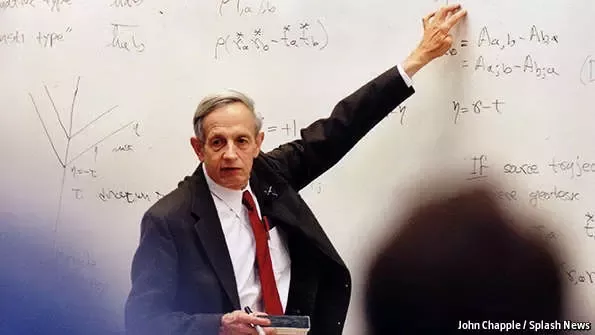
The mathematician that film was based on, John Nash, has one of the shortest PhD dissertations ever published: ‘Non-Cooperative Games’.
It has a grand total of 26 pages, and only cites two references.
That thesis went on to found the basis for his paper on the development of game theory, for which he won the 1994 Nobel Prize in Economics.
If you like thinking about what math can do for biology and vice versa, you might like this public talk I gave a year ago. It contains a lot of stories from my own life. "From Math to Bio and Back: Reflections on a Two Way Street" https://t.co/TzKE3jnK29
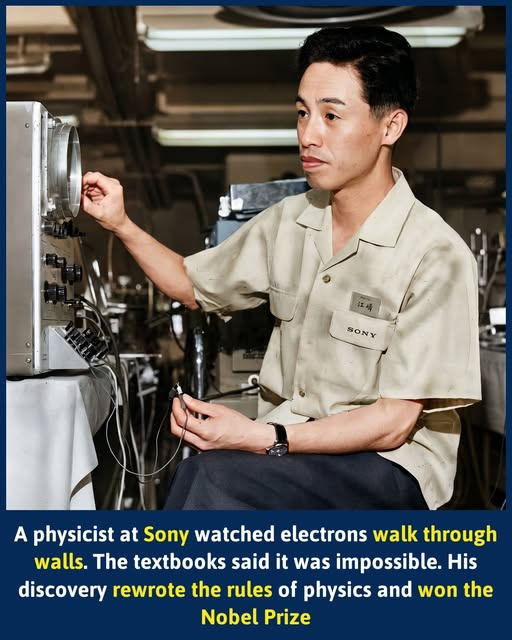
The year was 1957. Inside a modest Sony research laboratory in Tokyo, a 32-year-old physicist named Leo Esaki was doing something that looked almost embarrassingly simple. He was pressing a tiny sliver of germanium semiconductor between two electrodes and watching what happened. No massive particle accelerators. No sprawling university budgets. Just a quiet man, a small crystal, and an idea that the textbooks said shouldn't work.
What Esaki noticed was extraordinary. Electrons weren't behaving the way classical physics demanded. Instead of climbing over an energy barrier the way any sensible particle was supposed to, they were slipping straight through it. Vanishing on one side and reappearing on the other, as if the wall simply didn't exist. This was quantum tunneling, a phenomenon that had been theorized for decades but never cleanly demonstrated in a semiconductor until that moment.
The implications were staggering. Esaki hadn't just confirmed a ghostly quirk of quantum mechanics. He had shown that it could be harvested, controlled, and put to work. The device born from his discovery, the tunnel diode, could switch between states faster than any conventional transistor of its era. It was a signal that the future of electronics wouldn't just be about building smaller components, but about bending the rules of nature itself.
Physics laboratories across the world took notice almost immediately. The tunnel diode ignited a wave of research into quantum devices that rippled from Bell Labs in New Jersey to research centers in the Soviet Union. Scientists who had spent careers working within the comfortable boundaries of classical electronics suddenly found themselves peering into the strange, probabilistic world of quantum mechanics.
In 1973, the Nobel Committee in Stockholm made it official. Esaki was awarded the Nobel Prize in Physics alongside Ivar Giaever, the two of them recognized for independently illuminating the tunneling phenomenon from different angles, Esaki in semiconductors and Giaever in superconductors. It was a recognition not just of two brilliant careers, but of an entire new chapter in the story of physics.
Today, Leo Esaki turns 101 years old. Born in Osaka on March 12, 1925, he has lived long enough to watch the quantum principles he uncovered in that Tokyo lab become foundational to the technology billions of people carry in their pockets every single day. The man who once watched electrons walk through walls is still here. And the world he helped build is still catching up to him.
Dirac couldn't get hired as an electrical engineer. A 19-year-old with a Bristol degree in 1921, during a post-war depression that had no use for him. So he stayed at Bristol and studied math for free because there was nothing else to do.
Two years later he got a fellowship to Cambridge. His advisor, Ralph Fowler, handed him proofs of an unpublished Heisenberg paper in August 1925. Dirac read it and realized the math resembled Poisson brackets from classical mechanics. Within months he had built an entirely new mathematical framework for quantum theory.
He published 11 papers before submitting his thesis. Eleven. Most PhD students struggle to publish one. Dirac had a body of work that constituted an entire theoretical foundation, and he still needed to package it into a dissertation to satisfy the degree requirements.
The thesis title tells you everything about the confidence level. When you title your PhD "Quantum Mechanics" at age 23, you are either delusional or correct. Dirac was correct. It was the first PhD thesis ever written on the subject.
Two years after that he wrote the Dirac equation, unifying special relativity with quantum mechanics and predicting antimatter before anyone had observed it. By 1932 he held the Lucasian Professorship of Mathematics at Cambridge. The same chair Isaac Newton held. He was 30.
Nobel Prize at 31. The youngest physics laureate at the time.
The entire arc from unemployable engineer to owning Newton's chair took 11 years. The field he named his thesis after is now the operating system of modern physics.
1/n: There are some academic papers that are so brilliantly and so accessibly written and so universal in scope that they transcend disciplines and stand as timeless testaments to both great thinking and great writing. Here's a short personal selection:
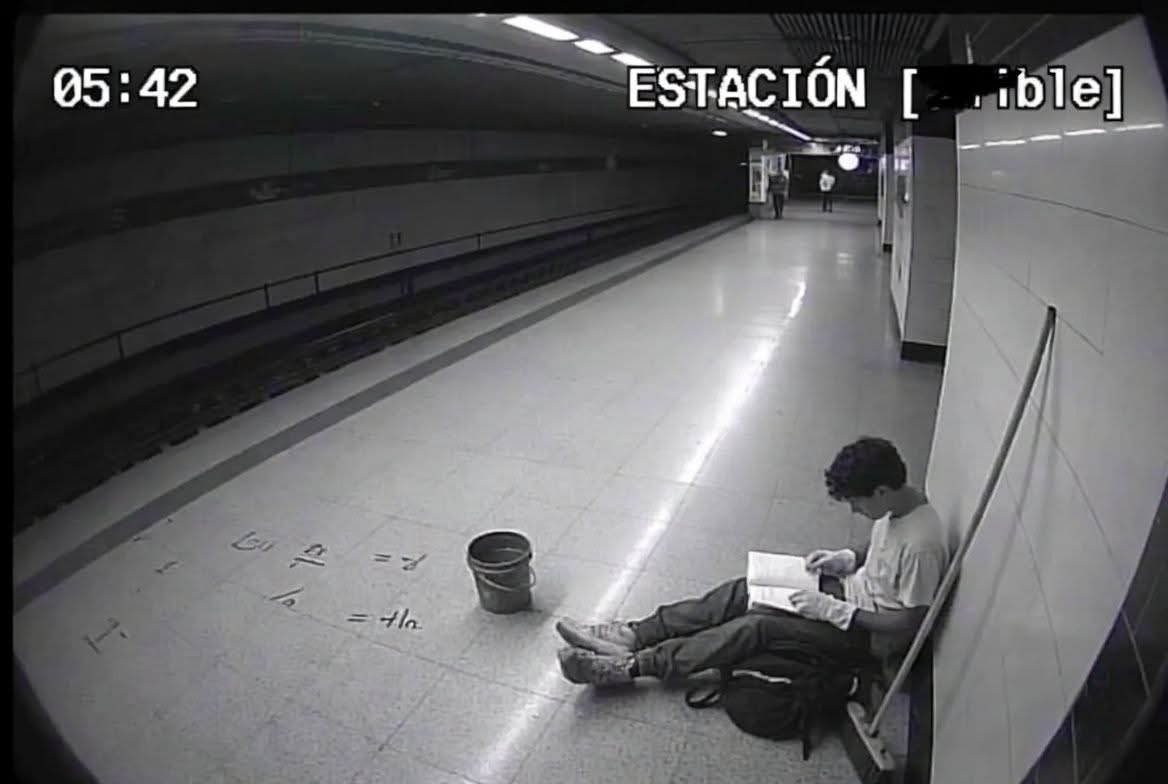
Una cámara de seguridad instalada en una estación de metro de Bogotá captó una escena que nadie esperaba y que, días después, inspiraría a millones de personas en redes sociales.
Todo ocurrió un lunes a las 5:42 de la mañana. Mientras gran parte de la ciudad aún dormía, las cámaras mostraban a Mateo, un joven de 19 años que trabajaba limpiando los pasillos de la estación durante la madrugada. Llevaba un uniforme desgastado, unos zapatos viejos y una mochila negra apoyada junto a un cubo de agua.
Al principio, las imágenes parecían una rutina común. Mateo barría el suelo mientras los pasajeros pasaban apresurados sin mirarlo. Pero minutos después ocurrió algo que cambió por completo la percepción de quienes vieron el video.
Cuando terminó de limpiar una esquina de la estación, sacó varios libros de su mochila, miró el reloj y se sentó en el suelo junto a la pared para estudiar. Con los mismos guantes de trabajo puestos, comenzó a repasar apuntes de matemáticas y física. Cada cierto tiempo se levantaba para seguir limpiando y luego volvía rápidamente a sus libros.
Durante casi dos horas repitió exactamente la misma rutina:
Trabajar. Estudiar. Trabajar. Estudiar.
Sin descanso.
Más tarde, uno de los supervisores reveló que Mateo llevaba más de un año viviendo así. Trabajaba desde la medianoche hasta las seis de la mañana y después viajaba directamente a la universidad para asistir a sus clases de ingeniería.
El video se volvió viral cuando una empleada del metro compartió las imágenes con una frase que conmovió a miles de personas:
“Mientras muchos se rinden por cansancio, otros luchan en silencio por sus sueños.”
Las redes explotaron. Millones comenzaron a compartir el clip, impresionados por la disciplina del joven. Aunque el cansancio era evidente y por momentos parecía quedarse dormido, Mateo siempre volvía a abrir sus libros y continuaba estudiando.
Días después, periodistas lograron entrevistarlo. Con una sonrisa humilde, contó que su padre había fallecido cuando él era niño y que su madre sobrevivía vendiendo comida en la calle. Desde pequeño entendió que la única forma de cambiar su vida era estudiando.
“Hay días en los que siento que no puedo más”, confesó. “Pero recuerdo por qué empecé. Quiero darle una vida mejor a mi mamá.”
Sus palabras tocaron el corazón de millones. Poco después, la universidad confirmó que Mateo no solo estudiaba ingeniería, sino que además era uno de los mejores alumnos de toda la facultad.
Tras la viralización, muchas personas decidieron ayudarlo. Una empresa se ofreció a cubrir todos sus gastos universitarios hasta graduarse y otras personas le regalaron una laptop y materiales de estudio.
Pero más allá de la ayuda o la fama, lo que realmente impactó fue el mensaje que dejó su historia.
Ese viejo video de CCTV recordó algo que muchas veces se olvida: los sueños más grandes suelen construirse en silencio. Detrás de cada logro casi siempre existen noches largas, sacrificios invisibles y personas que, aun estando agotadas, se niegan a rendirse.
Hoy, la estación de metro sigue funcionando como cualquier otro día. Pero para millones de personas, ese rincón donde un joven estudiaba sentado en el suelo se convirtió en un símbolo de disciplina, esfuerzo y esperanza.
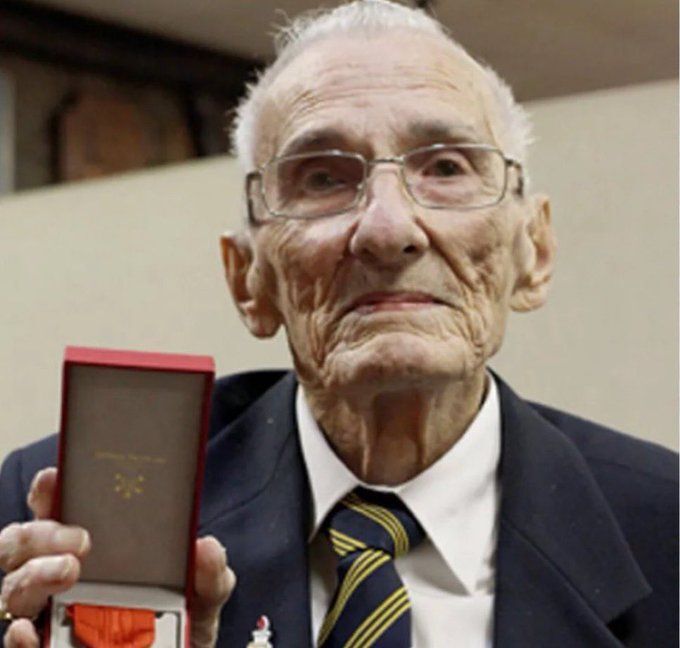
Este es el inmunólogo más famoso del mundo. Vivió 108 años, y cuando le preguntaron por el secreto de su longevidad, dijo que no se debía a la comida, ni a una dieta saludable, ni siquiera a un bajo nivel de estrés. Y cuando le preguntaron por el secreto de la longevidad, respondió con una sola palabra.
Her name was Wang Xiao, and at twenty-four years old, she was running out of time.
Doctors told her she had roughly one year left to live unless she received a kidney transplant. She suffered from uremia, a severe condition where the kidneys stop filtering waste from the blood, slowly poisoning the body from the inside. Her family had already been tested. None of them matched. Every normal option had failed.
So Wang did something almost nobody around her would have dared to do.
In 2013, she posted a message inside an online cancer support group. Her words were painfully direct because she no longer had the luxury of pretending.
She was searching for a terminally ill man with her blood type who would be willing to marry her and donate his kidney after his death.
In return, she promised she would care for him through the rest of his illness with everything she had.
“I just want to live,” she wrote.
Most people would have scrolled past the message.
One man did not.
His name was Yu Jianping.
He was twenty-seven years old, a former business manager and university graduate whose life had already been devastated by myeloma, a serious cancer affecting plasma cells. He had gone through a bone marrow transplant once already. The cancer had returned. His father had sold the family home to pay medical bills. A girlfriend had left after the diagnosis. Yu had quietly stopped fighting emotionally long before he stopped breathing physically.
Then he saw Wang’s message.
Their blood types matched.
He responded with remarkable simplicity:
“I can marry you.”
They met in a park for the first time.
And something unexpected happened almost immediately.
They liked each other.
One day during an online conversation, Wang suddenly disappeared for a while. Then she replied with dark humor that perfectly captured her spirit:
“On dialysis now. My arm is fixated. Here is a single-handed monster.”
She sent him a video from the dialysis machine smiling despite the tubes and blood moving beside her.
Yu laughed.
He later admitted he had not truly laughed in a very long time.
On July 16, 2013, they officially registered their marriage with a formal written agreement.
The contract was practical and emotionally detached on paper.
They would not live together.
They would not combine finances.
Their families would not know about the arrangement.
If Yu died and his kidney matched, Wang would receive it. In exchange, she promised she would care for his elderly widowed father for the rest of the man’s life.
It began as a survival agreement between two people who believed death was approaching.
But life complicated the arrangement.
Wang started accompanying Yu to hospital appointments.
Yu cooked soup for her after dialysis sessions.
They walked hospital corridors together.
They joked about sickness and death with the strange humor people develop when they genuinely understand mortality.
Without realizing it fully, the contract slowly became love.
Then Yu needed another bone marrow transplant — one his family could not afford.
Wang refused to stand still.
She opened a small flower bouquet stall on the street. Beside every bouquet she placed handwritten cards explaining their story: two sick people trying to save each other one day at a time. Customers returned. Strangers spread the story. The tiny stall slowly became something much larger through simple human compassion.
Eventually, Wang raised around 500,000 yuan — more than $90,000 — for Yu’s surgery.
And then something almost impossible happened.
Yu’s condition stabilized after his second transplant.
Meanwhile, Wang’s dialysis treatments began decreasing. Doctors told her she might not need a kidney transplant after all.
The two people who met expecting death were somehow both still alive.
In February 2015, they held a real wedding celebration with friends and family who finally learned how their relationship had truly started. Not as a romance at first, but as two desperate people trying to save each other.
Their story later inspired the 2024 Chinese film, which won multiple national awards. Today, Wang and Yu run the “Yongsheng Flower” shop in Xi’an — built from the same flower stall Wang once used to raise money for the man she believed she would someday outlive.
People often describe stories like this as miracles.
And maybe they are.
But what makes this story feel unforgettable is not only that two sick people survived.
It is that Wang Xiao refused to surrender her sense of agency even when almost every normal path disappeared.
She wrote down exactly what she needed.
She asked honestly.
She found another person who was equally broken by circumstance.
Then they slowly gave each other reasons to continue fighting.
The kidney was never donated.
Because in the end, neither of them needed it.
They were too busy learning how to live.
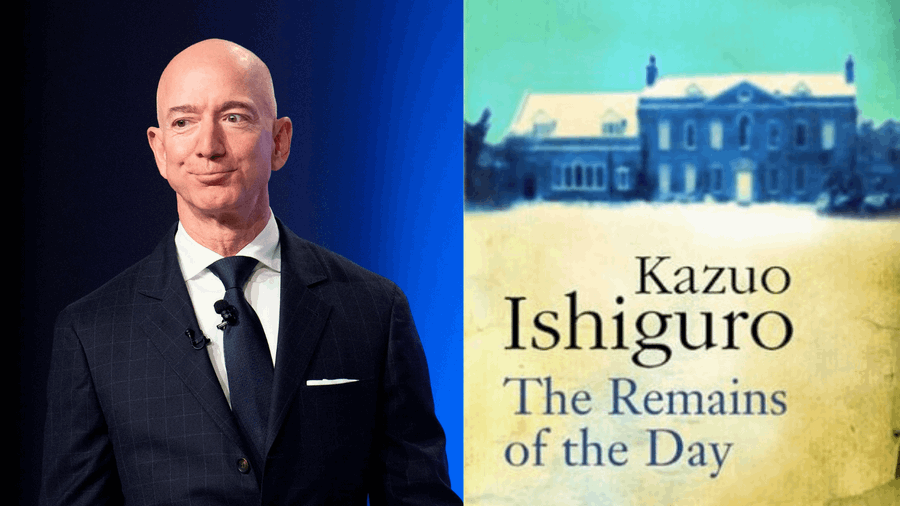
This is Jeff Bezos’s favorite book.
He’s reread it for 27 years.
It created his famous decision-making model that helped him build his 200B+ Amazon Empire.
Here are 7 lessons from “The Remains of the Day”: