90% of software engineering in 2026:
Engineer 1 → AI: “Build this and open a PR”
Engineer 1 → Engineer 2: “Can you review?”
Engineer 2 → AI: “Review this PR”
Engineer 2 → Engineer 1: “LGTM”
The irony: both engineers use the exact same AI model.
Fascinating mind virus ripping through parts of open source right now. Listen, the code is good or bad whether it was written by math or by mind. Coder or clanker. Merge good code, reject bad code. You don't need a fucking code of conduct or contributor covenant for that!
Launching the 💎 Timeless Typeface Family
One super family of Grotesk, Sans, Serif and Text, all variable with matching italics. Free to use.
We’ve been working on this for a couple years now, hope you enjoy them
Everyone deserves beautiful typography. https://t.co/XMVd5aFZwj
Cursor can now build charts and diagrams right in the chat.
Use /visualize to analyze data and see the answer inline. Available now in the Agents Window.
Info dump on Bend, HOC, next steps, etc.
I'm preparing my trip to SF for the $20m raise.
Plan is to have 2 internal teams:
- BendCore: Bend's theory, compiler, ecosystems, adoption, etc.
- SupGen: internal symbolic AI R&D (goal: GD-free GPT-3)
Below are some ways on which the language will improve.
Proof Kernel:
- fully rewritten in Bend (no more TypeScript)
- support for live λ contraction (largest Lean expressivity gap)
- funext + univalence (most likely HOTT-like, NOT cubical)
- perhaps bring self types back from Kind; they're powerful
- of course, all that must be justified by the formalization
Compiler:
- fully rewritten in Bend (no more TypeScript)
- keep improving in all directions. faster, safer, better
- target HTML apps (WASM + WebGPU) and AMD GPUs
- support for clustering, so it runs on 8x DGX B300 etc.
- way better support for shared atomic arrays
- more parallelism options (not just fork/join)
- apps must run identically on desktop, server, web, mobile
- all use cases of CUDA & Metal must be reproducible in Bend
Ecosystem:
- a 3d game engine, Unreal level
- AI framework / PyTorch / llama.bend / etc.
- full blown crypto libraries
- full blown networking libraries
- every database / api integration
- all good parts of mathlib, npm, hackage should be in Bend
- anything else the community asks for
The teams will be small and focused. We'll ship all these things with world-class quality, because we will heavily use AI inference, guarded by Bend's LAWS, to grow our own ecosystem, to the point it becomes the largest and most compelling language to use. Bend 2 launch is just the first stage. What matters is how it scales. It is a language evolved by AI, secured by math. That's Bend's thesis.
I'm also merging StudioVibi and HOC. Vibi will be a sub-team on the BendCore team, responsible for building vibe-coded games with Bend. That makes sense since we'll be maintaining our own 3D game engine now.
Also, we've recently published BendHub. Access it on BendLang's website. You can now publish a named, versioned library for other people to use, and there is even a "mini hacker news" on Bend's landing page, so you can discover and post packages, and upvote, downvote, and discuss them. This is just a first step.
You can also finally spend Bend Credits on something: a namespace. Not the most compelling use case (BendAI, or whatever we call it, will be the main one). But it is the first use for it.
I also should talk about Bend Credits quickly. These should be seen as the Robux of Bend's ecosystem. You will be able to use it for everything that HOC produces. For example, once we ship games, these same Bend Credits will be spendable on in-game assets. If we launch Kindelia, Bend Credits will be convertible. And, of course, once we have our models, and SupGen, this is how you'll have access to them.
You can buy Bend Credits in our website today, at a time-limited 50% founder discount. If you do buy them, please keep in mind there isn't much use for it yet, but you can expect more to come. We sold ~$3.5k so far 🥳 I'm very thankful to these who bought, despite the limited applications. That's basically the first time HOC makes any money lol
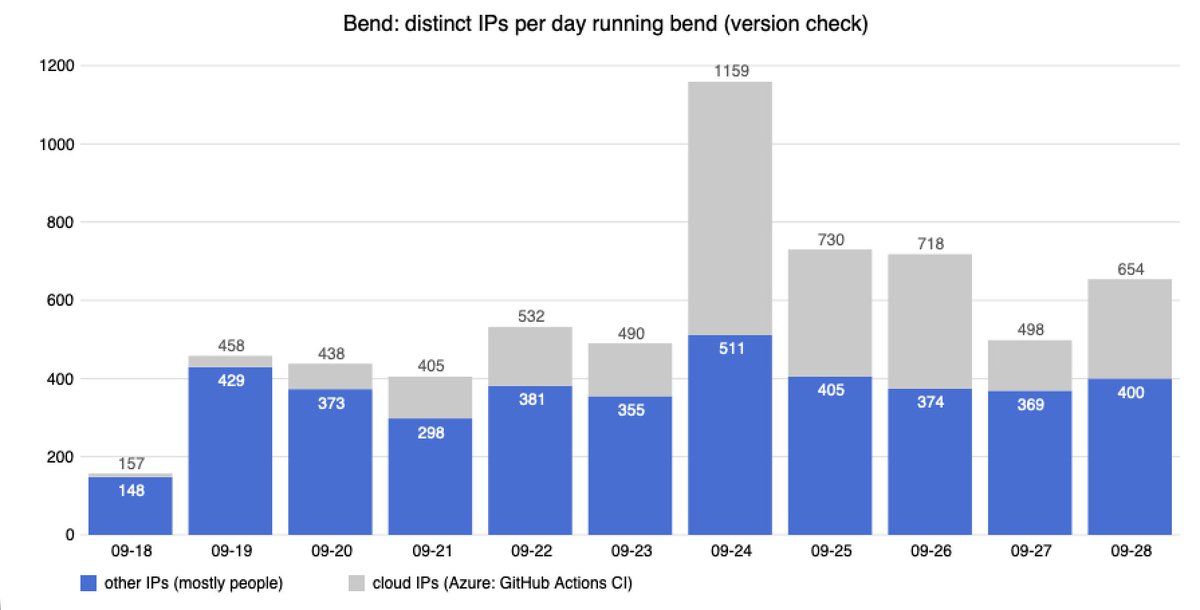
On adoption. This month, we had more installs than Zigs on Homebrew, which is kinda nice, but not really expressive given it was a launch. Roughly 400 distinct non-cloud IPs use the Bend command every day, and that number seems to be stable. I have no idea what this means but looks low, so I'll keep working to make Bend more useful and to let it be seen by way more people.
I like Bend's AI+LAWS evolutionary idea, because it dogfoods Bend's own thesis. If it works, the ecosystem will grow at an unprecedented rate - faster than any other language to ever exist. And that will make it way more useful and compelling to use. If it doesn't, then that means the entire thesis behind Bend itself wasn't that good to begin with, and the language thereby deserves to die anyway. Makes sense, doesn't it? I can't wait to see this play at scale.
That's all for now bye
Your job may be surviving on inertia. Your resentment won’t extend the runway. What do you actually want to do with the intelligence now at your disposal? https://t.co/vikawjCmZD
I’m seeing teams at Vercel iterate just as fast on Zig, Go, Rust projects as TypeScript & Python ones.
The days of language or runtime choice based on human convenience are over. Agents are the new compilers.
They compile intent into fast software.
Introducing terminal-code: VS Code inside the terminal
- VS Code compatible CLI
- works over ssh
- syncs with your terminal theme
https://t.co/j3HThPdVPw
Agents can write code faster than teams can review, deploy, and maintain it. Today we’re introducing the Agent Development Lifecycle and the Cloudflare primitives that underpin it. https://t.co/ms4ifso5on
now that the dust is settling around the last wave of model releases, and i've had enough time to use all these models in practice, let me share a more complete set of thoughts
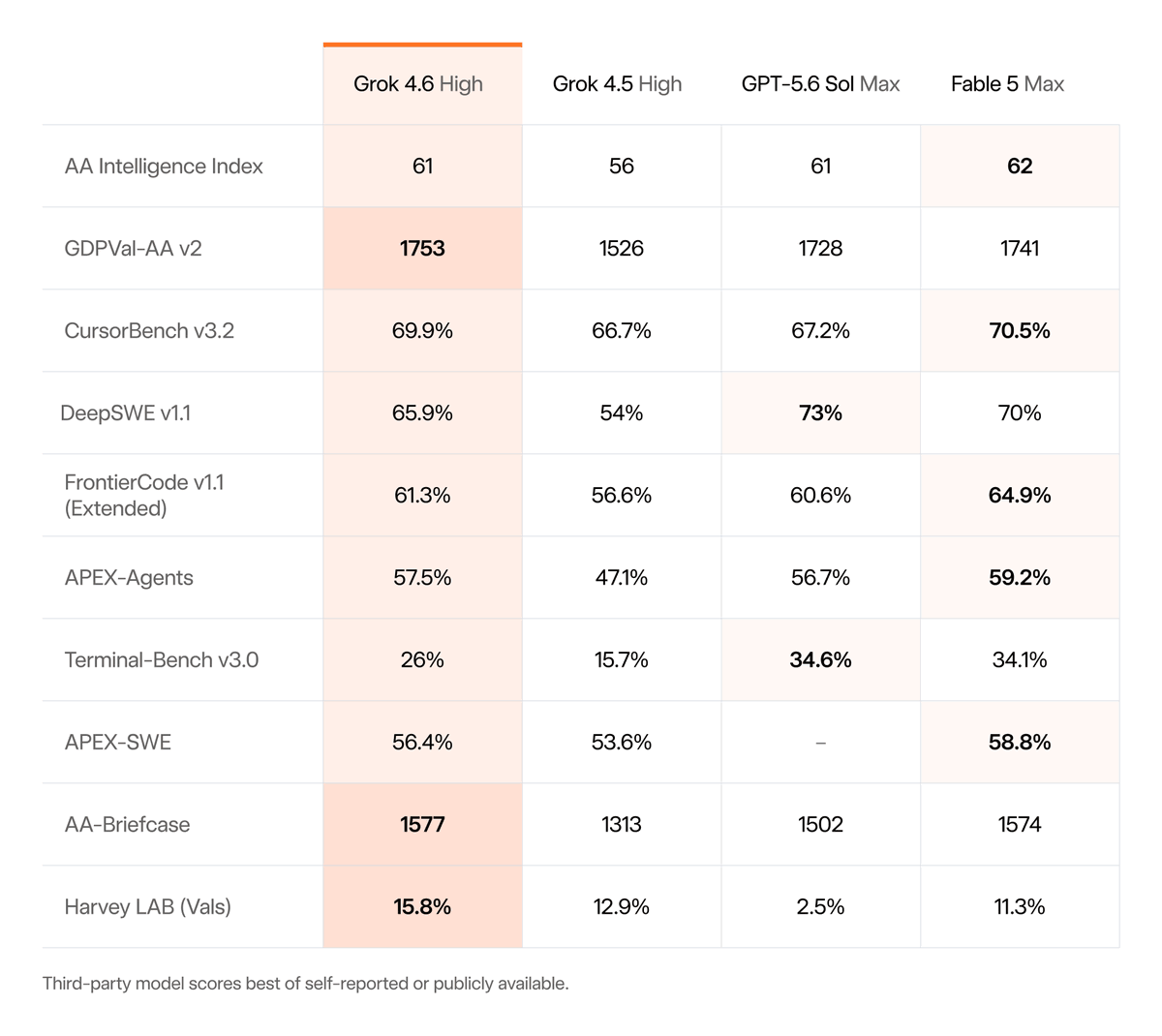
1. grok 4.5 is probably the single most significant event during the last couple of weeks
i've been talking with many heavy users across model families, and it's pretty much a consensus that grok 4.5 is the most "pleasant" frontier model to work with day to day. it's incredible how precisely the team behind it found this perfect sweet spot and created a model that's so fast, efficient and capable
it proved spacexai is now a 3rd real player in addition to anthropic and openai. they have real time data from the biggest public townsquare of humans, they have acquired a popular agent harness, and now they have proven they can build great models. and if you look closely, they are designing their own chips, they have their own data centers, they can send GPUs into the space and create tokens out of sunshine
holy shit
2. speaking of data, human usage over a harness proved to be extremely important for training good models. grok 4.5 was the first model that incorporated cursor's data and it made a massive difference compared to previous generations of grok
this explained why amazon mandates employee usage of kiro, why meta installed mass surveillance over employee devices, why anthropic bans 3rd party harnesses, and why google is still struggling with gemini - because they don't have a popular harness with mass adoption to collect the data
this is part of why i don't think the subsidized LLM subscriptions will end any time soon, because a wide consumer adoption is the best source of data collection. we're paying the subsidized tokens by teaching their models how to get work done
3. opus 5 flopped. almost no one likes it. the only people who like it seem to be using it to one-shot 3d games that look impressive but no one will ever buy
anything that AI can one-shot is just the definition of garbage, because if you can one-shot this thing with a quick prompt, you should know that it means billions of other people can also do it - you will not create anything of value this way
and this is just a symptom of a more fundamental problem that model training is heading down a slippery slope where machine verifiable outcome is dominating over human feedback
the latest training process rewards the agent for running for a long time and finishing a complex project, yet no longer seems to care about how the agent talks to its human
jargons, walls of text, "an honest mistake" - opus 5 showed us that we need AI that's more human friendly. let's not build a world where we end up working with robotic a**holes all day
4. fable 5 remains undefeated as the upperbound
i talked about this in my previous post about wisdom vs diligence. the benchmarks blend both together so it's not easy to see, but fable 5 is the GOAT on the "wisdom" dimension despite it not winning on every benchmark. if you used it meaningfully, you know what i'm talking about
that said, it seems anthropic is extremely paranoid about other players, including open models, reaching the same level of intelligence, which is an indication that the moat is not strong. kimi k3 is just a preview of what it looks like
at the same time, fable is the first time token cost is becoming a very real problem. it's the only model so far that i can't afford to keep using all day. i suspect this will remain true for a while, that we have to pick and choose what tasks to give to fable-tier models, not using them as a daily driver
5. openai is in an interesting position
gpt models have been great at efficiency, but now grok is also very competitive. gpt also haven't quite reached the same wisdom upperbound where fable is yet - although gpt 6 may change that
i think there are two angles for openai to pursue:
- continue to bet on efficiency, and go after enterprise adoption while claude is too expensive and grok has a brand tax to pay there. this is a very viable strategy
- or.. compete head on with fable on wisdom and win against them on the "human friendly" aspect. although traditionally this hasn't been the strength of openai models either, so this feels like a low-ROI option
alright, that's a bit of a long post but the landscape is just becoming increasingly complex. hope these thoughts are helpful in terms of providing a reference for how to rationalize everything happening