1/6 Published today in @HEP_Journal@docamitgs
https://t.co/59fmikB7Oa
➡️BEACON-HCC, a new treatment allocation system for #HCC, developed by @HCCLIVEConf consortium
AASLD Statement: https://t.co/erd141V5yk
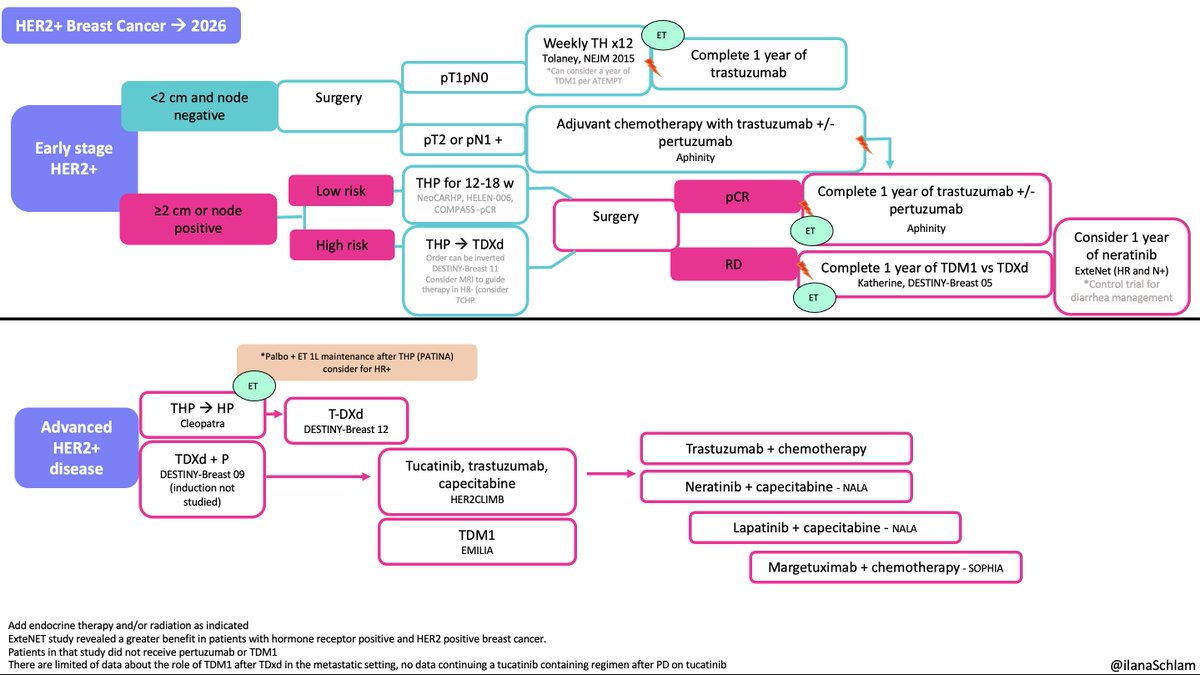
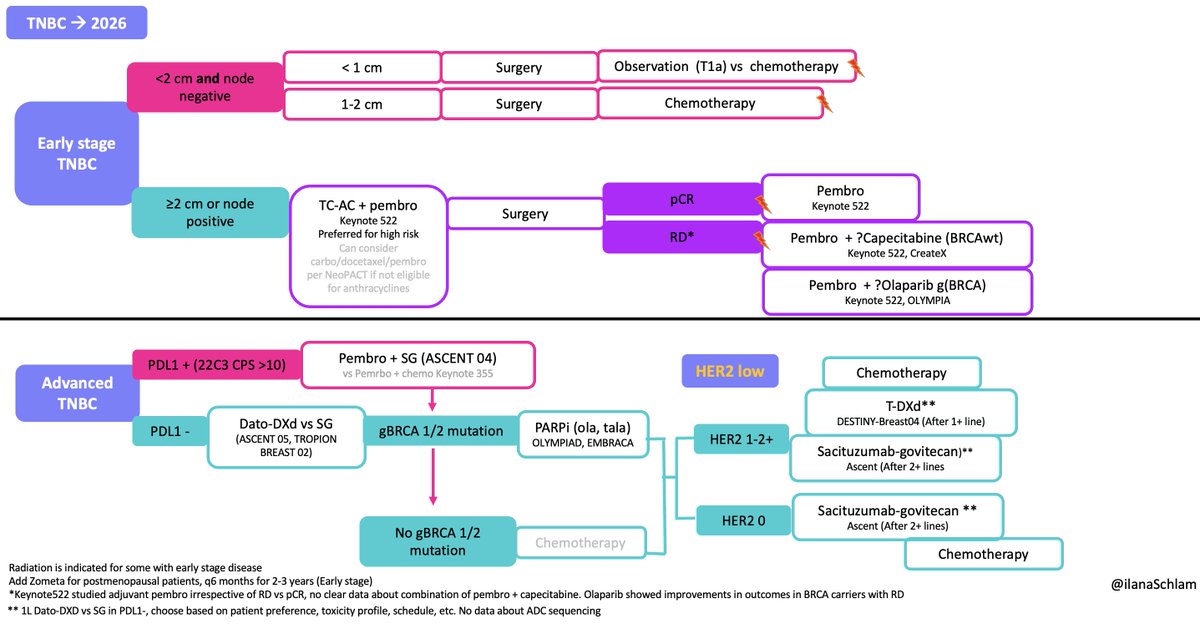
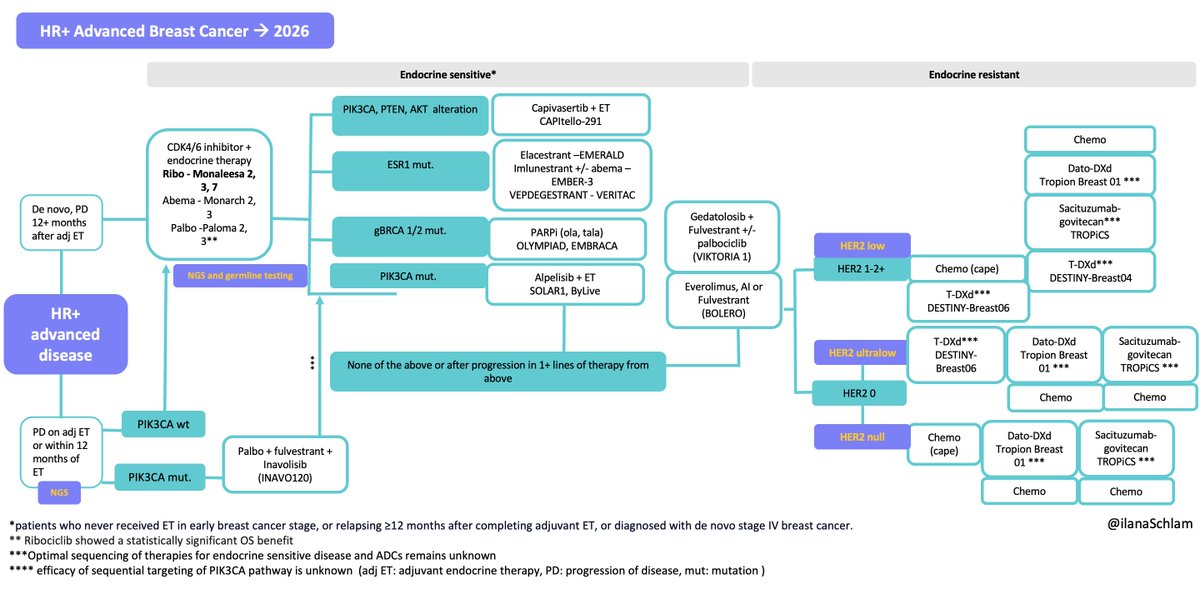
With 6 FDA approvals in breast cancer already in 2026, it was time to update the breast cancer treatment algorithms. It's a great problem to have when innovation is moving so fast that it's hard to keep up #bcsm@OncoAlert@DFCI_BreastOnc
In this article @Annals_Oncology GLP1 receptor agonists reduce cancer incidence. The focus is on those cancers linked to obesity @AparnaKamatMD . A retrospective study with a large sample size in people looking to lose weight . A detailed case/control type method. 41%⬇️ in cancer with GLP1 injections. It’s not clear if the effects of wt loss or the agonists are having an effect. Validation needed. Great work!!
🔵Real-world HR+/HER2− early #BreastCancer (Flatiron EHR, n=7,481; 78-mo FU).
N0 with high-risk features had recurrence & mortality risk comparable to N1, indicating meaningful risk beyond nodal status.
🖋️@PTarantinoMD@DrSGraff
🔗 https://t.co/xlqmVhLG5P
In advanced #TNBC and #Her2+ breast cancer, for many it’s not an “if”brain metastases will occur, it’s a “when.” Catching brain disease early can preserve cognitive function and decrease rates of catastrophic complications (herniation/death). We have many effective therapies for breast cancer with CNS disease now and folks can live many many years we need to change with the times and screen!! #bcsm #brainmetastases #Breastcancer
🚨 Can CDK4/6 inhibition replace chemotherapy even in visceral crisis?
DARVIN, a multicenter phase II trial, evaluated dalpiciclib + endocrine therapy in 53 women with HR+/HER2− advanced breast cancer and visceral crisis.
📌 6-month survival: 92.5%
📌 ORR: 26.4%
📌 DCR: 79.2%
📌 Median PFS: 11.2 months
📌 Median OS: Not reached
In an IPTW-adjusted external comparison:
Dalpiciclib + ET vs chemotherapy
🔹 Median PFS: 11.2 vs 4.6 months
🔹 HR 0.30, P<0.0001
⚠️ Grade ≥3 neutropenia: 77.4%
⚠️ Single-arm, nonrandomized study
⚠️ Nearly half had effusion-based visceral crisis
⚠️ External-control comparison remains hypothesis-generating
Verdict: Promising, not practice-changing yet.
This strengthens the case that selected patients with HR+/HER2− visceral crisis may not automatically require chemotherapy.
Would this change your first-line approach?
@oncoalert #BreastCancer #Oncology #CDK46
TROP2-Directed Antibody Drug Conjugates: New First-Line Treatment for All Patients with Advanced Triple-Negative Breast Cancer?
Great editorial👇
https://t.co/dQZYZS9Eul
When this article was published about a month ago, I outlined the main methodological concerns on X.
One month later, four comments have accumulated on the article’s online page. After reading them, it is hard not to ask a very simple question: how did this study pass editorial and peer review in its current form?
For those who have time, I would strongly recommend reading the comments under the article. My comment was probably the most superficial one; the more substantial and technically important critiques are in the other comments.
https://t.co/CDbgFK2glW
The tide is coming in. High tide of the X-tides, that is in the new GLP-1 family of peptide drugs. Today @NEJM survodutide, a GLP-1 and glucagon dual receptor agonist (no GIP, like tirzepatide) drug that achieved ~16% body weight loss at 2 different doses cf placebo
https://t.co/lHCy7iLUCn
I wouldn't say that was my big takeaway of this paper or trial. The takeaway I got was there is a giant overall survival benefit for our youngest breast cancer patients to ovarian function suppression over tamoxifen. Sure, there are some low risk patients, where Tam alone is fine, but the majority of super young breast cancer patients present at later stage. If you’re going to give chemo then do not give tamoxifen alone, this needs to be more widely accepted in the community, as it’s been 15 years and the uptake is still too low. Too many oncologists do not give the youngest patients ovarian suppression, as they don't like dealing with how unpopular it is with patients, and difficult it is for patients. Yes it is hard, but it saves lives and it’s our duty to our patients to work with them on side effect management and not just abandon so easily when things get tough, as this is likely our most effective weapon in premenopausal ER+ breast cancer. We are failing our very young breast cancer patients who have the highest mortality from breast cancer when we do not strongly recommend this and then HELP patients with their side effects so they can stay compliant. This often take a lot of time and extra visits, but it really is so important. #Breastcancer #SOFT #TEXT
Final 15-year SOFT/TEXT results confirm that ovarian function suppression matters in premenopausal HR+/HER2− early breast cancer.
•Tamoxifen + OFS reduces recurrence vs tamoxifen alone
•Exemestane + OFS further lowers recurrence and distant relapse risk
•Greatest benefit seen in very young women (<35 years) and other high-risk patients
A powerful reminder that treatment escalation should be considered for those at highest risk.
#BreastCancer @OncoAlert@oncodaily@Larvol
I think this was one of the most important datasets for breast oncologists at #ASCO26: the ET-use analysis in the HR+/HER2+ cohort of HER2CLIMB-05.
In HER2CLIMB-05, PFS curves in HR+ patients who received ET appear to be maintained for a longer period, with a lower rate of early progression. In contrast, the curve in patients who did not receive ET starts to decline earlier and more prominently.
This was not an ET-randomized analysis. So it would be methodologically wrong to say directly that “ET improved PFS.” But the direction of the curves is highly consistent with the biology of HR+/HER2+ disease:
Suppressing HER2 while leaving the ER axis untreated may represent undertreatment, particularly in the maintenance setting.
PATINA provides the cleanest comparison here. In PATINA, ET was not the question; it was the backbone. All patients received anti-HER2 therapy plus ET. Even the control arm included ET. Palbociclib was added on top of this backbone and improved PFS from 29.1 to 44.3 months.
So one of the key messages of PATINA was not only “add a CDK4/6 inhibitor.” The more fundamental message was this:
In HR+/HER2+ metastatic breast cancer, the biological backbone of maintenance therapy should be anti-HER2 therapy plus ET.
HER2CLIMB-05 reminds us of the same point from another angle. Disease control appears to be maintained longer in patients receiving ET, while early progression seems more evident in those not receiving ET.
In my view, maintenance treatment in HR+/HER2+ metastatic breast cancer should no longer be thought of simply as “continue anti-HER2 therapy.”
Anti-HER2 therapy is the backbone.
But the ER axis should not be left untreated.
In this patient group, maintenance ET should not be viewed as an optional add-on; omitting it should require a clear clinical justification.
Could an MRI after 12 weeks of neoadjuvant THP predict pCR?
Sub-analysis from CompassHER2pCR (~1400 pts) presented at #ASCO26
👉86% of ER-/HER2+ tumors with rCR on MRI actually had pCR
👉lower accuracy in ER+ disease, with 60% adequately predicted
Provides rationale to start with neoadjuvant THP and escalate with T-DXd if no MRI response among patients with stage II ER-/HER2+ disease
The 7-year CROWN triql update is now published in @Annals_Oncology, concurrently with #ASCO26
Median PFS remains unreached with lorlatinib, with a 7-year PFS rate of 55%‼️
A level of durability rarely seen with targeted therapy👇
https://t.co/gZSP1WHz9Y
Updated Results of the POSITIVE (Pregnancy Outcome and Safety of Interrupting Therapy for Women with Endocrine Responsive Breast Cancer) Trial
https://t.co/x4vT9HZXOf
A major 2026 meta-analysis by involving 15,000+ premenopausal women confirmed that ovarian function suppression (OFS) significantly reduces recurrence and breast cancer mortality in ER+ early breast cancer.
• Recurrence ↓ 21%
• Distant recurrence ↓ 2%
• Breast cancer mortality ↓ 26% in younger women
#BreastCancer #ERpositive #Oncology #OFS #Tamoxifen #ESMO #BreastOncology @Larvol@OncoAlert
TDXd now @US_FDA ✅ in neoadjuvant and adjuvant high risk residual HER2+ breast cancer based off DESTINYBreast05 and DESTINYBreast11:
- ⬆️ pCR & iDFS w/ TDXd
- Timings of RT did NOT impact the incidence or severity of ILD
- New Soc for high risk disease!
#bcsm#OncTwitter
FAST-Forward 10-year update is here.
1 week of breast RT holds up. ✅
In early breast cancer, 26 Gy in 5 fractions over 1 week showed durable outcomes vs 40 Gy in 15 fractions over 3 weeks.
10-year ipsilateral breast recurrence:
🔹 40 Gy: 3.6%
🔹 26 Gy: 2.1%
Late breast/chest wall effects were also similar:
🔹 40 Gy: 13.1%
🔹 26 Gy: 14.4%
27 Gy had slightly more late effects, making 26 Gy the preferred 5-fraction schedule.
Takeaway:
26 Gy/5 fractions over 1 week is no longer just convenient.
It is mature, effective, and patient-friendly.
#BreastCancer #RadOnc #OncoTwitter #MedTwitter
@OncoAlert@ASCO@myESMO
Today @FDAOncology issued one wrong and one right approval.
pCR is a prognostic marker not a predictive marker of treatment benefit. Drug approval based on pCR is not science based. Additionally, DB11 is a classic case of overpowered trial. They failed to meet their own stated goal of 15% improvement in pCR but this 11% difference was nevertheless significant because of overpowered trial. Approval of neoadjuvant TDXd based on DB11 is not an evidence based decision. For more on this, watch this video- https://t.co/7ddeG1UcL0
However approval of adjuvant atezolizumab based on ctDNA is right.
There is a difference between these two.
Prognostic vs predictive biomarkers.
Many people don’t understand this difference.
We have a paper coming out soon to explain this.