My god this is such a good speech that every SWE needs to hear. You know what? Every person should hear it
Keep the happy memories, eyes on the reality, be excited about the future. That’s the best that anyone can do
Like the early NoSQL days we are seeing a surge of orgs building distributed DB engines from scratch without the experience on their teams.
There will be a phase of dog shit systems and stupid data anomalies all over the place.
Be careful who you trust with your data, for now
The wildly opposite ai programming takes are a sign the folks calling it over are missing what's possible, because they were limited by what they came from. Dream bigger!
others: "it's over, guess it's all rust from here"
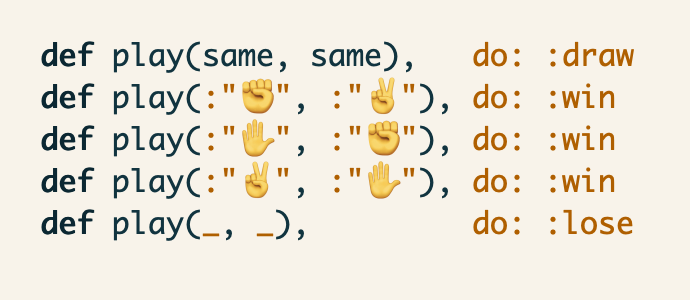
me: "omg there's so many things I can build in Elixir"
If coding agents will write most of our code, what happens with our communities and sense of ergonomics? How does it impact our compilers and tools? https://t.co/DaYCSHFUBY
I knew Riak was written in Erlang, but TIL RabbitMQ and CouchDB are also Erlang/Elixir.
Wouldn't normally think of Erlang for anything database related, but turns out it has some appealing properties here too, e.g. clustering, RPC / node-to-node communication.
The ARR multiple fallacy
ARR multiple is not the right way to think about sub-20% growers.
Simple framework:
If you’re growing sub-20%, you get a 10-30x EBIDTA or FCF multiple. If you use this rubric, Miro is very fairly valued by Bending Spoons.
Only 30%+ growers get the luxury of an ARR multiple.
The reason is that 30% growth means you’re doubling in 3 years and so the revenue base will be 2x in 36 months, and the margin structure will look different at 2x scale. Cash flow today is a rounding error against that. So you value the trajectory, and ARR is the cleanest proxy for trajectory.
At 15% growth, doubling takes 5 years. That's close enough to "never" that the market stops paying for the future and starts paying for the present. The present is earnings. If you're not producing them, you're not a growth company anymore. You're a bad value company.
The mistake founders make is anchoring to the multiple they had at 40% growth and thinking the ARR multiple just compresses. It doesn't compress. It gets replaced. You cross 30% on the way down and the entire valuation framework switches out from under you.
Which is why the worst place to be is 20-30% growth with no FCF. Growth investors won't pay for it. Value investors can't. You're priced by whoever is least excited,a really painful place to be.
⚗️ Elixir Tip #17 - Time unity conversion ⚗️
Often times you'll need to convert time durations from millisecond to second or vice versa. Before reaching for a library to do that, check out System.convert_time_unit/3!
#ElixirLang#Erlang#Livebook
To calibrate you all on which reasoning effort to use for Astra, know that GPT-6 Astra on low performs better than GPT-5.6 Sol on high.
If you were using high reasoning efforts with Sol and were happy, I suggest you move down to low or medium for Astra.
We will give one banked reset for every day you don't have access to Astra on your paid ChatGPT plan, starting today. Team is moving mountains to give access as fast as we can.
First one will land in ~ 3 hours. There is still time to create your account if you don't have one.
Friends don't let "LIMIT 1" queries crush their fiends' databases.
Years ago, I remember running a simple "SELECT * FROM table LIMIT 1" on BigQuery expecting a quick response. Instead, it scanned 3 TB of data because its parallel engine did an embarrassingly parallel scan of every single partition before applying the limit at the very end. Slow and $$$.
We designed @TimescaleDB to avoid this. For queries like ORDER BY time DESC LIMIT 1, we use metadata to pinpoint the target chunk and push the LIMIT down via OrderedAppend.
But traditional planning logic still expanded thousands of chunks upfront to build the execution tree.
Query planning matters just as much as query execution because planning overhead alone can kill your performance at scale.
That's why we built DeferredChunkAppend in TimescaleDB 2.30 to avoid the unnecessary planning overhead of expanding all chunks upfront.
The results: on a hypertable with 10,000 chunks, planning time dropped from 202 ms to 0.013 ms, a 14,000x speedup.
The full engineering breakdown:
https://t.co/abEwTN0CmM
Linus Torvalds says tracking down a bug in Linux's Intel GFX Driver was a "debug session from hell." The AI helping him repeatedly called it "impossible and unsolvable" and suggested they just write a report instead.
He kept pushing. 24 debug patches and 18 kernel boots later he found the bug: one round_up() that should have been round_down().
He then let the AI write the commit message.
https://t.co/9qcHPvThzP
THE ANNOUNCEMENT: We’re going to make the prophecy of The Year of Linux on the Desktop come true. All the pieces are now in place. Time to go all in! https://t.co/zuf5h9ClWX