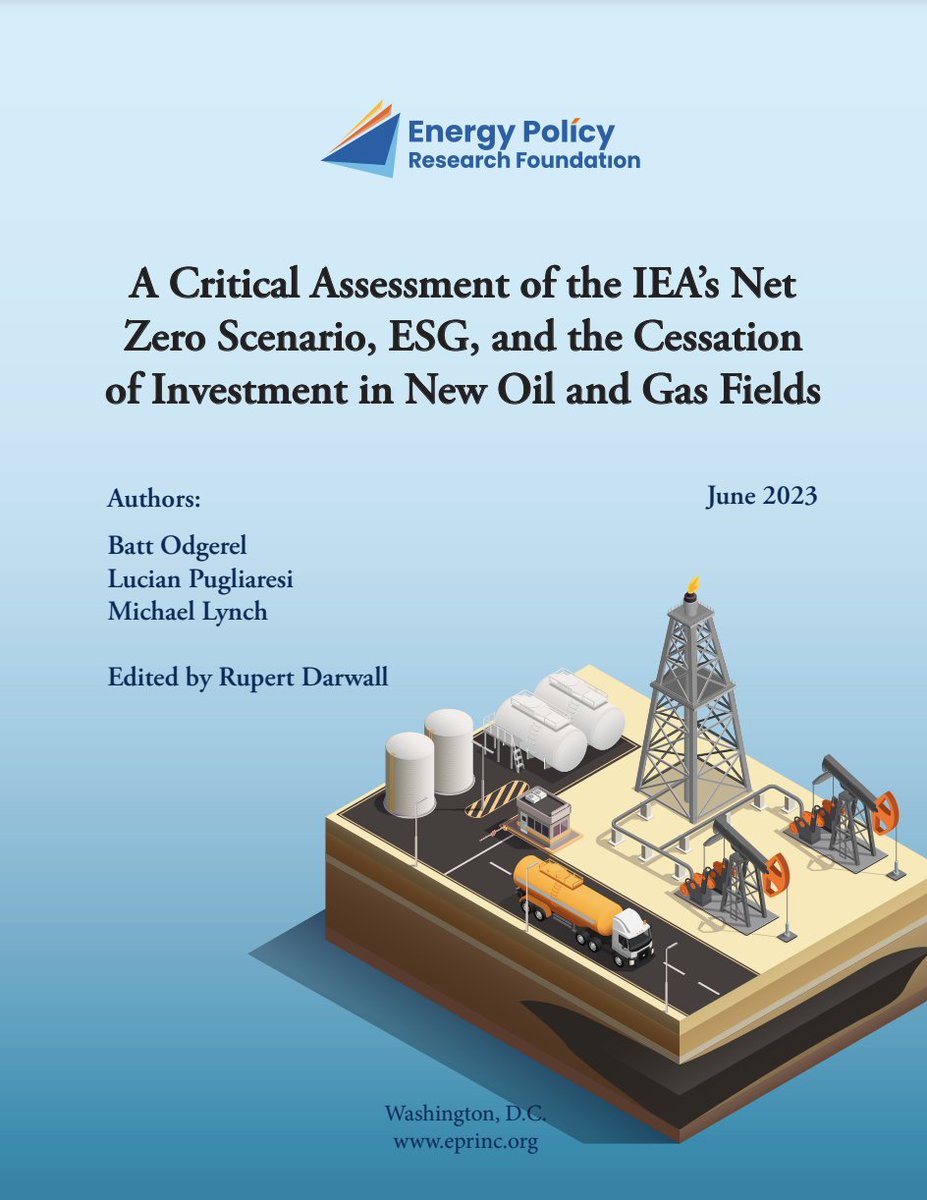
We are excited to announce the launch of @EPRINC_DC report, “A Critical Assessment of the IEA’s Net Zero Scenario, ESG, and the Cessation of Investment in New Oil and Gas Fields.” Link: https://t.co/1kNGgLaGWG
In this report, we’ve assessed the likely economic impact of environmental, social, and governance (ESG) with respect to the production and prices of oil and natural gas. This report takes IEA’s major reports—in particular, Net Zero by 2050: A Roadmap for the Global Energy Sector (May 2021) and World Energy Outlook 2022 (WEO-22; October 2022)—on achieving net zero emissions by 2050. @RupertDarwall@RealClearEnergy
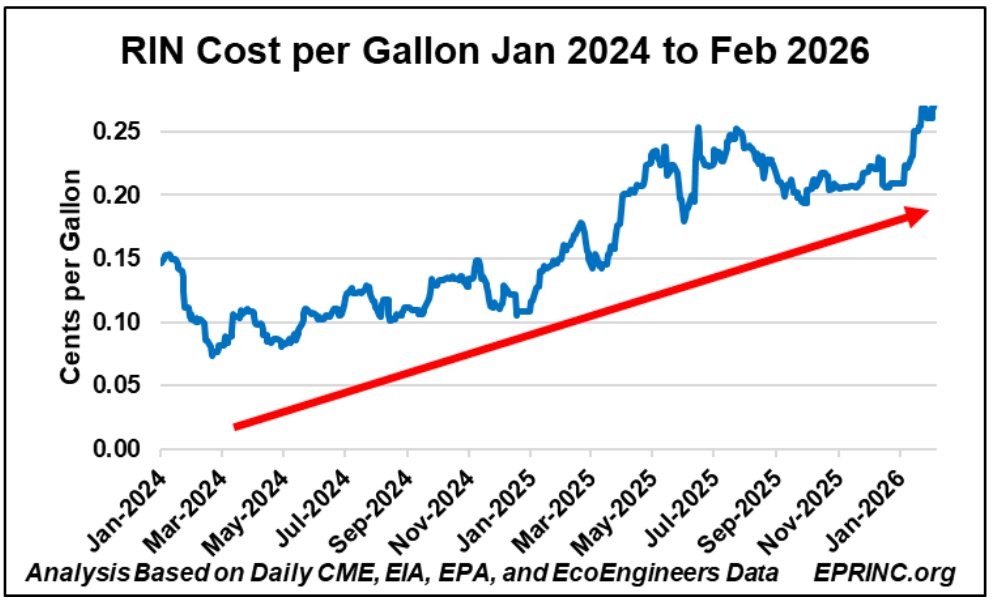
@EPRINC_DC At some point policymakers should understand one constant; attempting to drive blending above 10% remains a high-cost (for customers) low yield enterprise
@SecretaryWright is 100% correct, he’s probably referring to our work from our Power Vision 2030 project. As the chart shows managing intermittent power can be very costly.
@SecretaryWright is 100% correct, he’s probably referring to our work from our Power Vision 2030 project. As the chart shows managing intermittent power can be very costly.
WATCH: Secretary of Energy Chris Wright NUKES CNN for pushing a narrative that renewables were cheaper than oil and gas:
“The Lazard report, of course, is crazy, because they use a thing called ‘Levelized Cost of Energy,’ as if they're delivering the same thing. …When you include the backup cost, it's a huge driver of increased cost. … You make energy expensive. People consume less of it, and your industries will leave, and your voters will be angry.”
@EPRINC_DC@EPA U.S. autos and trucks are not a big contributor to world carbon emissions. Emission reductions from the transportation sector can be achieved at much lower cost, e.g., hybrids. Regulatory programs under reform by the Trump Administration will lower costs for U.S. consumers.
Batt's graph shows the return to an EV mandate (in reductions in carbon emissions ) demonstrates this is a very expensive initiative. Keep in mind total carbon emissions in the production of an EV is much higher than internal combustion vehicle. Some modest encouragement of hybrids would have had a much higher yield.
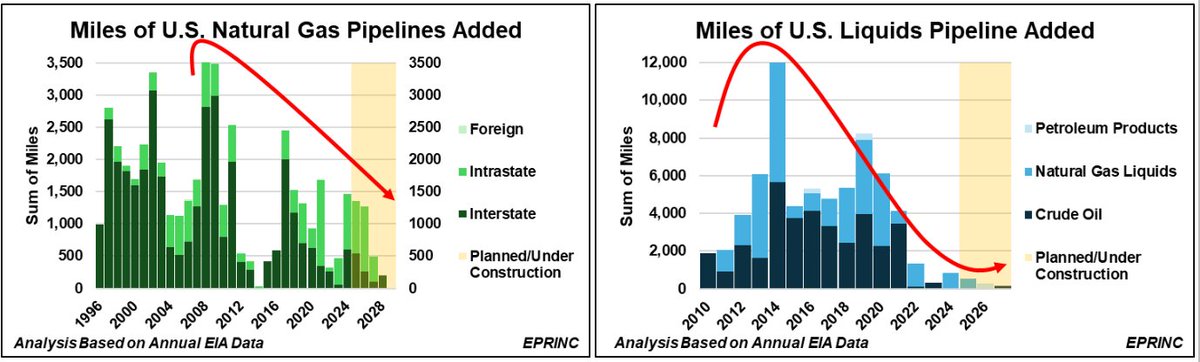
The expansion in domestic #electricity demand + #CrudeOil, #NaturalGas, and #Diesel export growth, additional #Pipeline capacity will be required.
But the combo of setbacks from #COVID plus restrictive #permitting has led to a curtailment in new capacity to 2030.
$WMB $ET $KMI
1. If we don’t build the pipes, we have no hope of getting the grid back on track.
2. Subsidization is a death spiral... the debt bomb is real.
3. Data, not emotion, has to drive policy.
4. Markets are speaking. They've pulled back on offshore wind and a number of other energy transition projects because the economics and social appetite aren't there."