I want to write about what life is like right now for millions of people in Kyiv, living under constant air-raid sirens, Russian attacks, and threats.
The alerts have been going on for more than a month without a break. The danger is constant. There are explosions every day, with no real respite. Here’s how this affects the daily lives of Kyiv residents:
• Children: Kids have to spend hours in shelters at schools and kindergartens (not all of them have shelters). There is often not enough space or the necessary facilities to hold regular classes. There is no ventilation. Online learning is not always possible either, because children at home also have to move to shelters constantly. Poor sleep makes it harder for children to absorb information and for teachers to work with them. At kindergartens and schools, children cannot go outside, have regular activities, or even eat properly because it is often impossible to organize full meals in shelters.
• Parents: For many parents, it is extremely difficult to balance work with caring for school-age or preschool children. If there is an air raid alert in the morning, for example, schools and kindergartens may not open, meaning parents cannot take their children there and go to work. If a child studies online, this often requires one of the parents to be present. Given the large number of displaced families and families in which at least one parent is defending Ukraine, it is especially difficult for mothers to combine motherhood and work because there is often no one to help.
• Elderly people: If they have limited mobility or cannot move around easily, they may be unable to reach shelters even with the help of relatives. Access to medical care is more difficult. Calling an ambulance is harder because the system is overwhelmed with the number of injured people. Buying food and essential goods becomes more difficult as well. During power, water, and heating outages, elderly people living alone, especially on upper floors, are left in an extremely vulnerable situation.
• Pets: They are terrified by explosions, often run away and get lost during air raid alerts, live under constant stress, and become ill more often.
• Public transport and getting around the city: Kyiv lies on both banks of the Dnipro River. Traditionally, much of the business activity is concentrated on the right bank, while many residential districts are on the left bank. One of Kyiv’s metro lines, which helps hundreds of thousands of residents get to work and back home, is closed during air raid alerts because part of it runs above ground across a bridge, where passengers could not be safely evacuated in the event of a drone strike.
As a result, when air raid alerts last for hours in the morning or evening, hundreds of thousands of Kyiv residents have to take much longer routes, getting stuck in massive traffic jams. This also makes it difficult for parents to pick up their children from schools or kindergartens.
GPS is another problem. During air raid alerts - which are now constant - location services do not work properly, making it very difficult for drivers to navigate unfamiliar routes. Kyiv and Kyiv region cover a huge area. Mobile networks and internet service also experience disruptions.
• Government services: Although some government services continue operating when "only" drones are heading toward Kyiv, getting services, certificates, or documents still becomes more difficult and takes longer. People have to spend much more time on these things, and delays are common.
• Logistics: Postal services are slower. Nova Poshta, a private Ukrainian postal company, has suffered numerous Russian attacks on its warehouses and distribution centers. Large numbers of parcels have been destroyed by fire, and deliveries that once took one or two days can now take a week.
• Food and goods: Because of Russia's strikes on warehouses, some products are temporarily unavailable in many stores. The situation changes constantly, so you never know whether you will be able to buy groceries for the week or find the things you need. Many production facilities have also been destroyed by Russia, creating shortages of certain goods. Prices for food and other products are also rising because of fuel costs, destroyed warehouses, and disrupted logistics.
• Travel: Russian attacks on railway transport and infrastructure are intensifying, so train travel - once the most reliable and comfortable way to travel, including abroad - is becoming unpredictable and dangerous. Yesterday, Russia attacked Kyiv’s central railway station. If there is a threat of a Russian strike in an area where a train is traveling, it is stopped and passengers are evacuated. They have to spend hours outdoors, sometimes several times during a single journey. Trains are delayed, making it incredibly difficult to plan connections.
• Mental health: It is impossible to plan anything while living under constant attacks. People are exhausted by the endless explosions, air raid alerts, and sleepless nights.
Russia cannot break through the Ukrainian front, so it is terrorizing civilians and seeking to undermine Ukraine’s rear, force Ukrainians to leave their cities, or pressure them into demanding peace on any terms.
What is the mood in Kyiv right now? The reality is extremely difficult. Some people are adapting - as terrible as that may sound - because it's actually impossible to get used to constant attacks. Kyiv residents who have decided to spend the winter in the city are preparing for a harsh winter. Some are choosing to spend the winter elsewhere.
People are tired but determined. Everyone understands that winter will be worse. So they keep working and preparing for it. They support one another. I feel deeply sorry for the people. We did not choose this war or this life.
Honestly, I don’t know what other country or people could endure such a brutal and destructive war for this long. We have to hold on. The war will end, there will be peace, and we will live to see it.
For now, Kyiv residents drink yet another cup of coffee after a sleepless night and continue to work.
P.S. I will also write about other cities: Kherson, Zaporizhzhia, Dnipro, Kharkiv, Sumy, Odesa, Mykolaiv, Kryvyi Rih...
#NAFO Friends, we have an urgent fundraiser — actually, three of them. We’ll start with the smallest one and move step by step.
Goal #1 — 231st Logistics and Support Battalion.
The guys reached out to us through our friend @Oksii33 ♥️recommendation. They urgently need:
💙10 mattresses × 1,490 UAH = 14,900 UAH
💛10 blankets × 380 UAH = 3,800 UAH
With delivery, our first goal is approximately 460$ 💙💛
If you can support :
🅿️🅿️ [email protected]
🅿️🅿️ [email protected] 💙💛 @tatyanaodesssa
This is the smallest of the three fundraisers, so I really hope we can close it quickly. 🙏
Goal #2 — 23rd Brigade 💙💛
They need warm jackets. I already have all the sizes. The total need is 25 jackets, but thanks to our friends who constantly support us, we already have funds for 5.
So we need to provide 20 more jackets. I’ll post the exact amount for this goal separately.
Goal #3 — 80th Brigade 💙💛
We also need to help them with repairs for their pickup trucks.
I have video requests from all the guys and will post everything step by step so you can see exactly what we are raising funds for.
‼️For now, we’re starting with Goal #1: 10 mattresses + 10 blankets.‼️
Please share this thread if you can. Every repost helps us reach more people.
And if you’re able to support the fundraiser — thank you so much. 💙💛
First goal: ~460$ . Let’s start.
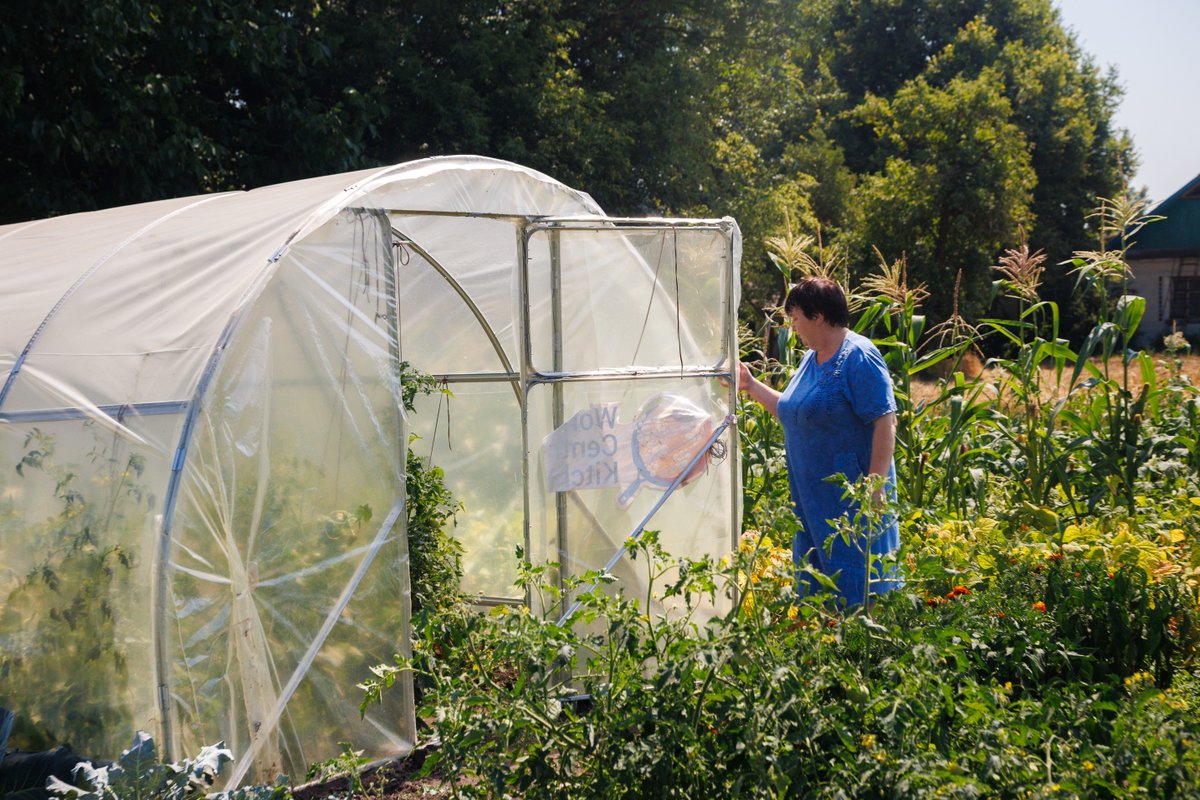
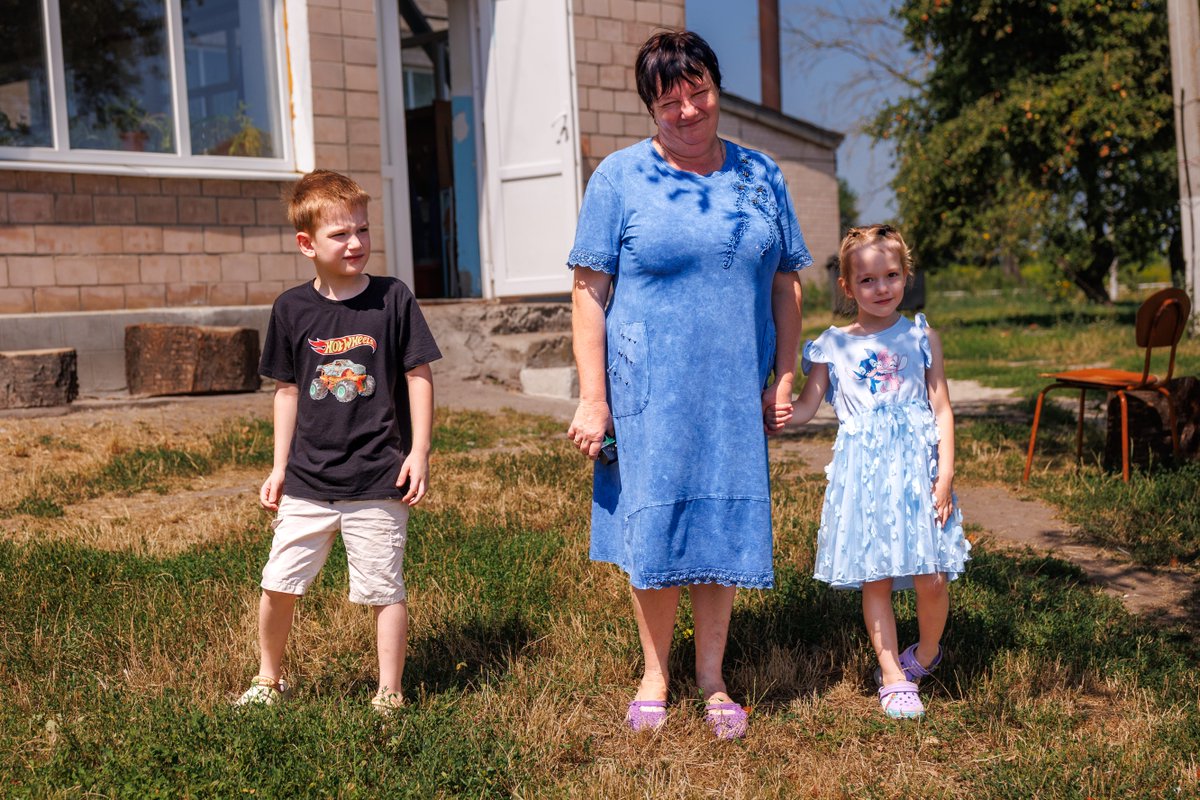
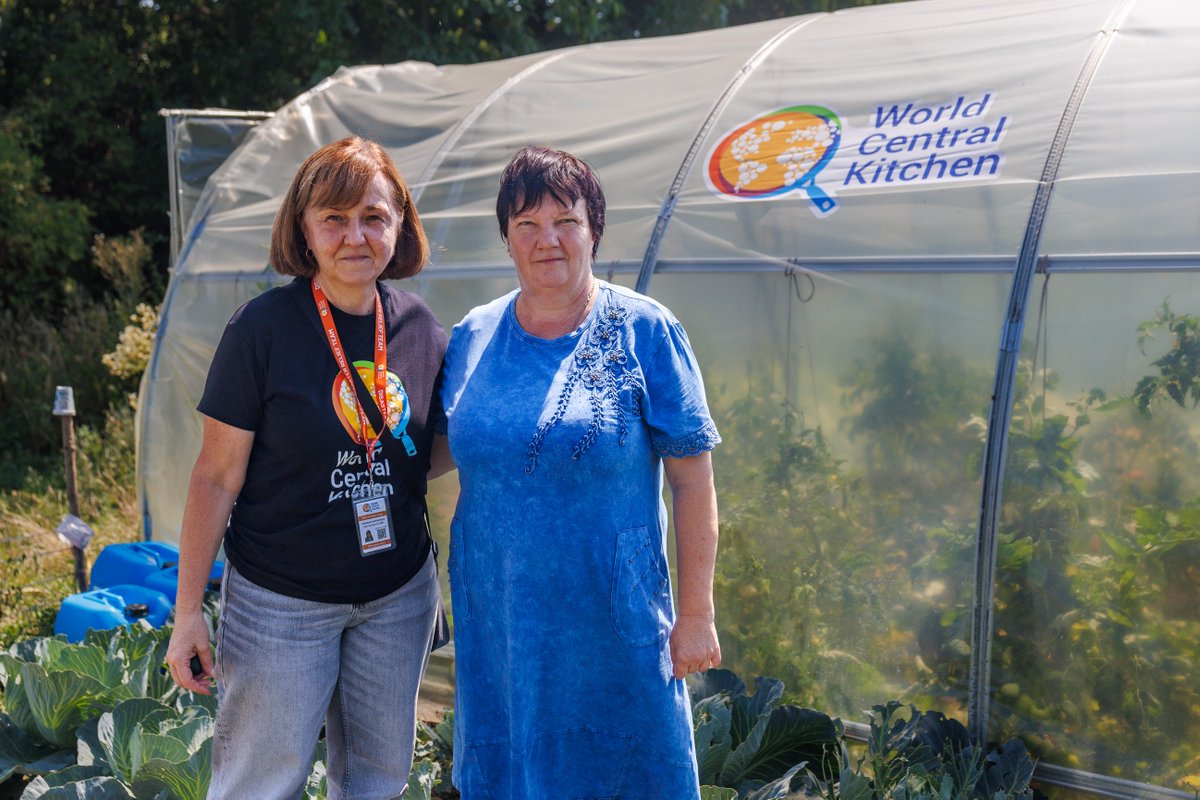
After being forced to flee their home in Kherson, Tetiana and her family are rebuilding in the Khmelnytskyi region. She has always grown vegetables, so receiving a greenhouse and seeds from WCK is helping her feel closer to the life she had before. “When you work the land, you get distracted from all kinds of thoughts, you miss home less,” she told us. After years of uncertainty and separation, Tetiana says what matters most of all now is having her family close by to rebuild together. #ChefsForUkraine
@antoninaodesssa@RoxyInSpace I gifted my brothers jackets. They live in the midwest with the sometimes brutally cold winters and said they were impressed both by the craftsmanship and how warm they are 🥰
@antoninaodesssa thank you for sharing. i have no new words. they’ve all been said before. but we are still here hoping that this nightmare will end soon 💙💛❤️
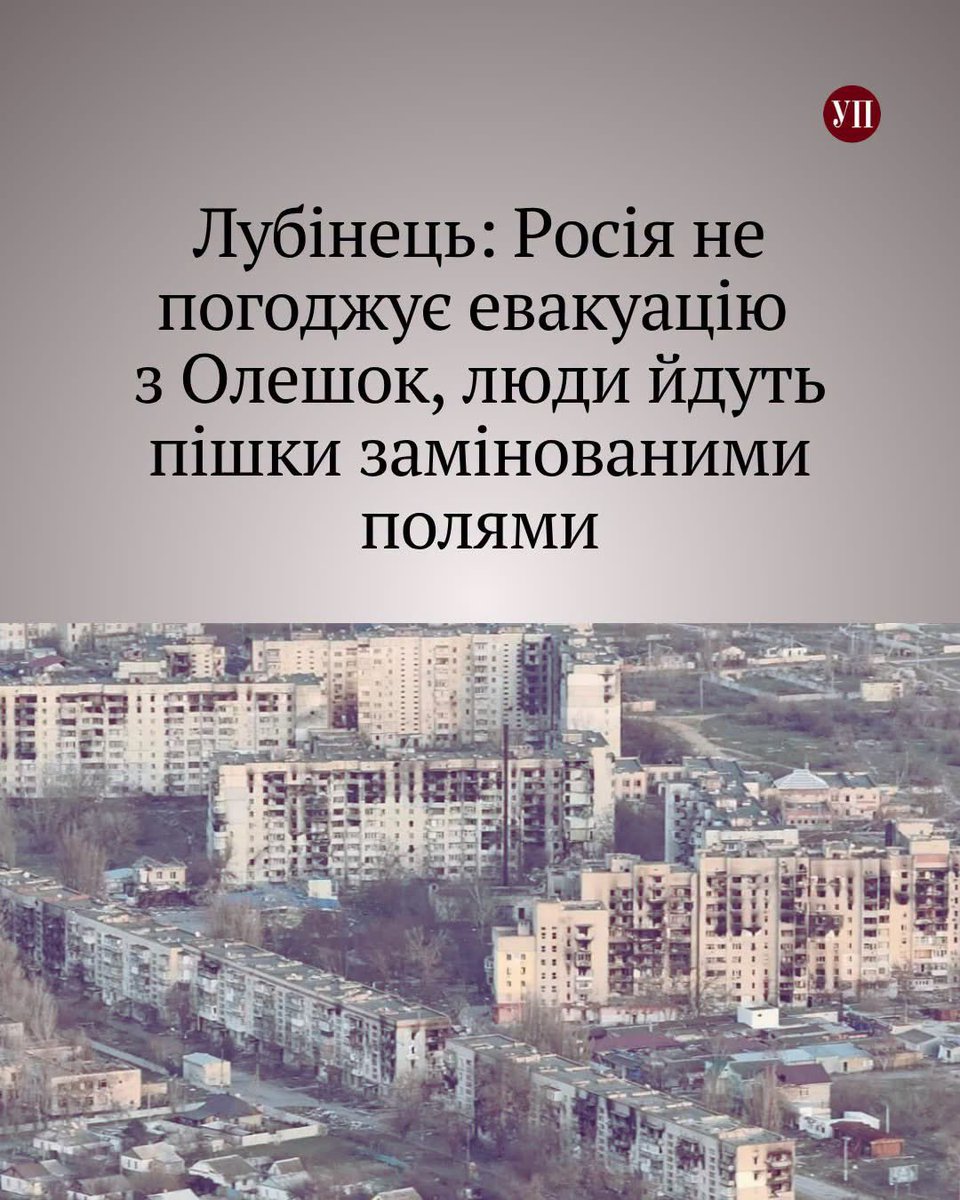
#Oleshky ‼️🆘🆘🆘‼️
More than 6,000 people, including around 200 children, are facing starvation in ruzzian-occupied on the left bank of Kherson Oblast.
The ruzzian terrorist state is blocking aid and preventing civilians from leaving. People are trying to escape through mined roads and fields. No one knows how many will make it. Thousands remain trapped, slowly starving.
Oleshky. Left bank of Kherson.
People are starving under ruzzian occupation. The last food delivery to Oleshky was on May 26, 2026.
DO NOT STAY SILENT‼️‼️‼️
And how are Europe’s leaders doing? Is it time to gather for tea again, or are Oleshky and 6,000 trapped civilians simply not an interesting enough topic???
@vonderleyen@EU_Commission@eucopresident@kajakallas@UN@antonioguterres@UNOCHA@UNHumanRights@ICRC
As a Ukrainian, I can say that I’m no longer surprised by constant rashists attacks going unpunished. I’m no longer surprised that, somehow, we are expected to prove we deserve the weapons we need to defend ourselves — though I still don’t understand why. I’m no longer surprised to see world leaders sit down and negotiate with the ruzzian terrorists state attacking us.
But there is one thing I still cannot comprehend: how can anyone stand by and watch people starve to death? How can this be acceptable?
Another difficult day 💔 #Odesa . I’m writing less and less about the 🚨 because they are sounding almost every hour now, with only short breaks in between.
Today, in one of the busiest parts of Odesa, ruzzian terrorists attacked a business center surrounded by residential buildings. Ten people are already known to have been injured.
It was another cynical and cruel attack, like so many before it. They struck twice, including after rescuers had already arrived to help.
The explosions were very powerful, even though I was several kilometers away. I had gone to the post office to send groceries to people in a village we help.
After so many years of war, explosions and attacks still somehow feel unexpected…💔.
Burn in hell, ruzzians 🤬.
Every day, I start my afternoon by reporting Russian attacks: on apartment buildings, private homes, streets, shopping malls, civilian cars, gas stations, first responders, hospitals, civilian infrastructure, trains, buses, and markets.
By this time, we usually know how many people were killed overnight.
But never before has it been this normalized, to the point where Russians have stopped even pretending to target anything military-related.
No, now they proudly post strikes on civilians on their Telegram channels and gloat over our deaths.
Today alone, two people were killed in Russian attack on Dnipro in an attack that burned down a food manufacturing plant and 12 cars; three were injured in a gas station strike in Kyiv; one person died and another was injured in attacks on a residential area in Shostka, Sumy region; and eight more were injured in Dnipro. And it’s only been half a day.
And then of course there is yesterday's strike on the shopping mall in Sumy, the number of victims is still unclear.
Russians are killing us, ordinary civilian Ukrainians, for the crime of being Ukrainian in our own country. They have done this every single day, now into the fifth year. And the weak reaction from the world's democracies only makes them bolder.