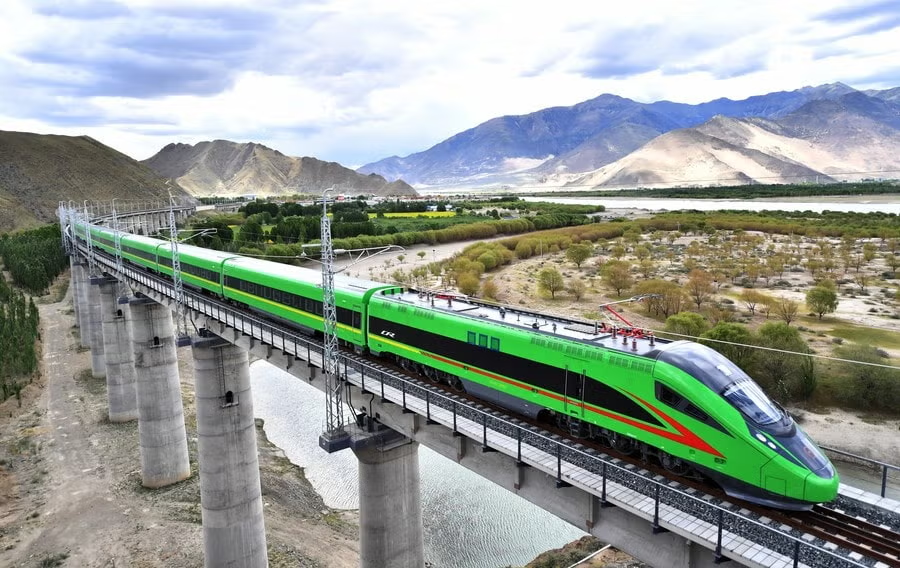
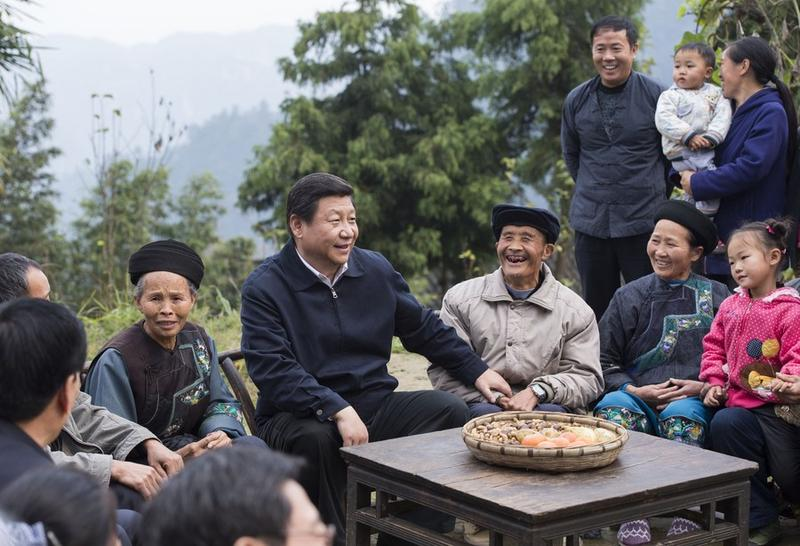
Nobody said Singapore must “align with China’s interests” just because it is ethnic Chinese-majority.
The point is simpler:
Do not benefit from China’s rise, profit from Chinese capital, trade, tourists, markets, and civilizational proximity, while hosting anti-China strategic theater and lecturing China to forget Japan’s crimes.
Singapore is not some innocent “tiny red dot” floating outside geopolitics.
It actively positions itself inside the U.S.-led Indo-Pacific architecture, it helps normalize India’s insertion into the anti-China containment framework, it hosts the Shangri-La Dialogue, where Western and allied security elites perform annual China-threat theater.
Then it acts shocked when Chinese people notice.
Please. If Singapore wants to behave like a cold strategic operator, fine.
But stop crying when Chinese people judge it like one.
China does not owe Singapore emotional protection just because it is ethnically Chinese-majority.
And Singapore should stop expecting to enjoy China’s development dividends while morally posturing against China’s historical memory and security interests.
@jacksonhinkle Most importantly is the USD. When USD is not the most wanted currency, US can't print money freely to:
- fund colour revolution
- fund propaganda
- run CIA operation overseas
- fund terrorists
- maintain military bases.
- provide unlimited funds and weapons to Israel
🚨🇵🇸 Kuzey Gaza'daki gazeteciler dünyaya doğrudan hitap ediyor: "İsrail'in Palestinlileri ölüme asma yasası Nazilerden daha kötü."
Bu videoyu görürseniz, lütfen farkındalık için yeniden yayınlayın.
🇨🇳 The West loves to lecture China about “democracy” while their own voters get more fed up with every election.
Politicians come and go, campaigns make all kinds of amazing promises. But once the votes are in, nothing really changes. The same groups stay in control and regular people are left waiting. Is that really what they call freedom of choice?
China operates on a completely different model. One that can be hard to understand and easy to misinterpret.
President Xi Jinping didn’t gain power through inheritance or wealth. He worked his way up for over forty years, serving at every tier: villages, counties, cities and provinces. He has spent his life governing, not just running for office. Top leadership is elected by the National People’s Congress, while local residents choose their community representatives, with the entire system built from the grassroots up.
The Communist Party of China is the world’s largest political organisation, with almost 100 million members rooted in communities nationwide. Its five-year plans aren’t just empty promises either; they get delivered. This is how China pulled hundreds of millions out of poverty, built the planet’s most extensive high-speed rail network and now takes the lead in electric vehicles, renewable energy and key cutting-edge technologies.
The country’s leadership has a clear mission: to rejuvenate the nation and work for the Chinese people. When people see real progress being made, the system stays stable, rather than cycling through one disappointment after another.
This is supported by the polls. Long-running research from Harvard Kennedy School shows Chinese public satisfaction with the government consistently sits above 90 percent. Edelman’s global trust surveys record government trust at 89 to 91 percent among the highest worldwide. National happiness scores range from 70 to 79 out of 100. Considering everything, it’s reasonable to argue he’s among the most effective national leaders in the world right now.
It’s understandable why the critics target this; after all, China keeps achieving things their nations simply cannot. If you witness this steady progress firsthand while living here in China, the reality is simply astonishing.
At the end of the day, I have to wonder: does that so-called Western freedom of choice truly deliver better lives for ordinary people, or is it just better marketing?
🤯Absolutely insane. Unitree's humanoid robot team's performance at the 2026 Spring Festival Gala
The significance of the humanoid robot's performance lies in letting 1.4 billion Chinese people know where the future lies.
@XH_Lee23 First 5 months in 2025:
- BYD sold: 15,199
- Toyota sold: 100,753
First 5 months in 2026:
- BYD sold: 33,454 (2nd)
- Toyota sold: 76,017 (1st)
https://t.co/CUkRRWJMGY
@kejimao There are only 2 ways to deal with competitors:
1. Face it. You plan to be as competitive.
Con: Extremely hard work.
2. Ignore it. You try to destroy your competitors.
Con: Total damage since you haven't built a strong foundation.
@OopsGuess China think of their people first.
But when it comes to foreign diplomacy, China should think of the govt first.
Foreign diplomacy is decided by the govt not people.
Govt is grateful u help their people so the govt is safe.
CPC needs to change tactics dealing with those govt.
How China’s Central Planning Actually Works
There’s a widespread perception in the West that China runs a classic Soviet-style command economy: CPC sits in Beijing and dictates every detail, magically implementing perfect plans across the country.
In reality, the central government lacks the granular knowledge to micromanage every sector. Instead, it sets directional guidelines and strategic priorities. Major initiatives like Made in China 2025, the Belt and Road Initiative, and broader industrial policies are folded into the national Five-Year Plans. These serve as high-level signals rather than rigid production quotas.
The Five-Year Plan Process: Top-Down Meets Bottom-Up
Every five years, China releases a new Five-Year Plan. The preparation is more consultative than many outsiders realize:
•Government bodies (NDRC, ministries, and local governments) actively gather input from industries, state-owned enterprises, private companies, academics, and local officials.
•They synthesize market realities, technological trends, supply-chain bottlenecks, and competitive gaps.
•This bottom-up information is then merged with top-down strategic goals set by the leadership (e.g., technological self-reliance, green transition, or national security priorities).
•The process is often iterative — drafts circulate, feedback is incorporated, and adjustments are made to improve alignment between central vision and on-the-ground feasibility.
The result is a plan that is ambitious yet somewhat realistic, functioning more like a national strategy document than a detailed engineering blueprint.
How Companies Respond: Alignment, Financing, and “Overcapacity”
Once the Five-Year Plan is announced and publicized, companies across China study it carefully. Executives and strategists look for priority sectors, technologies, and goals.
•If the plan emphasizes electric vehicles (EVs), semiconductor independence, or new-energy equipment, dozens of companies — state-owned and private — incorporate those priorities into their own corporate strategies.
•When these aligned companies seek bank loans, land approvals, or regulatory support for expansion, their plans match government priorities, making financing and permissions significantly easier to obtain.
•The outcome: rapid scaling. Multiple players rush into the same strategic sector, pouring in capital and building capacity quickly.
Western observers often label this “overcapacity.” In China’s system, it is an intentional feature of directed competition. Intense domestic rivalry follows: price wars, rapid iteration, cost-cutting, and technological improvement. Weak players exit or consolidate. The survivors emerge extremely competitive — hardened by brutal home-market competition, with economies of scale and refined supply chains.
This is exactly why Chinese firms in EVs, solar, batteries, and other targeted sectors have become formidable global competitors. The central government doesn’t pick individual winners in advance; it sets the direction and lets fierce market-like competition (within a guided framework) determine the victors.
Bottom Line
China’s model is neither pure central planning nor unfettered free markets. It is coordinated industrial strategy — directional guidance from the center, massive bottom-up execution, and Darwinian competition to sort the strong from the weak. This approach has clear downsides (inefficient capital allocation in some cases, debt buildup, environmental costs), but it also explains the speed at which China has moved up global value chains in strategic industries.
Understanding the actual mechanics — rather than cartoon versions of “central planning” — is essential for anyone analyzing China’s economy or crafting policy responses.
@D162Michele To be fair though. He said he was.
Many enthic kids born in Western countries, experienced that while growing up. The way the West portrait enthic groups.
But you don't hear that in ASEAN. Hardly heard of Chinese ashamed of being Chinese in Malaysia or Thailand.
CHINA’S LEADER XI JINPING TOLD DONALD TRUMP the truth about Jimmy Lai on Thursday—and the US President immediately backed off on calls for him to be freed.
Here’s what happened. Trump raised the topic and Xi “went through a whole thing”, the US leader said afterwards.
The facts the Chinese leader gave him were so powerful that the discussion moved on to other topics.
.
THE DETAILS
So what did he say? ‘He went through a whole thing.’
No press was allowed into that discussion, but the present writer has seen some of the China documentation on the Jimmy Lai trial and it is accurate, detailed and evidence-based—unlike the reports in the western mainstream media.
No western media attended the Jimmy Lai trial, and all wrongly presented it as a press freedom issue. Not true. It was fundamentally a foreign collusion case with more than 2000 pieces of evidence, none of which were quoted in the international press.
.
SO MUCH TO SAY
There’s so many facts the Chinese leader could have included.
Such as the fact that Jimmy Lai was shown to be in communication with multiple anti-China people in Washington, including Mike Pompeo (director of the CIA and later Secretary of State); James Cunningham, a US diplomat who ran a notorious China demonization operation; defense official Paul Wolfowitz; and others in the White House and in the US State Department, including John Bolton, the mustache man who just likes to bomb everyone in sight.
The Chinese leader may also have told him that since at least 2014, Jimmy Lai had secretly distributed huge amounts of overseas cash to anti-China agents cultivated in Hong Kong by the Washington-based NED, an operation that Trump’s own administration describes as one which “destabilizes sovereign governments”.
And there’s much more, too. Whatever Xi Jinping said to Donald Trump, it was enough for the US leader to realize that this man could not be released—and they moved on to other topics.
For the people of Hong Kong, who are STILL unfairly suffering from the sanctions that Jimmy Lai worked with Mike Pompeo and others to introduce, justice will continue to be done.
How China Built the World’s Biggest Train Station on Top of a Mountain
Welcome to Chongqing East Station: China's $7.8 billion high-speed rail megaproject. 1.22 million square metres. 40,000 peak workers. A 16,500-tonne steel tube truss roof assembled on the ground and hydraulically slid 57 metres upward onto 41-metre tree-shaped "Huangjue" columns.
• How 40,000 workers built a 1.22M m² station in just 38 months on a mountain
• The sliding assembly method — why the 16,500-tonne roof was built on the ground first
• The Huangjue tree columns — 41-metre branching steel structures designed for earthquake resistance
• Stainless steel cladding installation at 57 metres above a mountain slope
• Why Chongqing East Station is now the largest railway hub in the world
• The high-speed rail network connecting Southwest China to 14 major cities