Climate change.
Canada’s boreal forest is far north.
Most parts of it only reach 64F (18C) averages in the heat of the summer.
Its density and climate also means it gets very little evaporation compared to its rainfall, and is subject to frost 9 months of the year, and heavy fog the rest of the time.
This kept this biome very humid, kept soil damp, and left most of the low level foliage coated in dew all day long.
Some parts of the forest even had thick levels of permafrost beneath the topsoil that on rare hot days would seep water back into the ecosystem.
Just as many wildfires started by lightning strike in previous decades as now.
The difference is they struggled to catch and spread in this damp environment.
Now extreme dry weather, record breaking heat, northern thaw, erode that protective moisture barrier, leaving the boreal forest vulnerable especially in the more southern parts.
Boreal forests previously went through this process naturally when an over density caused a drier environment you’d get high-intensity crown fires that were cyclical. Every 50-200 years depending on region.
Now we get them annually.
Boreal forest fires are much more severe than others too. The long history of cyclical burns means the soil contains charcoal, the thick multi-layer foliage adds fodder and causes the fire to spread quickly, and pine, spruce, and aspens are all some of the trees with both the most density and the best for wood burning.
It results in towering forest fires of immense heat and rapid spread.
These forests are denser than anything else in North America or Europe, and the current fire in Ontario alone, is the same square mileage as the entire state of Delaware.
From the time it ignited, to covering that size, took less than 20 hours.
While some in the US still think climate change is a hoax, we are all going to deal with the consequences of it, as we’ve turned the largest forest in the world into a tinder box, and fires in less than 0.01% of it drowns the entire continent in smoke.
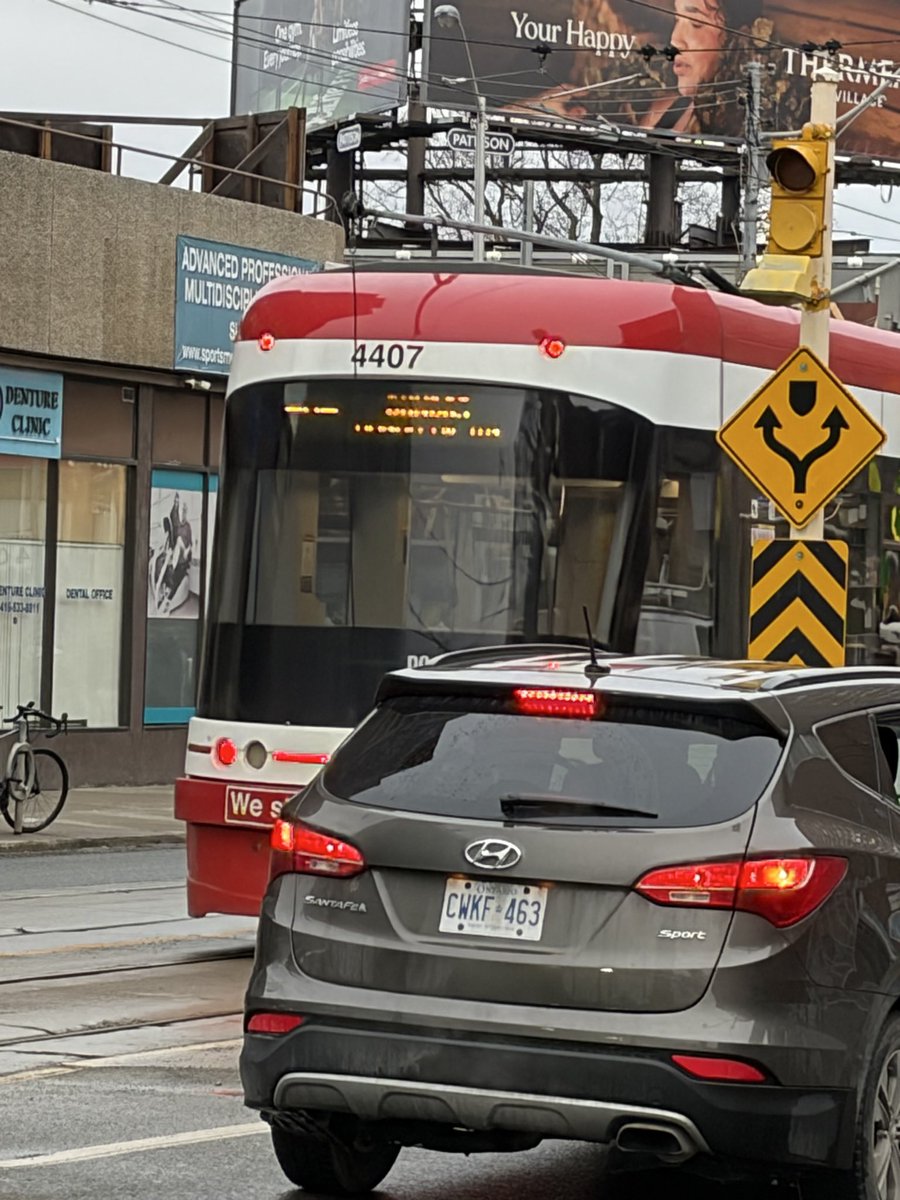
@TTChelps hello! at 9am this morning, the operator of streetcar 4407 refused to open the door and let me board. They were at a red light at a designated stop at Dundas & Roncesvalles. The vehicle was fully haulted and I pressed buttons on multiple doors, but they ignored them.
The water released from two California reservoirs will likely go to waste, not help Los Angeles with firefighting, experts say. https://t.co/FKPADbNNad
#BREAKING - The FAO, Ontario Financial Watchdog, finds the Ford government moving 9 ServiceOntario’s into Staples stores will cost taxpayers $11.7 million, more than if they were left with private operators. While Staples has increased hours, there are 30% fewer service desks. 🧵
New study concludes that carbon pricing contributed to a 0.5 per cent increase in prices since 2019, a period of time in which overall prices went up 19 per cent.
Our story on what the study authors called carbon pricing's "minimal impact" on inflation: https://t.co/JDS4yWLGxQ
Some of the bike lanes in Toronto were designed specifically for emergency vehicles because cyclists can get out of the way much, much, MUCH more easily than cars.
Mexican President Sheinbaum fires back at Trump in a statement: "Seventy percent of the illegal weapons seized from criminals in Mexico come from your country. We do not produce these weapons, nor do we consume synthetic drugs. Tragically, it is in our country that lives are lost to the violence resulting from meeting the drug demand in yours."
In summary, Ford's bike lane removals will, according to a new City Hall report:
- Cost $75 million in direct costs and sunk costs.
- Make traffic much, much worse for at least nine months during construction to remove lanes
- Have minimal long-term impact on car travel times.
It takes about 8 minutes to get up University. It's 1.8km so it would take 2min42s to drive it at the speed limit. There are 10 traffic lights on this stretch. If you hit the mean reds (5) and each takes 60s that's about 8 minutes. The bike lanes aren't impacting anything.
An island with an indigenous name!?
In a city with an indigenous name?
In a province with an indigenous name?
In a country with an indigenous name?
Crazy.
That’s MacGregor. Serious question tho, if there’s a use conflict here, why not swap out the diamond for I dunno, a soccer pitch?
There are other parks nearby, like Campbell Ave, that can probably accommodate a diamond better.
I’d recommend reading “Enemies Within: Italian and Other Internees in Canada and Abroad” by historians Franca Iacovetta, Roberto Perin and Angelo Principe. Again, if you want an accurate historical perspective.
The War Measures Act was terrible, but if you care for historical accuracy, the total number of Italian-Canadians interned in 1940 was roughly 500 (out of a community of nearly 200,000). Almost all were active members of the Italian Fascist Party too.
This top staffer to @MaritStiles has never heard of internment camps in Canada for Italian Canadians, the thousands who had rights trampled by the government of the day or the discrimination pushed on Italians.
Opposition to developers today still has an anti-Italian air to it.
Historians still debate the ramifications of this. However, some members of the Italian-Canadian community and their enablers, like to create a false comparison with Japanese-Canadian internment.