@benedictk__ My setup is fully cc right now for product work but I'd like to see if codex is an even better thought partner. When is the next one in Berlin?
Notion fan since day one. Was great to bring my Notion habit and my day job of building agent harnesses together at the Café Notion panel last week.
As in building agents for credit and fraud decisions, the hardest part is figuring out what context to give the agent and when.
Definitely very late to the party but now there’s no more excuse to try @vietdle‘s favorite tool.
Could have saved myself the Hetzner OpenClawd setup I guess.
@nikunj "Comparison is how ambitious people procrastinate." - reading this on x after getting distracted from researching a competitor while waiting for my claude to finish. This one hits home, great read!
So basically Anthropic found thousands of zero-days in major OS and browsers with one model.
@leopoldasch laid out exactly this scenario two years ago on the @dwarkesh_sp pod: the moment AI cyber capabilities force the national security actors to the table
https://t.co/iri7w2VIQX
Introducing Project Glasswing: an urgent initiative to help secure the world’s most critical software.
It’s powered by our newest frontier model, Claude Mythos Preview, which can find software vulnerabilities better than all but the most skilled humans.
https://t.co/NQ7IfEtYk7
Financial spreading is one of the most time-consuming steps in underwriting. AI is changing that.
At Taktile Labs, we discovered the latest models now exceed human accuracy in this complex task.
→ AI: 96%+
→ Humans: 89%
We built the first benchmark for AI in financial spreading by evaluating how well leading models extract data, calculate, and reason across financial documents such as:
→ bank statements
→ payslips
→ financial spreads
It’s part of our mission to give financial institutions the trusted research and benchmarks they need to deploy agents reliably at scale.
Explore the benchmark: https://t.co/Nj5wyghkKI
Excited to finally launch our most advanced agent yet!
Financial spreading is painstaking, high-stakes work. Our agent handles the repetitive heavy lifting exceeding human accuracy with 96% vs 89%!
We built an agent to help credit teams reliably automate one of their most time-consuming tasks. This is @Taktile’s Financial Spreading Agent:
It can extract and analyze data from balance sheets and income statements automatically. We see this cut manual work by up to 80% among early users.
And this would surprise you - accuracy actually goes up.
In our research at Taktile Labs we found latest models now exceed human accuracy in financial spreading: 96%+ vs. 89%.
This is huge for credit teams as financial spreading is very time intense and there can be a lot of errors.
With less manual work and higher precision - you get faster underwriting decisions.
Huge thanks to our development partners on this. You helped us understand how the agent works in the real world - so we could build a solution that makes every decision transparent and explainable.
Team is demoing on April 8. Sign up here: https://t.co/0Gi8jBJVz8
Time to reveal who let the 🦞 out ;) Today, @Taktile launches Taktile Labs. We dropped the lobster on Wall Street to ask the question: are banks ready for autonomous agents?
With our applied AI research institute, we aim to bridge the gap between what frontier models can now do - and what regulated institutions need in order to trust it.
Our first benchmark shows the latest models can beat human accuracy on very complex banking tasks: 96%+ vs. 89% in financial spreading.
The models are ready. Now the industry needs evidence, benchmarks, and practical frameworks to ensure they work reliably at scale.
That is what Taktile Labs is built for.
AI is coming to financial services - let's make sure we can trust it.
Excited to drive this with a stacked internal team and many incredible individuals on our Research Council and Advisory Board.
Thanks to Bradesco’s Fagner Abreu, Parallel’s @paraga , Founder, Investor, and Morgan Stanley Lead Director Tom Glocer, Harvard Business School Professors Robin Greenwood and Karim Lakhani, Harvey’s Ben Liebald, Camunda’s Daniel Meyer, Cursor’s Jonas Nelle, ROC Partners’ Tina Reich, Equifax’s Harald Schneider, Suno’s @MikeyShulman, Intuit’s Henry Venturelli, Allianz Partners’ Pieter Viljoen, Flexcar’s Michael Zambrano, and Varo Bank’s Jill Zucker Sheckman.
Learn more at: https://t.co/wV9UVEPIES
(nothing AI generated about it btw, we worked with NYC artist @AndrewLoganAMW to build the lobster from scratch)
Time to reveal who let the 🦞 out ;) Today, @Taktile launches Taktile Labs. We dropped the lobster on Wall Street to ask the question: are banks ready for autonomous agents?
With our applied AI research institute, we aim to bridge the gap between what frontier models can now do - and what regulated institutions need in order to trust it.
Our first benchmark shows the latest models can beat human accuracy on very complex banking tasks: 96%+ vs. 89% in financial spreading.
The models are ready. Now the industry needs evidence, benchmarks, and practical frameworks to ensure they work reliably at scale.
That is what Taktile Labs is built for.
AI is coming to financial services - let's make sure we can trust it.
Excited to drive this with a stacked internal team and many incredible individuals on our Research Council and Advisory Board.
Thanks to Bradesco’s Fagner Abreu, Parallel’s @paraga , Founder, Investor, and Morgan Stanley Lead Director Tom Glocer, Harvard Business School Professors Robin Greenwood and Karim Lakhani, Harvey’s Ben Liebald, Camunda’s Daniel Meyer, Cursor’s Jonas Nelle, ROC Partners’ Tina Reich, Equifax’s Harald Schneider, Suno’s @MikeyShulman, Intuit’s Henry Venturelli, Allianz Partners’ Pieter Viljoen, Flexcar’s Michael Zambrano, and Varo Bank’s Jill Zucker Sheckman.
Learn more at: https://t.co/wV9UVEPIES
(nothing AI generated about it btw, we worked with NYC artist @AndrewLoganAMW to build the lobster from scratch)
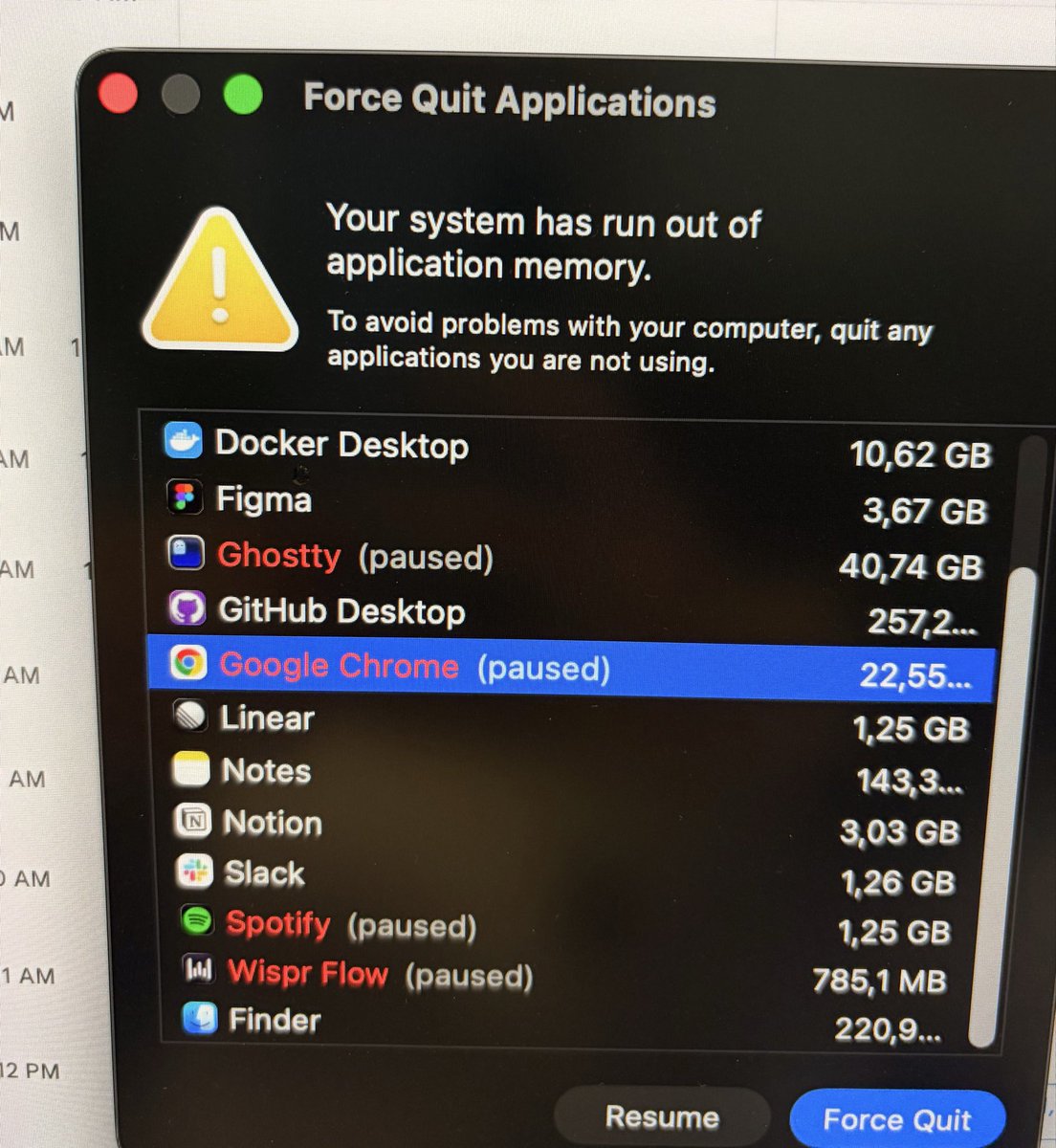
@bcherny I‘m struggling quite a bit with Claude Code‘s resource intrusiveness (on Ghostty). Probably related to the „game engine“ implementation targeting 60 fps.
Any tips on how to improve this?