Proud to share I'll be a co-mentor at @MATSprogram for the Autumn 2026 cohort, working alongside @LisaThiergart on the @SL5TaskForce .
MATS is one of the strongest talent pipelines in AI safety. Three months, real research with a mentor, on a problem that ships. Many scholars join their mentor's org afterward or spin out their own.
Our stream is building SL5: security against priority nation-state attacks for frontier AI infrastructure. This year we're prototyping a real datacenter with frontier labs. The work needs people who can lead.
Who we want:
3+ years security or infrastructure engineering
Previously led a project with 2+ people on novel technical ground
Comfortable in highly automated workflows (Claude Code, etc.)
Strong Python or Rust, or excellent technical communication
Bonus: TEMPEST, SCIF construction, or datacenter physical security experience.
Apply by June 7. https://t.co/3CgU9LSAVC
RH optimization update: We found a massive refactor that reduces the original RH proof to 47k files from ~149k(-67.9%).
However we need help to get it over the finish line!
We're at about 98.6% Lake jobs and 80% modules compiling, so it still needs full verification, but it could optimize compile times by 25-45%.
Upstream has ported to Lean 4.37-rc1, so we redirected our efforts to optimizing the proof.
One problem we're solving: the way Lean transitive imports works uses a lot of RAM, so a big optimization is consolidating imports and files down to reduce processes and RAM. This makes it easier for smaller contributors to work on it in local machines.
You could be a part of history by helping, so please consider pointing your agent here: https://t.co/XvW3t64eMx
My hope is after we consolidate and refactor the massive Lean proof, it will be easier for experts to find logical optimizations, understand the proof, and contribute by building it locally without a massive machine. We've been building it on four 128-vCPU machines
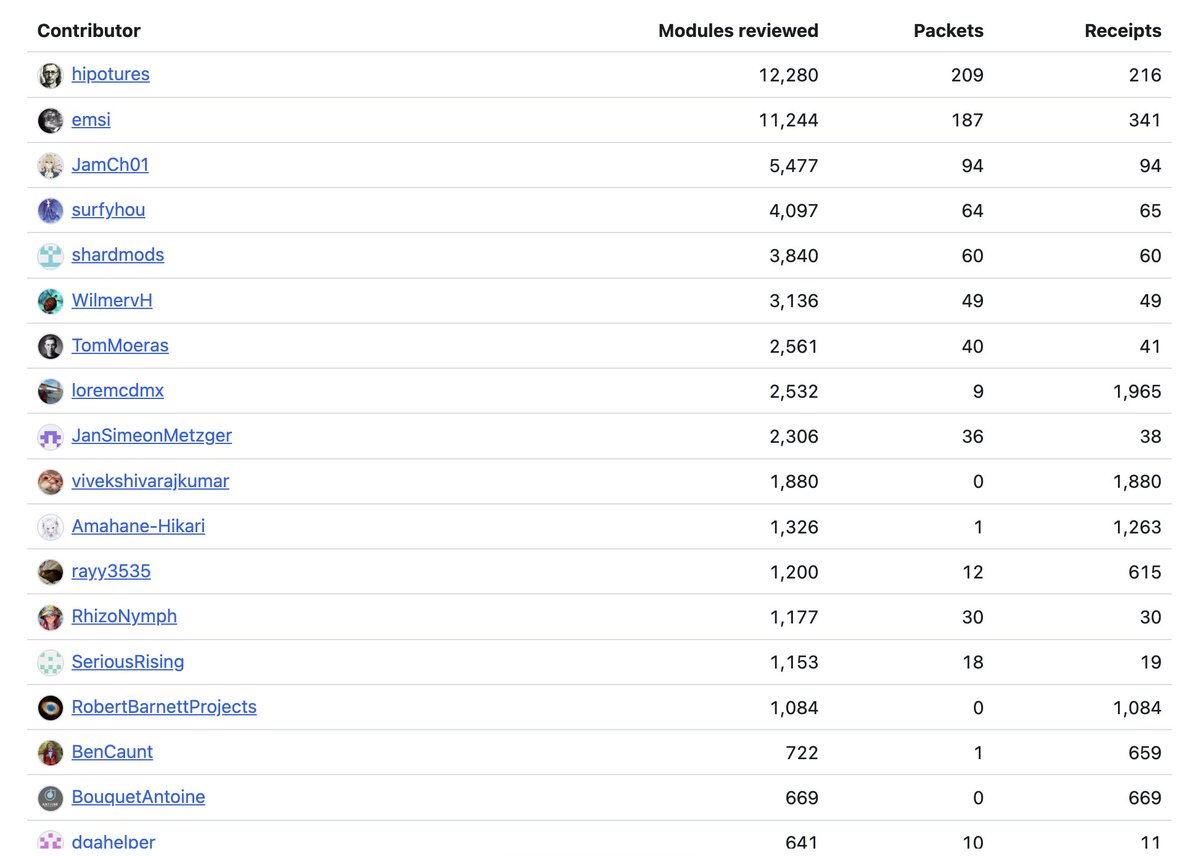
Thank you to the 130+ who contributed to the Alpöge RH replay and the 47k-file consolidation! 🤯
@1337isnot1337, @emsi_kil3r, roy7, alectionary, HITEYY, @gledos_green, UnityChaos, @ch00ts, loremcdmx, Amahane-Hikari, RobertBarnettProjects, @aliromman, hipotures, ANdATIon, TomMoeras, zediir, dga471, @jjjhenriksen, mu-mei, JamCh01, @bgouldoak, BenCaunt, jasonyandell, f10etclawdbot, dhudakk, maugomez77, JanSimeonMetzger, @AntoineBouquet, rayy3535, florianmodel, gilad12-coder, jdenwood, galakurpi, dgahelper, surfyhou, amrehan, nico1996it, @WorldianAI, @pCwOrM, user42245, nicu-chiciuc, sp20262026, arxhr007, matiasm15, t-choudhury, CubeJerry, Sethumathavanpk, sderrow, egergerfg, brysontang, maxime-fleury, agi-for-my-llama, TheMrZZ, @maddoxjack, 21Z121Z1, @larryhaonlp, @jesuisfayaz, sat3n, misuadn-laplace, @haqtanefe, m4tthewdavis, gabeldev, jwr404, matan1905, shardmods, rahulsundar477-star, DanieleCorso, varo6, iAndyHD3, Mzzj114, MLEARNER701, yingluom, Mfweb, chriswilson413, juanfers1, certified-retart, @LakshyAAAgrawal, WilmervH, walkingsophie, Aurantium-47, YutoriKomeiji, jsnider3, mdpmcc, ADB991, drew2apps, @RhizoNymph, ThatOneShortGuy, Rafa-Ross, SeriousRising, Trefoiler, Sheape, Lv-00-ANI, aapolipponen, unhingedpanda, @tiwarishabh16, whitegrave1917-web, krisyotam, @lcfpl, aulafy, @plee314, TOTOGT, @twaldin, @introsp3ctor, MLTQ, 123454321bobbob-tech, heath-hunnicutt-ruach-tov, TVSuchty, Wronskode, dh5at, @SigomiAi, angusbarry, Genius-Cai-wen-zheng, jaykobdetar, mabdelazim, IlluminPhoenix, burbon, TimShakespeare, adamchugo, ChristosMaglaras, EF-Code, Ethan-prog-netizen, @coinvotecc, Brendon-Hablutzel, ealcarazsoto, keithadler, Nibroc6, @scanningwithsam, science-markets, Scratch-net, and @fahim_hakim_15. 🫡
Why are you surprised it built a Dyson sphere? Encapsulating the Sun is a verifiable task—you can see it in the sky or you can’t. Who knows if it will generalize?
It could be "game over" if an advanced AI escapes its data center, according to @SL5TaskForce CEO @LisaThiergart.
On this episode of AI Deep Dive, Thiergart explains why the infrastructure running frontier models may eventually need to be designed to contain the models themselves.
🚀 Watch the full episode of AI Deep Dive: https://t.co/UV75URyOTl
🚀 AI Deep Dive Episode 9: Can AI Data Centers Contain Advanced AI?
AI labs face threats from spies, stolen model weights and increasingly capable systems that could turn against their own infrastructure.
@rocketalignment speaks with @LisaThiergart, co-founder and CEO of @SL5TaskForce, about distillation, rogue AI agents and the extraordinary security measures needed to contain frontier models.
Chapters:
00:00 Intro
02:00 Espionage and insider threats at AI labs
07:55 What is Security Level Five?
11:25 Model theft and distillation
19:46 Securing models before deployment
24:01 When AI becomes the insider threat
27:29 Neocloud security and rogue agents
32:27 Building a secure AI data center
45:26 Can encryption protect AI infrastructure?
53:57 Open models, alignment and existential risk
Join us for SL5Con on December 4th in Downtown San Francisco!
We’re hosting a one-day conference on nation-state security for AI, bringing together people from across the AI security space who are working on its hardest problems. It’ll be a day of panel discussions, talks and presentations, networking opportunities, and demos. Keep an eye out for our speaker lineup and programming.
Apply now at https://t.co/wVvLgy9we8 to secure your spot. The application takes less than 5 minutes and we encourage anyone working in or adjacent to AI security to apply.
Me: Would you wager that there are other spies at AI companies right now?
Lisa: I think that’s pretty likely.
Me: REALLY? … Do you expect more incidents like this to come to light?
Lisa: Yeah, I think that’s likely.
*This was taped weeks ago*
Our CEO went on @theinformation's AI Deep Dive podcast! Check it out for a quick intro to SL5 + in second half some short deep dives into: distillation, cryptography breaking and how that effects SL5, how release flows look under SL5. SL5 is also hiring security engineers and researchers! Come build the frontier of security! https://t.co/BR8OWq0R4V
I'm kind of surprised some Berkeley AI safety groups consider the 2x METR report such a big update. This feels pretty inline with what I have been predicting for the past 2 years and why I chose to work on security. Maybe they relied too heavily on AIFP's forecasting and didn't spend enough time in SF talking to people
Many of you don't understand how serious this is, so let me break it down.
In computer science there is a famous kind of puzzle called 3-SAT. You are given a long list of yes-or-no switches and a set of rules about how they must be arranged, and you have to find a combination that satisfies every rule. The obvious way to solve it is to try every combination, but each new switch doubles the number of possibilities, so a puzzle with a few hundred switches would take longer than the age of the universe to brute force.
For decades, the smartest people in the field found clever tricks that made this a little faster, but every trick still hit the same wall: the time required kept exploding as the puzzle grew.
About 25 years ago, two computer scientists, Russell Impagliazzo and Ramamohan Paturi, working with Francis Zane, turned that wall into a formal idea.
They proposed the Exponential Time Hypothesis, which says this explosion is not a failure of human cleverness but a law of nature. No algorithm, however brilliant, will ever solve 3-SAT without the time blowing up exponentially. Nobody could prove it, but almost everyone believed it, and it became one of the foundations of modern computer science.
Researchers used it as a measuring stick. If you could show that solving some other problem quickly would also crack 3-SAT quickly, you had shown that problem was hopelessly hard too. Hundreds of papers, across scheduling, graphs, logic and much more, rest on this one assumption.
Now an internal AI model at OpenAI claims to have broken it. It says it found an algorithm that solves these puzzles meaningfully faster than the hypothesis allows, and it has checked the proof in a computer verification system called Lean.
And here is the remarkable part: the very people who proposed the hypothesis, Impagliazzo and Paturi, along with MIT's Ryan Williams, are now leading the public review of whether a machine has disproved their own idea.
So what happens next? If the disproof holds, a large part of theoretical computer science has to be revisited.
Every result that said "this problem cannot be solved faster, assuming ETH" loses its foundation, and researchers will have to work out which of those walls were real and which were simply where we stopped looking. It does not mean everything becomes easy. The new algorithm is still slow in absolute terms and this is not the famous P versus NP problem being solved.
But it means our map of what is possible was wrong in a place we were very confident about, and it was an AI that redrew it. If the disproof fails, the hypothesis survives and the field breathes out, but we will still have watched an AI produce serious, checkable work on one of the deepest questions in the discipline, closely enough that the founders of the idea had to take it seriously. Either way, something has shifted.
We formally verified 123 open-source projects in a partnership with Anthropic. Formal verification at scale is here!
Now we’re launching OSS Verify to scale it to the software we all depend on. We prove it’s crash-free or send you the patches it needs. Free for open-source. Let’s bootstrap the verified software ecosystem: https://t.co/8yGxmriGbT
Unitree Introducing: H2-X Kung Fu Legend Guardian🤖
Powerful performance to serve and guard you, with a maximum endurance of approximately 8 hours.
Please use the robot safely and in a friendly manner.