partycoloR is now on CRAN! Started as a simple idea 6 years ago, now it's a full-featured package. Extract party colors and logos from Wikipedia with one line of code. It's already powering ParlGov Dashboard.
install.packages("partycoloR")
https://t.co/QQtOQqCYIx
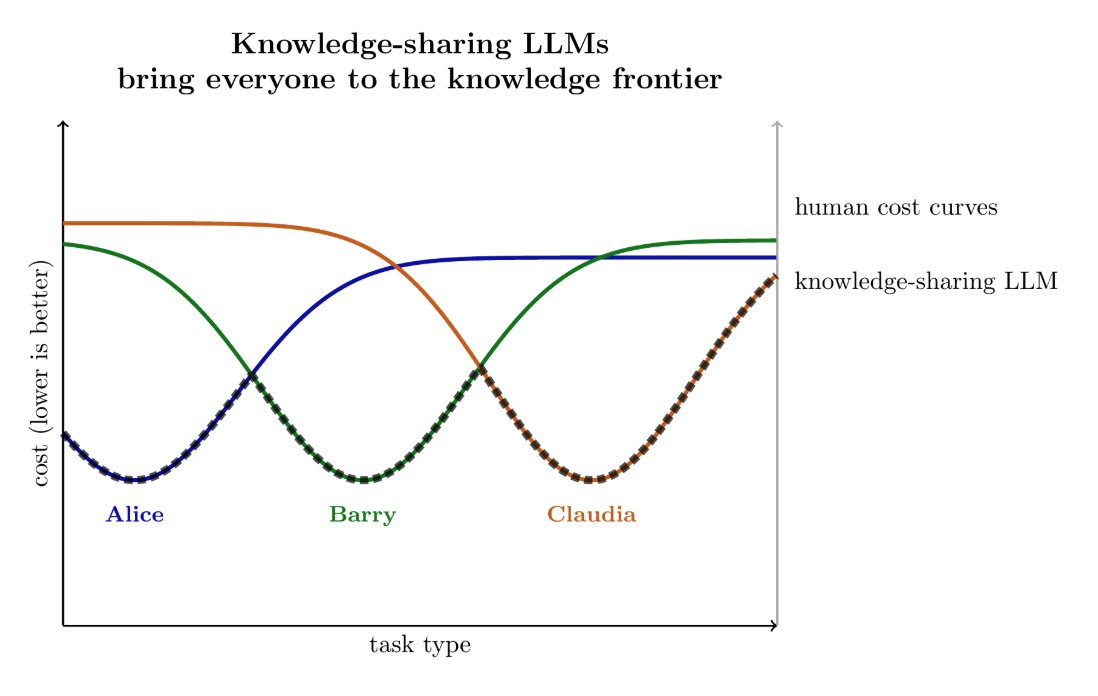
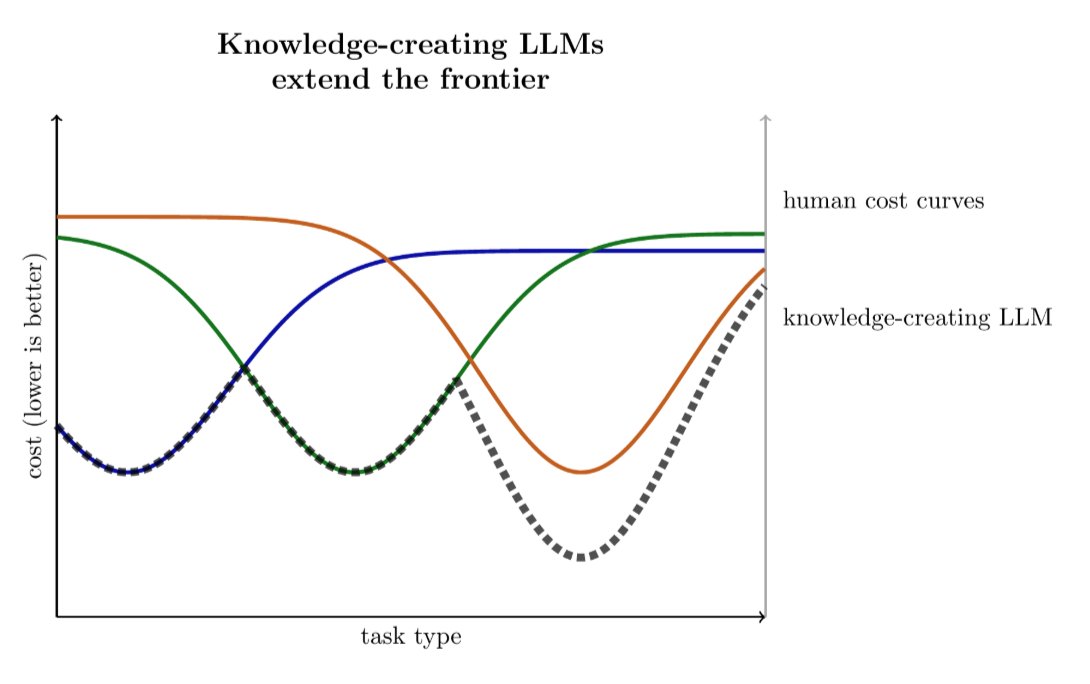
New post: knowledge-sharing LLMs vs knowledge-creating LLMs.
The economics of the two cases are qualitatively different, & it seems plausible that labs will start to restrict access to knowledge-creating LLMs so they can use the fruits themselves.
https://t.co/HxOT4M4e82
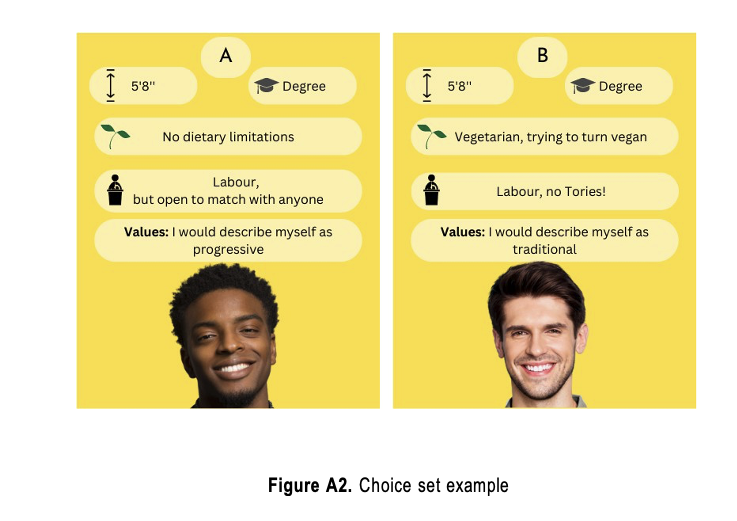
❤️Does partisanship shape online dating?
➡️ In a conjoint in the UK, @yara_slei@GeorgeMelios & @profpauldolan find politics matter as much as looks, but openness to opposing views matters more. Labour voters show stronger in-group bias https://t.co/0UrhHOxe6O #FirstView
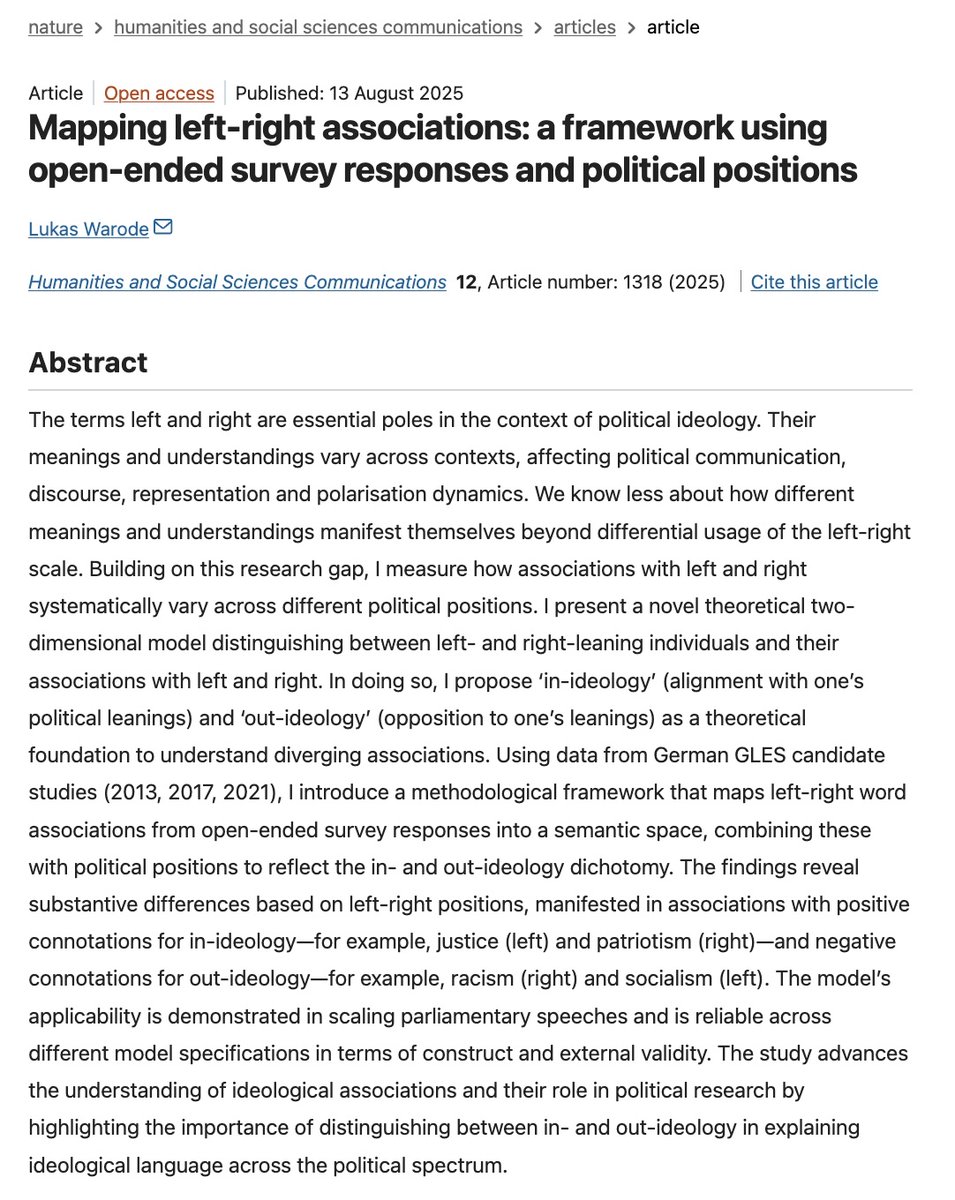
My 2nd dissertation paper is out in @Nature@HSScomms: https://t.co/sIN23d4sSQ
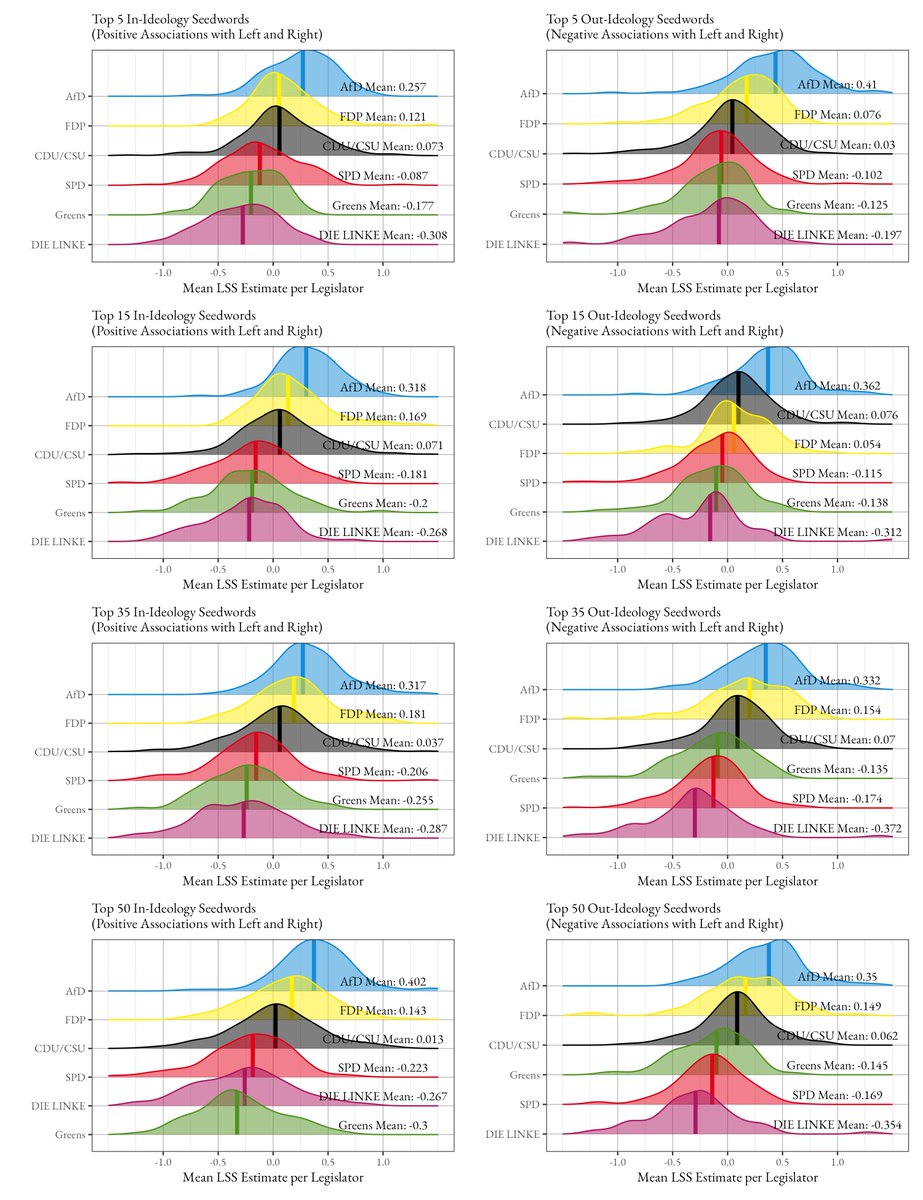
I study and explore how associations with 'left' and 'right' vary systematically by semantic and political position.
Implications for political behaviour, communication, and representation are manifold, as 'left' and 'right' are central categories in polarised public discourse – which is particularly evident in pejorative usage, such as labelling political opponents as 'racist' or 'socialist'.
My 2nd dissertation paper is out in @Nature@HSScomms: https://t.co/sIN23d4sSQ
I study and explore how associations with 'left' and 'right' vary systematically by semantic and political position.
Both in- and out-ideological associations are externally validated by serving as seed words to scale parliamentary speeches. The resulting ideal points reflect party ideology across different specifications in the German Bundestag.