@serotonin_ride@kubaVleg@Kuba77l OnlyFans nie przekreśla kompetencji, ale magister socjologii i doświadczenie w copywritingu nie czynią z nikogo eksperta. Kompetencje, reputacja i autorytet to różne rzeczy. Wolność wyboru zawodu nie oznacza wolności od społecznej oceny tych wyborów… ☝️
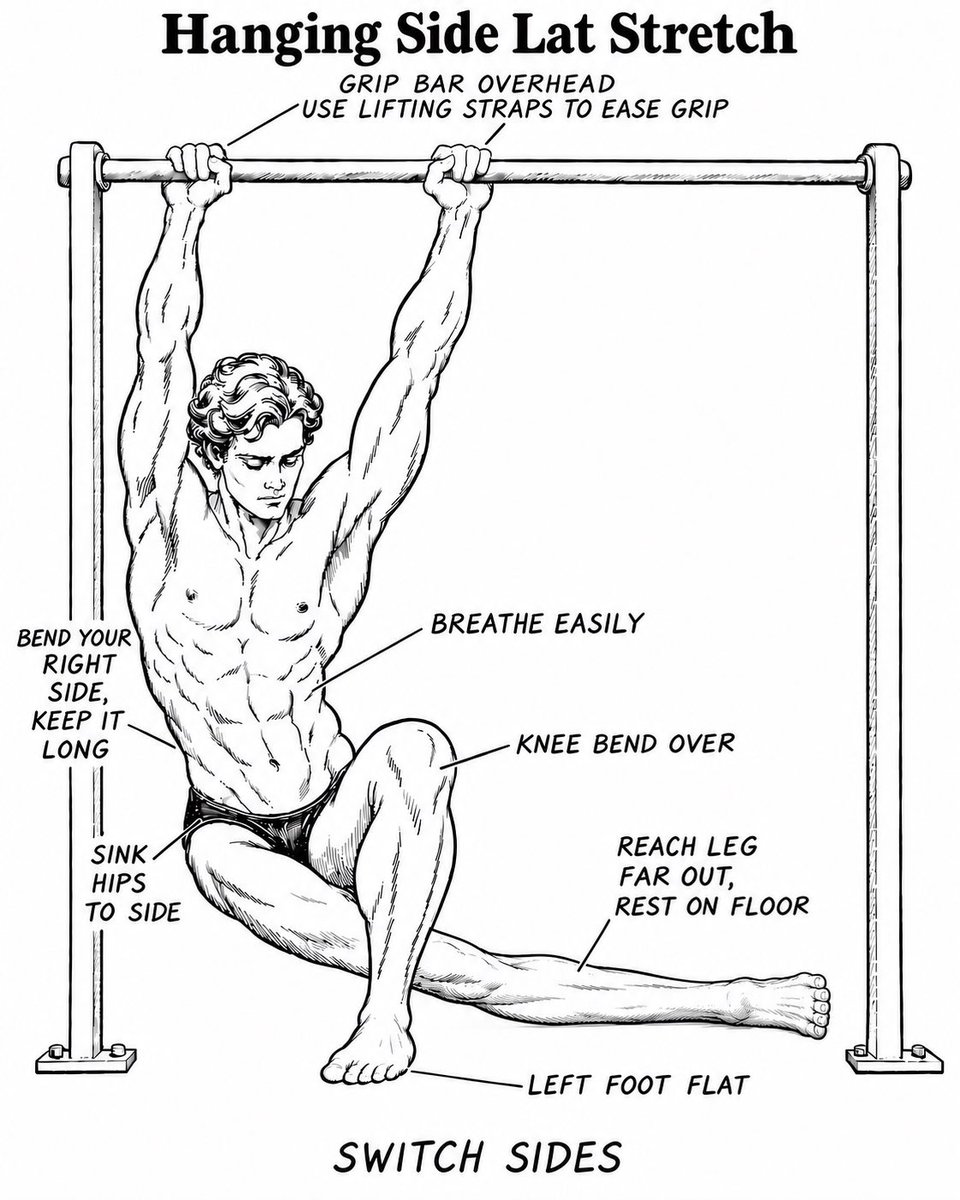
Fascia stretching remains the most powerful form of stretching. Always including the whole chain of ur body. Fully sinking into the stretches and opening everything up. These two, side lat stretch and reclining hero pose are two of my favorites. Hold as long as u comfortably can. Start mediating and feel everything loosening up, feeling better and taller afterward.
A toothpaste company has quietly killed the entire market research industry and nobody is talking about it.
Colgate published a paper showing you can predict real purchase intent by simply asking LLMs to roleplay customers.
And this is beyond insane.
If you ask an AI, "Rate this product from 1 to 5," it gives safe, middle-of-the-road garbage.
So researchers invented a method called Semantic Similarity Rating (SSR).
Instead of asking the AI for a number, they asked it to roleplay.
They gave the LLM a demographic profile. They showed it a product concept. And they asked it to write down its raw, unfiltered thoughts.
Then, they used a semantic model to translate those written thoughts into a numerical score.
The results are staggering.
Tested against 57 real personal care product surveys and 9,300 human responses, the synthetic consumers hit 90% of human test-retest reliability.
They perfectly mirrored how different age brackets and income levels react to price changes.
And they provided detailed, qualitative feedback that was deeper and more critical than what actual humans wrote.
This destroys the economics of traditional market research.
You don't need to wait a month to see if a product will sell.
You can simulate 1,000 hyper-targeted customer interviews overnight.
You can A/B test pricing across every demographic instantly.
I'm 47. This 3 minute neck drill changed my life.
The neck is one of the most important parts of your body but it gets stiff after long periods of sitting.
The 3 minute life changing neck drill
1) Neck CARS
2) Rotations
3) Looking up + down
4) Lateral stretches
5) Cell Phone stretch
6) Janet Jacksons
I usually do these in the morning, in my shower, or between desk sessions. Doesn't take long to feel the benefits.
Do each of these exercises for 15 seconds, and watch how much better your neck feels afterward.
Some men don't celebrate their birthday, and it's not because they don't care...
Here are 5 truths about men who treat their birthdays like any normal day.
🧵👇
@GadSaad Oh did he make a joke about Israel at some point (outside of this conversation of course) so you will point fingers on this to the rest of this life. Interesting.
@0xPorterio This is such a irresponsible tweet. Did you notice it was supposed to conducted this way. It’s a talk show on MTV, not a church. It’s played out this way for fun and click. The loop from this to „he must be guilty” is an imbecile move.
ANDREAS ANTONOPOULOS PERFECTLY EXPLAINS HOW HE SECURES HIS #BITCOIN IN UNDER 2 MINUTES:
"I WOULD CERTAINLY NOT PUT MY ENTIRE NET WORTH ON MY COMPUTER"
"I ASSUME EVERYTHING I’M DOING IS MONITORED, INCLUDING MY PASSPHRASES, INCLUDING MY KEYS"
"I BOOT ONTO A COMPLETELY BRAND NEW MACHINE OFF A CD"
"I PRINT PAPER WALLETS, AND THOSE KEYS HAVE NEVER BEEN ONLINE"
NOT YOUR KEYS, NOT YOUR BITCOIN 🔥
I hate to say it, but in 10 years, we're all going to be furious about what degenerate social media has done to our society.
We're going to look at ourselves in the mirror and wonder why we didn't react. Why we didn't fight this plague when its consequences were already so obvious.
We allowed a handful of technology companies to redesign human behaviour around the most primitive psychological impulses: vanity, envy, resentment, sexual exhibitionism, aggression and the desperate need for recognition.
We gave children machines that compete for their attention every waking minute. We replaced their curiosity with stimulation, their friendships with audiences, and their capacity for concentration with an endless succession of fifteen-second distractions.
We turned ordinary people into performers, private lives into public advertisements, and human relationships into competitions for social status.
We created an economy in which stupidity is profitable, narcissism is rewarded, outrage generates revenue, and the most grotesque personalities receive the greatest visibility.
And then we wondered why public discourse became increasingly stupid, why people grew incapable of sustained attention, and why so many young people became depressed and committed suicide.
The most extraordinary thing is that we can already see the mechanism.
We all know that these platforms are designed to maximise engagement rather than human well-being. We know very erll that their algorithms reward emotional stimulation. We perfectly know that constant comparison can damage self-esteem and that compulsive use can interfere with sleep, attention and ordinary social life.
Yet we continue handing them to children as though they were harmless toys.
And the damage goes beyond individual psychology.
A society cannot remain intellectually healthy when millions of its members spend hours every day consuming material selected primarily for its ability to provoke an immediate reaction.
It cannot preserve serious public debate when every argument must compete with entertainment, scandal and manufactured indignation.
It cannot maintain meaningful human relationships when people increasingly evaluate their own lives through the imaginary eyes of an online audience.
We have allowed commercial algorithms to become some of the most influential institutions in the formation of human personality.
Without democratic deliberation. Without serious consideration of the consequences. And often without parents even understanding what their children are being exposed to.
Perhaps the greatest scandal is that none of this was inevitable.
We could have established stronger protections for minors. We could have demanded greater transparency about addictive design. We could have refused to normalise the permanent commercial exploitation of human insecurity.
Instead, we adapted ourselves to the machines.
And when the consequences become impossible to ignore, we will probably do what modern societies do best: commission investigations, publish reports, organise conferences and solemnly declare that mistakes were made.
But the generation that grew up inside this experiment will not get its childhood back.
And that is what will make our retrospective indignation so pathetic.
We will pretend that nobody could have known.
When, in reality, we are watching it happen every single day.