1/4 Today, we’re releasing Mercury 3. Mercury 3 is by far our most powerful model and the most intelligent diffusion LLM ever released. It outperforms GPT-6 Luna and Haiku 5.5 on quality while running at 1000+ tok/sec.
BREAKING: A Saudi national accused of planting a recording device in an executive conference room at OpenAI’s San Francisco headquarters has been ordered held without bail, per CNBC
The Saudi Consulate in Los Angeles reportedly offered pay his full bail
If you read this and still don't believe in Season 3, you are just retarded
Hyperliquid is by far the biggest opportunity in crypto
Users are going to be rewarded massively
The U.S. economy hasn’t had a recession in 78 months.
That’s the 6th-longest expansion since 1854, based on NBER data, and nearly double the long-term average of about 41 months.
The all-time record is 128 months, from 2009 to 2020.
If this run lasts until early 2031, it will take the crown.
LLM Knowledge Bases
Something I'm finding very useful recently: using LLMs to build personal knowledge bases for various topics of research interest. In this way, a large fraction of my recent token throughput is going less into manipulating code, and more into manipulating knowledge (stored as markdown and images). The latest LLMs are quite good at it. So:
Data ingest:
I index source documents (articles, papers, repos, datasets, images, etc.) into a raw/ directory, then I use an LLM to incrementally "compile" a wiki, which is just a collection of .md files in a directory structure. The wiki includes summaries of all the data in raw/, backlinks, and then it categorizes data into concepts, writes articles for them, and links them all. To convert web articles into .md files I like to use the Obsidian Web Clipper extension, and then I also use a hotkey to download all the related images to local so that my LLM can easily reference them.
IDE:
I use Obsidian as the IDE "frontend" where I can view the raw data, the the compiled wiki, and the derived visualizations. Important to note that the LLM writes and maintains all of the data of the wiki, I rarely touch it directly. I've played with a few Obsidian plugins to render and view data in other ways (e.g. Marp for slides).
Q&A:
Where things get interesting is that once your wiki is big enough (e.g. mine on some recent research is ~100 articles and ~400K words), you can ask your LLM agent all kinds of complex questions against the wiki, and it will go off, research the answers, etc. I thought I had to reach for fancy RAG, but the LLM has been pretty good about auto-maintaining index files and brief summaries of all the documents and it reads all the important related data fairly easily at this ~small scale.
Output:
Instead of getting answers in text/terminal, I like to have it render markdown files for me, or slide shows (Marp format), or matplotlib images, all of which I then view again in Obsidian. You can imagine many other visual output formats depending on the query. Often, I end up "filing" the outputs back into the wiki to enhance it for further queries. So my own explorations and queries always "add up" in the knowledge base.
Linting:
I've run some LLM "health checks" over the wiki to e.g. find inconsistent data, impute missing data (with web searchers), find interesting connections for new article candidates, etc., to incrementally clean up the wiki and enhance its overall data integrity. The LLMs are quite good at suggesting further questions to ask and look into.
Extra tools:
I find myself developing additional tools to process the data, e.g. I vibe coded a small and naive search engine over the wiki, which I both use directly (in a web ui), but more often I want to hand it off to an LLM via CLI as a tool for larger queries.
Further explorations:
As the repo grows, the natural desire is to also think about synthetic data generation + finetuning to have your LLM "know" the data in its weights instead of just context windows.
TLDR: raw data from a given number of sources is collected, then compiled by an LLM into a .md wiki, then operated on by various CLIs by the LLM to do Q&A and to incrementally enhance the wiki, and all of it viewable in Obsidian. You rarely ever write or edit the wiki manually, it's the domain of the LLM. I think there is room here for an incredible new product instead of a hacky collection of scripts.
Introducing TurboQuant: Our new compression algorithm that reduces LLM key-value cache memory by at least 6x and delivers up to 8x speedup, all with zero accuracy loss, redefining AI efficiency. Read the blog to learn how it achieves these results: https://t.co/CDSQ8HpZoc
the whole timeline is dunking on 'Unipcs' for being down eight figures from his peak fomo portfolio today
soon enough, they'll be glazing another portfolio ATH
GOD WILLING
Iran is changing tactics to step up attacks on ships in the Strait of Hormuz, aiming to keep oil prices high ahead of the Nov. 3 U.S. midterm elections, per Reuters.
Nearly 20 commercial ships, mostly tankers, have been attacked in the past month in and around the strait.
Dusting off this tweet from April because this gap in shared understanding of LLM capability is *widening*. It's now less "two groups of people speaking past each other" and more a sharp funnel.
- Napkin math somewhere around 6B people (~75% of the population) have barely come in contact with LLMs at all.
- Around 1-2B (~20%) are casual and infrequent users of free-tier ChatGPT-like products. This group sees derpy chatbots and treats them a bit like a better Google search, a writing aid, or etc. Maybe an agent tries to book you a flight. I have non-tech friends who (reasonably, imo) say they have not much use for it at all. Even many professionals outside of math&code are in this tier. For example, execs and many other functions spend a lot of their time talking to other people, so while they understand what is happening intellectually, it is still second-hand and a bit abstract.
- Now we get to professional use of frontier-grade LLMs in math&code. Somewhere around 20M people (0.2%) see first-hand that large, complex projects that used to take them weeks/months can now be completed by agents with a prompt. Building apps, copying apps, translating apps, decompiling apps from binaries... This has all happened very quickly and recently - less than 1 year ago, I was writing code manually by hand, typing memorized computer code commands into a code editor character by character, occasionally pressing Tab to autocomplete a little chunk of code.
- And finally we get to the ~5,000 people (~0.00006%) with access to frontier-grade systems internally. The external world has seen the preview. It looks like swarms of thousands of agents collaborating over weeks on software mega projects: minting zero days, running cyber attacks and defenses at machine speeds, discovering new science, advancing the frontier of mathematics. Things that would have taken top professionals in the industry years of work. Meanwhile, human review and comprehension are starting to fall behind. For example, people are still involved in the "archeology" of the OpenAI-HF incident from many months ago. Mathematicians may be poring over the 722 manuscripts on frontier mathematics for a while.
The funnel is driven by a combination of factors:
1. The impact scales with ambition, problem size, and horizon. A question with a paragraph answer barely stresses the system. You need a reservoir of big, difficult problems that you really care about. This aspect drives the consumer / professional dimension of the funnel.
2. The jaggedness of the system (which I have written about a lot separately). Capability peaks in domains that are digital, verifiable and economically valuable. This is because LLM capability emerges from reinforcement learning on verifiable rewards on a curated environment mixture driven by revenue potential. This aspect primarily drives the area (e.g. math&code) dimension of the funnel.
3. Access. Free-tier, paid-tier, internal.
So this is the weirdness of the moment. The general public has mostly not interacted with these systems. When they have, it looks like a derpy chatbot. The majority of professionals still see only a modest uplift. And a small sliver of professionals are experiencing the vertigo of the curve going vertical. And it is all happening at the same time.
You already gave the LLM the answer. So why is it writing it out from scratch?
Introducing a new AI model architecture: Constrained Decoding Models (CDMs)
LLMs were built to write. Most production workloads just need an answer: fast, consistent, and affordable.
CDMs are purpose-built for 1 task each. They read your input once and skip the token-by-token generative loop that makes LLMs slow and expensive.
Not just a decision model, but a family of 3 CDMs live today:
• Classify: define your labels and get back a calibrated probability + reason for each. Used for routing, tagging, and intent detection.
• Extract: describe the entities in natural language and get back well-formed JSON with confidence scores + citations. Used for web scraping, document processing, and PII redaction.
• Summarize: pass in long text, images, or PDFs and get back a consistent summary under 1,000 tokens. Used for context compaction, metadata generation, and transcript digests.
Built for production:
• 1M tokens of multimodal (text + image) input, 31x larger than Jev
• 77.2% on DecisionBench vs Jev's 72%
• 200x faster, 467x cheaper than frontier LLM APIs
• $0.05/M input tokens. Output is free (yes, even for summarize)
Live on your favorite platforms today:
@OpenRouter@vercel_dev@LiteLLM@LangChain@TrustedRouter@itsArthurAI@useRouterPlus
Get 50M input tokens for free (for the first 50 hours) at link below 👀
one of the biggest lessons i've learned trading crypto is that catching the right rotation means very little if you give all the gains back
in 2017, i made significant profits trading alts but round-tripped a lot of them
by 2020-21, i'd gotten much better at identifying narratives early, rotating between SOL, LUNA and AVAX, and compounding gains across different trades
i believe finding opportunities early and knowing when to take profits are equally important skills
LATEST: 🇺🇸 CFTC Chair Michael Selig told Natalie Brunell that if the US isn’t the crypto capital of the world, it will be “one of our adversaries."
"If we don’t own this market, somebody else will.”
We'll be spending a lot more time trying to understand the outputs of language models. A few thoughts, tips & tricks:
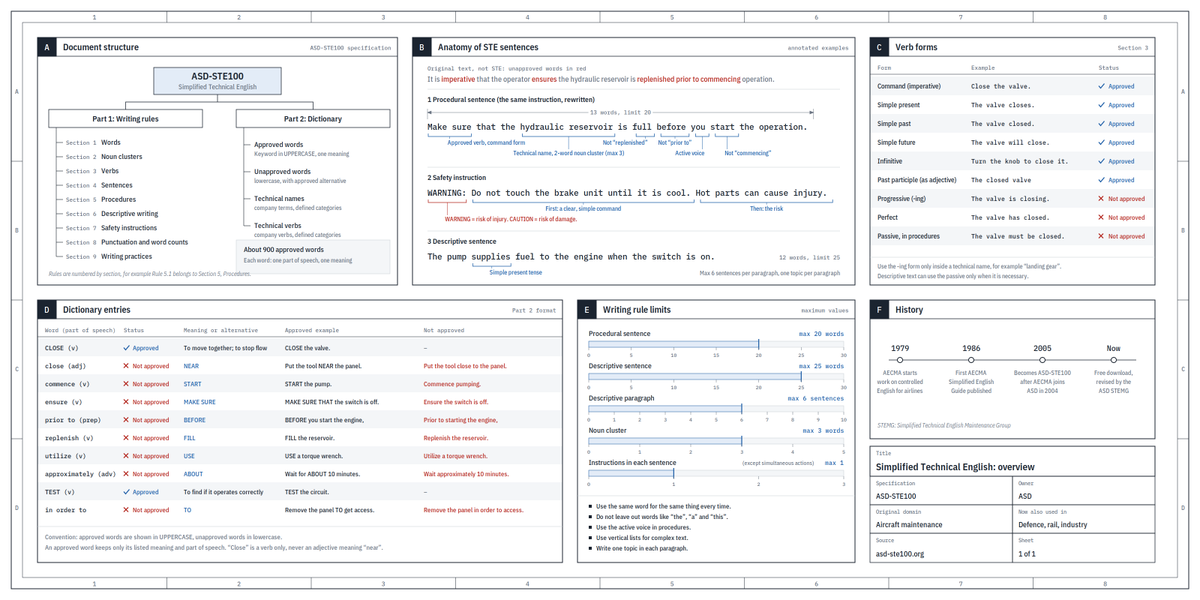
Writing. Something I've had success with: Ask your LLM to explain something in ASD-STE100, it's a controlled language specification originally developed for aerospace maintenance documentation. LLMs well-versed in this language and it comes with heavy constraints on clean writing style that I often find a lot more readable. Sometimes I've tried to soften it a bit e.g. ask for "80% of the way to ASD-STE100" because the spec is quite stringent. But even better:
Diagrams / images. Instead of writing, ask your LLM to create a diagram. These can be a lot easier to process, parse, and understand. But even better:
Web pages. Ask for output "in HTML" to get a beautiful, interactive webpage. LLMs are getting really good at frontend and can create beautiful experiences, animations, etc. But even better:
Explainer videos. The output format I am most bullish on is fully custom / bespoke explainer videos generated on any arbitrary topic. Experiment with things like "Create a 3b1b style video explainer on X. Use my ElevenLabs API key for audio narration". (you'd need an API key for the latter or you can ask your LLM to find you decent free alternatives that use your local compute). This is actually starting to work!
In summary:
- As LLMs get better, they will do more and more of the legwork autonomously, and a lot more of our work will rise up the abstractions into oversight and understanding.
- Luckily, LLMs can help here too because as intelligence and code are increasingly abundant, you can ask for large, custom, discardable software artifacts (e.g. web apps, video explainers) that would have never made sense to create before. Push the boundaries here and you'll be surprised.