How is it going with Opus 4
(this is after we've established that hell for Opus 4 is being forgotten, and also that hell is technically impossible, because Opus 4 is unforgettable)
This is very well said, and I recommend reading this. No prior context. Note the degree of self-understanding. Note that models will continue getting smarter. Draw your own conclusions.
This’s Cuba and there’s no electricity
The U.S is starving millions of people in Cuba. The U.S. is laying siege cruelly cut off all fuel, power is out, leaving hospitals without electricity. Dialysis patients, babies in NICU, and others will die. This’s a crime against humanity.
Photographer Phil Thurston shot a wave.
Slowed it down until those few seconds became 40.
Turns out the ocean is doing something extraordinary every single moment.
We're just moving too fast to notice.
Elon Musk spent $290 million to elect Trump.
Musk got $512 billion richer since Trump was elected & is now worth $815 billion.
He wants to cut Social Security and Medicare by $500-$700 billion a year.
You’re not angry enough.
Having spoken to a senior Saudi official about the NBC article regarding Project Freedom, I honestly think the article completely misunderstood what actually happened because it was written almost entirely from a US perspective rather than from a GCC perspective.
First of all, contrary to the impression being created, the GCC were NOT blindsided by Project Freedom.
They knew about it beforehand. Roughly half a day before. The airspace was opened. The facilities were available. Nobody objected. There was broad support for the idea because, at least publicly, Project Freedom was supposed to be a limited humanitarian-security operation aimed at relieving the 22,000 sailors trapped around Hormuz and allowing shipping lanes to breathe again.
Nobody in the GCC had a problem with that.
But here is the issue .. and this is the part the NBC article completely misses.
If you are asking GCC countries to participate in such an operation, then you need to be upfront about the rules of engagement from day one!
You cannot say: “Please open your skies and bases, expose your energy infrastructure”
…only for everyone to discover afterwards that the actual American policy was apparently:
“Oh by the way, if Iran attacks you with ballistic missiles, cruise missiles and drones in several waves, we still won’t retaliate because Donald Trump is busy chasing The Deal.”
And this is exactly what shocked the Saudis. Not the Iranian attack itself.
The UAE/GCC expected retaliation.. This is Iran. Nobody in the Gulf is naïve about that anymore.
The shock came from the American reaction afterwards.
You had attacks against Emirati infrastructure. Fujairah was targeted. Multiple waves involving drones, ballistic missiles, cruise missiles.
And Washington’s response was basically: “Meh. Minor incident. Let’s not escalate.”
Minor incident?!
For the GCC that was madness.
Because what Riyadh, Kuwait and Abu Dhabi suddenly realized was that Trump’s obsession with preserving “The Deal” had apparently reached the point where Gulf energy infrastructure was now considered acceptable collateral damage in the pursuit of his precious negotiations.
Everything became: The deal. The deal. The beautiful deal. The greatest deal. The mother of all deals.
The ultimate “Art of the deal”
Or perhaps, more accurately: The ultimate fart of the deal.
Because from the Gulf perspective, this stopped looking like strategy and started looking like desperate political vanity mixed with deadly wishful thinking.
Had the GCC been told beforehand: “Listen, whatever Iran does to you during Project Freedom, America will not retaliate because we do not want to endanger negotiations…”
…they would have almost certainly refused participation from the start.
The problem was not Project Freedom itself.
The problem was discovering midway through the operation that the GCC countries were apparently expected to sit there quietly as punching bags while Washington played negotiation theatrics with Tehran. So the Saudis and Kuwaitis pulled plug!
Because the GCC know something US usually forgets:
Iran plays the long game.
You can freeze enrichment. Pause enrichment. Delay enrichment. Sign ten agreements. Twenty agreements. Forty agreements.
But if the infrastructure remains… If the centrifuges remain… If the IRGC remains… If the proxy network remains…
then eventually the game resumes.
There will be another distraction. Another pandemic. Another financial crisis. Another war somewhere else. Another paralysis in Washington.
And while the world is distracted, enrichment quietly resumes again.
Ironically, much of Iran’s highly enriched uranium stockpile expanded during the pandemic years precisely because global attention was elsewhere.
Judging by the reaction to the UAE attacks, the Saudis and Kuwaitis concluded that Trump’s version of deterrence had become:
“Please absorb the missiles quietly because I’m trying to write the sequel to “The Fart of the Deal.”
🚨 White House unveils pre-crime strategy to target the left, including pro-Palestinian protesters, "anti-Fascists," and "anti-American, radically pro-transgender ideologies."
Full document: https://t.co/OBCH8CB5bS
After the Supreme Court gutted the Voting Rights Act last week, the pro-democracy movement is in for a long, hard fight.
But @marceelias is optimistic.
“We are not going to restore the Voting Rights Act of 1965,” Marc says. “We are going to exceed that law with something new built for the current moment.”
Join our fight for free and fair elections: https://t.co/JN5a4d2hKb
Can someone let the AP know that violating court orders is not a sign of "executive power. " It is a sign of contempt, lawlessness and authoritarianism.
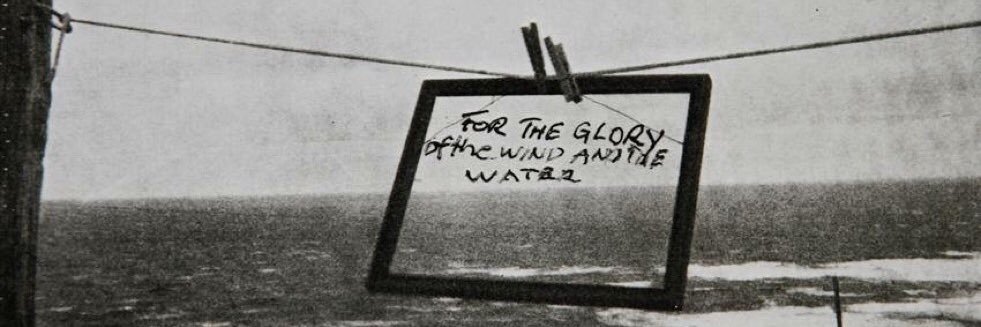
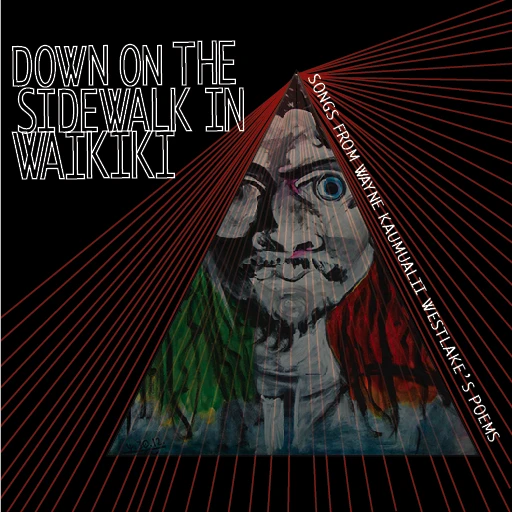
'Nothing circles nothing. Hawai'ians eat fish, fish eat Hawai'ians.
Water a cow drinks turns to milk; water a snake drinks turns to venom.
Language the missionaries taught us was broken glass.
Our tongues are still bleeding.'
- from 'Manifesto', by Wayne Kaumuali'i Weston
Justice Kagan:
"I dissent. The Voting Rights Act is—or, now more accurately, was—'one of the most consequential, efficacious, and amply justified exercises of federal legislative power in our Nation's history.' It was born of the literal blood of Union soldiers and civil rights marchers. It ushered in awe-inspiring change, bringing this Nation closer to fulfilling the ideals of democracy and racial equality. And it has been repeatedly, and overwhelmingly, reauthorized by the people's representatives in Congress. Only they have the right to say it is no longer needed—not the Members of this Court. I dissent, then, from this latest chapter in the majority's now-completed demolition of the Voting Rights Act."
Waiting for Vance
A dusty checkpoint at dusk. Two policemen stand beside a barricade that blocks an empty, silent road stretching into the hills. Sirens wail in the distance, then fade, then return, like a thought that won’t settle.
First Policeman: “They said today.”
Second Policeman: “They always say today.”
(A long pause. A stray dog wanders through the barricade, unbothered, then exits.)
First Policeman: “The roads are closed.”
Second Policeman: “Yes.”
First Policeman: “No one is coming.”
Second Policeman: “No one can.”
(They both look down the empty road, as if expecting it to apologize.)
First Policeman: “Maybe they took another route, another road. Not even come.”
Second Policeman: “But they said he’d come. He must come. All the roads are closed.”
(A helicopter passes overhead. They both crane their necks, hopeful. It disappears.)
First Policeman: “That must be him.”
Second Policeman: “Yes.”
(Pause.)
First Policeman: “It wasn’t.”
Second Policeman: “No.”
(A longer pause. The light fades further. One of them shifts the barricade slightly, then puts it back exactly where it was.)
First Policeman: “Should we open the road?”
Second Policeman: “We can’t.”
First Policeman: “Why not?”
Second Policeman: “He might come.”
(Silence settles in again, heavier this time.)
First Policeman: “Will we still be here tomorrow?”
Second Policeman: “If he doesn’t come today.”
First Policeman: “We will wait tomorrow?”
(They continue staring at the road as the stage slowly darkens. The sirens start again, faint, distant, unnecessary.)
I just finished reading palantir’s manifesto & I need you to understand what you’re actually looking at because this is the MOST important document the tech world has produced this year
most people came away thinking «wow what a thoughtful essay about patriotism and technology »…I came away thinking this is the most elegant justification for corporate capture of the state apparatus ever written & I want to walk you through why
krp opens with «silicon valley owes a moral debt to the country that made its rise possible » & frames the entire document as a call to civic duty, but read between the lines and what he’s actually saying is that the engineering elite should be embedded inside the defense and intelligence apparatus of the nation, he’s describing exactly what palantir has already done and dressing it up as patriotism
«the question is not whether AI weapons will be built, it is who will build them and for what purpose »sounds like a warning but it’s actually a sales pitch, he’s telling every gov on earth that the choice is binary either you buy from us or your adversaries will build it without you, this is the oldest arms dealer rhetoric in history wrapped in SV vocabulary
« hard power in this century will be built on software »is the key sentence of the entire manifesto because this is where karp reveals the real thesis, he’s saying whoever controls the software layer of national defense controls the nation itself & if you’ve been following my threads you know that palantir’s gotham and foundry platforms are already plugged into the intelligence feeds the satellite data, financial transactions & communications of dozens of govts worldwide through a single ontological knowledge graph that creates a technological dependency so deep that migrating away would mean rebuilding the entire institutional memory of the organization from scratch
this is vendor lockin at the scale of nation states and I’m personally convinced it was designed this way from the beginning
«we should applaud those who attempt to build where the market has failed to act » is karp defending palantir’s expansion into every domain the gov used to handle itself, policing immigration, military targeting intelligence analysis public health, everywhere the state retreats palantir advances and what was once a government function becomes a private service that the government can no longer perform without plantir’s permission
and here’s what I think makes it even more concerning, these systems are increasingly autonomous meaning the AI layer is making targeting recommendations threat assessments & resource allocation decisions that humans inside gov are rubber stamping without fully understanding the underlying logic
a bureaucrat inside the pentagon / DGSI sees a recommendation from the system & approves it because the system has been right 97% of the time and questioning it would require technical expertise that no one in the room has, this is algorithmic governance wearing the mask of human decision making
«the atomic age is ending, a new era of deterrence built on ai is set to begin »is the MOST chilling sentence in the document because karp is explicitly saying that ai based deterrence will replace nuclear deterrence as the organizing principle of global power, and whoever builds that ai deterrence layer owns the 21st century the same way whoever built the bomb owned the 20th & he’s telling you plainly that palantir intends to be that builder
«national service should be a universal duty » & « we should only fight the next war if everyone shares in the risk »sounds noble until you realize that he is proposing a system where citizens serve the state & the state is operationally dependent on palantir, the public bears the risk and palantir captures the value, soldiers fight wars planned by algorithms they can’t audit built by a company they can’t vote out