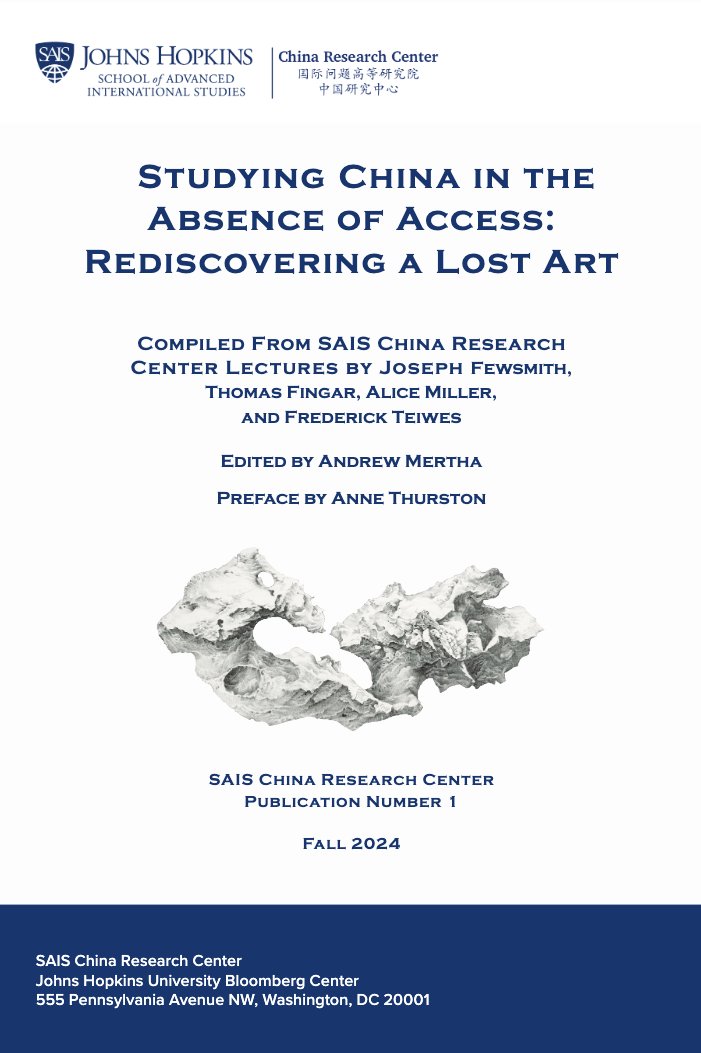
CICIR, one of China's most influential foreign policy think tanks, published a framework piece on May 13th called "The World's Great Transformation and the Path to U.S.-China Coexistence."
The piece argues that the post-Cold War liberal international order has collapsed, that the world is in a transition period between old and new orders, and that U.S.-China competition has entered what Beijing calls "comprehensive strategic stalemate." It identifies three drivers: the changing balance of power, deep economic interdependence, and what the document describes as China's "historical initiative" in matching American pressure.
The piece explicitly names the Strait of Hormuz as one of the crises shaping this transformation. It treats AI governance as a shared U.S.-China responsibility. And it lays out a six-element framework covering everything from Taiwan to AI cooperation to risk management.
A must read. There's a lot to digest, and I'll have more to say this weekend.
https://t.co/FBPLe9ngRq
1/ As details emerge about the US capture of Maduro and his wife, there will be an impulse among foreign policy analysts to draw analogies to Taiwan and to warn about Trump setting a precedent Beijing could use against Taiwan. I would caution against that impulse. (short 🧵).
we need more smart, nuanced coverage of china in the u.s.
the sinica podcast delivers
just because the current political climate favors 💩 bashing 💩 beijing doesn’t mean that u.s.-china relations are disappearing… it’s just getting harder to understand
give the sinica podcast a try if you value signal over noise (link 👇)
and if you like it, consider supporting kaiser’s work
@alyce_ge@alx_sacco Sure, lots of 'em! 1/ Sulmaan Wasif Khan, "Haunted by Chaos: China’s Grand Strategy from Mao to Xi " is a great one. Howard French (@hofrench) – Everything Under the Heavens: How the Past Helps Shape China’s Push for Global Power (2017). I've interviewed both of them on Sinica.
Admiral Davidson coined the “2027 Davidson window.” General Minihan and others created their own timelines. Secretary Austin said conflict not “imminent or inevitable.” Admiral Paparo closed the “Davidson window.” Now, it appears, DoD is back to warning of imminence of conflict.
A reminder that Uyghurs (plus Kazakhs and Kyrgyz) is less than 1 percent of China’s population.
Also a reminder that working in a factory thousands of miles away is basically the playbook to level up in China. And yeah…it sucks.
Do you know what sucks more? Having western anthropologists and professors do a Deep Reading of homesick TikToks.
« Patime had posted a video of rain falling on tarmac at the factory’s entrance with a single line from a song: “Why does the sky cry in the form of rain? My tears flow like a river.”
“You have to understand the context to understand the meaning,” said Rebecca Clothey, a professor studying language and identity at Drexel University in Philadelphia. »
I wonder how much Prof Clothey’s degree cost to give her the ability to read Uyghur minds with TikTok BGM analysis.
« Clothey, Steenberg and other cultural experts who reviewed some of the Douyin videos concluded that the workers were communicating unhappiness and distress at their situations.
“There’s a sense of defeat tied to the work that they’re doing,” said Steenberg. “And a feeling they’ve little other choice.” Whether that’s because of economic circumstances, discrimination, dispossession or coercion is hard to disentangle, he added. »
What’s conspicuously missing: ppl asking Uyghur workers straight up why they might take a job a long way from home. I’m gonna guess a lot of them will say something along the lines of « that’s where the jobs are. » But of course you can’t just ask because…
« “The coercion is systemic, built into the system,” said Zenz. “The very notion of choice becomes highly questionable.” »
Luckily we have plenty of western profs to see through the false consciousness into the pain of the Uyghur soul by interpreting « age-old Uyghur tradition of expression of resistance through poetry, song and dance. »
At least they’ve graduated from grainy satellite photos of desert warehouses labeled ‘Uyghur slave factory.’ Progress, I guess. SMH.
Flagging this piece by @BonnieGlaser laying out an agenda for Trump’s expected upcoming meeting with Xi and warning against chasing a grand bargain. https://t.co/O68Esn3YC8 via @NYTOpinion
When I started talking about Oligarchy, many people didn't understand what I meant.
Well, that's changed.
When the 3 wealthiest men in America sit behind Trump at his inauguration, everyone understands that the billionaire class now controls our government.
We must fight back.
The Lai administration has commented on the budget debacle, Lai stating that the cuts will have an impact on the operations of government with no parallel in Taiwanese history. This is the most direct comment that Lai has had on these events to date
https://t.co/Iyh17NQNrH
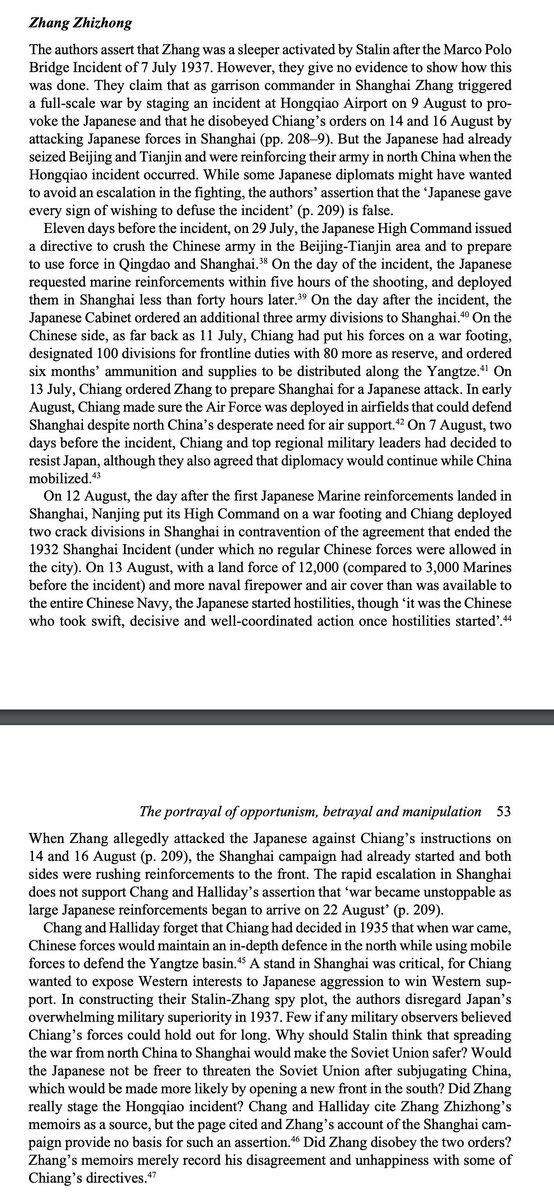
For those curious, an entire book was compiled to rebut The Unknown Story.
The section by Gregor Benton and Steve Tsang provides sufficient context to demonstrate how the story telling in the original does not match up with the facts when scrutinized.
"Taiwan Experts On Chances Of Chinese Invasion Under New Trump Administration"
I joined discussio with other 5 researchers to discuss about the China-Taiwan relations after the US election.
https://t.co/NyQszleWdG
Dear friends: The ESOC (Empirical Studies of Conflict) is coming to Taipei next June! Renard and I are helping organize the conference this time around, and there will be “lots of” cool people (no spoilers!) attending it and presenting their newest research on conflict.
Sharing this deeply researched piece by @ChuBailiang on Wang Huning - his background, his role in shaping China’s modern authoritarian state, and his current responsibilities for developing China’s approach to Taiwan.
https://t.co/gKj2rHH2w0 via @NYTimes
My latest article in Journal of Contemporary Asia:
"When Do South Koreans Support Government Restrictions on Media? The Roles of Partisanship and Democratic Support"
https://t.co/3X0WRZT9uE