Try and find people who give you useful responses. Some always say “great!” Some always say “bad!” Seek those with dynamic range in their evaluations. Also, some people are good for brainstorming, some for evaluation—these are not the same.
With our publication in @NatureMedicine on pandemic-related barriers to the success of women in research, I’d like to shine a spotlight on gender equity for women physician-scientists, who face cumulative barriers imposed in medicine AND science https://t.co/7TlbyIsHAp 1/n
Some people (me) do an MD-PhD in part to keep our career options open. I don't think this reasoning makes much sense because:
1) Doing an MD-PhD greatly limits your options for 8 years at a time (your 20s) when many would otherwise have tons of options (e.g., because no kids).
I only started my lab a little over 4y ago as an Instructor @harvardmed@MGHHeartHealth with a new K08 award in hand.
4 R01 awards as PI later, here's what I've learned as a physician-scientist:
And there is! https://t.co/VrUl7DTkCz It would be interesting to explore whether the subset of pts w/ COVID-induced psychosis also has increased inflammatory markers as a further window into the connection b/w neuroinflamm & mental illness.
Cool work by Prof. Iwasaki showing COVID infx -> increased CNS cytokines and microglial activity, both of which have been noted in primary psychosis as well. Which begged the question as to whether there is such a thing as COVID-induced psychosis.
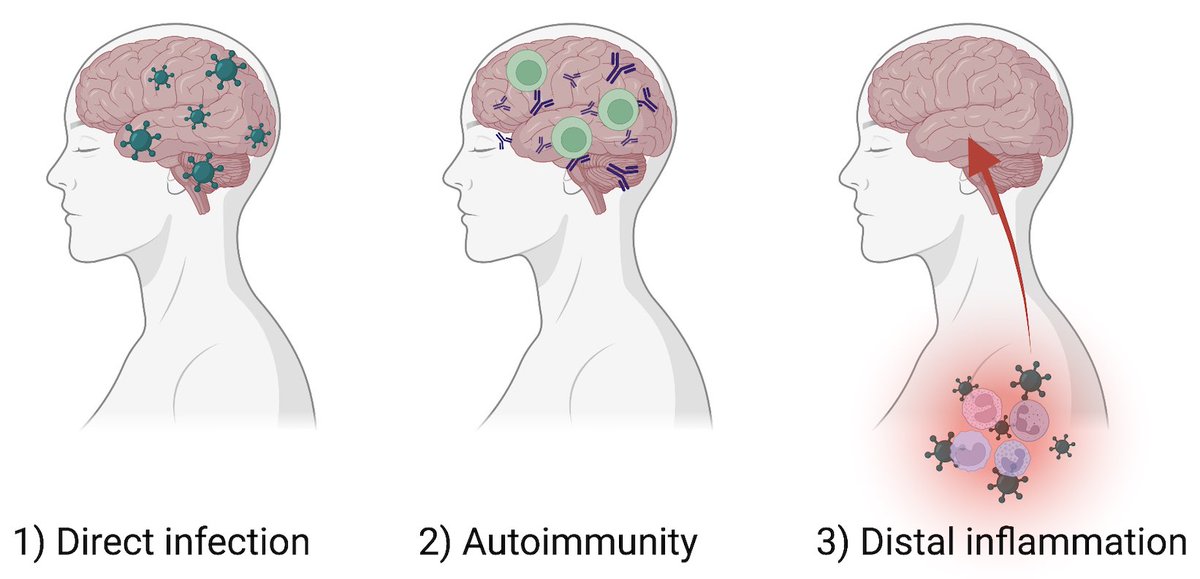
How can a mild respiratory SARS-CoV-2 infection lead to longterm neurological symptoms? Possibilities include 1) direct infection of 🧠, 2) autoimmunity, and 3) inflammatory impact of infection distal to the 🧠. In this study, we focused on 3) 👇🏽 (2/)
How can a mild respiratory SARS-CoV-2 infection lead to longterm neurological symptoms? Possibilities include 1) direct infection of 🧠, 2) autoimmunity, and 3) inflammatory impact of infection distal to the 🧠. In this study, we focused on 3) 👇🏽 (2/)
So excited to be a part of this important study led by @michelle_monje on how significant longterm neurologic damage can occur after a mild respiratory-only SARS-CoV-2 infection. My own🧵on the findings of this study with relevance to #longCovid (1/)
https://t.co/MgXZRrh899
1/12
Our latest autism genomics study is finally done 🎉🎉
Our teams aggregated lots of genetic data to explore shared and distinct genes, mutations, and cellular expression patterns across ASD, developmental delay (DD), and schizophrenia (SCZ) cohorts. https://t.co/fHDONxUYoA
Year in Review #9
The final one for the this year.
Hope everyone has a enjoyable, healthy (twitter-free?) holiday ahead.
If you enjoy these, I store most of my twitter slides here. https://t.co/8pUEKRIRwI
Did you know that, in E. coli, the structure of the gene regulatory network does not only control the average expression levels of genes, but also their noise levels, i.e. that expression noise is itself a regulated quantity? Check out our paper. 1/n https://t.co/nMxwP5SmHn
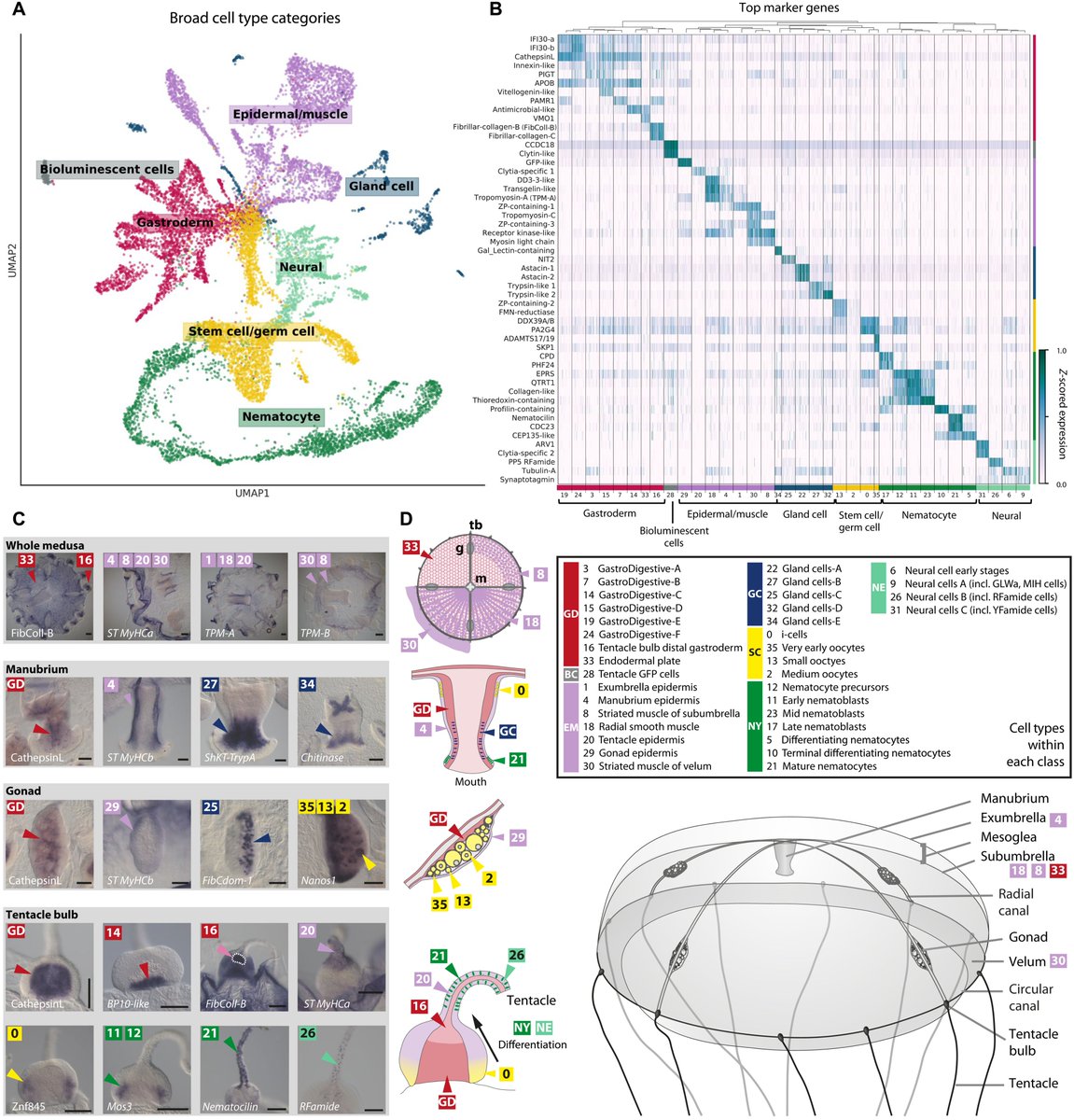
Our Clytia medusa cell type atlas introducing WHAMseq is out. This collaboration, with Tara Chari, Brady Weissbourd, @JaseGehring, @AnnaFerraioli_, @Leclere_L, Sandra Chevalier, @richcopley, @Clytia_Vlfr and David Anderson now has me hooked on jellyfish! https://t.co/ENc64q9HTT
Introducing a dramatically improved method, RD-SPRITE, to simultaneously map RNA-RNA, RNA-DNA, and DNA-DNA organization in the cell. [1/7] https://t.co/NNSeiqyWUT
Testing is key and we need more of it. Our team at @dgsomucla and @OctantBio have worked tirelessly over the past three months to develop SwabSeq: A high-throughput platform for massively scaled up SARS-CoV-2 testing https://t.co/xZ7oYSbQ6D
/1
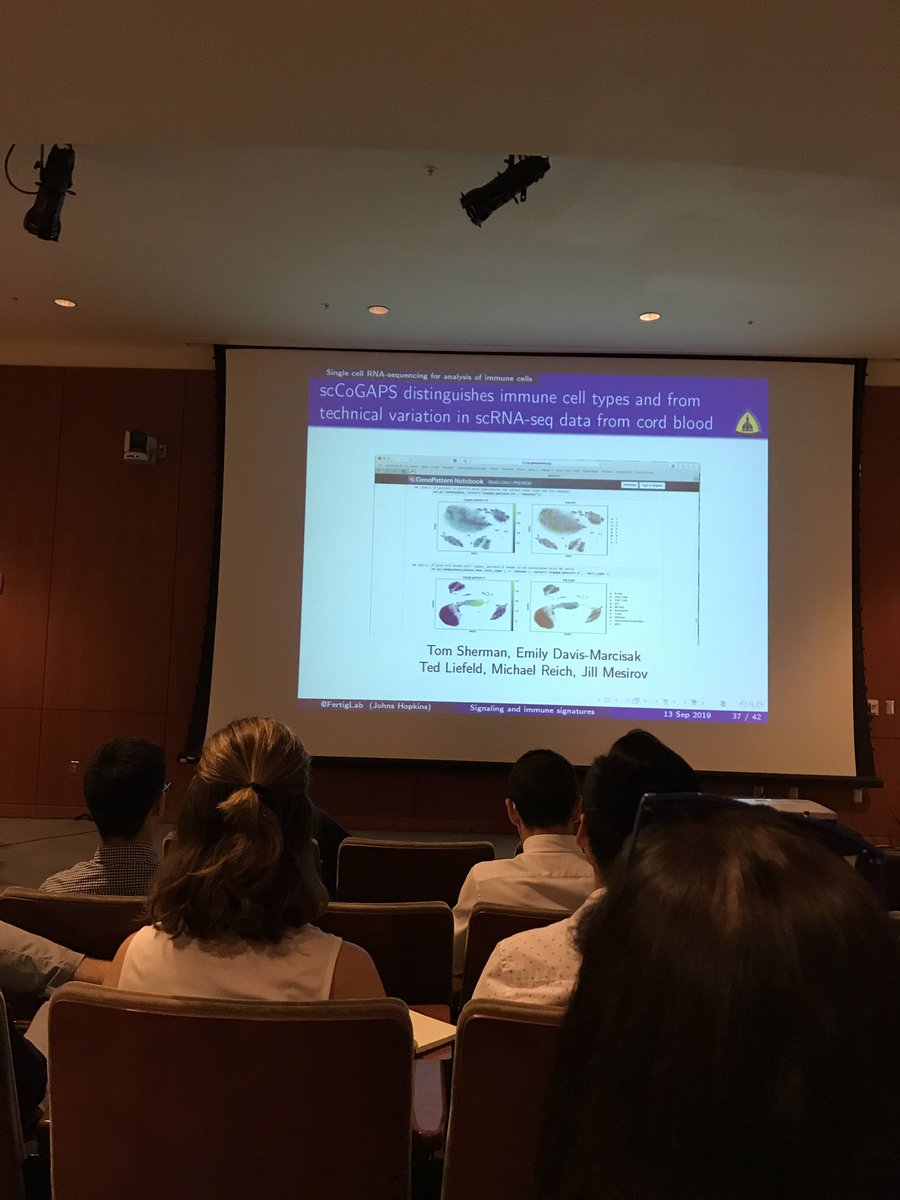
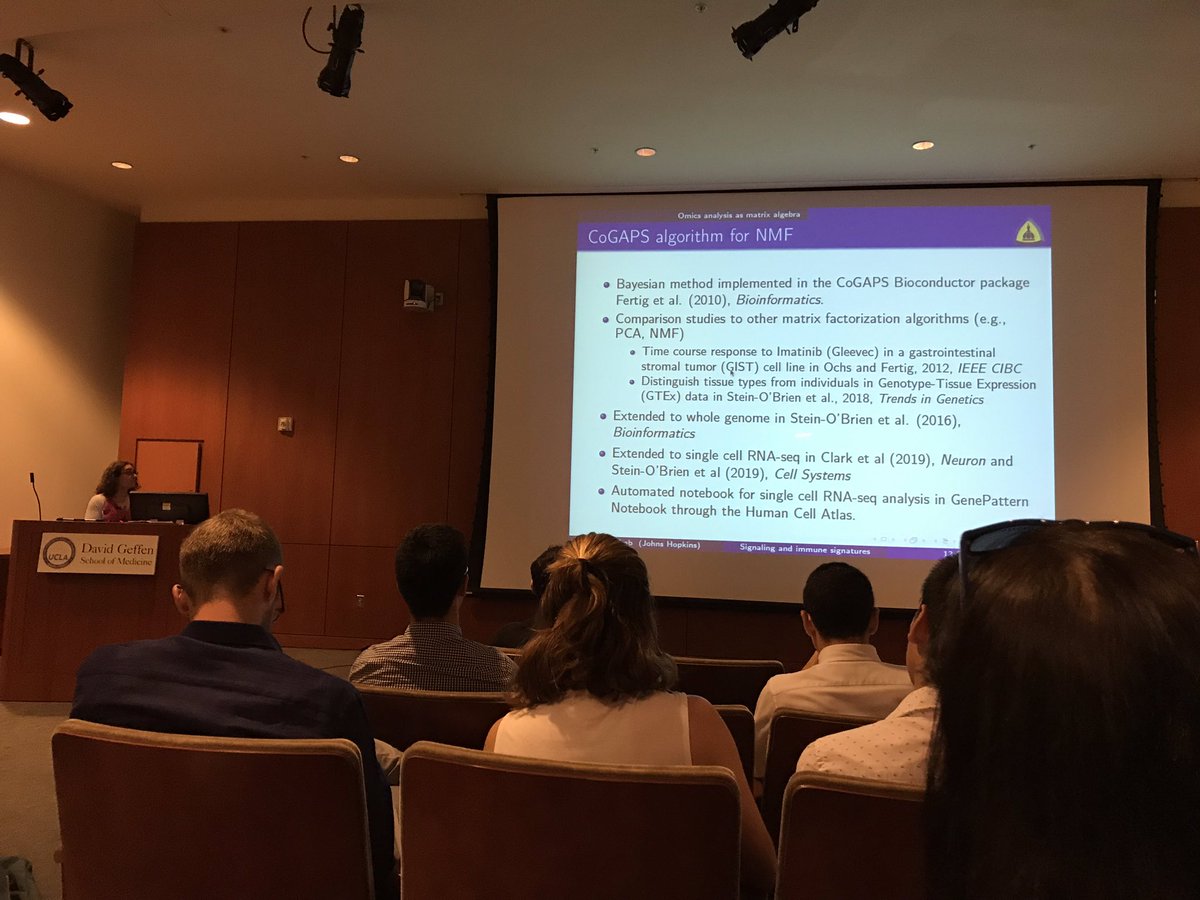
@FertigLab presents at Ucla Caltech MSTP research conference on applying matrix factorization techniques to oncological datasets to investigate molecular patterns of treatment response.





![sofiquinodoz's tweet photo. Introducing a dramatically improved method, RD-SPRITE, to simultaneously map RNA-RNA, RNA-DNA, and DNA-DNA organization in the cell. [1/7] https://t.co/NNSeiqyWUT https://t.co/vaSgoNcQMl](https://pbs.twimg.com/media/Egd97iQXsAY1Q0m.jpg)