We’re introducing the Cursor SDK so you can build agents with the same runtime, harness, and models that power Cursor.
Run agents from CI/CD pipelines, create automations for end-to-end workflows, or embed agents directly inside your products.
Today we’re open-sourcing our own version of “Claude Design.”
It uses your local coding agent to do the work Claude Design can do.
We also have a cloud version currently in private beta. Stay tuned.
https://t.co/x5wEteUuQ5
We’re pleased to announce Agent Computer Cloud: like a traditional computer, but the only interface is through an agent harness. It persists forever, runs only when you interact with it, and lets you own an unlimited number of agent computers.
@FredKSchott This is exactly how we abstract agents at @rebyteai: the agent is the computer—on demand, always persistent.
It’s just as cheap as Lambda.
Today, we’re launching a Rather Large™ update to the OpenAI Agents SDK.
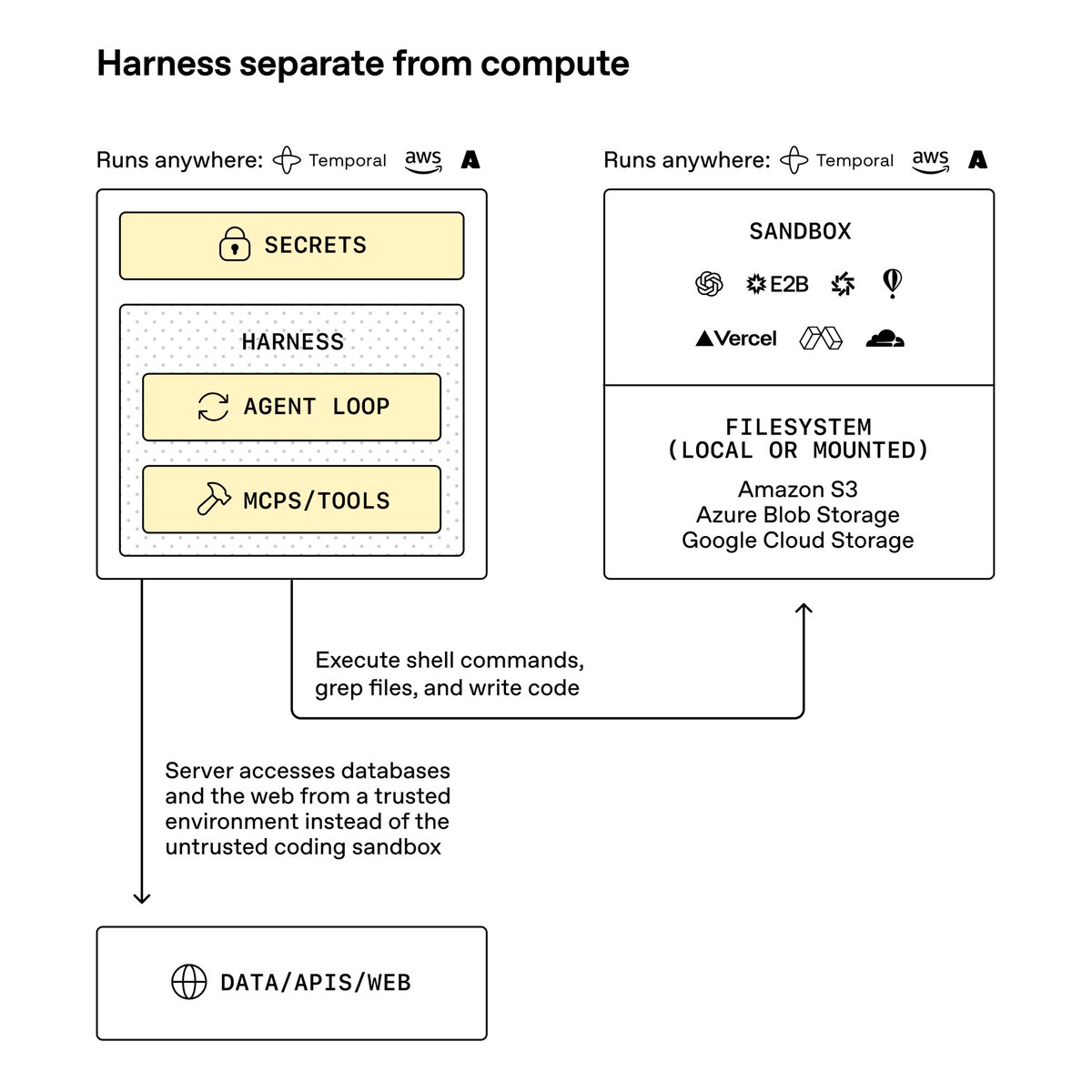
Agents SDK now allows you to scale Codex-style agents in production, without building the whole harness yourself. We’ve brought all of the stuff of modern agents: computer-use, skills, memory, compaction, and more to the same platforms you’re already using.
Same idea as claude code routine
Rebyte routines let you turn a prompt into something that runs on a schedule and sends back useful results. back by claude code/codex/gemini cli/opencode, you define the agent.
I just posted a demo of a routine that watches US market hours, checks a few stocks every hour, compares prices vs. the previous hour, analyzes what changed, and sends the summary back automatically.
You can use the same idea for anything you want to monitor:
stock prices, watchlists, company news, competitors, filings, crypto, niche indicators, whatever matters to you.
Set the routine once. Rebyte keeps watching. You get the updates.
That’s the point of routines: not just asking AI once, but having it do recurring work for you.
#buildinpublic
Build long-running agents with more control over agent execution.
New capabilities in the Agents SDK:
• Run agents in controlled sandboxes
• Inspect and customize the open-source harness
• Control when memories are created and where they’re stored