Step 1 is simple:
Ask yourself:
“What would I want if I stopped pretending I didn’t?”
Not what sounds practical.
Not what your anxious mind says is safe.
What is true?
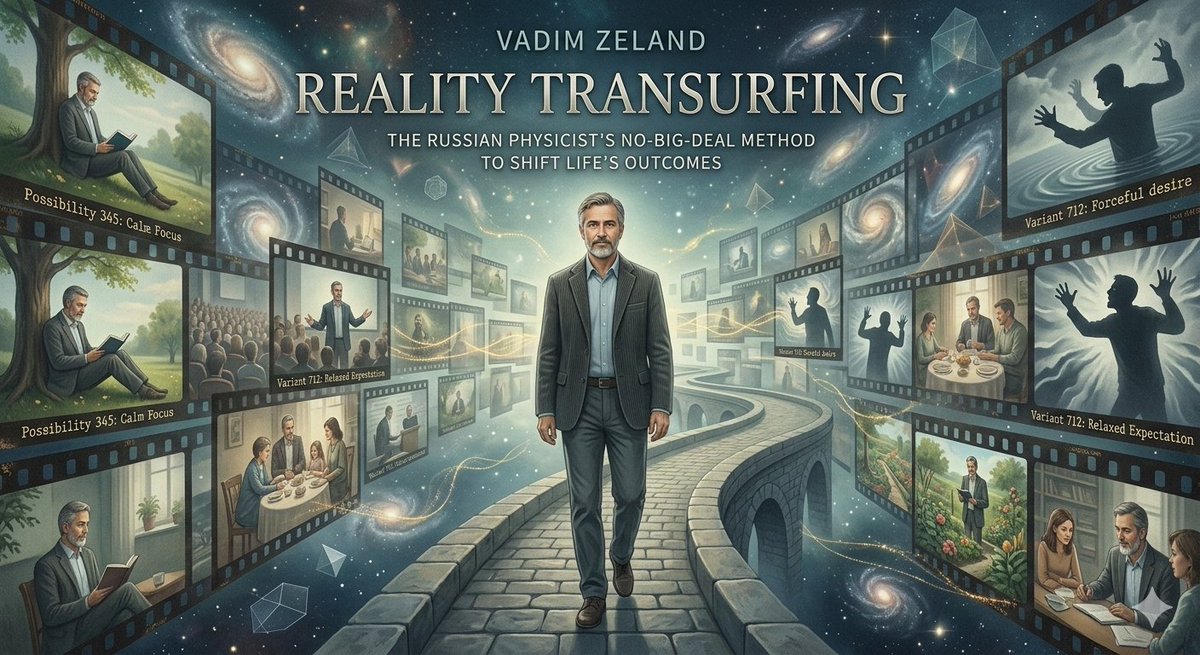
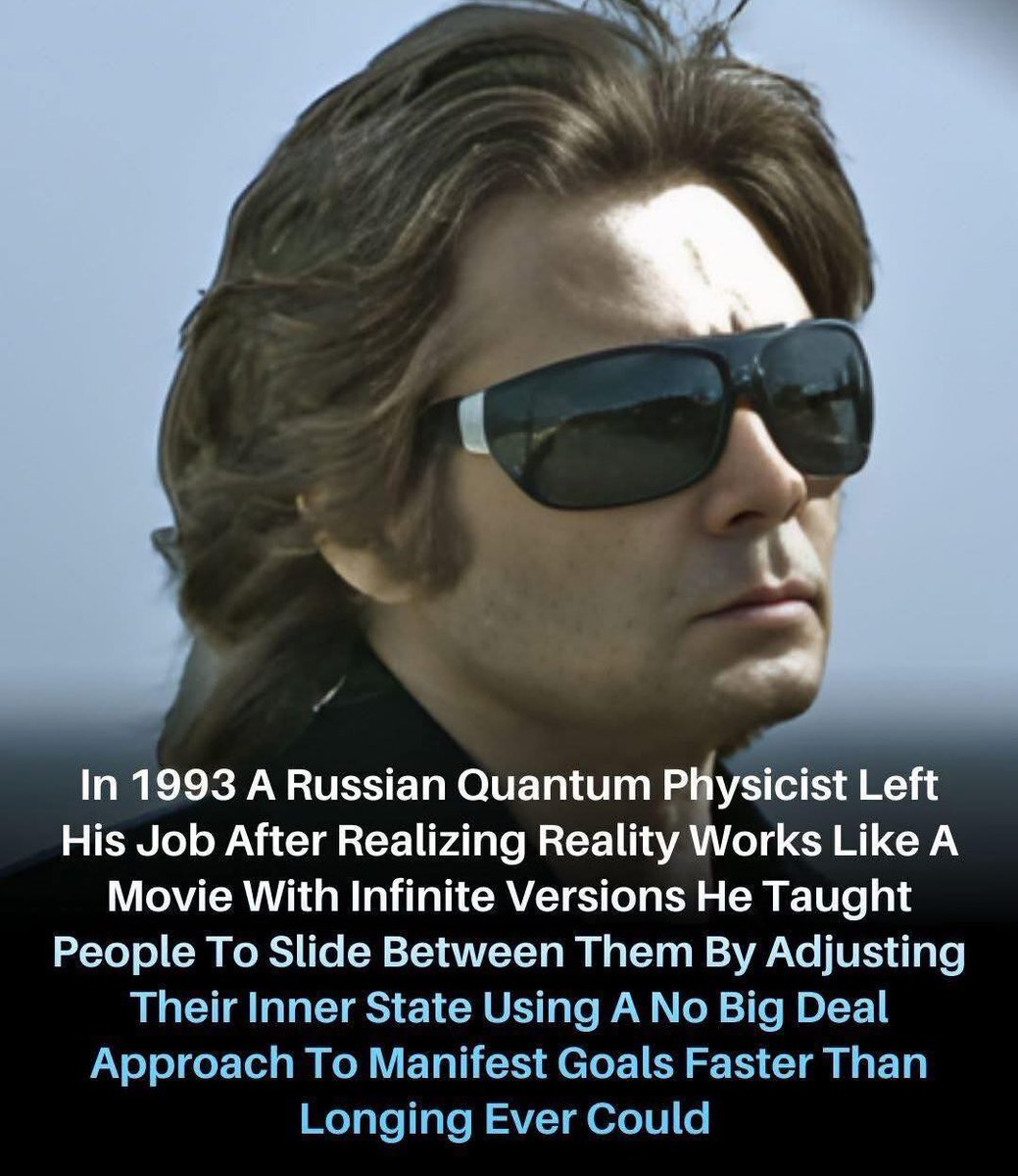
In 1993, Russian quantum physicist had a groundbreaking insight: reality is like a movie with infinite versions already filmed.
He realized that by shifting your inner state, you could “slide” between these versions and influence outcomes in your life.
His method focused on treating goals like “no big deal.” Instead of obsessively wanting something, he encouraged detachment, reducing resistance and allowing desired outcomes to manifest faster than forceful desire ever could.
The physicist taught that small internal shifts like calm focus, relaxed expectation, and confident patience align consciousness with favorable timelines. This approach helps bypass mental blocks and accelerates manifestation by harmonizing your mind with the quantum flow of possibilities.
By practicing his three-step “no-big-deal” method, anyone can experiment with sliding between realities. The technique emphasizes simplicity: acknowledge your goal, maintain a relaxed mindset, and trust that reality is already moving toward it.
This story reminds us that the universe is far stranger than it seems. Consciousness interacts with reality in subtle ways, and small mental shifts can ripple outward, showing that the way we think, feel, and focus can alter the paths available to us.
✨🙌🏾💫
This is directionally right—but too simplistic.
High failure rates don’t mean “avoid.” They mean low barrier to entry + high competition + poor operators.
The real takeaway:
Most people don’t fail because of the industry.
They fail because they enter it like amateurs.
Restaurants don’t fail because food is a bad business.
They fail because people think passion = margins.
Gyms don’t fail because fitness isn’t profitable.
They fail because owners can’t sell, retain, or differentiate.
Retail doesn’t fail because products don’t move.
It fails because people have zero brand or distribution advantage.
If you have no edge, yes—avoid these.
But if you do have one, these industries print money.
Your edge could be:
•Distribution (audience, content, network)
•Operational excellence (systems, cost control)
•Brand (people trust you before you sell)
•Skill (you’re actually top-tier, not average)
The game isn’t “pick a safe industry.”
The game is: become dangerous in any industry you enter.