The State of SEO in 2026
Great conversation with the folks at @Adsy_Com - covered nearly every major SEO topic of the year:
- Why Google doesn't know who should rank number one until you tell them
- How AI overviews moved discovery + consideration away from your website
- How optimizing for CTR can actually hurt you
- A three-layer framework Google uses to evaluate every page
- What Google's site quality patent reveals about branded search
More: https://t.co/zvLOnxdrcR
Big news for local businesses📍
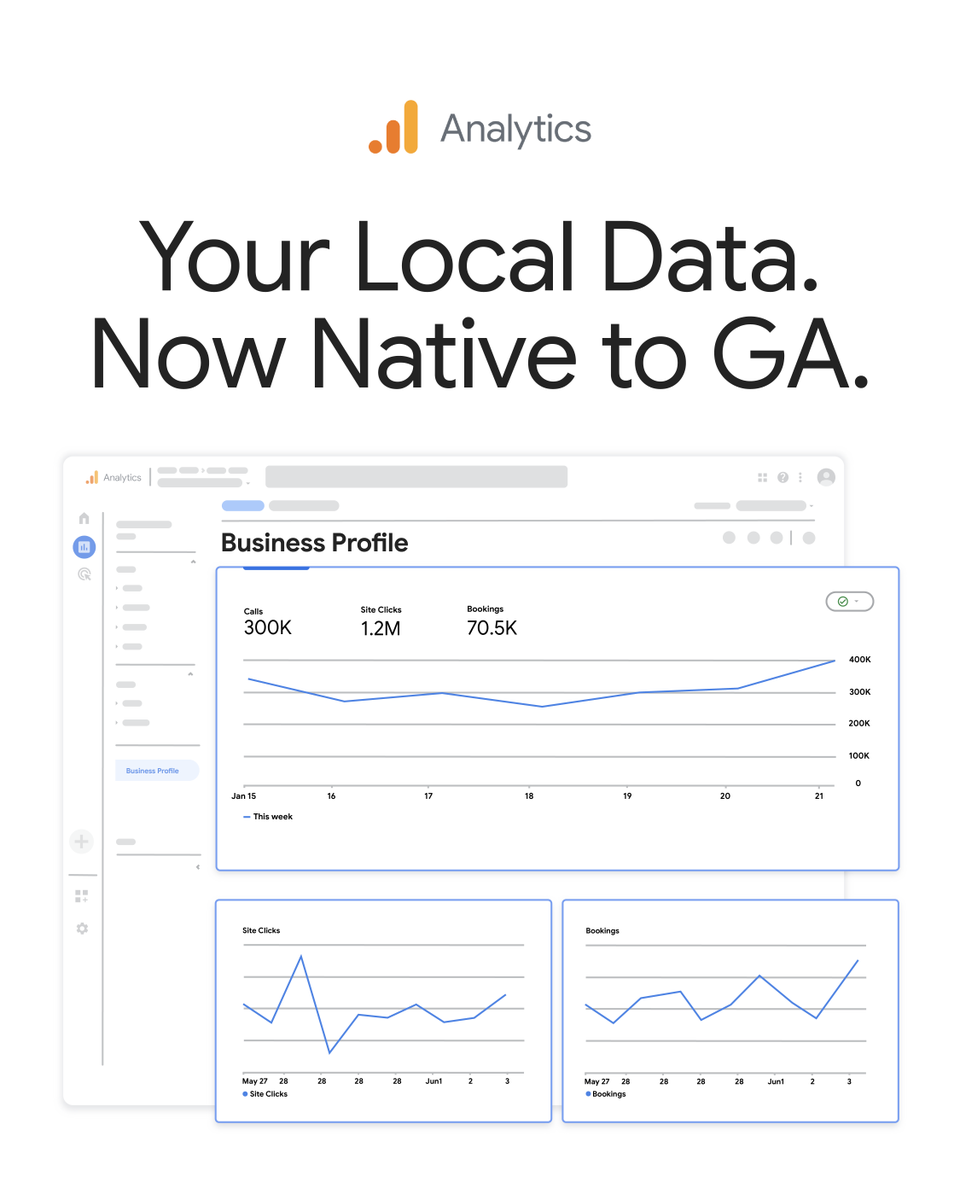
You can now link your @GoogleMyBiz Profile directly to Google Analytics 📣
Track local interactions, calls, bookings, & direction clicks right in GA for a complete, cross-channel view of your performance. Stay up to date → https://t.co/bwCGPbhyXg
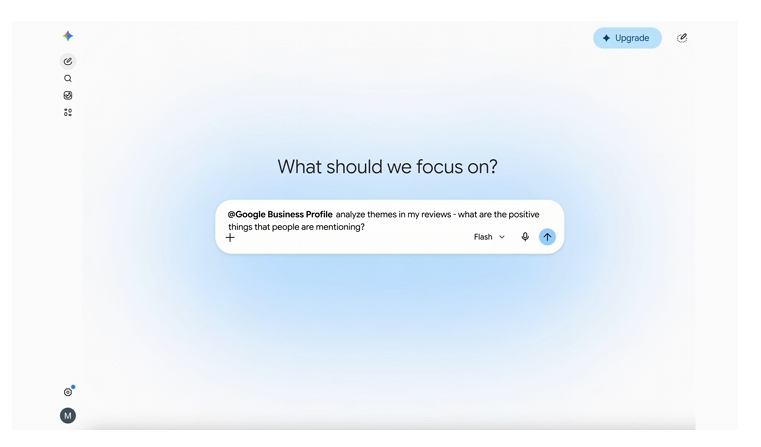
Starting soon -> Connect your Google Business Profile to Gemini
"In the coming weeks, you’ll be able to securely connect your Google Business Profile to Gemini with a single tap. Once connected, Gemini becomes an AI assistant that actually knows your business, having access to your real-world context like customer reviews, customer questions and performance data. This gives Gemini all the context it needs to provide recommendations and content that’s relevant to your business, and allows you to offload complex, time consuming tasks." https://t.co/GIf8HD99ZD
Hey @screamingfrog have you ever seen an issue with a crawl being rate limited (i.e., a 429 too many requests) that ONLY occurs when you're in list mode?
Regular crawls of a site don't get rate limited. I've even whitelisted my IP.
But a crawl of about 10k URLs in List mode gets rate limited after about 150 URLs. Even tried to use another ISP, and get the same thing.
There's something about List Mode in SF that is the issue is seems.
👀 Google is building an Audience Loyalty ecosystem - A must read analysis from Barry Adams where he shares how a common thread among many new Google features is how they enable publishers to build loyal audiences across all Google surfaces 👇
1. Preferred Sources
2. Search Profiles
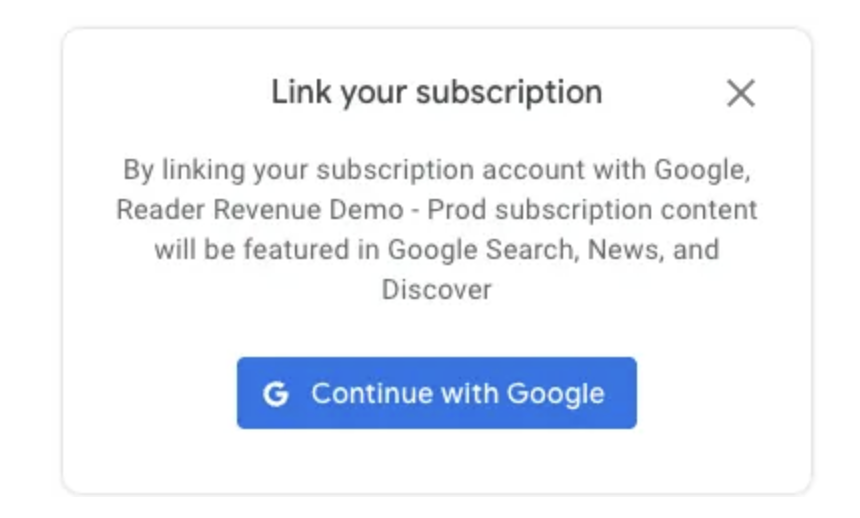
3. Subscription Linking
Not Traffic. Loyalty. Google is building an audience loyalty ecosystem.
Read more here: https://t.co/e1nxafhE2q
Ahrefs' Domain Rating (DR) API endpoint is now 100% FREE. 🔥
Now that AI lets anyone spin up their own tools and automations, the bottleneck isn't coding anymore — it's access to quality data.
And DR is one of the best shortcuts out there for sizing up how authoritative a website really is.
So we're just giving it away!
Grab it here:
https://t.co/stR5n5KF3c
New to DR?
It rates the strength of any site's backlink profile on a 0–100 scale.
More here: https://t.co/YdV3oI98Ny
Now go build something cool. 😉
👀 In 2026, Less than One Third of Google Searches Still Send a Click - Excellent research by @randfish and @Similarweb 👇 and he asks a key question: "What Can Website Owners Do to Fight Back?"
1. Replace traffic as a KPI for your digital marketing efforts.
2. Conduct audience research to find out where your audience pays attention.
3. Invest in marketing on platforms you don’t own or control. Free yourself from the goal of directly driving traffic back to your website.
More: https://t.co/cjZjrgsCWE
A little AI search hack I've been using:
Take your SEO keyword research & convert keywords into prompts for AI search within Google sheets' AI function using a prompt like this one:
=AI("You are converting a terse SEO search keyword into the natural-language query a real person would actually type or speak to an AI assistant like ChatGPT, Gemini, or a voice assistant. Rewrite the keyword as a single conversational question or request that preserves the exact search intent and intent type (informational, commercial, transactional, or local). Phrase it the way someone would genuinely ask out loud in a full sentence — not in keyword shorthand. Keep any brand, product, or location named in the keyword, but do NOT invent specifics, constraints, or details that aren't already implied. Do not answer the query. Return only the rewritten prompt as plain text — no quotation marks, no preamble, no explanation, no trailing punctuation beyond a question mark. Keyword:", A2)
NEW: The fastest Search Console MCP on the market: A full SEO report over a 4 GB dataset, generated end to end in 4.4 seconds. Try it out for free at https://t.co/ajapeWKM57 while open Beta lasts
What is an Authority Signature?
Google has a concept called “Authority Signature,” which appears in a patent that carries “Topic Authority” in its name.
The patent “Determining Topic Authority” explains that an author’s expertise, and the author’s signature on a document associated with a specific topic, can increase the topical authority of that document.
In other words, Google can evaluate not only the document and the website, but also the person-like entity behind the content.
This becomes even more interesting today because Google is reintroducing famous “authors,” “people,” and “answers” in a social-like format through Google Profiles.
Google can recognize person-like entities, gather information about them under a specific profile, and define them with expertise signals.
According to the patent, the simplified formula for Authority Signature is:
Authority Signature Update = Authorship Percentage of Author A for Topic T in Document D × Topical Weight of Topic T in Document D
For example, imagine a document covering two topics:
Topic A: 70% of the document
Topic B: 30% of the document
Three authors contributed:
For Topic A:
User X wrote 80%
User Y wrote 20%
For Topic B:
User Z wrote 100%
The authority contribution is calculated like this:
User X on Topic A: 0.80 × 0.70 = 0.56
User Y on Topic A: 0.20 × 0.70 = 0.14
User Z on Topic B: 1.00 × 0.30 = 0.30
If User X also writes 100% of Topic A in another document where Topic A has only 0.05 topical weight, User X gains an additional 0.05 authority for Topic A.
So, User X’s total authority for Topic A becomes:
0.56 + 0.05 = 0.61
This means the system does not only evaluate whether an author exists. It can also evaluate:
Which topic the author contributes to
How much of the document belongs to that topic
How much of that topical section the author actually authored
How consistently the author contributes to the same topic across different documents
This is important because the patent mainly defines topic authority for authors, not websites.
That shows an early design where authority is treated as an attribute of a person-like entity. Later, this concept can be understood together with site name, site boundary, and website segment concepts.
For example, a news website has many different authors. Each author can represent a different topical section of the website. A politics author, health author, finance author, or sports author can contribute different expertise signals to different website segments.
Thus, every author’s expertise can strengthen the topical authority of a specific website segment in a specific direction.
Topical Authority is not only about how much a website covers a topic.
It is also about who covers the topic, how consistently they cover it, and whether the system can recognize the author as a real entity with a measurable topical signature.
To learn more: https://t.co/mbivstyH1J
Winning organic in 2026: A framework for surviving Google’s AI era - My presentation from @smx Advanced 👇 thanks so much for having me!
Read: https://t.co/2FaSozjuSJ
We're launching Search profiles, a new way for publishers and creators to shape their presence on Search. Search profiles are a dedicated, shareable space to highlight content across social media, video and news platforms, and help audiences find accurate and up-to-date information about sources on Search.
New AI reporting features finally coming to GSC.
Reporting on impressions and not clicks says a whole lot here 🫠
But yes, grateful to have any AI reporting at this point 🙏🏽
https://t.co/7MWjkYuNEh
“If you’re a publisher, I don’t have any good news for you. Because Google is starting to show AI Overviews for news results too. You need to diversify your traffic.”
@iPullRank#SMXAdvanced
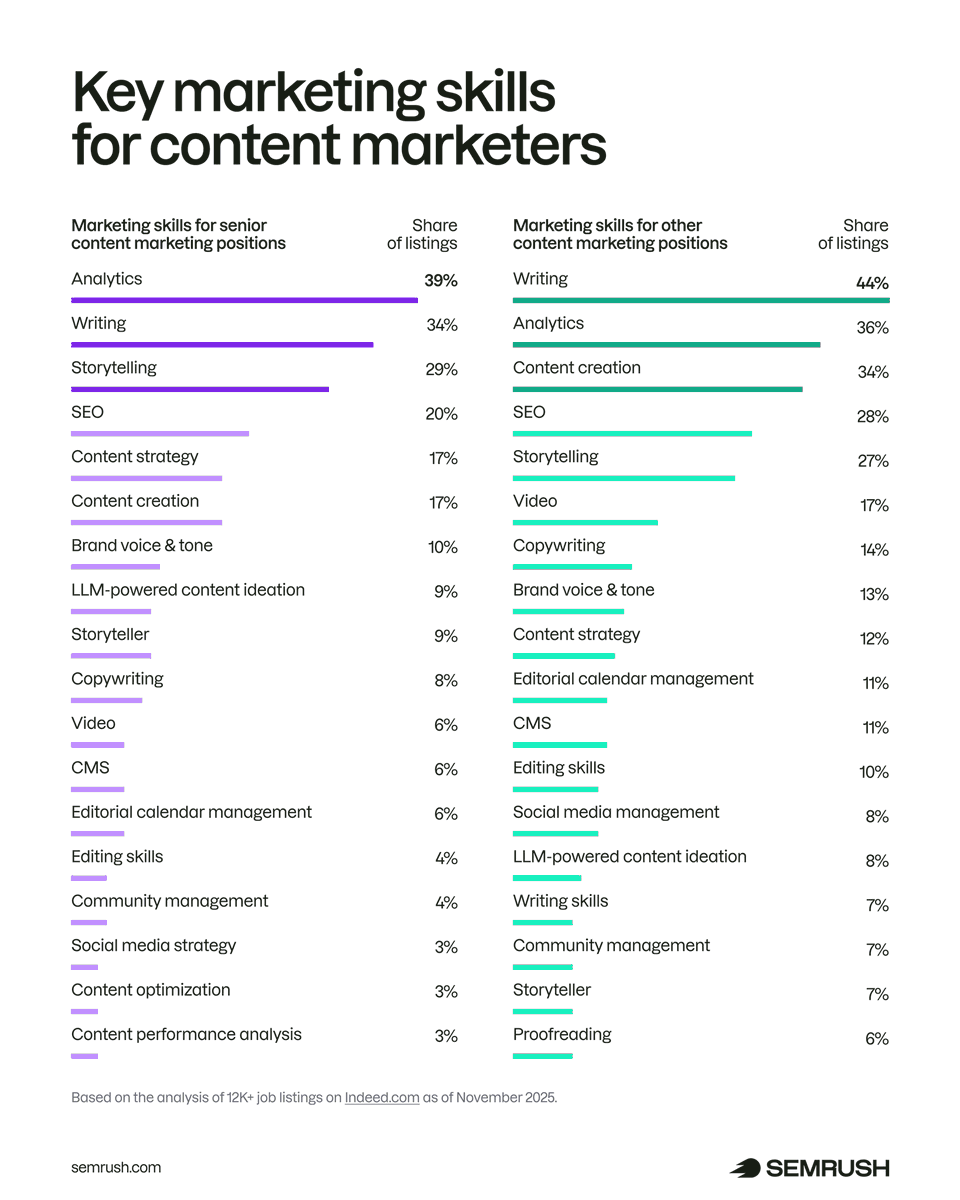
According to our study, data literacy and narrative skills are now core to high-performing content marketers.
• Analytics ranks #1 for senior roles (~40%)
• Storytelling is now a top-three skill (29%)
• Content creation is increasingly replacing pure writing (+209%)
• SEO is a baseline skill across roles
The role has evolved: create, distribute, and demonstrate impact.
Full data: https://t.co/bYcHYijmXX.