My book on the modern-day United States, its society, politics and policies, has remained among top 10 best-sellers for 10 consecutive weeks now.
It can be purchased in book stores or online.
https://t.co/YZ75xq8Lqv
https://t.co/iQzCMtgN7L
1/4 On 8–13 Nov, MGIMO Vice-Rector Dr. Vladimir Morozov and IfIS Director Dr. Maxim Suchkov @m_suchkov joined a Russian expert delegation visiting Israel at the invitation of the Embassy of Israel in Russia.
This idea that the European security architecture is somehow sacred & cannot even be discussed is ahistorical. Europe's security has changed repeatedly since the end of the Cold War
-the European Union was formalized
-NATO added new members
-the U.S. added & moved military forces
-NATO intervened in Civil Wars in the Balkans
-Russia fought several of its neighbors.
It is one thing to take issue with Moscow's specific demands but to rule out any discussion at all suggests that a set of security arrangements set up in 1990 can manage relations in a Europe that looks radically different. Talking about how to update old rules is normal & necessary.
And of course Russia should be part of that conversation. It is bizarre to say the the U.S. (Not in Europe) should have a say in Europe's security oder but Russia (in Europe) should not.
"The lesson is clear: combat power is no longer derived primarily from maneuver formations engaging in direct contact, but rather from indirect, precision fires and standoff strike capabilities." https://t.co/uxP6h7wscj
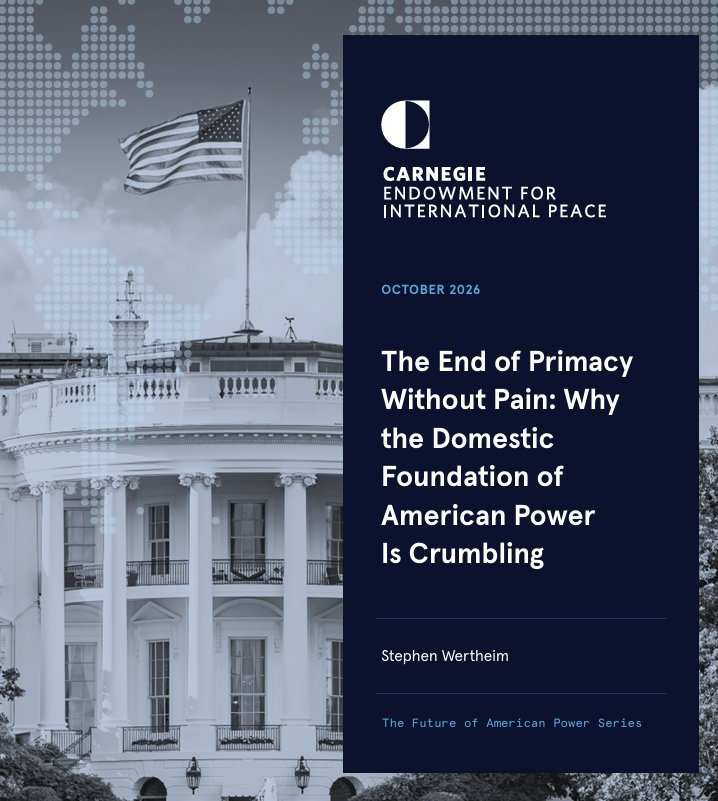
The domestic foundation of American global power is crumbling. Trump is less the cause than a symptom and an accelerant. Since the Cold War ended, the United States has pursued global primacy under an implicit bargain with the public: dominance would come cheap. Today Americans are no more willing to bear serious costs for foreign policy than they were in the 1990s. But a far more competitive world is driving up the price of upholding U.S. commitments.
No matter who wins the White House in 2028, this gap will constrain American power around the world.
In a new @CarnegieEndow paper, I trace the U.S. foreign-policy consensus from the Cold War to the present and outline three scenarios for the future:
1/3 On 5 Oct, MGIMO hosted British historian & political scientist Anatol Lieven @lieven_anatol, Director of the Eurasia Program at @QuincyInst.
He met MGIMO Rector Anatoly Torkunov for a discussion on the role of history in understanding contemporary international politics.
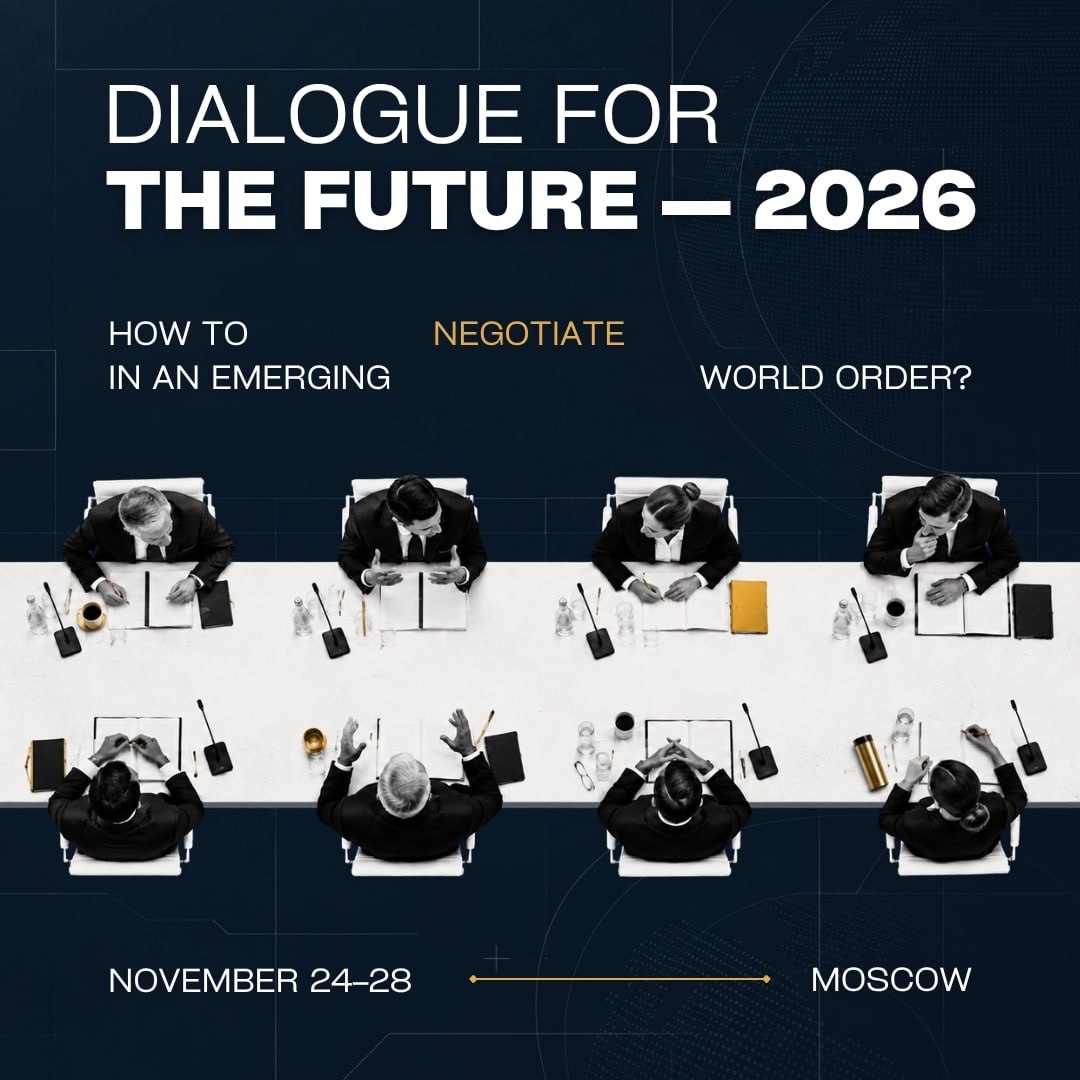
1/4 Applications are open for @Gorchakov_Fund’s “Dialogue for the Future — 2026.”
This year’s theme: “How to negotiate in an emerging world order?”
🗓 24–28 Nov | Moscow
Working languages: Russian & English (simultaneous interpretation).
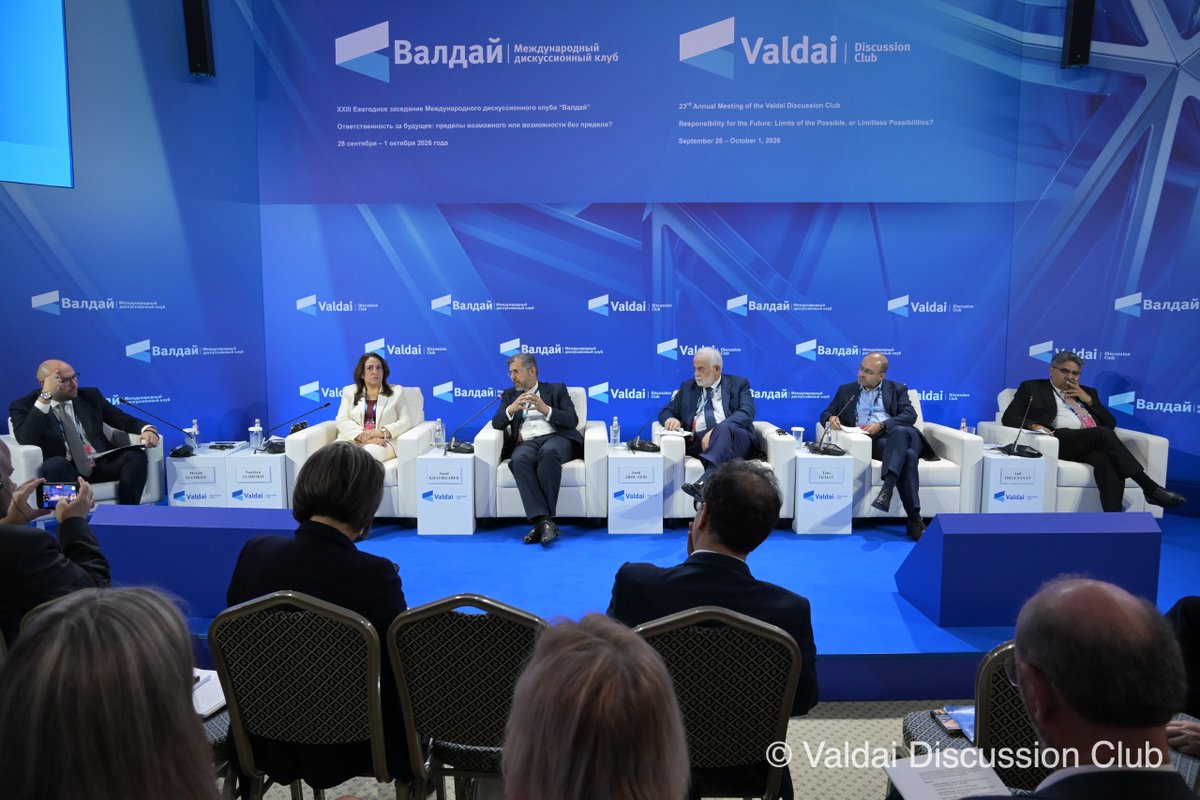
Happy to have moderated this panel on the present and future of #MiddleEast - lots of interesting insights on rising tensions b/n #Turkey & #Israel, nuclear (non)proliferation in the tegion and crisis over #Iran.
📷 The second day of the Valdai Club’s 23rd Annual Meeting was completed by the special session, titled “The Middle East: Neither Carrot nor Stick. The Intractable Contradictions of a Boiling Region”
Photo gallery — https://t.co/y4T5Z64iH7
#valdai2026
So, I wrote a report, and it got a lot of feedback.
I hoped the report would open a wider debate on posture and strategy in Asia. It did that, so in that spirit, I will respond to some of the common criticisms.
They are grouped into four categories: security, economics, questions about American decline, and questions about my personal motivations/loyalties. 🧵
(1) Security.
One area of disagreement is over what kind of U.S. military presence is required to maintain a balance of power in Asia that protects U.S. interests. In part, this depends on how those interests are defined. I define them narrowly. People can disagree with that, but the military requirements I specify are based on that narrow definition.
Critics of my paper argue that the only way to maintain the necessary balance of power is to protect the status quo, preserve U.S. security guarantees and keep posture unchanged. I disagree. Countries like Japan and South Korea are strong and wealthy. There is no reason to believe that they cannot build the capabilities to deter aggression against them over the timeline outlined in my report, which is 5-10 years. They benefit from favorable geography and access to advanced technology. They can choose to spend the required resources and generate the necessary industrial production.
“Moscow continues to punch above its weight because it is navigating a fragmented, unpredictable world that plays to its strengths,” writes Andrey Kortunov. “The downside risk for Russia is that today’s turmoil and uncertainty may not last.”
https://t.co/0b0QuxgBOC
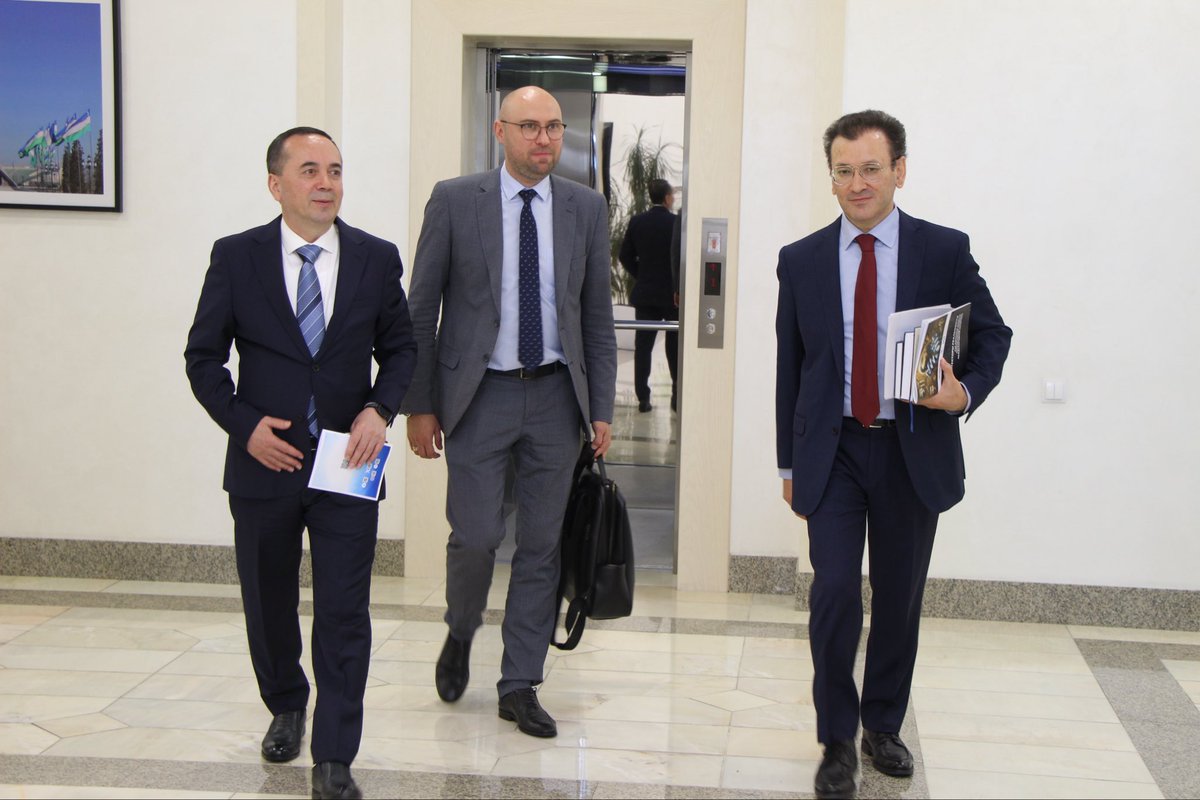
Glad to meet with Dr. Maxim Suchkov (@m_suchkov), Director of the Institute for International Studies at the Moscow State Institute of International Relations (@mgimo_iis, @mgimo_en, @mgimo, @mfa_russia), here at The International Institute for Central Asia (@IICAinTashkent) today.
We talked about where our two organizations could work together — joint research, expert exchanges, and the kind of sustained dialogue that keeps analysis on both sides grounded in what the other is actually thinking.
Look forward to taking these ideas forward.
@bgsu@FareedZakaria@wrmead 15/ PART IV.
3)AI & "tech monarchs": the fate of the humankind.
4)Nostalgia for a Golden Age: why America of 50s can't be revived.
In sum, the idea was to present to RUS a picture of modern-day America in all its complexity & to trigger further interest for the phenomenon.
END.
My book on the modern-day United States, its society, politics and policies, has remained among top 10 best-sellers for 10 consecutive weeks now.
It can be purchased in book stores or online.
https://t.co/YZ75xq8Lqv
https://t.co/iQzCMtgN7L
@bgsu@FareedZakaria@wrmead 14/ PART IV. "Revival, Decline, Adaptation: How to Survive and Preserve Greatness in the World of Tomorrow"
1) Environmental issues – why Americans worry so much about it and when it became such a political issue
2) How to win the battle for the future with China.