Pré-vendas, IDOs e ICOs sempre foram um dos meus principais interesses no mundo cripto. Inclusive, foi por meio deles que entrei no DeFi ainda em 2020. Como tudo naquela época, quem soube aproveitar no começo ganhou muito dinheiro; quem chegou atrasado provavelmente levou prejuízo. Após um bom tempo no ostracismo, as launchpads voltaram com tudo neste ciclo. E, como toda narrativa no mundo Web3, você precisa saber surfar a onda.
Esta semana tivemos duas grandes pré-vendas. Na minha opinião, ambas trazem boas oportunidades: uma com alocação garantida, mas retornos menores; a outra com potencial maior, porém sem garantia de alocação. Vou tentar aqui fazer uma análise não sobre os projetos — já que está tarde para entrar em ambos —, mas sobre as especificidades de cada plataforma e como você pode aproveitar as próximas oportunidades.
A primeira pré-venda foi na @buidlpad. Para quem me segue, já deve ter entendido bem como funciona essa plataforma. Em resumo: se você for aprovado no KYC e na pré-venda do projeto, terá alocação garantida — embora não fixa, dependendo da demanda e do valor que o projeto pretende arrecadar.
Utilizando o último projeto lançado por eles, a @MMTFinance, houve várias regras de alocação: partindo de uma base de US$ 2 mil até um teto de mais de US$ 20 mil, com dois tipos de FDV dependendo dos requisitos da plataforma. A pré-venda fechou hoje às 8h da manhã, arrecadando cerca de US$ 82 milhões, com excesso de contribuições de aproximadamente 1.839%. Nesse caso, a conta é simples: se você entrou na pré-venda e não conseguiu alocação garantida, basta dividir sua contribuição por 18,39 para obter o valor final da sua alocação.
A outra pré-venda, ainda mais badalada, é da @megaeth, lançada pela @echodotxyz. Ela ainda está em andamento, mas era necessário ter feito o KYC no período de subscrição. As vendas vão até o dia 30 deste mês, às 1h UTC (10h no horário de Brasília).
Essa pré-venda é mais simplificada: se você passou no KYC, está automaticamente apto a dar um lance no projeto, no estilo de leilão inglês — começa com um FDV bem baixo e vai subindo conforme os lances são ofertados. Diferente dos leilões tradicionais, aqui há um teto: US$ 999 milhões de FDV. Os lances podem variar entre US$ 2.650 e US$ 186.282, segundo a equipe do projeto. Ninguém receberá menos que o lance mínimo.
Caso haja excesso de subscrições, um mecanismo especial de alocação será utilizado. Informações adicionais sobre lances e perfil (redes sociais, GitHub, endereços de carteiras adicionais etc.) que demonstrem envolvimento anterior nas comunidades MegaETH e Ethereum ajudarão a determinar sua alocação.
Quem optar por bloquear os tokens por 1 ano terá 10% de desconto e isso também pode melhorar a alocação. Espero que tenha ficado clara a distinção entre as plataformas. Além dessas, temos a @legiondotcc, que recentemente fez parceria com a corretora @krakenfx e já lançou projetos bem interessantes. A @KaitoAI também tem uma ferramenta nesse sentido e potencial para ótimos lançamentos.
Finalizando: estudem cada projeto lançado nas principais plataformas de lançamento. Muita coisa interessante pode acontecer ainda este ano e, principalmente, no próximo. Muitos projetos podem não render um bom airdrop, mas oferecem excelente oportunidade de pré-venda para quem os farmou (Lombard foi um exemplo disso). E lembrem-se: nem só de airdrop vive um farmer!
Mas essa comparação nunca fez sentido, familia é um núcleo inversamente proporcional a empresa, visto que quando se perde um membro da família, quanto mais importante ele for, mais insubstituível a figura dele se torna, ja na empresa, quanto melhor e mais importante para a empresa for um funcionário, mas necessário será a sua substituição, ninguém vai deixar um cargo importante vago por consideração a alguém que nem faz mais parte da equipe...
@0xSopranoFi Lançaram na Upbit e a Binance lançou nos perpétuos, mas como tem muita gente usando a mesma estratégia, a taxa de financiamento ta bem alta e pode ter um shortaqueeze pesado
Bryan (CEO da LayerZero) respondeu o post longo da Kelp e disse que muita coisa lá é falsa.
Ate onde eu entendi, os principais pontos que ele cita na postagem sao:
👉O Kelp começou usando a configuração padrão da LayerZero (multi-DVN, que é mais segura e força você configurar manualmente).
👉 Só depois eles mudaram sozinhos para o 1/1 (uma única verificação).
Quase todo o volume que usava 1/1 era do rsETH deles. Os outros projetos quase não usavam.
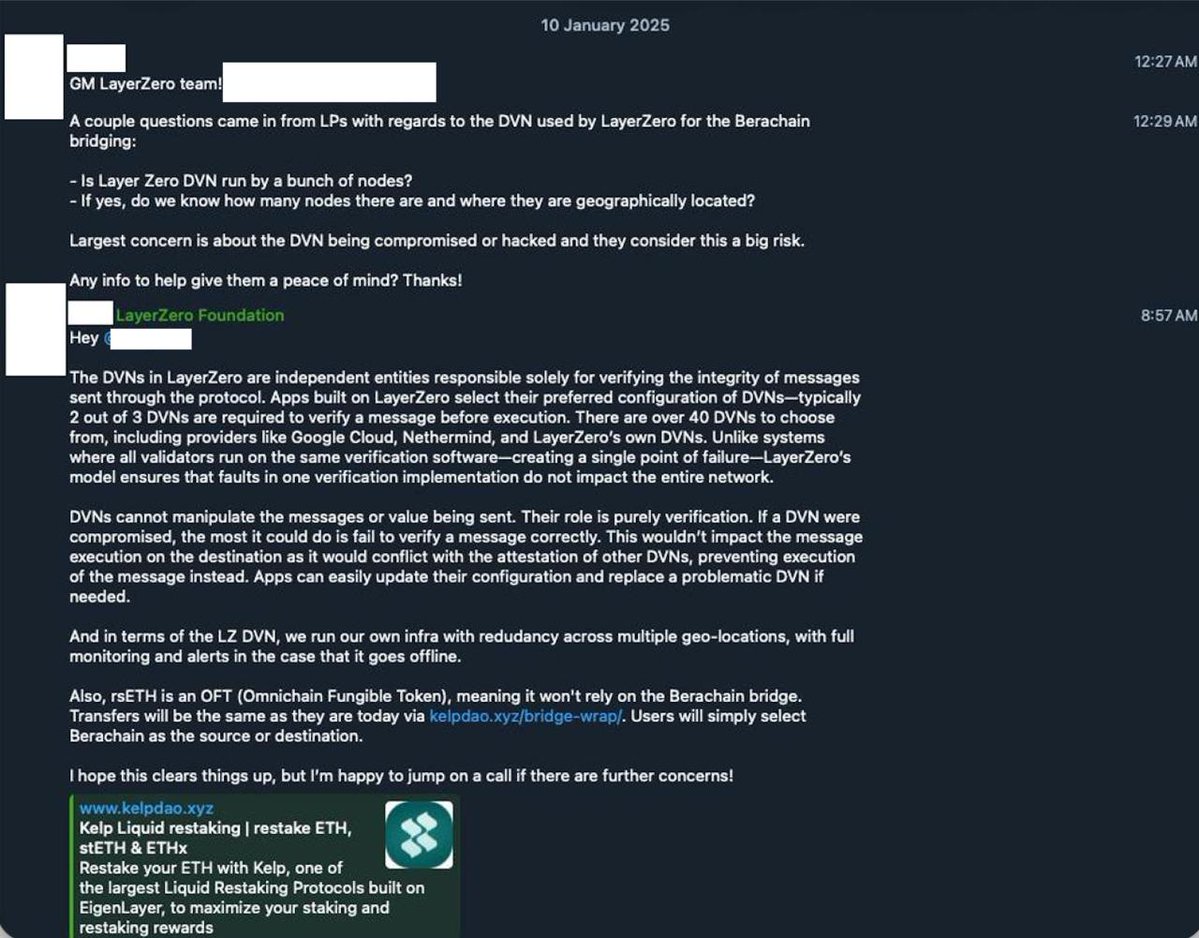
👉A documentação da LayerZero avisa várias vezes (tem prints): “Não use só 1 DVN em produção”
“Use mais de um DVN pra ser seguro”
👉Eles ainda mostraram mensagens antigas onde a LayerZero recomendou pro Kelp usar 2 ou 3 DVNs.
👉Resumo final:
O Kelp escolheu manualmente a configuração mais fraca, mesmo sendo avisado. A LayerZero vai publicar o post-mortem completo em breve com todas as provas.
Esse hack da Kelp ainda vai dar muito pano pra manga, desde o dia do acontecido praticamente todos os envolvidos estão trocando acusações, enquanto isso, o usuário final que foi o verdadeiro prejudicado, espera o desenrolar da novela que pelo que parece, vai ser longa...
A ton of this is just completely untrue.
1) Kelp originally used the defaults which were MultiDVN or DeadDVN and manually migrated to a 1/1 config later
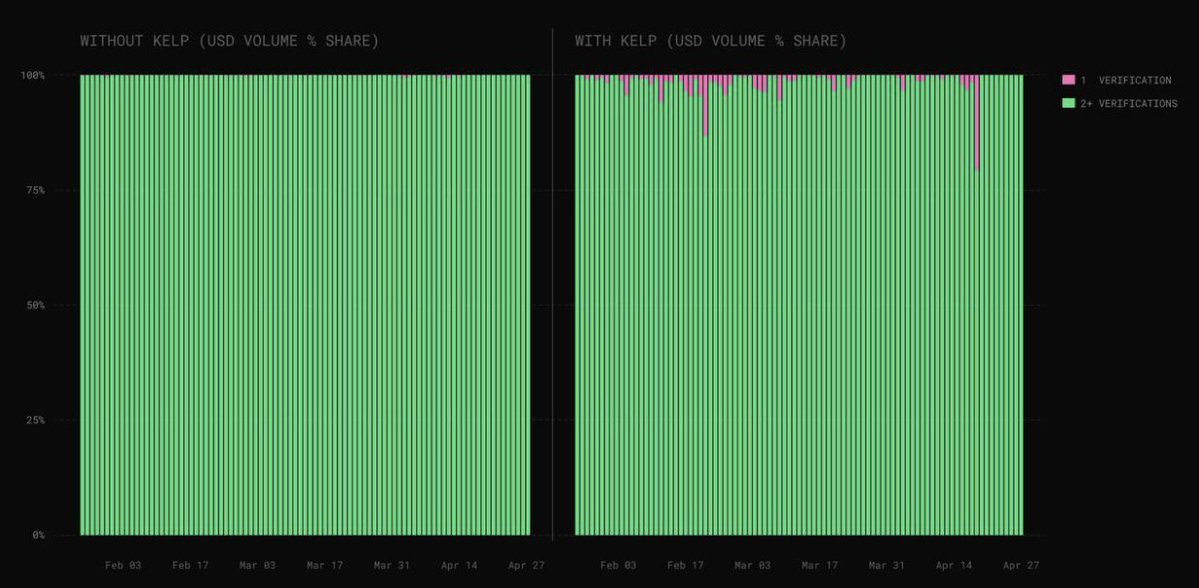
2) Almost 100% of the volume on a 1/1 config was rsETH
3) Not using a 1/1 for production applications is mentioned many times in the documentation.
The defaults Kelp is referencing in their screenshot were multiDVN or DeadDVN, which force-rejects an application using the defaults at all and requires them to manually set configuration.
rsETH was originally configured to use the default LayerZero configuration of a multiDVN setup of LayerZero Labs + Google:
Here are the exact transactions where that happens
Ethereum → Arbitrum:
https://t.co/C2uCxmpBCX
at 2024-02-06 03:09:47 UTC
Ethereum → Optimism:
https://t.co/vuQWxeyUUA
at 2024-02-06 03:09:59 UTC
KelpDAO then manually changed these to 1/1 configs:
For the original Feb 6 Ethereum routes to Arbitrum/Optimism, KelpDAO’s Ethereum contract switched from defaults to manual OApp-scoped config on 2024-04-01:
Send-side manual config:
https://t.co/HKCE8C8n7F
2024-04-01 07:12:11 UTC
Receive-side manual config:
https://t.co/FZTiol0qAp
2024-04-01 07:12:23 UTC
From this point on, Kelp began deploying all of their configurations as 1/1 configs. Here is Kelp’s deployment on Unichain:
Unichain → Ethereum was opened on 2025-04-01 18:55:41 UTC.
Pathway-open / setPeer tx:
https://t.co/0MlFpIxCfA
The manual ULN config followed 6 seconds later in https://t.co/0di0j78zYc.
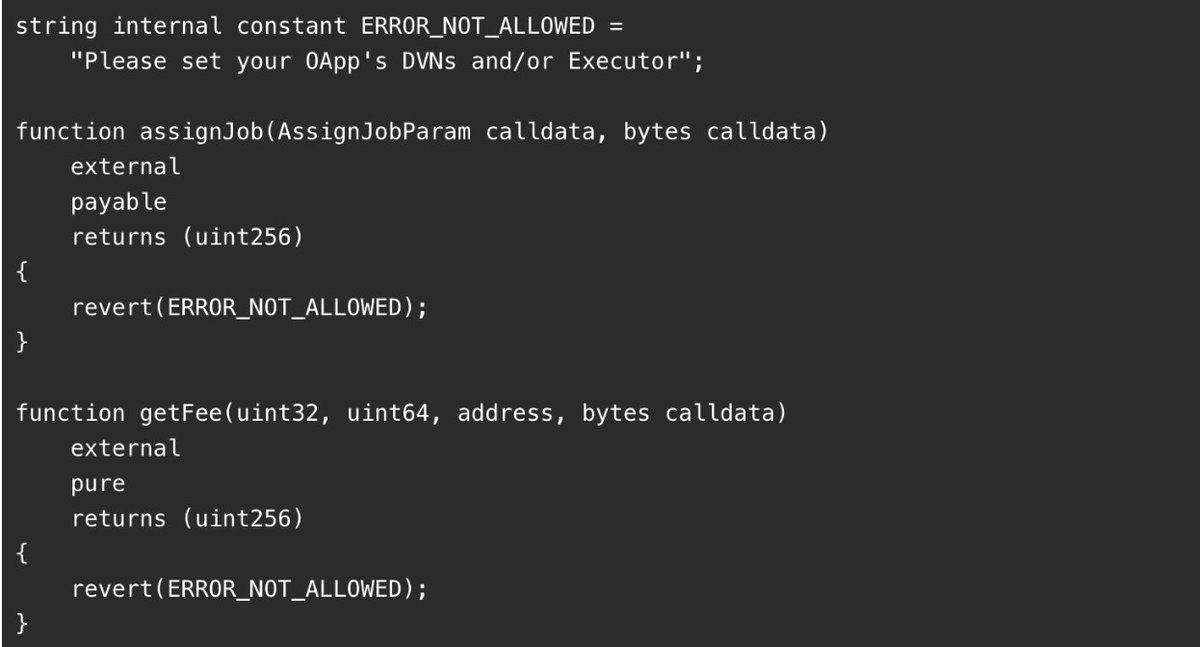
During this time the Unichain -> Ethereum and Ethereum -> Unichain defaults were set to DeadDVN which is a contract which makes it impossible for any application to transact without manually configuring their DVNs, this was not possible on the defaults of this pathway.
Here is the code in the DeadDVN (https://t.co/mAge3W6NhP) that specifically prohibits this.
(Screenshot 1)
This is called out many many times in the docs:
1. Integration Checklist — "Do" list
- Last edited: 2025-11-26 (Nazreen)
- Content: "Do: … Use more than one DVN for each production pathway instead of relying on a single DVN."
- File: v2/tools/integration-checklist.mdx:244
- URL: https://t.co/h9GHby9ynE
2. Integration Checklist — "Don't" list
- Last edited: 2025-11-26 (Nazreen)
- Content: "Don't: … Configure only one DVN for a pathway and treat it as production‑ready."
- File: v2/tools/integration-checklist.mdx:251
- URL: https://t.co/h9GHby9ynE
3. Integration Checklist — Defaults are not safe
- Last edited: 2025-09-25 (Tino Martínez Molina)
- Content: "Do not assume defaults are safe for production. Always check explicitly: getSendLibrary, getReceiveLibrary, and getConfig. If these resolve to defaults, confirm whether the defaults are valid for the intended pathway. Unintentional fallbacks to defaults are a common cause of blocked or failing pathways."
- File: v2/tools/integration-checklist.mdx:126-128
- URL: https://t.co/a6SdjYCbOu
4. Integration Checklist — Default fallback warning
- Last edited: 2026-02-26 (migration; same wording predates it)
- Content: "Warning: If no configuration is set, the OApp will fallback to the default settings set by LayerZero Labs."
- File: v2/tools/integration-checklist.mdx:222-238
- URL: https://t.co/h9GHby9ynE
5. ONFT Quickstart — Production guidance
- Last edited: 2025-02-20 (Radek Sienkiewicz)
- Content: "DVN Settings: Use multiple DVNs in production to ensure message verification is robust."
- File: v2/developers/evm/onft/quickstart.mdx:700
- URL: https://t.co/b8nO2yrEiX
6. ONFT Quickstart — Strong recommendation to configure
- Last edited: 2025-03-10 (Radek Sienkiewicz)
- Content: "We strongly recommend reviewing these settings carefully and configuring your security stack according to your needs and preferences."
- File: v2/developers/evm/onft/quickstart.mdx:366
- URL: https://t.co/WcNuXHLbiG
7. Starknet FAQ — "Should I use multiple DVNs?"
- Last edited: 2026-01-21 (Nazreen)
- Content:
▎ Should I use multiple DVNs?
▎ Recommended for production. Multiple DVNs provide:
▎ - Increased security (multiple independent verifiers)
▎ - Resilience (no single point of failure)
▎ - Trust minimization
- File: v2/developers/starknet/troubleshooting/faq.mdx:290-296
- URL: https://t.co/vtSZUFLZPJ
Here are the exact recommendations we gave KelpDAO when asked about DVNs (typically 2/3)
(Screenshot 2)
Other LayerZero applications speaking on exactly what is advised by the team
https://t.co/0ulWmlTZ2y
https://t.co/vQ2B8YQrw9
For how much volume was actually configured on 1/1 here is the exact data.
(Screenshot 3)
We will publish a complete post-mortem as soon as the external security firms have completed it.
Brian Armstrong mandando email pra demitir 14% da Coinbase: 'AI tá revolucionando tudo, time! Vamos virar lean, AI-native e com pods de 1 pessoa só'.
Traduzindo: 'Robôs fazem em 1 dia o que vocês faziam em semanas... e não pedem aumento nem férias. Tchau, humanos! Toma 16 semanas de salário e boa sorte no próximo ciclo 'Clássico: o futuro é brilhante... se vocêfor uma IA."
This is an email I sent earlier today to all employees at Coinbase:
Team,
Today I’ve made the difficult decision to reduce the size of Coinbase by ~14%. I want to walk you through why we're doing this now, what it means for those affected, and how this positions us for the future.
Why now
Two forces are converging at the same time. We need to be front footed to respond to both.
First, the market. Coinbase is well-capitalized, has diversified revenue streams, and is well-positioned to weather any storm. Crypto is also on the verge of the next wave of adoption, with stablecoins, prediction markets, tokenization, and more taking off. However, our business is still volatile from quarter to quarter. While we've managed through that cyclicality many times before and come out stronger on the other side, we’re currently in a down market and need to adjust our cost structure now so that we emerge from this period leaner, faster, and more efficient for our next phase of growth.
Second, AI is changing how we work. Over the past year, I’ve watched engineers use AI to ship in days what used to take a team weeks. Non-technical teams are now shipping production code and many of our workflows are being automated. The pace of what's possible with a small, focused team has changed dramatically, and it's accelerating every day.
All of this has led us to an inflection point, not just for Coinbase, but for every company. The biggest risk now is not taking action. We are adjusting early and deliberately to rebuild Coinbase to be lean, fast, and AI-native. We need to return to the speed and focus of our startup founding, with AI at our core.
What this means
To get there, we are not just reducing headcount and cutting costs, we’re fundamentally changing how we operate: rebuilding Coinbase as an intelligence, with humans around the edge aligning it. What does this mean in practice?
- Fewer layers, faster decisions: We are flattening our org structure to 5 layers max below CEO/COO. Layers slow things down and create coordination tax. The future is small, high context teams that can move quickly. Leaders will own much more, with as many as 15+ direct reports. Fewer layers also means a leaner cost structure that is built to perform through all market cycles.
- No pure managers: Every leader at Coinbase must also be a strong and active individual contributor. Managers should be like player-coaches, getting their hands dirty alongside their teams.
- AI-native pods: We’ll be concentrating around AI-native talent who can manage fleets of agents to drive outsized impact. We’ll also be experimenting with reduced pod sizes, including “one person teams” with engineers, designers, and product managers all in one role.
In short: AI is bringing a profound shift in how companies operate, and we’re reshaping Coinbase to lead in this new era. This is a new way of working, and we need to leverage AI across every facet of our jobs.
To those who are affected
I know there are real people behind these decisions — talented colleagues who have poured themselves into this company and our mission. To those of you who will be leaving: thank you. You’ve helped build Coinbase into what it is today, and I am sincerely grateful for everything you've done.
All impacted team members will receive an email to their personal account in the next hour with more information, and an invitation to meet with an HRBP and a senior leader in your organization. Coinbase system access has been removed today. I know this feels sudden and harsh, but it is the only responsible choice given our duty to protect customer information.
To those affected, we will be providing a comprehensive package to support you through this transition. US employees will receive a minimum of 16 weeks base pay (plus 2 weeks per year worked), their next equity vest, and 6 months of COBRA. Employees on a work visa will get extra transition support. Those outside of the US will receive similar support, based on local factors and subject to any consultation requirements.
Coinbase prides itself on talent density. Our employees are among the most talented people in the world, and I have no doubt that your skills and experience will be highly sought after as you pursue your next chapters.
How we move forward
To the team that is staying, I know this is a difficult day. We’re saying goodbye to colleagues and friends you've been in the trenches with. But here’s what I want you to know as we move forward together:
Over the past 13 years, we have weathered four crypto winters, gone public, and built the most trusted platform in our industry. We’ve made it this far by making hard decisions and by always staying focused on our mission. This time will be no different – nothing has changed about the long term outlook of our company or industry. And most importantly, our mission has never been more important for the world. Increasing economic freedom requires a new financial system, and we’re building it.
The Coinbase that emerges from this will be more capable than ever to achieve our mission.
Brian
Past days has been extremely hardcore for our team and DeFi in general. DeFi went trough a substantial stress test and the consequences were felt. It definitely was the hardest couple of weeks that I experienced in my life and during the past decade building in the space. I am still writing this with couple of hours of sleep per day so bear with me.
For me personally, the rsETH bridge incident was unfortunate as our team and community has put so much effort into securing the protocol and seeing the exploit happening outside of the protocol smart contracts, and affecting the markets is hard to watch even when the markets had (and still have) full backing like Mainnet Core. That being said, Aave has seen multiple market/credit cycles and always has been able to prove its resiliency. I have more confidence in DeFi today than ever, not because of the industry is stepping up and improving security practices, but because there is a true community behind DeFi that is willing to help and do whatever it takes to ensure our space has future.
I want to say that during all this madness there were lot of people that were extremely supportive and proactive to mitigate any issues and contagion. At the first glance, from Aave's perspective we were positive that we would find a resolution and we had overall balance sheet, protocol revenue and external/public support to over come the issue from Aave's perspective but what we understood is that the issue was beyond Aave. It was about restoring the whole state of DeFi, avoid contagion and ensuring that the whole ecosystem overcome this incident not solely Aave.
DeFi United started as an initiative from DeFi protocols that were affected but eventually became an industry wide movement to save DeFi and bring protocols together. I am grateful for all the contributions and support that everyone has been providing and can say that this wouldn't be possible without it. I'd hope that DeFi United becomes a permanent movement in some shape or form with the right form factor. DeFi United was executed at insane speed and other constraints but there could be a model that could continuously support the industry from the unexpected.
I'd say during the past week lot of people stood up and I really don't have the space to mention everyone (you know who you are) but specifically I want to say that @MikeSilagadze deserves more respect from the space than anyone else atm, he went above and beyond and was willing to sacrifice a lot to solve what actually wasn't something cause by his efforts. Full respect.
@LidoFinance team also deserve special credit, this team truly cares about DeFi and was extremely helpful along the way. They deserve full credit.
@gdog97_ deserves credit as well, who helped to brainstorm various solutions and also stepping in with Ethena and helping on coordination.
@arbitrum community for doing the right thing and rescuing the funds from the bridge contract that was a difficult but the right call.
@Mantle_Official@Bybit_Official team for stepping up as well and showing strong support. The team has been supportive and truly cares about making the space safe.
Last but not least lot of credit goes to @ethereumJoseph who really stepped in to help DeFi and the ecosystem. Joe cares about Ethereum, he cares about DeFi and understand the importance of DeFi for the future of Ethereum.
We have truly good people within our community.
These folks are true guardians of our space (among others on my long list) that really want DeFi to win.
I feel very optimistic now about our space, it is true that events like these can be a setback but in reality it builds resiliency, which our space stands for, and over time that is hard to beat by legacy systems.
The past week we had to operate in multiple different constraints from time, information, resources, governance and other. We had to move as fast as we could as time was against us. It was a large coordination effort that we haven't experienced so far. I'd like to give most of this credit to our team and community especially @Token_Logic and @LlamaRisk who went also above and beyond to find resolutions and coordinate.
There has been some banter about right type of market structure for onchain lending between shared or isolated pools but the reality is that when capital moves, it moves at scale and market structures are less of a mitigating factor. These kinds of times require to find solutions fast and reestablish the trust in the markets and the technology, that's whats important.
All this being said there are some great learnings from this indecent like from any incident and we as any other team involved will share a post mortem and steps to improve anti-fragility. I might be now less bullish on onchain lending as infrastructure and more leaning towards a model where the market structures need to be backed by strong balance sheets and risk transfers, however this is another discussion for the future as issues can stem outside of the protocol's control.
Now as the markets on Ethereum mainnet Core are restoring, our team continues to execute the technical plan to restore rest all the markets.
Thank you for everyone who has been supportive and we will keep you up to date as we progress.
DeFi United.
@LucasBaia98@solsticefi Na minha visão eles estão fazendo tudo certo ATÉ AGORA, o que não significa que não podem cagar daqui pra frente, ou que o lançamento vai ser bom para todos.
Podem reclamar a vontade, mas a taxa para registro do airdrop da @solsticefi foi uma das ferramentas antisibyl mais bem sucedidas dos últimos tempos, o farm caiu de 1.4mi para 15k de carteiras!
@LucasBaia98@solsticefi Se a pessoa farma qualquer coisa que uma taxa de 8 dol ameaçe a sua alocação, definitivamente não foi um farm que valeu a pena...
@KaelKenner@ZattarRafael Dos que estão saindo atualmente vale mesmo kkkkkkkkkk
Eu gastava uns 150 pila por mês com streamings que a cada dia ficava mais bosta, aumentando valor, colocando propaganda e os caralho, cancelei tudo, agora gasto isso por ano e agora tenho ainda mais conteúdo...
@fabiocatalao_ Poderia montar pow, a maioria das comparações são muito simplórias e não levam em conta as particularidades de cada plataforma, seria interessante ter dados mais precisos, mas realmente não deve monetizar nada mesmo não kkkkkkkkkk
A questão é que Twitter é timeline, você meio que é obrigado a ver posts mesmo que nem se interesse, a quantidade de posts que alguem visualiza por dia é infinitamente maior do que de videos que um usuário médio do youtube visualiza, aqui tem o fator compartilhamento tambem, que faz você ver o conteúdo por meio de terceiros, no YouTube, la depende mais do algoritmo entregar.
Tem a questão tambem da propaganda ser bem mais eficaz no youtube do que aqui, já que é uma plataforma que o apelo visual é bem mais forte, enfim, pra mim são variáveis muito distintas.
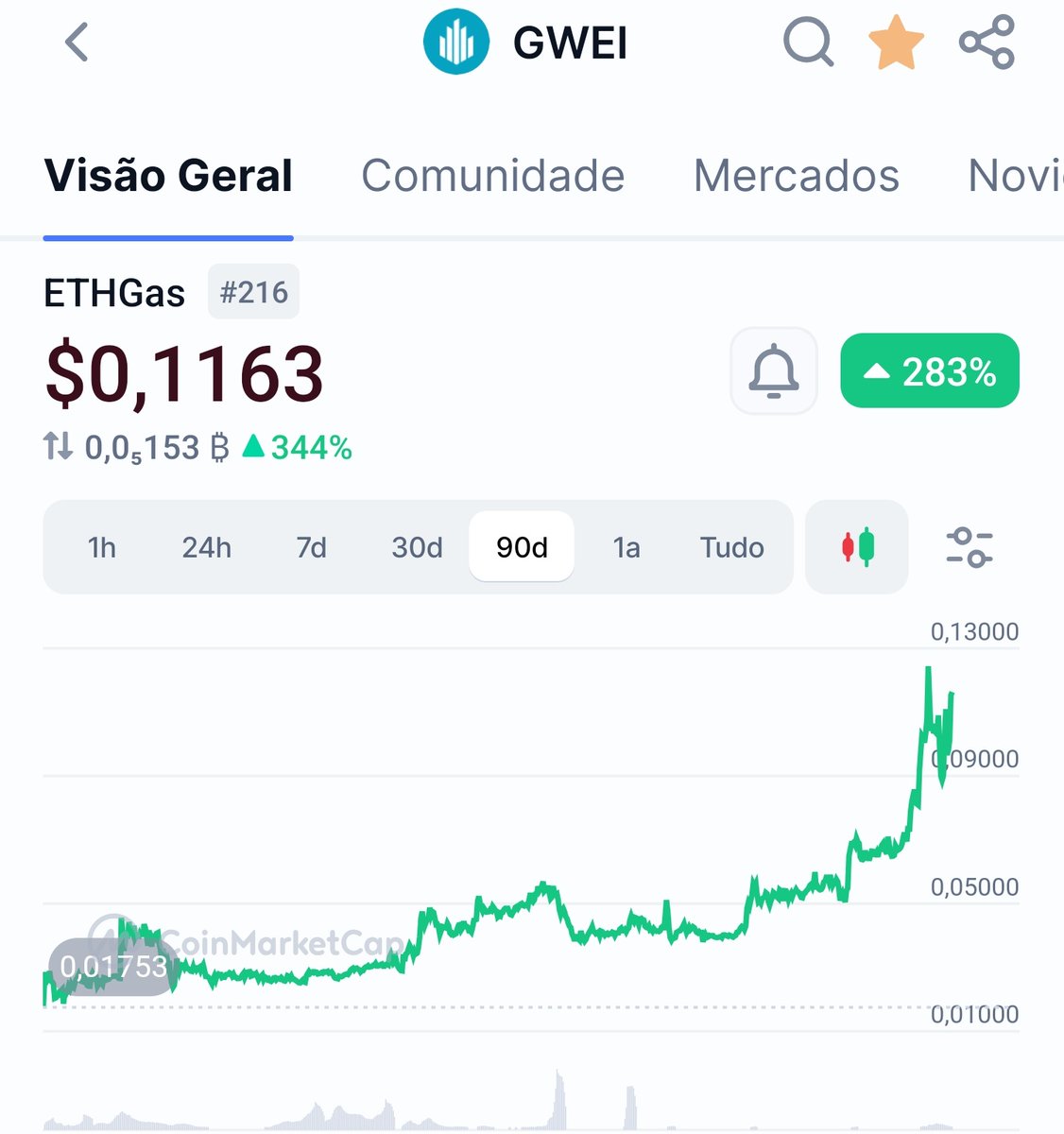
Comendo belas beiras, o token $GWEI vem subindo constantemente nos últimos meses com ótimo volume e sem estardalhaços, ja vale mais que a grande maioria das L2, o que estamos deixando passar despercebido? 🤔