Assistant Professor of Molecular, Cell and Developmental Biology at UC Santa Cruz studying epigenetic mechanisms regulating adaptations in health and disease.
It took a little while, but our website is finally up! Please take a look at what we’re establishing and working on in the future at UC Santa Cruz! https://t.co/jtxLdwpx3P
I’m excited to announce I’ve started a new faculty position at UC Santa Cruz in Molecular, Cell and Developmental Biology. We will be studying the epigenetics of adaptation in health and disease. We are hiring all levels! Please reach out or visit: https://t.co/Xc71ky9AY0
Take a look at our recent work just out @NatureCellBio So excited it’s finally out! Thank you to everyone who worked on this project over many years to make this beautiful story! Very proud of all the hard work! Congrats @Mic_Hicks and all! https://t.co/fJN6wHYxcY
One of the most impactful collaborations our lab will ever partake in. High resolution myofibril imaging led by the @HornbergerLab. In sum, resistance training in humans increases myofibril # (not size) in type II (not type I) fibers. Let's go!!! https://t.co/FfivZKiy8o
Inactivity with hospitalisation is disastrous for physical function in older adults.
So much so that >30% of older adults leave hospital unable to do at least one activity of daily living they could do independently beforehand.
But it doesn’t take much activity to offset these losses.
A new study found as little as 25 min/day of slow walking was enough to improve physical function in older adults during hospitalisation.
There were greater benefits with up to 50 min/day slow walking or multicomponent programs incorporating resistance exercise.
https://t.co/LKybp8gKUG
Congrats on the huge review @DrMikeRoberts@kaesser and all co-authors. Im about 7 pages and 3 coffees in so far. A cracking paper!
https://t.co/j2DoWiy5gq
Congrats to @MspencerUCLA & colleagues for their new #MolTherMethClinDev manuscript: Innate and Adaptive AAV-mediated Immune Responses in a Mouse Model of Duchenne Muscular Dystrophy. https://t.co/p9T1yoJNf3
Our latest
Exercise metabolism and adaptation in skeletal muscle | Nature Reviews Molecular Cell Biology
A great collaboration with @JonoSmith01 @KevinMurachPhD @DyarKen
👍 https://t.co/kruOS8nSk4
Pleased to share a new paper from the lab about the use of the muscle fusogens on vectors for therapeutic gene delivery. Huge congrats to Sajedah Hindi who did an incredible amount of work. Check it out -
https://t.co/OZ8Kym2AGG
I sang the old theme song for TMNT and my daughter made me show her what show it was from… she’s currently obsessed. I’ve been waiting my whole life for this moment!
Our work on the discovery of a biochemical mechanism through which lactate regulates protein function, cell cycle, and proliferation, is out today in @nature.
Congrats to lead authors Weihai, Yun, @luiz_bozi & Patrick! A 🧵
@HarvardCellBio @DanaFarber
https://t.co/Zgsce6IrL6
Exercise is a promising non-pharmacological strategy to maintain and improve brain function. Exercise stimulates the production of exerkines from tissues such as skeletal muscle, adipose tissue, or liver, which affect the nervous system…
https://t.co/mTwdIkJRfC
Now published in Research Policy:
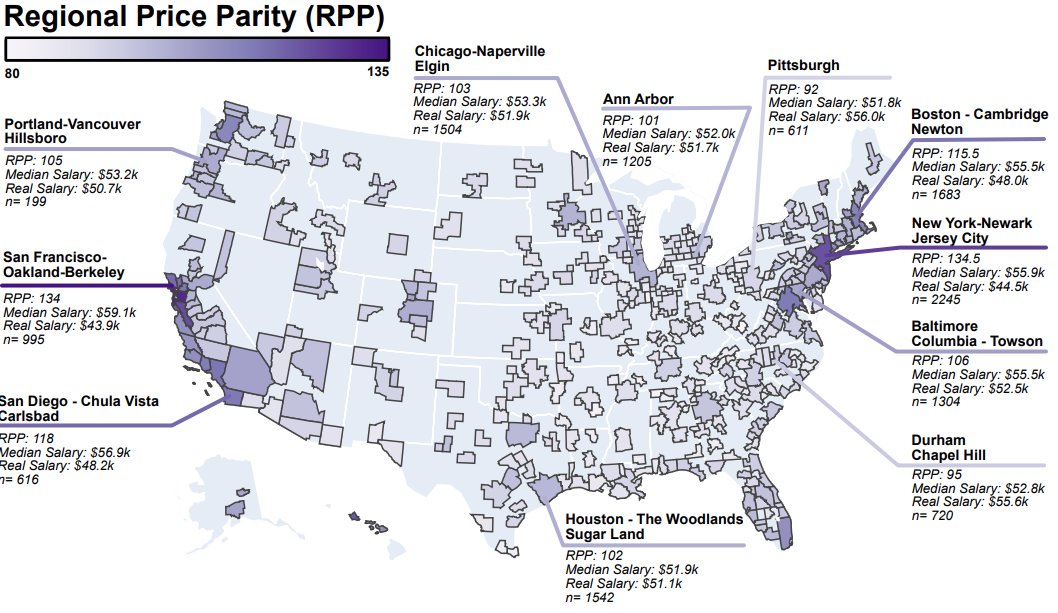
I looked at 27k postdoc salaries across the US, their relationship to cost of living, tenure-track job prospects, and how things have been changing over time. Here's what I found:
https://t.co/cLXPAcTjYI
Yes! Great perspective from @CedricFeschotte lab and co!
https://t.co/cPsW5a6UYa
An interesting point is where we showed exercise downregulates the TE LINE-1 and impacts proliferation - big jump (no pun intended) to suggest an interaction rn, but interesting. @DrMikeRoberts