I am compiling a basic reading list on the areas of modern #money & #credit, where mainstream #macro is poor & misunderstandings are common.
This is work in progress and I will add to the thread as I come across more.
Additions to the list most welcome!
1/n
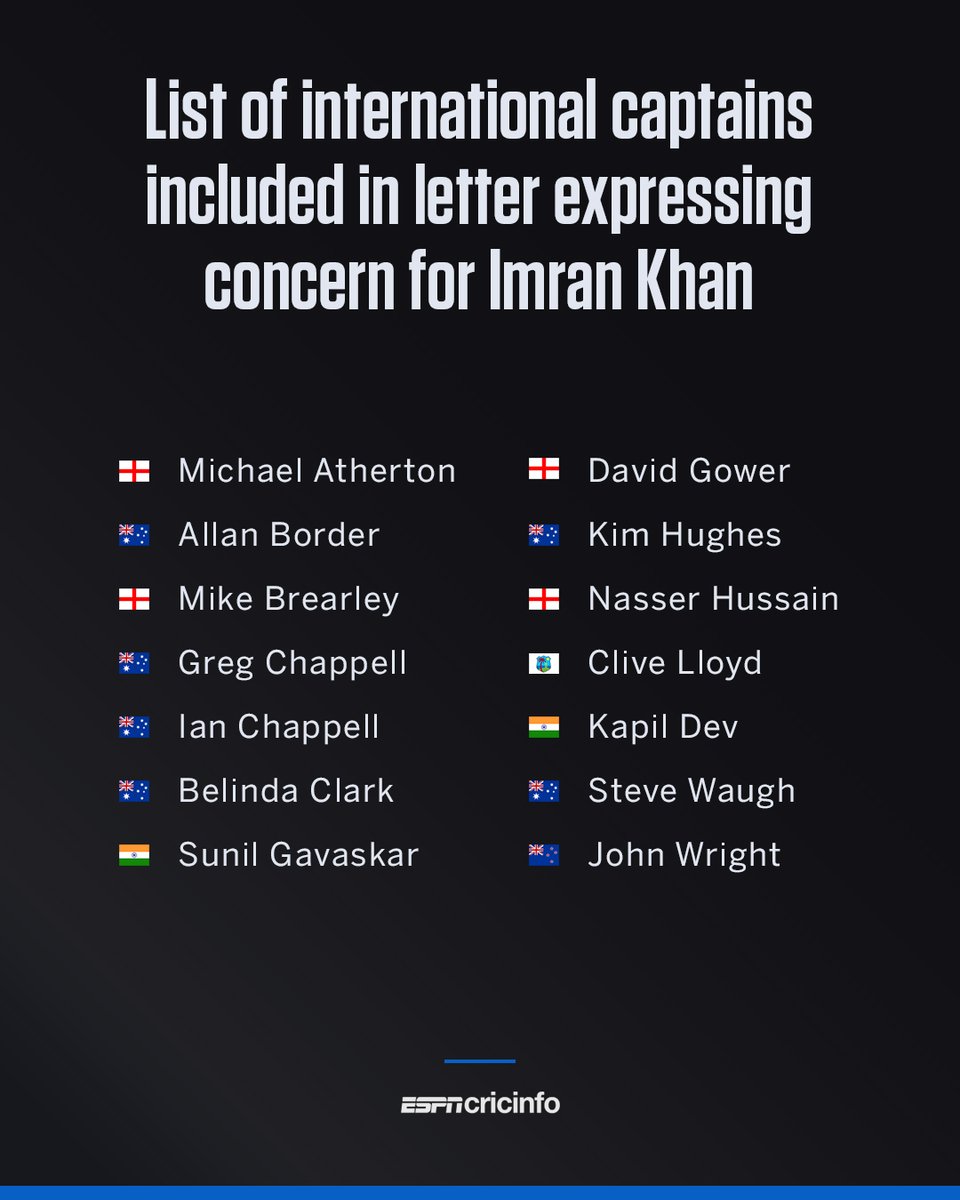
Sunil Gavaskar, Michael Atherton, Ian Chappell and Clive Lloyd are among 14 former international captains that have written a letter to Pakistan's prime minister expressing concern for the health of Imran Khan
Full story: https://t.co/5XDIAO9zdV
@nntaleb It's not that tariffs are permanent. It's the perception that the US establishment has lost its marbles and adhocism is the new normal. US reputation as a sensible adherent to global agreements has been damaged and won't come back for a long time, with or without Trump.
1/6
Renmin University's Jia Genliang is calling for a substantial expansion of China's fiscal deficit to fund direct increases in Chinese household income. "China is facing a lack of consumption demand," he argues, "which is fundamentally due...
https://t.co/aOeA6bfPJt
@elerianm@elerianm not sure, think back to earlier in your career. It is just that we are conditioned to low vol now. MOVE index at ~120 is not extreme; very normal through the 90s and 00s.
Most descriptions of #inflation xxx quickly descend into commentary about relative prices. It says nothing about inflation or the forces driving inflation. Inflation is not simply an adding-up exercise of various line items,
- that’s just arithmetic, not #economics.
(Sorry didn't get to this yesterday.) The latest a cause for a *bit* of concern about inflation coming down into the 2's. In September core PCE inflation was a 3.6% annual rate. Still 2.5% annual rate over last three months but some quirks held this down & higher may be coming.
Things every investor learns at some point in his/her career:
1. Avoid emerging markets
2. Avoid small caps
3. Avoid value stocks
4. Sell your losers aggressively
While it is hard to think about anything except the tragedy in Gaza, here are my 8 takeaways from last week’s IMF/WB Meetings & what they might mean for Pak.
1️⃣ The mood in Marrakesh was somber, amid yet another reminder that the world is (literally & figuratively) on fire…
@nntaleb We have a more pertinent contemporary example. It is exactly what happens between India & Pakistan over the Kashmir Line of Control with regularity; and the cross-border ammo exchange per se has never led to war.
My two (or more) cents about Iran's involvement in recent developments in Southern Israel. In my opinion, two crucial distinctions are required. First, it is necessary to distinguish between Iranian support to Hamas, as well as the ongoing coordination between IRGC, Hezbollah, Hamas, and the Palestinian Islamic Jihad (the "Resistance Front") and between the initiative, organization, and execution of the Hamas operation. While there is no doubt about the military cooperation between Iran and Hamas and Iran's increasing involvement in the Palestinian arena, including the West Bank, in recent years, I highly doubt whether Iran was significantly involved in Hamas's latest action. This is a Palestinian story. Did Hamas use Iranian aid? Definitely yes. Did Iran have an interest in this action? Yes.
Does Hamas need Iranian permission to operate? No. Was there early coordination between Hamas, Iran, and Hezbollah? It's possible. But, in the end, it is an action by Hamas based on it own interests arising from the Palestinian reality. My assessment is also supported by the recent statement of the IDF spokesman who said, "Iran is a significant player, but we cannot say that it planned the operation or trained for it."
A second important distinction that is between the involvement of Iran (and Hezbollah) until the Hamas operation and what will happen from now on. In recent years, I shared the assessment that Iran has no interest in expanding the conflict between Israel and Hamas to other arenas through active participation (by itself and mainly through Hezbollah) during the occasional rounds of warfare between Israel and the Palestinians. I still believe that the concept according to which Iran has no interest in involving Hezbollah (which is considered by Tehran as a strategic tool to respond to a potential Israeli attack against Iran's nuclear facilities) is still relevant. However, we have recently witnessed at least three developments that may challenge the validity of this assessment:
A. The Hamas operation is a reality-changing event in the Middle East that may oblige Iran to move from the phase of ongoing support and coordination to a more direct involvement, especially if the Israeli response poses a significant challenge to Hamas.
B. In recent years, it has become increasingly clear to Iran that, with all due respect to the nuclear issue, a significant part of Israeli activity has been aimed at undermining the regional order and not only Iran's nuclear program. Therefore, Iran has been more committed to increase its involvement around Israeli borders (and even inside Israel) and perhaps is also prepared to pay a higher price for a possible confrontation with Israel, not only in the nuclear context.
C. Iran has practically positioned itself on the nuclear threshold and, at this stage, is not concerned with the possibility of Israeli military action except in the scenario (which does not seem likely at this stage) of a decision to break out to nuclear weapon. Therefore, Tehran may assess that using Hezbollah is no longer considered a "waste of capabilities" but a justified way to advance its strategic vision at the most convenient time. And so, in the bottom line, even assuming (as I do) that Iranian involvement in the implementation of the Hamas operation was not significant, I believe that the danger of escalating into an event involving Iran and Hezbollah has increased significantly.
@Penn@PennMedicine, not your best moment...
“They told me that they’d had a meeting and concluded that I was not of faculty quality,” she said. ”When I told them I was leaving, they laughed at me and said, ‘BioNTech doesn’t even have a website.’”
If investing in a high-speed rail link between the infrastructure-deprived 2nd and 3rd cities of the UK doesn't make economic sense, and the cost cannot be recovered via fares, econ growth or jobs created, then what does it say about the #UK?
#HS2
The most powerful new fact I learned from @WorldBankSAsia's new collection of notes on 🇵🇰 was this:
our taxation is the most regressive of 66 countries studied by @CEQinstitute 👇
JPMorgan is adding India to its benchmark emerging-market index, a keenly awaited event that could drive billions of foreign inflows to the nation’s debt market https://t.co/fO4QtdWkjI
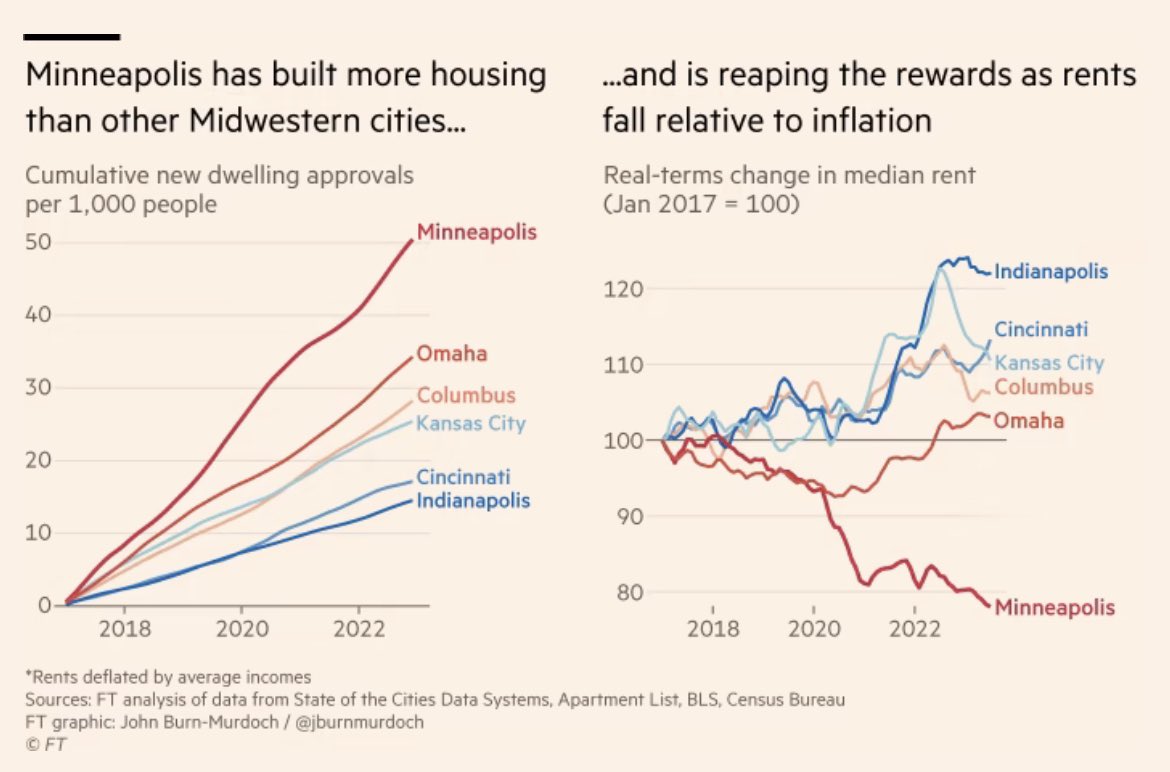
Fixing the housing crisis is not rocket science.
“Minneapolis has been building more housing than any other large city…and has abolished zones that limited construction to single-family housing…average rents are down more than 20% since 2017”
Cc:@Noahpinion@JohnHCochrane