The jump for the Knicks vs Celtics grabs the very high NYC disposable income, and corporate buyers. This dynamic also existed in 1999.
My major point is the indexing to 1999 inflation, and the debasement priced in low vs high end tix.
This is the big story.
Possible that experiences are valued more highly now by the poor as a % of disposable income, but it still isn't great.
I have been thinking about the price of 2026 US world cup & Knicks finals tickets in the context of a hyperinflation marker
Here is some data on Knicks pricing vs 1999 (which interestingly was also the height of another tech bubble)
https://t.co/t9g1CZeqDp
Summary:
Floor seats - lets be generous and mark down 2026 pricing to $43,000 vs 1999 pricing at a high end $4,350 = 10x
Nosebleed seats - $4,500 in 2026 vs $45 in 1999 = 100x
Takeaway: M2 is up 4x. No better illustration on how the plebs always lose. HFSP...
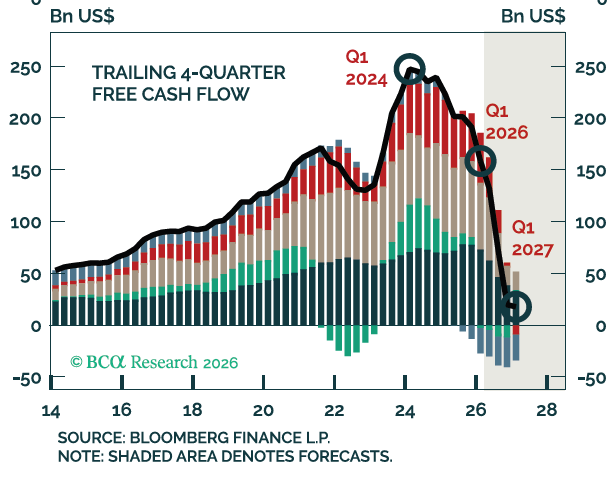
Remember when shale companies would keep drilling negative ROIC wells and fund them with debt or equity or converts or literally any idiotic funding source. That’s why they’d trade at 3x EBITDA. $GOOG just told you that it’s basically a shale company. They cannot stop spending on negative ROIC datacenters…
@johnarnold I thought there were estate taxes in Europe. Potentially it’s because the state wants its cut, and charitable giving is tax exempt.
https://t.co/bq7KPulvIf
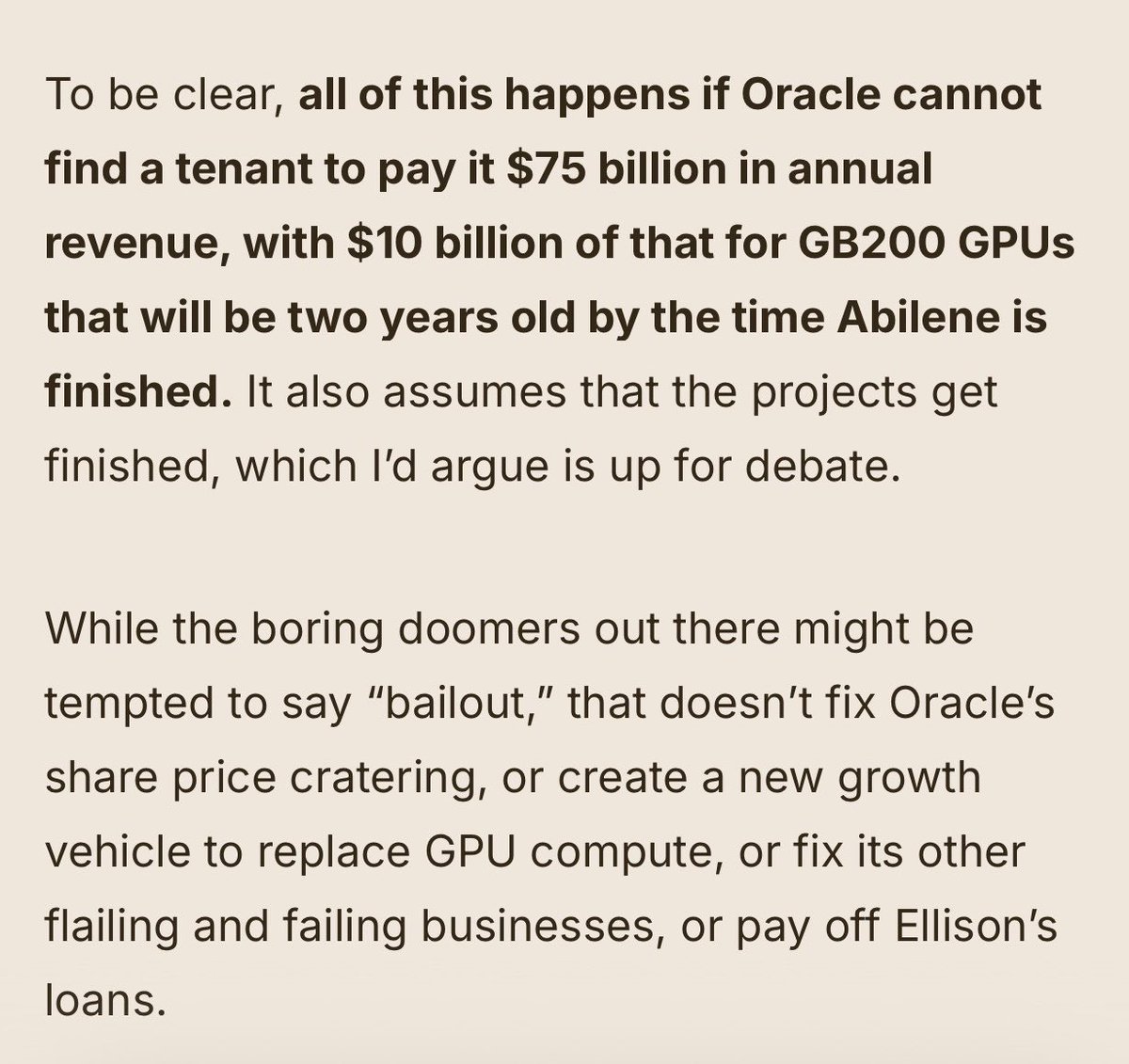
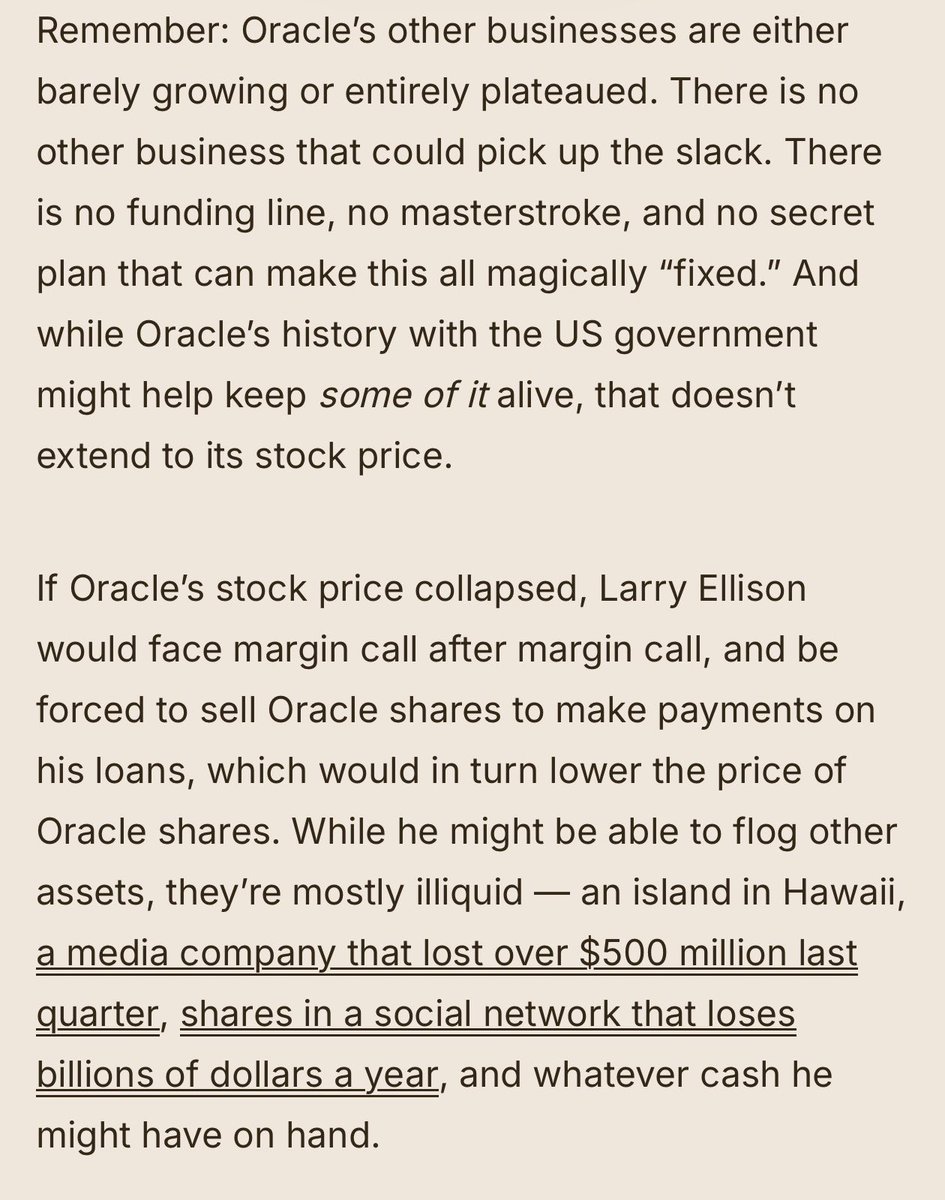
Larry Ellison has pledged 30% of his Oracle shares for roughly $21bn of personal loans. The future of Oracle and the Ellison family hinges on its ability to build 7.1GW of data center capacity and for OpenAI to pay it $300 billion over 5 years.
https://t.co/fmxKU8v0bi
There are many lessons from WeWork for OpenAI. Here are 2 pertaining to the IPO:
#1: for MSFT, don’t backstop the failed ipo. Of Softbanks roughly $14b in WeWork losses, $9.5b went in following the S1 being pulled
#2: the board should blame Altman for everything, strip his equity and accuse him of fraud. Neumann was allowed a $1.7b exit package that in hindsight should have been taken from him in court
That water clarity is an engineering decision, and the math behind it is wilder than the video.
Roman aqueducts ran on gravity alone. No pumps, no pressure systems. Engineers carved channels with a gradient so shallow it borders on absurd. The Pont du Gard in southern France drops 2.5 centimeters over 275 meters. That's roughly the thickness of a coin over the length of three football fields. They surveyed that accuracy with plumb lines and wooden leveling instruments.
The clarity you're seeing is a direct product of flow velocity. Too steep and the water erodes the channel walls, picks up sediment, turns brown. Too flat and it stagnates. Roman engineers targeted a slope of about 20 centimeters per kilometer, which kept the water moving fast enough to stay fresh but slow enough to stay clear. Before the water reached the city, it passed through multi-chamber settling tanks where velocity dropped near zero. Suspended particles sank. Clean water flowed out the top into the next chamber. Repeat three or four times.
Pliny specified the minimum slope in writing. Vitruvius published the exact mortar ratio for hydraulic cement: one part lime to two parts volcanic ash for underwater work. The pozzolana from Pozzuoli reacted with water to form a calcium-aluminum-silicate compound that actually gets stronger the longer it sits submerged. Modern concrete degrades in water. Roman concrete bonds with it.
Scale the whole system and it gets harder to process. Eleven aqueducts fed Rome at its peak. Combined output: roughly 1 million cubic meters of water per day. That works out to about 250 gallons per person for a city of one million. Modern New York delivers about 125 gallons per person per day. Ancient Rome had access to double the per capita water supply of the largest city in the United States, running entirely on slope and stone.
The Trevi Fountain in Rome is still fed by one of them. Two thousand years, same source, same gravity, same water.
Here is one thing I don't think Trump heard last night:
"The best way to solve affordability is to crash the stock and housing markets while resetting interest rates and food supply to address the two biggest drivers of the crisis."
https://t.co/RJUiCUqxxc
@DarioCpx Facebook has 3B global users and it’s estimated that Google has 2-3B DAU’s. These are reasonable figures for a current TAM estimate. At $20-40 per month, today’s AI revenue TAM is roughly $1T…or about 1% of global GDP.